School Tables: The Ultimate Guide to Selection, Care & UK Compliance
🎯 Key Takeaway
Selecting the right school tables involves a strategic balance of UK compliance (BS EN 1729), material durability for long-term value, and ergonomic design appropriate for the specific age group and learning activity. Compliance with BS EN 1729 standards for size, strength, and stability is a legal requirement and crucial for pupil well-being. Material choice significantly impacts lifespan and total cost of ownership; solid core laminate often provides better long-term value than cheaper MDF. Finally, table height and shape must be matched to the UK Key Stage and intended use, from individual work in secondary schools to collaborative play in EYFS. This guide provides the detailed criteria for making a compliant, cost-effective investment.
For School Business Managers (SBMs) and Headteachers, procuring furniture is far more than a simple purchase. For school tables, the decision directly impacts pupil well-being, classroom management, and long-term budgets. Navigating the complexities of school furniture compliance, particularly the mandatory BS EN 1729 standard, whilst under constant financial pressure can be a significant challenge. Getting it wrong can lead to safety risks and wasted funds.
This comprehensive school table buying guide is designed to simplify the process. We’ll provide the expert knowledge you need to select appropriate, durable, and compliant furniture, ensuring you maximise the long-term value of your school’s investment. As of September 2026, these standards and principles form the bedrock of responsible educational procurement in the UK.
👤 Written by: Costcutters UK Content Team
Reviewed by: Costcutters UK Editorial Team, 35+ Years in Educational Furniture Supply
Last updated: 16 September 2026
ℹ️ Transparency Disclosure
Transparency: This article explores the procurement of school tables based on our decades of industry experience and analysis of UK government and safety standards. Some links may connect to our services or detailed guides. Our Disclosure is that all information is verified by our editorial team to ensure accuracy and relevance for UK school leaders, helping you make informed decisions.
Decoding School Table Types for Every Learning Space
The most effective table is one that is perfectly matched to its environment and the pupils using it. The effective choice for a Year 10 science lab is fundamentally different from one for a nursery or a busy dining hall. Understanding these distinctions is the first step in successful procurement.
General Classroom Tables (KS1-KS4)
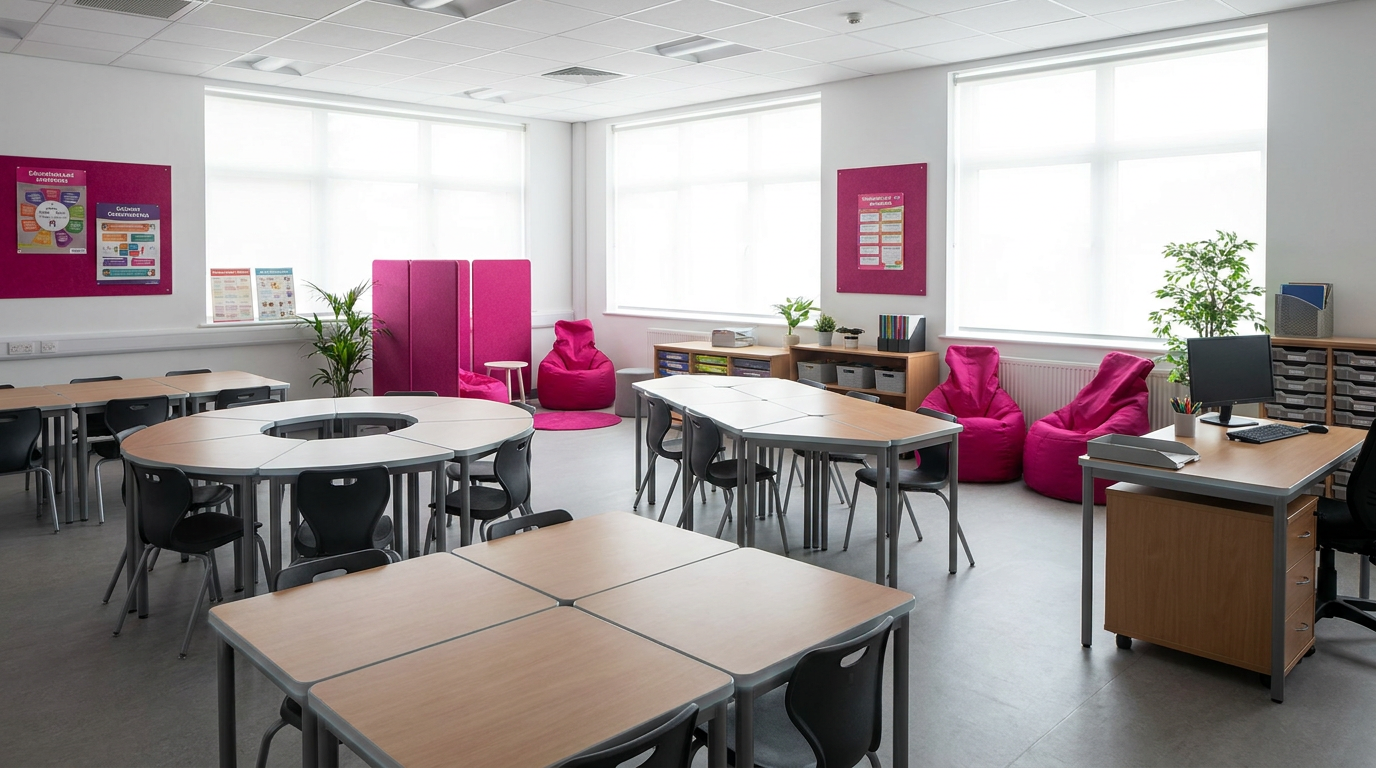
For general classrooms, versatility is key. Rectangular and trapezoidal tables are popular choices as they can be used for individual work or easily grouped together for collaborative tasks. The key consideration for these classroom tables UK suppliers provide is matching the height to the correct Key Stage, ensuring ergonomic comfort and focus. Many modern classrooms favour shapes that can be reconfigured, allowing teachers to adapt the learning space to the lesson plan.
Specialised Tables: Science, Art, and IT Suites
These environments demand specialised surfaces. Science labs require tables with chemical-resistant tops, such as Trespa or Solid Core Laminate (SCL), to withstand spills and frequent cleaning. Art room tables need to be durable and easy to wipe clean. For IT suites, integrated cable management is essential to maintain a safe and tidy workspace, preventing trip hazards and protecting equipment.
School Dining Tables and Canteen Furniture
In multi-purpose halls, school dining tables must be exceptionally reliable and easy to manage. The primary features to look for are durability, ease of cleaning, and efficient storage. Folding and stacking table-and-bench units are a popular solution, as they allow for rapid deployment and clearing of the space. Wipe-clean laminate surfaces and heavy-duty steel frames are standard in these high-traffic areas.
Early Years Foundation Stage (EYFS) Tables
Safety and play-based learning are the priorities here. EYFS tables are characterised by their low heights, rounded safety edges, and bright, engaging colours. As mandated by the Department for Education (DfE) in the EYFS Statutory Framework (2024), all equipment must be safe and suitable. This means choosing tables that are stable, free from sharp corners, and designed to facilitate group activities and exploration. Some models, like height adjustable school tables, offer added flexibility as children grow.
What Key Factors Should Inform Your School Tables Selection?
Beyond the specific type, the critical factors that determine a table’s value and lifespan are its material composition, ergonomic height, edge type, and frame construction. A cheaper initial cost can often lead to a higher Total Cost of Ownership (TCO), a financial estimate that includes the purchase price plus maintenance and replacement costs over its lifetime. In our experience, prioritising durability from the outset is the most cost-effective strategy.
The material of the tabletop is arguably the most important decision. Below is a comparison of common materials for durable school tables:
| Material | Pros | Cons | Best For |
|---|---|---|---|
| High-Pressure Laminate (HPL) on MDF Core | Cost-effective, wide range of colours, good general durability. | Susceptible to water damage if the edge seal is broken. Can chip. | General classrooms (KS1-KS4), staff rooms, where budgets are tight. |
| Solid Core Laminate (SCL) | Completely impervious to water, extremely durable and impact-resistant, hygienic. | Higher initial cost than MDF core. Heavier. | Science labs, art rooms, dining halls, and any high-wear environment. |
| Plywood with Laminate Top | Strong, holds screws well, lighter than MDF, good impact resistance. | Can be more expensive than MDF, potential for delamination over time. | Environments where tables are frequently moved; design and technology rooms. |
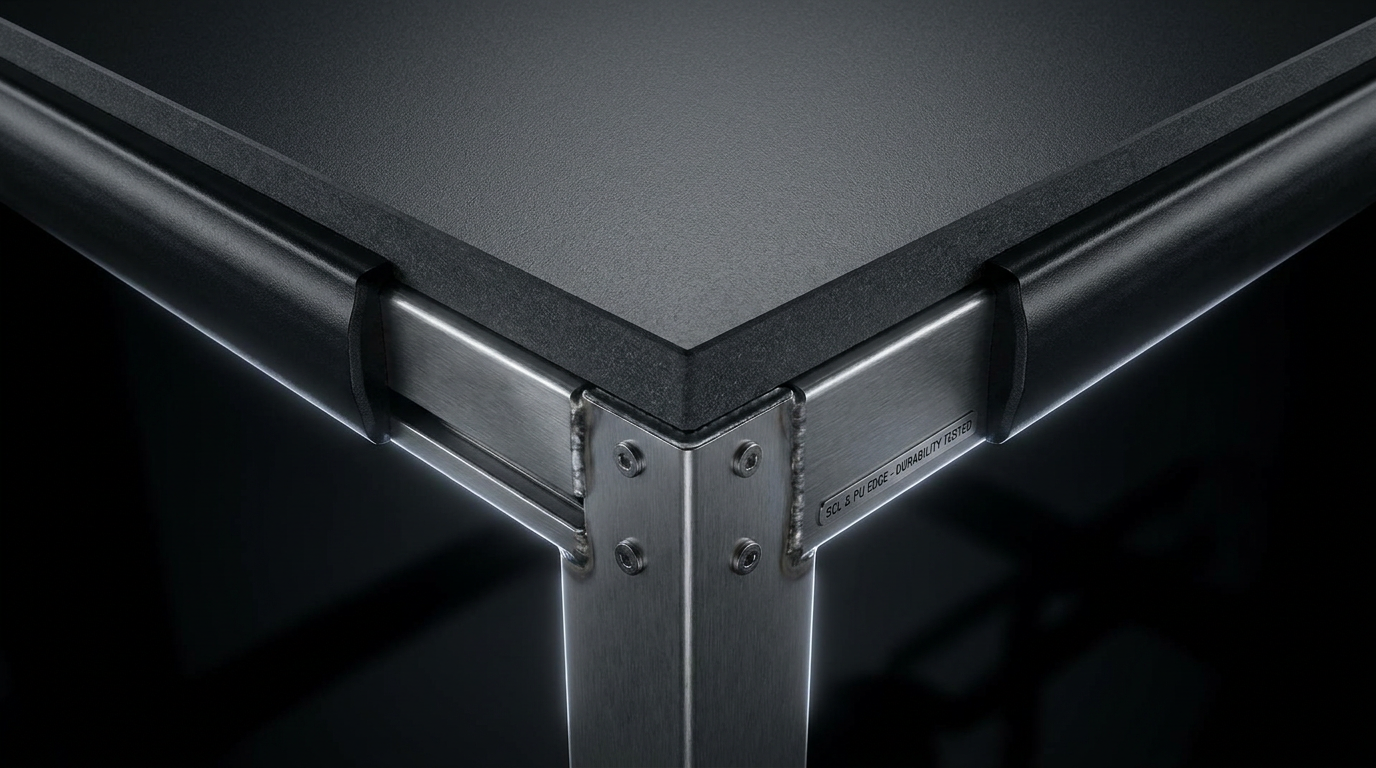
| Polyurethane (PU) Edged MDF | Extremely durable and tamper-proof edge, water-resistant seal, smooth finish. | Higher cost, limited to specific table shapes and suppliers. | Primary schools and SEN environments where safety and durability are paramount. |
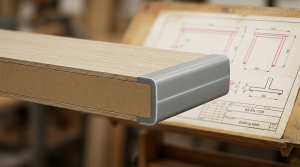
The frame provides the table’s strength. Look for fully-welded steel frames for maximum rigidity. The thickness, or gauge, of the steel also matters; a thicker gauge means a stronger, more durable school table. Finally, consider the edging. A simple MDF bullnose edge is the cheapest but least durable. A high-impact Acrylonitrile Butadiene Styrene (ABS) edge offers good protection, while a cast Polyurethane (PU) edge provides a smooth, water-resistant, and tamper-proof seal that is effective for the toughest environments.
How Do You Ensure School Tables are Compliant in the UK?
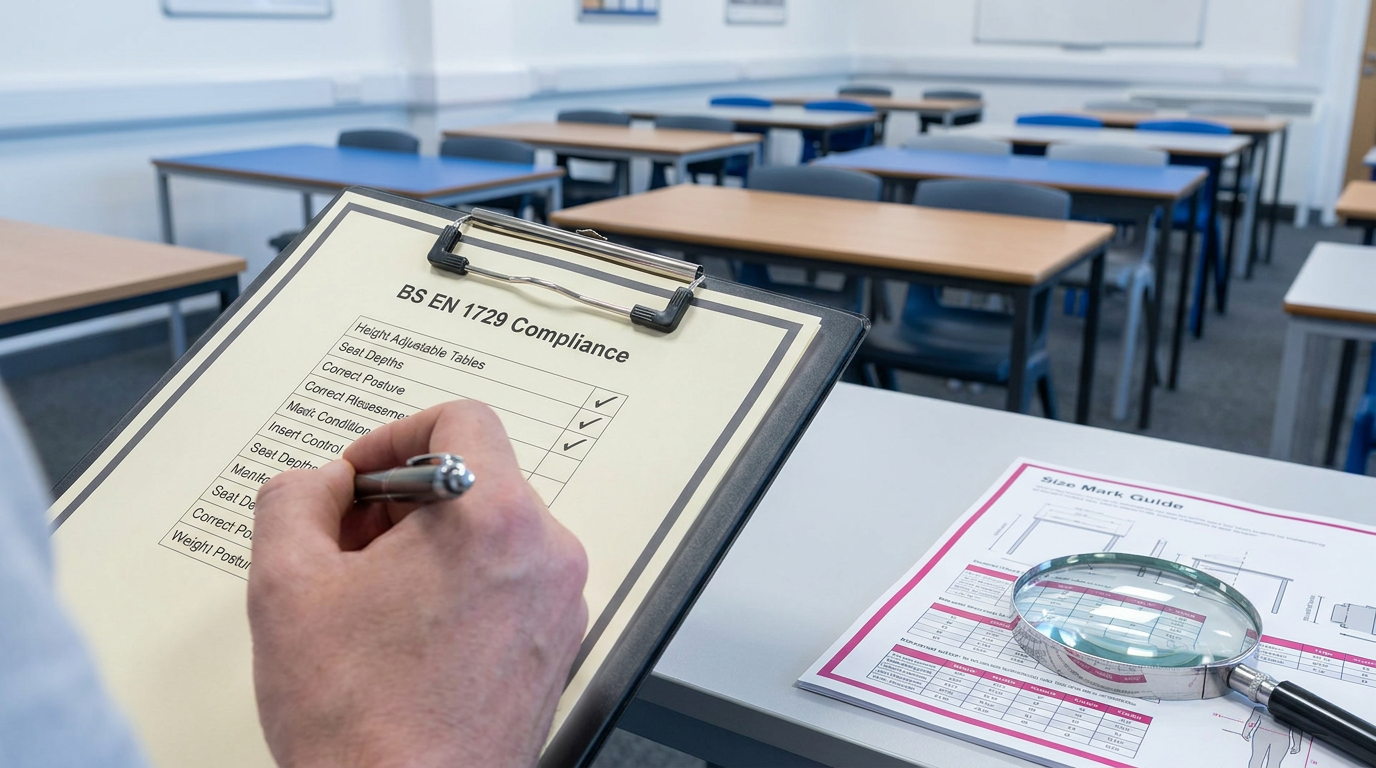
The single most important step is to ensure all school tables you procure are certified to BS EN 1729. This is not a ‘nice to have’; it is a fundamental requirement for school furniture compliance in the UK. BS EN 1729 is the British and European standard specifically for chairs and tables for educational institutions. Its purpose is to ensure furniture is fit for purpose, ergonomically sound for pupils, and strong enough to withstand the rigours of a school environment. The standard is split into two critical parts.
Adherence to this standard is also a key component of your school’s duty of care under the Health and Safety at Work etc. Act 1974. The Health and Safety Executive (HSE), the UK government agency for workplace health and safety, provides a framework that applies to creating safe environments for staff and pupils alike. Furthermore, having a fully compliant and well-maintained learning space helps to meet Ofsted’s expectations for an enabling learning environment.
Understanding BS EN 1729 Part 1: Ergonomics and Sizing
Part 1 of the bs en 1729 furniture standard deals with functional dimensions. It sets out the appropriate heights, depths, and widths for tables and chairs to suit pupils of different ages. This is crucial for preventing musculoskeletal issues, which the European Agency for Safety and Health at Work (EU-OSHA) identifies as a major health problem often linked to poor posture. The standard uses a ‘Size Mark’ system to make selection simple.
BS EN 1729 Size Mark Guide:
| Size Mark | Associated Colour | Pupil Stature (mm) | UK Year Group (Approx.) |
|---|---|---|---|
| 1 | Orange | 800-950 | Nursery (Ages 2-3) |
| 2 | Violet | 950-1100 | Nursery/Reception (Ages 3-4) |
| 3 | Yellow | 1100-1250 | Years 1-2 (Ages 5-7) |
| 4 | Red | 1250-1400 | Years 3-4 (Ages 7-9) |
| 5 | Green | 1400-1600 | Years 5-6 (Ages 9-11) |
| 6 | Blue | 1600-1800 | Secondary/Adult (Ages 11+) |
| 7 | Brown | 1800-2000 | Secondary/Adult (Ages 14+) |
Understanding BS EN 1729 Part 2: Strength and Stability
Part 2 specifies the safety requirements, including strength, stability, and durability tests. Tables undergo rigorous testing to ensure they won’t tip over if a pupil leans on the edge and that the frame and top can withstand significant, repeated loads. For a busy school, this is non-negotiable. It may help the furniture can handle the daily reality of classroom life, from being knocked and pushed to having pupils occasionally sit on them (which we don’t recommend, but it happens!). Typically ask a supplier for their certificate of compliance for any product you consider.
Extending the Life of Your Investment: Care & Maintenance
A proactive maintenance programme is essential for maximising the lifespan of your school tables and ensuring they remain safe for use. While choosing durable school tables from the start is an effective strategy, regular care protects that investment. We’ll be honest – this part can be tedious, but it’s crucial for Saving Time & Stress in the long run by avoiding costly replacements.
We recommend site managers implement a simple checklist:
- Daily Cleaning: Clean tabletops with a soft cloth and a pH-neutral detergent solution. Avoid abrasive creams or scouring pads, as these will permanently scratch laminate surfaces. For tougher marks, use a non-abrasive cleaner and rinse thoroughly.
- Periodic Checks (Termly):
- Inspect all frames for signs of cracking or broken welds.
- Check that all screws and fixings holding the frame to the top are tight. They can loosen over time with movement.
- Examine table edges for peeling or damage. Damaged edging can expose the core material (like MDF) to moisture, leading to swelling and irreversible damage.
- Simple Repairs:
- Minor scratches on laminate can sometimes be polished out.
- If an edge is peeling, it can sometimes be re-glued with a strong contact adhesive. However, if the core is swollen, the top will likely need replacing.
- Tighten any wobbly legs immediately to prevent strain on the frame joints.
This simple process of asset management not only saves money but also forms a key part of your school’s health and safety procedures.
A Guide to Procuring School Tables: Budgeting and Tendering
A structured procurement process is the SBM’s best tool for minimising risk and maximising value. The goal should be to find a supplier who acts as a partner, not just a vendor. According to market data from Statista (2024), the UK’s professional furniture market is substantial, meaning you have plenty of choices.
When budgeting, look beyond the initial unit price and consider the Total Cost of Ownership (TCO). A slightly more expensive table with a 10-year warranty may offer far better value than a cheaper alternative that needs replacing in three years. For more guidance, see our detailed guide to budgeting for school furniture.
For larger projects, creating a tender document is best practice. When evaluating suppliers, we recommend asking these key questions:
- Can you provide BS EN 1729 certification for every product quoted?
- Are you a member of the British Educational Suppliers Association (BESA) and do you adhere to their Code of Practice?
- What warranty do you offer on frames and tabletops?
- What are your procedures for delivery and installation? Do you clear away packaging?
- Can you provide case studies or references from similar schools?
Working with an experienced supplier can simplify the entire process, from initial space planning to final installation. This is particularly valuable when you are managing a full school furniture project.
Hypothetical Case Study: The Oakwood Academy Trust
- Challenge: A multi-academy trust needed to standardise furniture across five primary schools to ensure compliance and create consistent learning environments, all while managing a tight central budget.
- Solution: Our team provided a full “Design To Install We Do It All!” service. We conducted site audits, created optimised space plans, and proposed a mix of BS EN 1729 certified tables. We utilised our Bulk Buy Discounts to maximise their budget.
- Results: The trust achieved full compliance across all sites, reduced administrative procurement time by 40%, and saved 15% on the total project cost compared to sourcing from multiple suppliers.
- Key Insight: Centralising procurement with a single, experienced partner is a powerful way to simplify compliance, ensure consistency, and unlock significant cost savings.
Frequently Asked Questions About School Tables
What are school tables?
School tables are specialised pieces of furniture designed specifically for the demands of educational environments. Unlike domestic tables, they are built to be exceptionally durable, safe, and ergonomically sized for different age groups of children and young adults. They must comply with specific UK and European standards like BS EN 1729, which govern their dimensions and strength. Ultimately, they are a crucial investment for creating a safe and effective learning environment.
What are the standard heights for school tables in the UK?
Table heights are governed by the BS EN 1729 standard, which uses a ‘Size Mark’ system from 1 to 7. Each size mark corresponds to a specific pupil height range. For example, Size Mark 3 is for pupils aged 5-7 and requires a table height of 580mm, while Size Mark 6 for secondary pupils requires a 760mm height. Using the correct height is vital for good posture and concentration, so typically check supplier guidance against your pupils’ age group.
What is BS EN 1729 and why is it important?
BS EN 1729 is the mandatory British and European safety standard for chairs and tables used in educational institutions. It has two parts: Part 1 covers ergonomic dimensions to ensure a good fit for pupils, while Part 2 specifies strength and stability requirements. Its importance is paramount; compliance ensures furniture is safe, durable, and ergonomically sound, which is a legal health and safety requirement for all UK schools.
How do you choose the right material for classroom tables?
an effective material depends on the intended use, required longevity, and your budget. Standard high-pressure laminate (HPL) on an MDF core is a cost-effective choice for general classrooms. However, for high-wear areas like science labs or dining halls, a Solid Core Laminate (SCL) or Trespa top offers far greater durability and water resistance. We advise considering the total cost of ownership, as a more durable material often saves money long-term.
What’s the difference between primary and secondary school tables?
The main differences are height, typical size, and safety features. Primary tables are lower, corresponding to the earlier BS EN 1729 Size Marks, and often feature safer, rounded PU edges to protect younger children. They also come in shapes that encourage group work. By contrast, secondary tables are taller (Size Marks 5-7) and more commonly rectangular, designed for individual study or lecture-style layouts. Both must meet the same stringent safety standards.
Are height-adjustable tables worth the investment for schools?
For specific applications, they offer excellent value and flexibility. We’ve found that for multi-purpose rooms used by different year groups, or for meeting the specific ergonomic needs of pupils with Special Educational Needs (SEN), they are a highly valuable asset. However, their higher initial cost means they may not be a necessary or cost-effective choice for every single classroom. They are a strategic investment for targeted needs.
How do you clean and disinfect school tables safely?
We recommend a simple two-step process for safe and effective cleaning. First, clean the surface with a soft cloth and a mild, pH-neutral detergent solution to remove dirt and grime. Then, if required, disinfect using a product that is certified as safe for the specific laminate or surface type. Crucially, you should avoid abrasive scourers, bleach, or harsh chemical cleaners, as these can cause permanent damage to the tabletop finish.
What shape of table is best for collaborative learning?
Modular shapes like trapezoidal, triangular, semi-circular, or flower-shaped tables are effective for collaboration. These shapes are designed to be easily reconfigured from individual desks into small clusters or larger group work surfaces. This fosters pupil interaction and gives teachers immense flexibility in classroom layout. Traditional rectangular tables are often better suited to didactic teaching styles or exam settings, so an effective choice depends on your pedagogical approach.
What should I look for in a school dining table?
Focus on three key features: extreme durability, ease of cleaning, and efficient storage. Look for tables with reliable, wipe-clean SCL or HPL surfaces and heavy-duty, fully-welded steel frames. For multi-purpose halls, folding or stacking systems are essential for quick turnaround. Also, ensure any attached seating is equally compliant and durable enough to withstand a very high-use environment. Being Rated Excellent On Trustpilot often reflects a supplier’s quality in these areas.
How do I ensure a supplier is reputable?
A reputable supplier will provide clear proof of BS EN 1729 certification for their products. You should also check for membership in an industry body like the British Educational Suppliers Association (BESA), as members adhere to a strict code of practice. We also recommend asking for case studies or references from other schools and clarifying their warranty terms, delivery procedures, and after-sales support before placing an order.
Important Considerations
This guide is based on current UK standards and market data as of September 2026. While the principles of durability and safety are timeless, specific product availability and pricing will evolve. Typically request the latest certification documents from suppliers before committing to a purchase.
While this guide focuses on purchasing new tables, schools on very tight budgets might consider refurbishment. This involves replacing damaged tops and repairing frames. However, this may not bring the furniture up to current BS EN 1729 standards and should be evaluated carefully against the long-term value and compliance benefits of new, certified furniture.
For large-scale refurbishments, new builds, or spaces with complex requirements (e.g., extensive SEN provision), we strongly recommend a professional space planning consultation. An expert can ensure the layout, furniture selection, and pupil flow meet educational, safety, and budgetary goals simultaneously. This can prevent costly mistakes and create a more effective learning environment.
Your Partner in Creating Effective Learning Environments
Choosing the right school tables is a critical investment in your pupils’ safety, comfort, and learning. By prioritising UK compliance through BS EN 1729, evaluating materials for long-term durability, and following a structured procurement process, you can ensure your school acquires furniture that delivers exceptional value for years to come. This strategic approach moves beyond price to focus on creating a truly supportive and effective educational setting.
At Cost Cutters UK, we have over 35 years of experience helping schools make these important decisions. Our “Design To Install We Do It All!” service is built to make your life easier. If you are planning a furniture project, our specialists can provide a free space plan and a detailed, compliant quote to help you maximise your budget, whether you need Credit Accounts Or Pay Flexibly. Explore our full range of furniture buying guides or contact us today to discuss your project.
References
- Health and Safety Executive (HSE) – UK Government Guidance. Provides the legal framework for workstation ergonomics under the Health and Safety (Display Screen Equipment) Regulations 1992, with principles relevant to classroom ergonomics.
- European Agency for Safety and Health at Work (EU-OSHA) – EU Research Body. This body’s research highlights that musculoskeletal disorders are a major work-related health problem, reinforcing the need for ergonomic school furniture.
- Department for Education (EYFS Framework) – UK Government Statutory Framework (2024). Mandates that premises and equipment in Early Years settings must be safe and suitable, directly impacting furniture choice.
- British Educational Suppliers Association (BESA) – UK Professional Organisation. Members must adhere to a Code of Practice ensuring products are fit for educational purposes and meet high safety standards.
- World Health Organization (WHO) – International Health Body Guidelines (2020). These guidelines on sedentary behaviour provide a global health context for designing learning environments that promote good posture.
- Statista – Market Research Data (2024). This data on the UK Office Furniture market, projected at £1.80bn, indicates the significant scale of furniture procurement in professional and educational settings.
Conclusion
Your Partner in Creating Effective Learning Environments
In summary, choosing the right school tables is a critical investment in your pupils’ safety, comfort, and learning. By prioritising UK compliance through BS EN 1729, evaluating materials for long-term durability, and following a structured procurement process, you can ensure your school acquires furniture that delivers exceptional value for years to come. This strategic approach moves beyond price to focus on creating a truly supportive and effective educational setting.
At Costcutters UK, we have over 35 years of experience helping schools make these important decisions. If you are planning a furniture project, our specialists can provide a free space plan and a detailed, compliant quote to help you maximise your budget and achieve your vision. As