Ergonomic School Furniture: A UK School’s Guide to Durability & Value
🎯 Key Takeaway
Choosing the right ergonomic school furniture supports student health, enhances concentration, and delivers long-term value by adhering to critical UK standards like BS EN 1729. This decision is not just about purchasing chairs and tables; it’s a strategic investment in creating an effective learning environment. True durability goes beyond surface materials to encompass construction quality and resistance to daily wear, resulting in a lower total cost of ownership. Compliance with BS EN 1729 Parts 1 & 2 is the essential benchmark for ensuring furniture is safe, strong, and dimensionally appropriate for UK pupils.
For any School Business Manager (SBM), balancing tight budgets with the need for high-quality, long-lasting resources is a constant challenge. As of August 2026, the pressure to make every pound count has rarely been greater. For classroom resources, investing in the right ergonomic school furniture is not merely an expense but a crucial long-term investment in student outcomes and effective facility management. Knowing when to upgrade your school’s furniture is the first step. This comprehensive school furniture selection guide provides a clear framework for selecting compliant, durable items that are genuinely fit for purpose, ensuring you procure assets that support learning for years to come.
Written by: The Cost Cutters UK Content Team | Reviewed by: The Cost Cutters UK Editorial Team, Specialists in Educational & Commercial Fit-Outs with 35+ Years Experience and Rated Excellent On Trustpilot
ℹ️ Transparency Disclosure
This article explores the selection criteria for ergonomic and durable school furniture based on official UK guidance, European standards, and our 35+ years of industry experience. Our goal is to provide clear, actionable advice. Some links may connect to our specialised services, which we believe offer excellent solutions. All information has been verified for accuracy by our editorial team.
What is Educational Ergonomics and Why Does It Matter?
Educational ergonomics is the science of designing learning environments and furniture to fit the student, not forcing the student to adapt to the furniture. Its importance cannot be overstated, as it directly impacts student health, comfort, and ability to concentrate. The core principle is to create a physical setting that supports natural posture and reduces physical stress. This is critical for preventing musculoskeletal disorders (MSDs), which are conditions affecting muscles, nerves, and tendons.
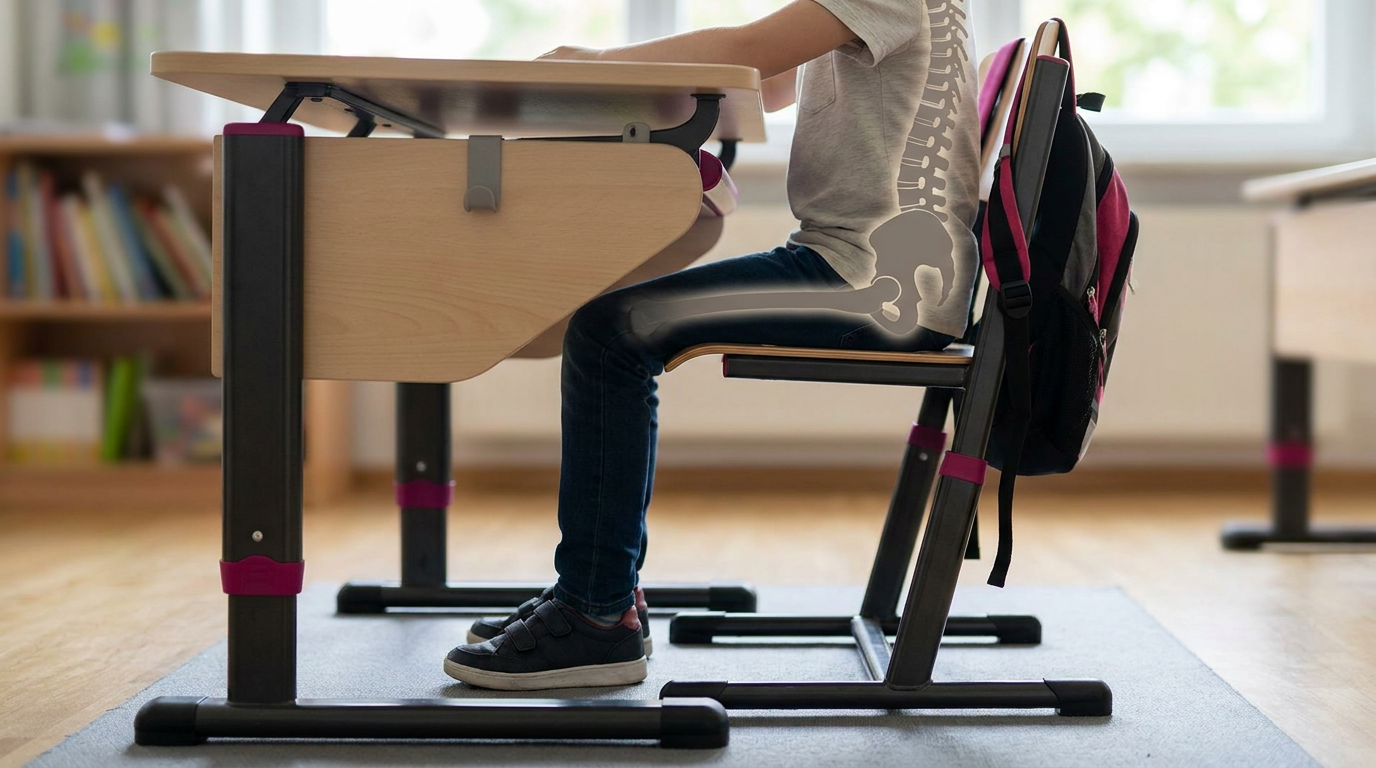
Research from the European Agency for Safety and Health at Work (EU-OSHA) highlights that poor ergonomic conditions are a primary cause of MSDs across all age groups. For children and adolescents, whose bodies are still developing, the risks are even more pronounced. Ill-fitting chairs and desks that are too high or too low cause students to slump, slouch, or strain, leading to poor posture. This physical discomfort is a significant source of distraction and fatigue, which directly hinders learning.
In the UK, guidance from the Health and Safety Executive (HSE) on workstations is highly relevant to the principles of classroom ergonomics uk. The HSE (2022) guidance on Display Screen Equipment (DSE) outlines the need for supportive seating and appropriate screen heights, principles that are just as vital in a classroom as in an office. Furthermore, the American Industrial Hygiene Association (AIHA) identifies mismatched furniture size as a key ergonomic hazard in any workplace, a risk that is amplified in a school with diverse age groups. By prioritising ergonomics, schools can create healthier, more attentive, and more productive learning spaces.
Decoding BS EN 1729: The UK Standard for School Furniture
BS EN 1729 is the definitive British and European standard for chairs and tables intended for use in educational institutions. For any school procurer, specifying furniture that complies with this standard is the most effective way to ensure it is safe, appropriately sized, and built to last. It acts as a trusted benchmark, removing guesswork from the procurement process. The standard is divided into two critical parts, each addressing a different aspect of furniture design and performance.
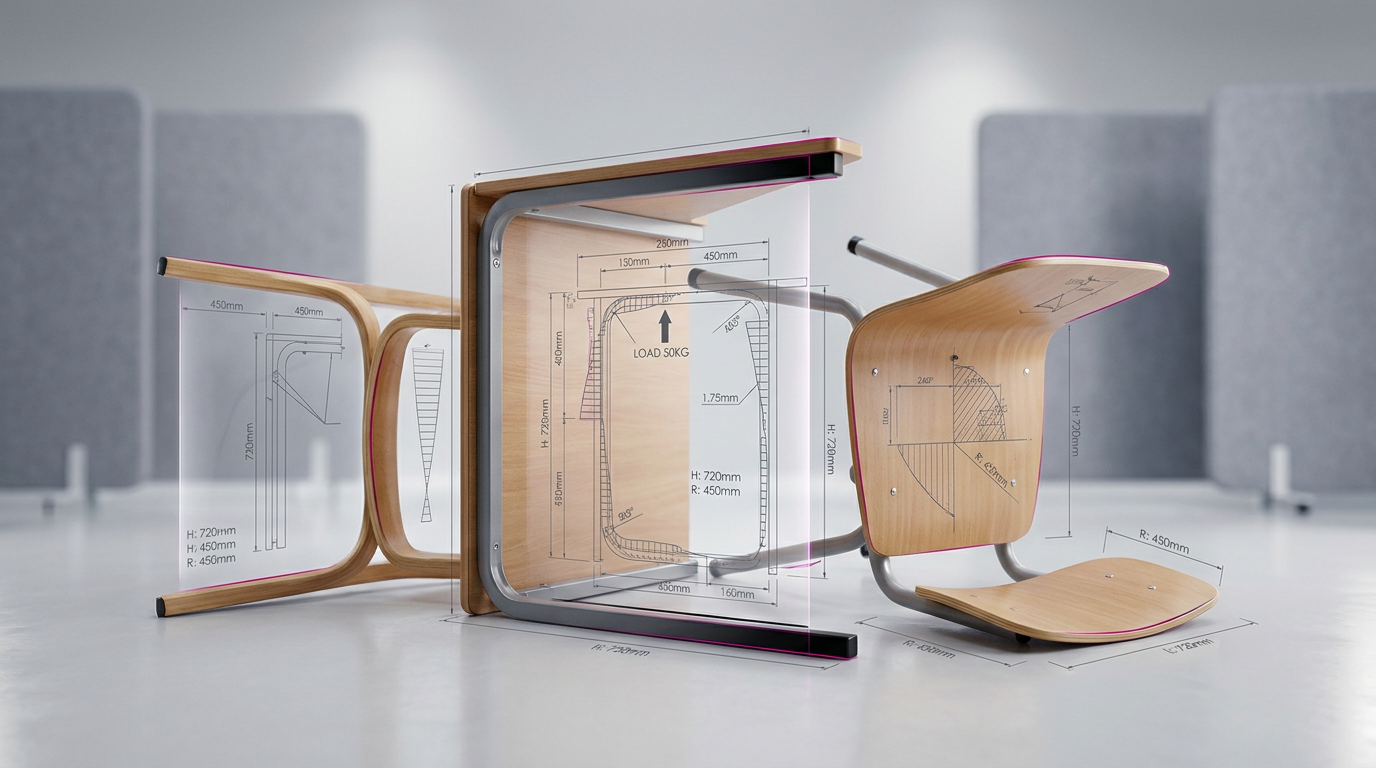
- BS EN 1729 Part 1: Functional Dimensions. This part focuses on ergonomics. It sets out the required dimensions for furniture based on the size of the pupils, not just their age.
- BS EN 1729 Part 2: Safety, Strength, and Durability. This part covers the structural integrity of the furniture, ensuring it can withstand the rigours of a school environment.
At Cost Cutters UK, we firmly believe that adherence to both parts of this standard is non-negotiable for any educational furniture. It’s the clearest guarantee of quality and suitability available. Insisting on BS EN 1729 furniture protects both your students and your investment.
Part 1: Functional Dimensions Explained
Part 1 is all about the ergonomic fit. It uses anthropometric data – scientific measurements of the human body – to define appropriate chair seat heights, desk heights, and backrest angles. To make this simple for schools to apply, the standard uses a system of ‘size marks’. These are typically colour-coded and correspond to a specific pupil height range (stature). For example, a Size Mark 3 chair and desk would be suitable for pupils between 1190mm and 1420mm tall. This system ensures that pupils can sit with their feet flat on the floor, their knees at a roughly 90-degree angle, and their elbows level with the tabletop – the effective posture for learning.
Part 2: Strength and Durability Requirements
Part 2 ensures that the furniture is tough enough for school life. Furniture must undergo a series of rigorous laboratory tests to prove it meets the required school furniture standards uk. These tests simulate real-world use and abuse, including:
- Static Load Tests: Heavy weights are placed on seats, backs, and tabletops to ensure they don’t break under pressure.
- Stability Tests: The furniture is tested to ensure it won’t tip over easily when a child leans back or sideways.
- Fatigue Tests: Mechanical arms repeatedly apply force to different parts of the chair or table to simulate years of use, checking for wear and tear on joints and frames.
Passing these tests demonstrates that the furniture is reliable and won’t fail prematurely.
Beyond the Price Tag: Assessing Real-World Durability
While compliance with BS EN 1729 is a fantastic starting point, our 35+ years of experience have taught us that true durability is found in the details. A certificate can tell you a chair passed a test, but it doesn’t typically tell you how it will look after five years of daily classroom use. Assessing durable school furniture means looking beyond the initial price and considering the total cost of ownership.
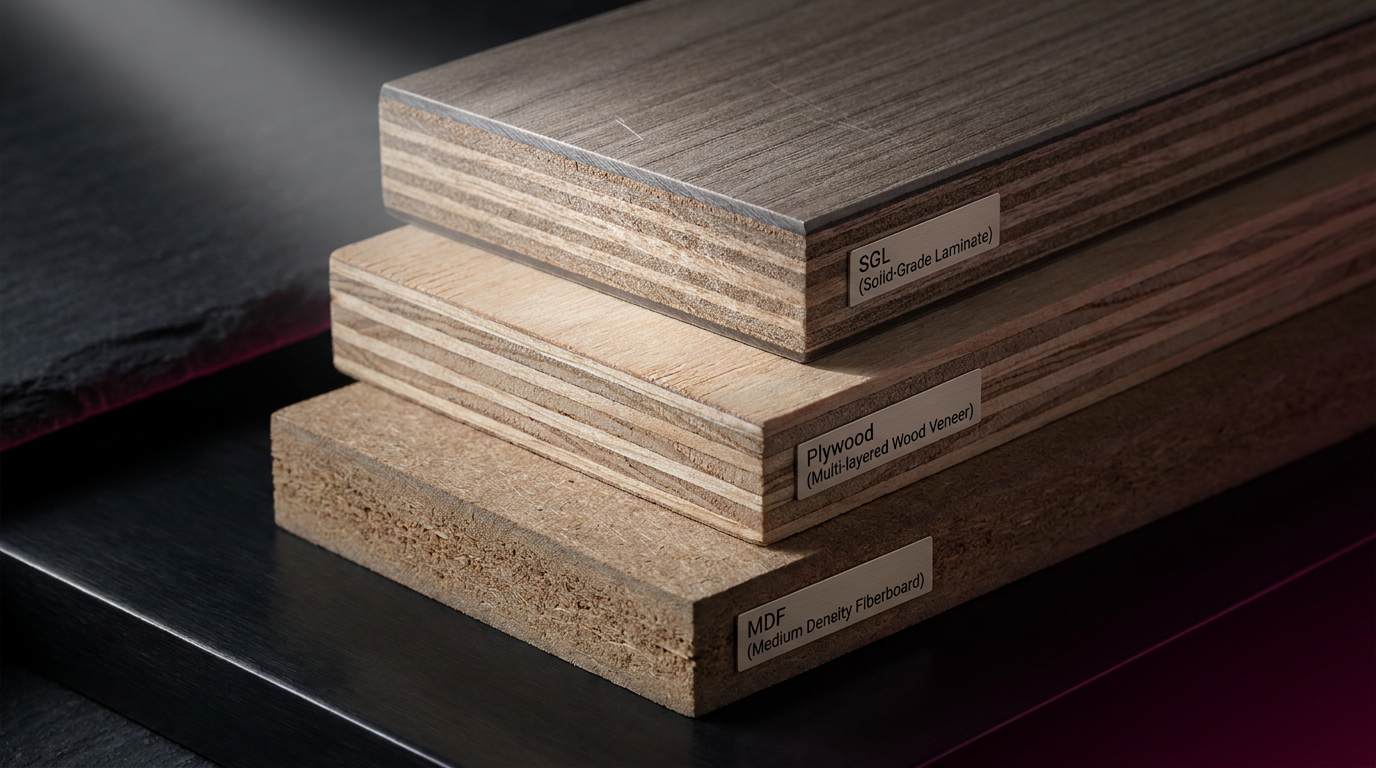
In our experience, common failure points often include weak welds on steel frames, laminate edges that peel away from the core material, and surfaces that are easily scuffed and stained. Cheaper options may save money upfront but often lead to higher replacement and maintenance costs down the line. That’s why understanding materials is key. For instance, a standard MDF (Medium-Density Fibreboard) tabletop is functional, but for high-traffic areas, we recommend considering an upgrade. A great example is Solid-Grade Laminate (SGL), a high-pressure composite that is incredibly resistant to scratches, impact, and moisture. It costs more initially but pays for itself by lasting significantly longer.
A guide on chair durability from Eureka Ergonomic (2023), based on an analysis of material science, indicates that build quality and material choice are the leading predictors of longevity. This is why we advise looking closely at the construction.
| Material | Pros | Cons / Common Failure Points | Best For |
|---|---|---|---|
| MDF (Medium-Density Fibreboard) | Cost-effective, smooth surface for laminating. | Susceptible to water damage, edges can chip easily, low screw-holding strength. | General use classrooms, library shelving, budget-conscious projects. |
| MFC (Melamine-Faced Chipboard) | Wide range of colours, good scratch resistance on the surface. | The core chipboard can swell with moisture, heavy, and prone to chipping. | Desktops, storage unit carcasses, and vertical panels. |
| Plywood | Excellent strength-to-weight ratio, holds screws well, impact resistant. | Can be more expensive, surface finish can vary, edges require sealing. | High-use chairs, craft tables, and structural components. |
| Solid-Grade Laminate (SGL) | Extremely durable, waterproof, impact and scratch-resistant. | Higher initial cost, heavier than other board materials. | Science labs, dining halls, toilet cubicles, and high-wear tabletops. |
A Strategic Procurement Guide for Ergonomic School Furniture
For a School Business Manager, school procurement furniture requires a strategic approach that aligns with the UK school budget cycle (April-March). This mini school furniture selection guide will help you make informed decisions.
- Plan Around the Budget Cycle: Begin your needs assessment in the autumn term to have a clear plan ready for the new financial year in April. This allows ample time for supplier consultation and ordering, ensuring delivery can be scheduled for school holidays. For larger projects, our guide to school furniture replacement projects offers a detailed timeline.
- Vet Your Suppliers: Look for established suppliers with a well-supported by research track record in the education sector. Membership in the British Educational Suppliers Association (BESA) is a strong indicator of quality. According to the BESA Code of Practice, members are committed to ensuring products are safe and fit for purpose. Also, check for independent reviews; for example, we’re proud to be Rated Excellent On Trustpilot.
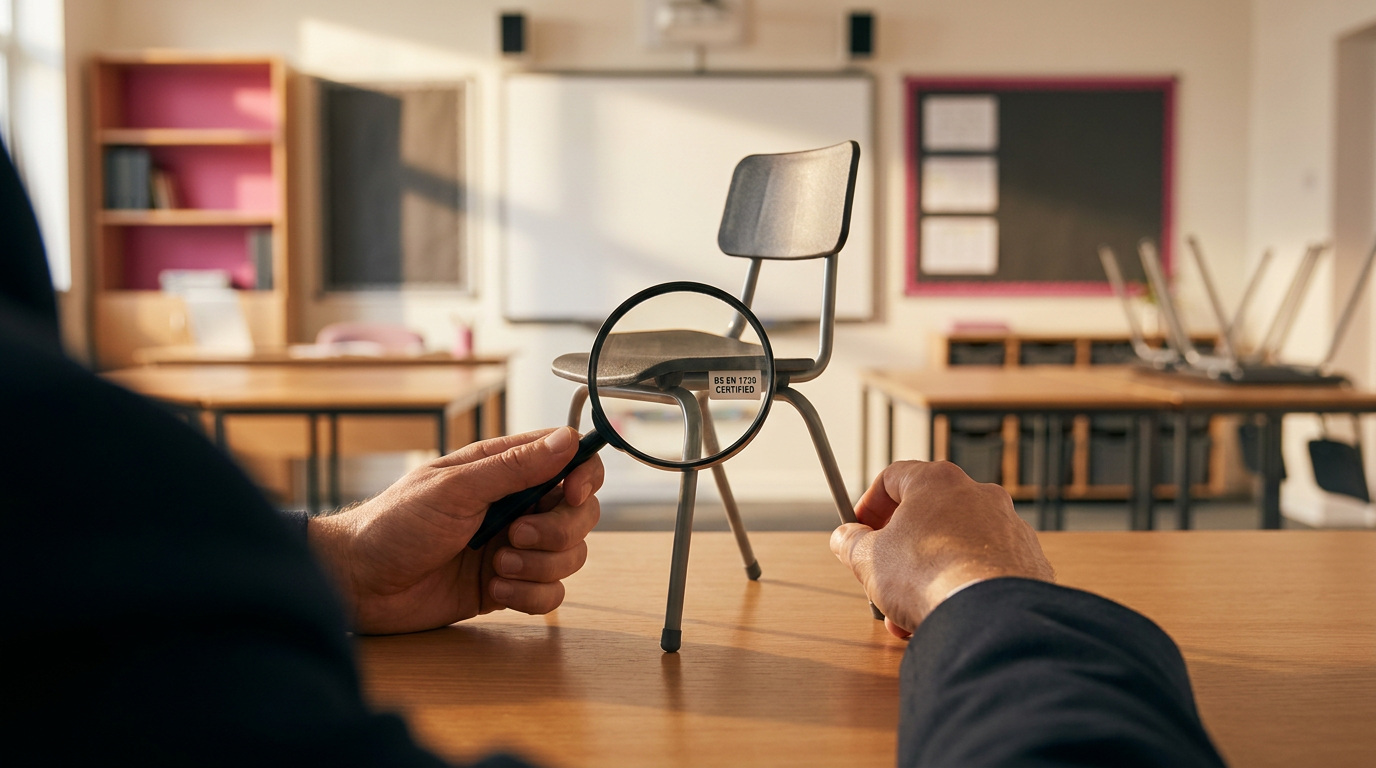
- Demand Compliance Confirmation: Don’t just take a supplier’s word for it. Request the BS EN 1729 compliance certificates for the specific products you are considering. A reputable supplier will have these readily available. This is your evidence of due diligence.
- Analyse Lifetime Value: A higher initial price for durable school furniture can mean a lower total cost of ownership. Ask about product warranties – a longer warranty period often signals confidence in the product’s durability. Don’t be afraid to ask for case studies or references from other schools.
- Confirm Installation Logistics: Does the price include delivery and installation? Can the supplier work within your schedule, such as during the summer holidays, to minimise disruption? A full “Design To Install We Do It All!” service can be invaluable for Saving Time & Stress.
#### Hypothetical Case Study: A Midlands Academy Trust
Challenge: A multi-academy trust was experiencing high replacement costs for classroom chairs across three of its primary schools. The chairs, bought on a tight budget two years prior, were showing significant wear, with cracked seats and failing welds.
Solution: The trust partnered with us to conduct a full audit. We recommended replacing the failing chairs with a BS EN 1729-compliant model featuring a reliable polypropylene shell and a fully-welded steel frame, all backed by a 10-year warranty. The trust used our Bulk Buy Discounts to make the project cost-effective.
Results: The trust invested £25,000 in new chairs. Over the next five years, they project savings of £15,000 in replacement costs compared to their previous purchasing cycle. Staff also reported fewer classroom disruptions from broken furniture.
Key Insight: Focusing on total cost of ownership and product warranties, rather than just the initial unit price, leads to significant long-term savings and better value.
Ergonomics Across UK Key Stages: From EYFS to Secondary
The principles of classroom ergonomics uk must be adapted to the size and developmental needs of pupils at different stages of their education. A one-size-fits-all approach simply doesn’t work.
Early Years (EYFS)
In the Early Years Foundation Stage (EYFS), the focus is on safety, stability, and supporting play-based learning. The Department for Education (DfE) statutory framework mandates that equipment must be safe and suitable. For this age group, this means furniture with rounded edges to prevent injury, a low centre of gravity to stop items from tipping over, and heights that allow children to interact with resources independently. Furniture should be lightweight enough to be moved for different activities but sturdy enough to withstand active play.
Primary (Key Stages 1 & 2)
This is where applying the BS EN 1729 size marks becomes crucial. As children grow rapidly during their primary years, it’s vital that the furniture in each classroom matches the average stature of that year group. The goal is to ensure pupils can maintain a healthy posture: feet flat on the floor, a small gap between the back of the knees and the edge of the chair, and elbows resting comfortably at a 90-degree angle on the desk. Using the correct size mark prevents the fidgeting and discomfort that comes from dangling feet or hunched shoulders.
Secondary (Key Stages 3, 4 & 5)
As students enter secondary school, study periods become longer and the use of digital devices increases. Ergonomic considerations must therefore evolve. Furniture needs to accommodate a wider range of body sizes, and adjustable chairs can be a practical solution in some settings, like IT suites. The principles outlined in the HSE’s Display Screen Equipment (DSE) regulations become particularly relevant here. Desks must be large enough to accommodate textbooks alongside laptops or tablets, and chairs should provide good lumbar support for prolonged periods of sitting.
Important Considerations
This guide is based on established standards like BS EN 1729 and official guidance from bodies such as the Health and Safety Executive (HSE). However, every school population is unique, and anthropometric data can vary. The recommendations provided are for general educational settings and may need adjustment for pupils with specific physical or Special Educational Needs (SEN).
While this guide focuses on traditional ergonomic chairs and desks, alternative classroom layouts are gaining popularity. These include flexible seating options like wobble stools, standing desks, and soft seating areas, which are explored in some modern classroom furniture trends. These can also support ergonomic principles by encouraging movement but require careful planning to ensure they are used correctly and are suitable for all learning activities.
For large-scale refurbishment projects or for schools with a significant number of pupils with specialised requirements, we strongly recommend a professional consultation. An experienced educational furniture specialist can conduct an on-site audit, help measure pupils, and create a detailed space plan that optimises for ergonomics, durability, and your specific curriculum needs. Our “Design To Install We Do It All!” service is built for this purpose.
Partnering for a Smarter, Safer School Environment
Ultimately, selecting the right ergonomic school furniture is a critical investment in your students’ immediate comfort and their long-term health. By moving beyond the initial price tag to analyse durability, compliance with school furniture standards uk, and true ergonomic fit, you can secure assets that deliver value for years. This strategic approach to school procurement furniture not only supports better learning outcomes but also protects your school’s budget from the costly cycle of frequent replacement of non-durable school furniture.
At Cost Cutters UK, we have over 35 years of experience helping schools navigate these complexities. Our team understands the unique demands of the UK education sector, and we are proud to be Rated Excellent On Trustpilot. We offer flexible payment options, including Credit Accounts Or Pay Flexibly, to support your budget. If you’re planning a project, let us help. You can see how we transformed a UK primary school and then Get a Free Space Plan & Quote to discover how we can help transform your learning environments.
Frequently Asked Questions
What is ergonomic school furniture?
Ergonomic school furniture is specifically designed to fit a child’s body size and support good posture throughout the school day. It follows scientific principles to reduce physical strain and enhance comfort, which has been shown to improve concentration and engagement in the classroom. True ergonomic school furniture is not just about adjustability; it’s about being the correct size and shape for its user, often verified by compliance with standards like BS EN 1729.
What are the key principles of ergonomics in a classroom?
The core principles are fit, posture, and movement, all aimed at reducing physical stress and improving learning. ‘Fit’ means the furniture size matches the pupil, allowing their feet to rest flat on the floor. ‘Posture’ means the chair and desk encourage a neutral, ‘S’-shaped spine. ‘Movement’ acknowledges that even small shifts in position are beneficial, so furniture shouldn’t be overly restrictive.
What are some examples of ergonomic features in school furniture?
Examples include height-adjustable chairs, desks with a tiltable surface, and chairs with built-in lumbar support. However, even a simple, non-adjustable chair can be ergonomic if it is the correct size for the pupil. The most crucial feature is the correct desk-to-chair height ratio, which ensures a child can work comfortably without hunching over or reaching up, a key aspect of classroom ergonomics uk.
Why is BS EN 1729 so important for UK schools?
BS EN 1729 is the official UK and European standard that may help furniture is both ergonomically sized and durable enough for school use. Specifying BS EN 1729 furniture is the simplest and most reliable way for a school to meet its duty of care obligations. It ensures you are buying products that are safe, structurally sound, and genuinely fit for purpose in a demanding educational environment.
How do I choose the right size furniture for my pupils?
You should measure the average stature (standing height) of pupils in each year group and match this to the BS EN 1729 size mark chart. This ensures you order the correct size chairs and tables for your classrooms. Reputable suppliers, like us at Cost Cutters UK, can provide guidance and support you through this process to guarantee an accurate fit for your students.
Isn’t ergonomic furniture more expensive?
While some specialised items may have a higher initial cost, good quality, ergonomic furniture offers a much lower total cost of ownership. Compliant, durable products last longer, significantly reducing the need for repairs and replacements. Investing in the correct furniture prevents the hidden long-term costs associated with furniture failure, student discomfort, and potential health issues, making it a smarter financial choice.
What is another term for ergonomics?
Ergonomics is also commonly known as ‘human factors’. This alternative term helps to emphasize that the discipline focuses on the interaction between people and the other elements of a system. In a school context, this means analysing how pupils interact with their chairs, desks, technology, and the overall classroom environment to optimise their wellbeing and academic performance.
What are the main ergonomic risk factors in a classroom?
The primary risks are a mismatch between furniture size and pupil size, prolonged static postures, and poorly designed workstations for technology. These factors can lead to musculoskeletal strain, fatigue, and reduced concentration. For example, a desk that is too high can cause shoulder and neck pain. Choosing correctly sized, supportive furniture is the most effective way to mitigate these common risks.
Can a simple chair be ergonomic?
Yes, a simple, non-adjustable chair can strongly be ergonomic, provided it is the correct size for the person using it. The key is that it allows the user to sit with their feet flat on the floor, their knees at a 90-degree angle, and their back properly supported. Ergonomics is fundamentally about achieving a correct fit to support good posture, not necessarily about having complex or adjustable features.
Where does the term ‘ergonomics’ come from?
The word ‘ergonomics’ is derived from the Greek words ‘ergon’ (meaning work) and ‘nomos’ (meaning natural laws). It literally translates to ‘the laws of work’. The term was first proposed in the 19th century but became widely adopted after the Second World War to describe the science of designing products and systems for optimal human use and safety.
References
- Health and Safety Executive (HSE) – Government Guidance (2022). Provides the legal framework and practical advice for complying with UK Display Screen Equipment regulations.
- European Agency for Safety and Health at Work (EU-OSHA) – International Body Research. Highlights that work-related musculoskeletal disorders are a significant problem, often stemming from poor ergonomic conditions.
- Department for Education (EYFS Framework) – Government Statutory Framework. Mandates that premises and equipment in early years settings must be safe and suitable.
- British Educational Suppliers Association (BESA) – Professional Organisation Code of Practice. Requires members to ensure products are safe and fit for their intended use in an educational environment.
- World Health Organization (WHO) – Global Health Guidelines (2020). Recommends limiting sedentary time and promoting physical activity to combat associated health risks.
- Statista – Market Research Data (2024). Projects the UK Office Furniture market revenue to be £1.80bn, indicating the scale of furniture procurement.
- Eureka Ergonomic – Industry Guide (2023). This analysis of material science identifies build quality and material choice as leading predictors of chair longevity.
- American Industrial Hygiene Association (AIHA) – Professional Organisation Guidance. Identifies key ergonomic hazards in the workplace, such as mismatched equipment size and awkward postures.
- Bostontec – Industry Analysis. Outlines the significant productivity and wellness benefits of implementing ergonomic principles in a work environment.
Frequently Asked Questions About Ergonomic School Furniture
What is ergonomic school furniture?
Ergonomic school furniture is educational furniture specifically designed to fit a child’s body size, support good posture, and reduce physical strain. It follows principles of ergonomics to enhance comfort and minimise musculoskeletal stress, which in turn can improve student concentration and long-term health. Compliance with official standards like BS EN 1729 is a key indicator that the furniture has a true ergonomic design based on verified anthropometric data for children.
What are the key principles of ergonomics in a classroom?
The core principles are fit, posture, and movement. ‘Fit’ means the furniture’s dimensions match the user’s size, allowing their feet to rest flat on the
floor and elbows at desk height. ‘Posture’ involves encouraging a neutral, ‘S’-shaped spine to prevent slouching. ‘Movement’ acknowledges that static positions are unhealthy, so furniture should allow for subtle shifts and adjustments. These principles work together to reduce physical stress and improve pupils’ ability to learn.
What are some examples of ergonomic features in school furniture?
Examples include height-adjustable chairs, desks with a tilted surface, chairs with lumbar support that encourages an ‘S’ shaped spine, and ensuring correct desk-to-chair height ratios. Even simple, non-adjustable chairs can be considered ergonomic if they are the correct size for the pupil using them according to BS EN 1729. The key is that the design is based on anthropometric data to support the user’s body correctly.
Why is BS EN 1729 so important for UK schools?
BS EN 1729 is the official UK and European standard that guarantees furniture is both ergonomically sized and durable enough for school use. It provides a clear benchmark for quality and safety. Specifying that products must comply with these school furniture standards uk is the most effective way for a school to meet its duty of care obligations and ensure it is buying products that are safe, robust, and genuinely fit for purpose.
How do I choose the right size furniture for my pupils?
You should measure the average stature (standing height) of your pupils by year group and match this data to the ‘size mark’ chart within the BS EN 1729 standard. This ensures the chairs and tables you procure are dimensionally correct for the intended users. Reputable suppliers can provide guidance and assist with this process to ensure the correct size of BS EN 1729 furniture is ordered for each classroom.
Isn’t ergonomic furniture more expensive?
While some specialised adjustable items may have a higher initial cost, compliant and durable ergonomic furniture often provides a lower total cost of ownership. It is built to last longer, reducing the frequency and cost of replacements. Furthermore, investing in correctly sized furniture helps prevent the hidden costs associated with poor student health, discomfort, and reduced concentration, making it a sound long-term investment in educational outcomes.
What is another term for ergonomics?
Ergonomics is also commonly known as ‘human factors’. This alternative term highlights its focus on the complex interaction between people and the other elements of a system. In a school context, this means analysing how pupils interact with their chairs, desks, technology, and the overall classroom environment to optimise their wellbeing and performance, creating a more effective and healthier learning space.
What are the main ergonomic risk factors in a classroom?
The primary risks are a mismatch between furniture and pupil size, prolonged static postures, and poorly designed workstations for technology use. A chair that is too high or a desk that is too low forces awkward postures that can lead to musculoskeletal strain. Long periods of sitting without movement can cause discomfort and fatigue. Choosing correctly sized, supportive furniture helps to mitigate all of these significant risk factors.
Can a simple chair be ergonomic?
Yes, a simple, non-adjustable chair can be ergonomic provided it is the correct size for the user. The core principle of ergonomics is ensuring a proper fit, not necessarily complexity or adjustability. If a chair allows a pupil to sit with their feet flat on the floor, their knees at approximately a 90-degree angle, and their back comfortably supported against the backrest, it is fulfilling its ergonomic function.
Where does the term ‘ergonomics’ come from?
The word ‘ergonomics’ comes from the Greek words ‘ergon’ (meaning work) and ‘nomos’ (meaning natural laws). It literally translates to ‘the laws of work’. The term was formally coined in the mid-20