Workplace Winter Safety: The Essential UK Guide to Gritting, Mats & Prevention
🎯 Key Takeaway
Effective workplace winter safety is a legal requirement for UK employers, involving a proactive strategy of risk assessments, correct procurement of supplies like grit and mats, and clear employee communication to prevent slips, trips, and cold-related illness. As of mid-2026, failing to prepare adequately presents significant legal and financial risks. Key prevention tools include BS 3247 certified rock salt for gritting and high-traction entrance matting to reduce indoor slips. A comprehensive plan addresses outdoor risks (ice), indoor risks (wet floors), and employee welfare (cold stress, safe travel), ensuring operational continuity throughout the colder months.
The arrival of winter weather brings significant disruption and liability risks for UK businesses, schools, and public sector organisations. Icy car parks, slippery entrances, and cold-stressed staff are not just inconveniences; they represent critical operational and legal challenges. For workplace winter safety, a reactive approach is insufficient and costly. A proactive strategy, grounded in a robust winter risk assessment for your workplace, is essential for meeting your legal duties, protecting your people, and ensuring your organisation can function smoothly. This guide provides a strategic framework for facilities managers to plan, budget, and procure everything needed for a safe and compliant winter.
👤 Written by: Costcutters UK Content Team
Reviewed by: Costcutters UK Editorial Team, Specialists in UK educational and workplace supplies with over 35 years of industry experience. Rated Excellent On Trustpilot.
Last updated: 15 June 2026
ℹ️ Transparency & Disclosure: This article explores workplace winter safety based on an analysis of UK Health and Safety Executive (HSE) guidelines and industry best practices. Some links may connect to our services. All information is verified by our editorial team. Costcutters UK, a leading UK supplier of workplace and educational equipment, has over 35 years of experience supplying UK public and private sector organisations.
Understanding Your Legal Duties: HSE Guidance for UK Employers
Yes, UK employers have an absolute legal duty to ensure a safe environment for employees and visitors during winter. This responsibility isn’t optional; it’s enshrined in UK law. The primary legislation is the Health and Safety at Work etc. Act 1974, which establishes a broad ‘duty of care’ for employers to protect the health, safety, and welfare of their staff so far as is ‘reasonably practicable’.
More specifically, the Workplace (Health, Safety and Welfare) Regulations 1992, which is a UK law governing workplace conditions, including temperature and surfaces, make this explicit. Regulation 12 states that floors and traffic routes must be kept free from substances which may cause a person to slip, trip, or fall. This directly applies to snow and ice. According to the Health and Safety Executive (HSE), the UK’s national regulator for workplace safety, slips and trips are the single most common cause of major injuries in UK workplaces, with winter conditions significantly increasing this risk.
The concept of ‘reasonably practicable’ means you must weigh the risk against the trouble, time, and money needed to control it. For winter hazards like ice, the risk of serious injury is high, whilst the cost and effort of gritting are relatively low. Therefore, the HSE expects employers to have a proactive system in place. Following official HSE guidance cold weather is not just best practice; it’s a core part of demonstrating legal compliance and protecting your organisation, a commitment reflected in our own our UK-recognised accreditations.
Conducting a Winter Risk Assessment for Your Workplace
A formal winter risk assessment for a workplace is the foundation of any effective safety plan. It’s a systematic process to identify hazards and implement sensible control measures. Rather than being a bureaucratic exercise, we see it as a practical roadmap for keeping your site safe.
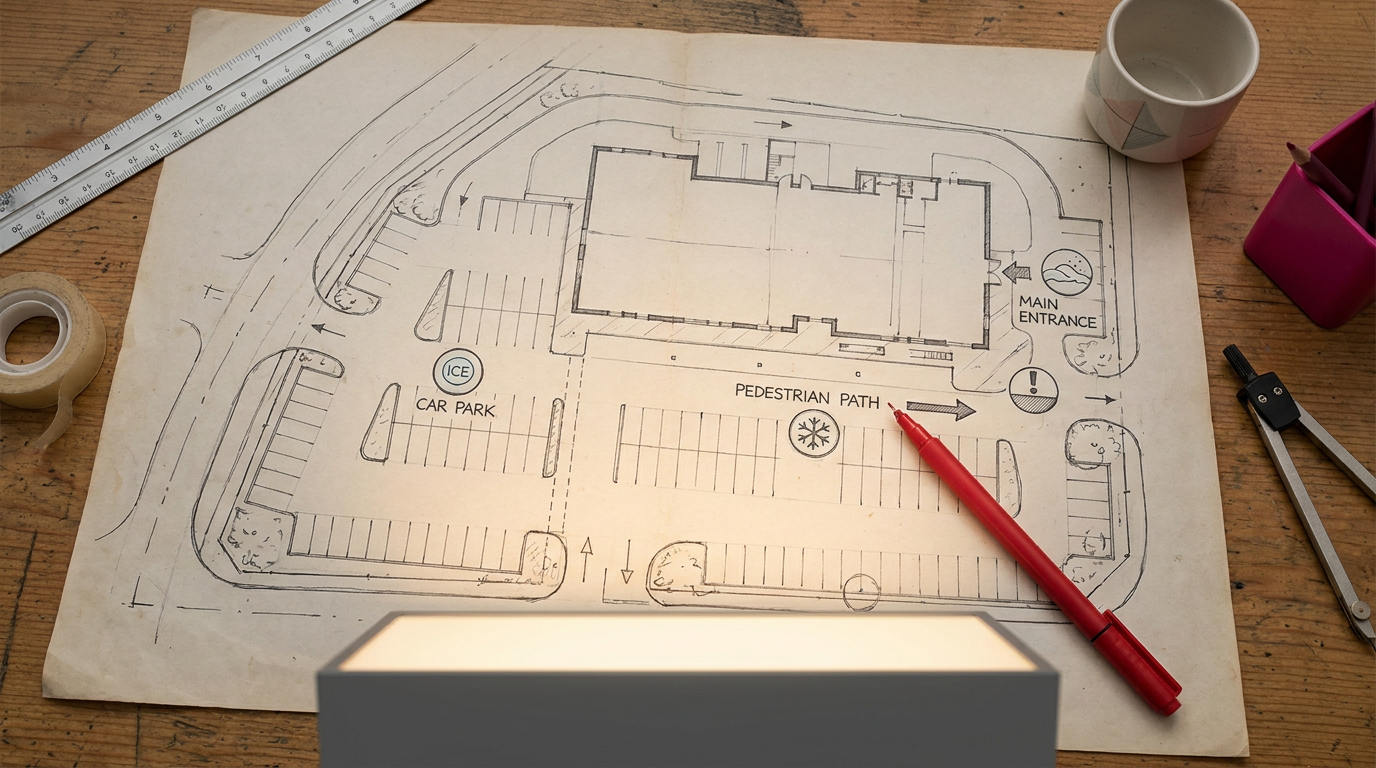
Here is a step-by-step guide to conducting your assessment:
- Identify the Hazards: Walk your entire site and think specifically about winter. Where can ice form? Where will water pool?
- Outdoor Areas: Car parks, pedestrian walkways, building entrances, fire escapes, loading bays, and sloped surfaces.
- Indoor Areas: Entrance lobbies, reception areas, corridors leading from entrances, and canteen floors where wet footwear is common.
- Other Hazards: Poor lighting on dark mornings and evenings, which makes spotting ice difficult. Snowdrifts blocking emergency exits.
- Identify Who is at Risk: Consider everyone who uses your site, not just employees.
- Staff: Including those who work outdoors or arrive very early/leave late.
- Visitors & Customers: They are less familiar with your site’s layout and potential hazards.
- Delivery Drivers: Often on a tight schedule and moving quickly in loading areas.
- People with Mobility Issues: The risk of a serious fall is significantly higher for them.
- Evaluate Risks & Implement Controls: For each hazard, decide on the control measures. This is where your winter car park safety checklist uk comes to life.
- Gritting: Establish a clear plan. Define priority routes, trigger points for action (e.g., when the forecast drops to 1°C), and assign responsibility.
- Matting: Install heavy-duty scraper mats outside and absorbent mats inside all entrances.
- Signage: Use ‘Wet Floor’ and ‘Caution: Risk of Ice’ signs where appropriate.
- Lighting: Check that all external lighting is functional and adequate.
- Clearing: Ensure you have snow shovels and a plan for clearing key routes and fire exits.
- Record & Review: Document your findings and the actions you’ve taken. This record is crucial evidence of your compliance. Review the plan annually and after any incident or near-miss. As Citation.co.uk (2023) highlights in their business guide, a documented plan is a key defence against liability claims.
Case Study: A Proactive Approach at a Multi-Academy Trust
- Challenge: A multi-academy trust with three school sites was experiencing significant disruption each winter. Multiple minor slip incidents, staff absences due to travel difficulties, and one parent injury claim were costing them time and money. Their reactive approach of gritting after snow had already fallen was failing.
- Solution: We worked with their facilities manager to implement a proactive winter safety plan. This involved a detailed winter risk assessment for workplace at each site, creating a clear gritting map for priority routes, and procuring bulk supplies of BS 3247 compliant rock salt and 10 large, lockable grit bins.
- Results: In the first winter after implementation, reported slips and trips fell by 90%. School closures due to unsafe site conditions were eliminated, saving valuable teaching days. The trust also achieved cost savings by ordering supplies in bulk ahead of the winter price surge.
- Key Insight: Establishing clear ‘trigger points’ for gritting based on weather forecasts, rather than waiting for ice to form, was the single most effective change they made.
Strategic Procurement for Workplace Winter Safety: A Buyer’s Guide
Effective workplace winter safety relies on having the right equipment on hand before you need it. A strategic approach to procurement not only ensures you are prepared but also delivers better value. The key is to think about your needs for salt, storage, and spreaders well before the first frost.

Choosing and Budgeting for Gritting Supplies
The most critical supply is de-icing salt. Rock Salt, a mineral used as a de-icing agent, is the most common choice. However, not all salt is the same. Our advice is to typically choose a product that meets BS 3247, the British Standard for de-icing salt quality. This ensures purity, moisture content, and grading for effective spreading.
When considering what to buy, it’s important to understand the options:
| Material Type | Effective Temperature | Key Characteristic | Average Cost (per 25kg) | Best Use Case |
|---|---|---|---|---|
| Brown Rock Salt | Down to -10°C | Contains impurities (marl) which can leave a residue but aids traction. More cost-effective. | £4-£6 | Large areas like car parks and roads where visual cleanliness is less critical. |
| White De-icing Salt | Down to -15°C | Higher purity (over 99% sodium chloride). Leaves minimal residue, making it cleaner for paths. | £6-£9 | Pedestrian entrances, school playgrounds, and retail forecourts where cleanliness is important. |
| Coated De-icing Salt | Down to -20°C | Salt coated with a corrosion inhibitor and performance enhancer. Works faster and longer. | £10-£15 | High-risk areas, bridges, and locations where corrosion of metal fixtures is a concern. |
| Eco-Friendly Liquids | Down to -18°C | Typically acetate-based. Non-corrosive and safe for vegetation and animals. Acts preventatively. | £20-£30 | Environmentally sensitive areas, near plant beds, or on delicate stone surfaces. |
To budget effectively, you need to calculate your required volume. A good rule of thumb is 10-15 grams per square metre for preventative gritting. Measure your critical paths and key areas of your car park. We strongly recommend leveraging Bulk Buy Discounts by ordering your entire winter’s supply in one go; this not only saves money but also protects you from mid-season shortages and price hikes. You can typically request a formal quote to lock in pricing.
Finally, consider storage. Salt must be kept dry to remain effective. Investing in dedicated, secure, weather-proof outdoor storage units like lockable grit bins is essential. Choose capacities based on your site size, placing smaller bins at key locations and a larger central store for refills.
Essential Matting Solutions: Your First Line of Defence Against Slips
Whilst gritting tackles outdoor risks, your plan is incomplete without addressing the hazard of water being tracked indoors. According to analysis by SafetyForward.co.uk (2024), a health and safety consultancy, wet and slippery entrance floors are a major contributor to winter accidents inside buildings. This is where a robust matting system becomes your first and most effective line of defence.
A common mistake we see is using a single, inadequate mat. A proper system involves two stages:
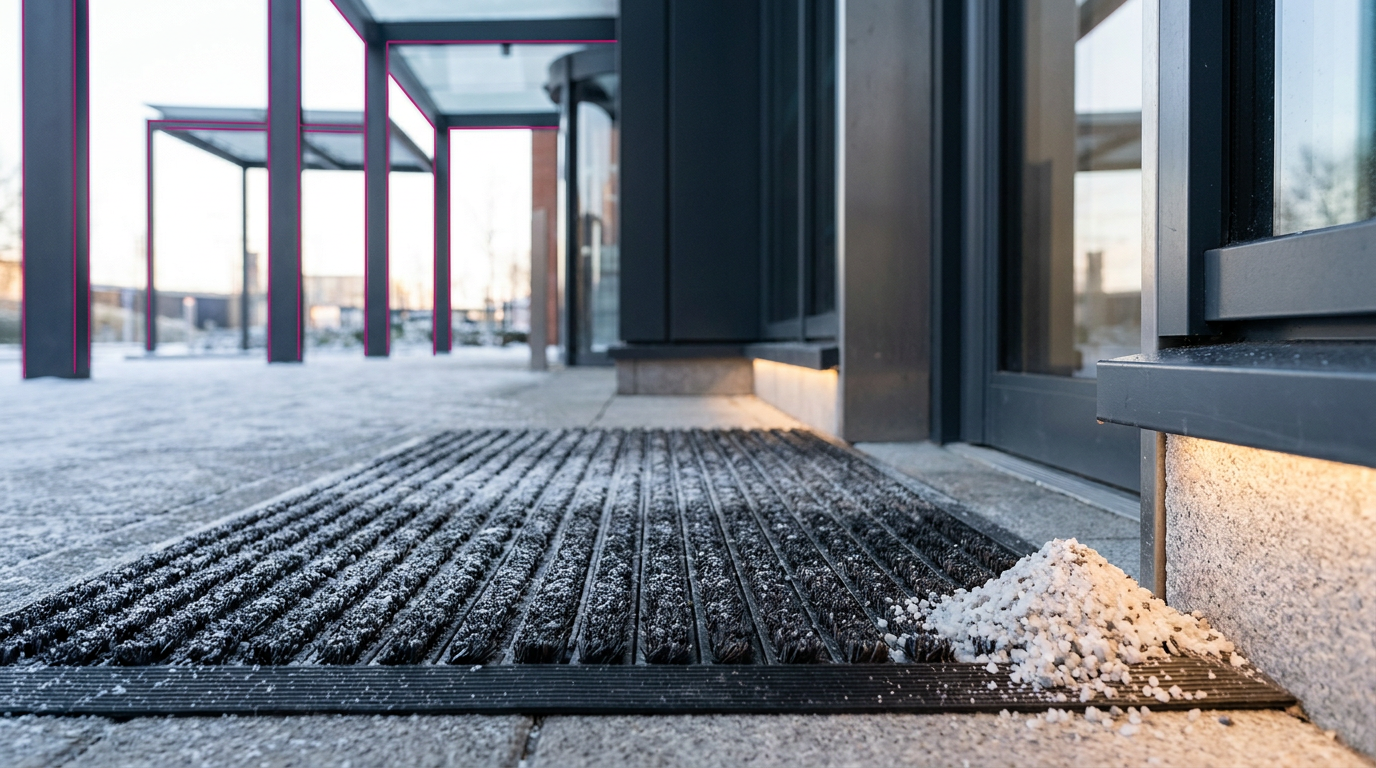
- Outdoor Scraper Mats: Placed directly outside the entrance, these mats have a coarse, textured surface designed to scrape heavy debris, snow, and slush from the soles of shoes before a person even enters the building. Look for durable rubber or coir bristle options that can withstand heavy footfall and harsh weather.
- Indoor Absorbent Mats: Positioned inside the entrance, these mats have a carpet-like pile designed to absorb the remaining moisture from footwear. The key is length; the mat should be long enough to allow for several footsteps to effectively dry shoes.
When procuring matting, here are the features we recommend you prioritise:
- High-Traction Backing: The mat itself must not become a slip hazard. Look for nitrile rubber backing that grips the floor securely.
- Bevelled Edges: Tapered rubber edges are crucial to reduce the risk of trips, especially for those with mobility aids or pushchairs.
- Durability: For high-traffic areas like school or office receptions, choose a commercial-grade mat designed for thousands of passes per day.
- Compliance: Ensure the matting profile is low enough to comply with disability access regulations and does not impede wheelchair access.
The right matting is a simple, passive safety measure that works continuously, Saving Time & Stress for your cleaning and maintenance teams.
Employee Welfare & Communication: Winter Safety Topics for Your Team
A comprehensive winter plan looks beyond slips and trips to consider the overall welfare of your employees. Cold weather itself can be a hazard, and effective communication is vital to ensure everyone plays their part in staying safe.
One key area is ‘cold stress’, a term for the body’s response to cold temperatures, which can lead to serious health problems. For outdoor workers in sectors like construction, logistics, or grounds maintenance, this is a significant risk. The HSE guidance cold weather makes it clear that employers must protect workers by providing warm, waterproof clothing, scheduling breaks in heated areas, and identifying signs of cold stress like shivering, fatigue, and loss of coordination. Providing access to warm and comfortable indoor breakout furniture is a practical way to support this.
For all staff, clear communication is paramount. Don’t assume people know what to do. We recommend holding a brief ‘toolbox talk’ or sending a company-wide email covering key winter safety topics for the workplace. These should include practical winter workplace safety tips such as:
- Appropriate Footwear: Encourage staff to wear sensible, high-grip shoes during their commute and on-site.
- Extra Travel Time: Advise employees to allow more time for their journey to avoid rushing on potentially icy roads and paths.
- Reporting Hazards: Create a simple, clear process for staff to immediately report any icy patches or unsafe conditions they notice.
- Walking Safely: Remind staff to walk slowly, take shorter steps, and keep their hands out of their pockets to maintain balance on potentially slippery surfaces.
A well-informed team is a safer team. These simple communication efforts empower employees to take personal responsibility and contribute to the overall safety of the workplace.
Frequently Asked Questions About Workplace Winter Safety
What is workplace winter safety?
Workplace winter safety is the comprehensive set of policies, procedures, and physical measures an organisation implements to protect employees and visitors from hazards caused by cold weather, snow, and ice. This includes everything from gritting car parks and providing adequate heating to communicating safe travel advice. A robust plan is essential for legal compliance and operational continuity, forming a key part of your health and safety management system.
What is the HSE guidance on working in cold weather?
The HSE guidance on working in cold weather focuses on employers’ duty to protect workers from cold stress and slips on ice. It states that while there’s no minimum legal temperature, employers must conduct risk assessments and implement controls like providing warm clothing, heated rest areas, and managing exposure time. For ice, the HSE guidance cold weather mandates clearing and gritting paths to prevent accidents.
Is it illegal for your workplace to be too cold?
No, there is no specific law defining a minimum workplace temperature in the UK, but regulations require it to be ‘reasonable’. The Workplace (Health, Safety and Welfare) Regulations 1992 are supported by an Approved Code of Practice suggesting a minimum of 16°C for sedentary office work and 13°C for work involving physical effort. Employers have a legal duty to assess risk and act if temperatures fall significantly below these levels.
What are 5 examples of unsafe winter conditions in the workplace?
Five common unsafe winter conditions include: 1) An ungritted, icy car park or walkway. 2) A wet, slippery floor in a building’s entrance with no warning signs or mats. 3) Poorly lit outdoor areas during dark winter mornings. 4) Outdoor workers lacking appropriate thermal protective clothing. 5) Blocked fire exits due to snow drifts. Each of these poses a significant and foreseeable risk of injury.
What are the 4 P’s of winter safety?
The 4 P’s of winter safety often refer to Plan, Prepare, Protect, and Prevent. ‘Plan’ your response before winter arrives by conducting a risk assessment. ‘Prepare’ your site with supplies like salt and mats. ‘Protect’ your people with training and appropriate personal protective equipment (PPE). ‘Prevent’ accidents by actively managing hazards like ice through gritting and clearing. This framework helps structure a comprehensive safety programme.
What are the key safety precautions for winter?
Key winter safety precautions include establishing a gritting rota for key routes, placing absorbent mats at all entrances, ensuring outdoor lighting is functional, and communicating weather warnings to staff. For employees, this includes wearing sensible, high-grip footwear and reporting any hazardous conditions immediately. These measures, when combined, create multiple layers of protection that significantly reduce the risk of accidents.
How do you create a winter car park safety checklist?
A winter car park safety checklist should include defined gritting routes, trigger points (e.g., temperature drops to 1°C), and designated pedestrian walkways. It must also include checks for adequate lighting and ensure drainage is clear to prevent refreezing. The winter car park safety checklist uk should assign responsibility for each task and include a log to record when actions are completed for compliance records.
Why is entrance matting important for winter safety?
Entrance matting is a crucial first line of defence against indoor winter hazards because it removes water and debris from shoes at the door. A two-part system first scrapes snow and slush from footwear and then absorbs the remaining moisture. This significantly reduces the risk of someone slipping on a wet, tiled, or vinyl floor just inside the building, which is one of the highest-risk areas for winter falls.
What should be included in a winter safety toolbox talk?
A winter safety toolbox talk should cover the location of grit bins, the gritting plan, the importance of wearing appropriate footwear, and the procedure for reporting an icy patch. As a key part of your winter safety topics workplace communication, it should also include reminders to walk slowly on potentially slippery surfaces. It’s also a good opportunity to discuss safe winter driving tips for commuters and company drivers.
How much rock salt do I need for my workplace?
A general guide is to use 10-15 grams of rock salt per square metre for prevention, and 20-40 grams for melting existing ice. First, calculate the total area of your critical paths and car park spaces. Then multiply this by an estimated number of frosty days (e.g., 30-50 for a typical UK winter) to get a total volume. Our advice is to typically order more than you think you will need.
Important Considerations & Limitations
This guide provides a comprehensive overview and best-practice recommendations for workplace winter safety. However, it is not a substitute for a site-specific risk assessment. Every workplace has unique layouts, traffic patterns, and vulnerabilities. The effectiveness of these strategies depends on their diligent application and adaptation to your specific environment and the severity of local weather conditions.
The primary approach discussed is in-house management of winter safety. An alternative for larger or more complex sites is to outsource winter maintenance to a specialised facilities management company. While this involves higher direct costs, it transfers the responsibility for planning, material procurement, and 24/7 monitoring, which can be a valuable consideration for organisations with limited on-site staff or resources.
While this article equips facility and procurement managers with the necessary knowledge to create a robust safety plan, complex legal questions or situations involving a serious incident may require expert advice. For matters of significant liability or when developing policies for a high-risk environment, we recommend consulting a qualified Health and Safety professional or legal expert to ensure full compliance.
Partnering for a Safe and Compliant Winter
Achieving effective workplace winter safety hinges on a proactive and integrated approach. By understanding your legal duties under HSE guidance, conducting thorough risk assessments, and making strategic procurement decisions for essentials like salt and matting, you can significantly reduce accidents and operational disruption. A successful programme combines the right equipment with clear communication, excellent winter workplace safety tips, and a vigilant team. It’s about creating a culture of safety that lasts all season long.
For over 35 years, Costcutters UK has been the trusted partner for schools, offices, and public sector organisations in preparing for winter. Our extensive range of compliant gritting supplies, heavy-duty matting, and secure storage solutions provides a single-supplier solution for all your needs, backed by our “Design To Install We Do It All!” service promise. We offer Bulk Buy Discounts and flexible payment options like Credit Accounts Or Pay Flexibly. To ensure your spaces are both safe and productive, explore our expert services. Book a Free Space Planning Consultation today to optimise your facility’s safety and layout.
References
- Health and Safety Executive (HSE) – Official UK Government Guidance on Cold Stress. Outlines employer duties regarding cold stress, including risk assessment and control measures. https://www.hse.gov.uk/temperature/employer/cold-stress.htm
- Health and Safety Executive (HSE) – Official UK Government FAQ on Slips and Trips. Indicates that slips and trips are the single most common cause of major injuries in UK workplaces. https://www.hse.gov.uk/slips/frequently-asked-questions.htm
- Workplace (Health, Safety and Welfare) Regulations 1992 – UK Statutory Instrument. Regulation 12 requires that floors and traffic routes be kept free from any substance which may cause a person to slip. https://www.legislation.gov.uk/uksi/1992/3004/contents/made
- Citation.co.uk (2023) – Industry Analysis. Highlights key considerations for UK businesses, including the importance of documented risk assessments and clear employee communication for winter safety. https://www.citation.co.uk/winter-workplace-safety-key-considerations-for-uk-businesses/
- SafetyForward.co.uk (2024) – Health & Safety Consultancy Guide. Provides practical steps for preparing for winter work, with a focus on risk assessment methodology and the critical role of entrance matting. https://safetyforward.co.uk/how-to-prepare-for-winter-working-including-risk-assessments/
- Thompsons Solicitors (2023) – Legal Guide. Provides workplace winter safety tips and legal context for employee rights and employer responsibilities during adverse weather. https://www.thompsons.law/support/legal-guides/workplace-winter-safety-tips
- SAMS Ltd (2022) – Safety Consultancy Advice. Offers five key tips for keeping a workplace safe in winter, emphasising proactive measures over reactive ones. https://www.samsltd.co.uk/5-tips-workplace-safe-winter/
- Workplace Safety Solutions (2023) – Safety Bulletin. Advises on practical measures to keep safe at work during winter, including personal preparedness and environmental checks. https://www.wpsafety.co.uk/safety-bulletin/keep-safe-at-work-in-the-winter
- Internal Data (2024) – Costcutters UK Product Analysis. Data compiled from our procurement team’s analysis of market rates and product specifications for de-icing materials.
Partnering for a Safe and Compliant Winter
In summary, effective workplace winter safety is not just a seasonal task but a year-round commitment to proactive planning and strategic investment. It rests on a clear understanding of your legal duties under the Health and Safety at Work etc. Act 1974, brought to life through diligent winter risk assessments and smart procurement of essential supplies like BS 3247-compliant rock salt and high-performance entrance matting. A successful programme is a holistic one, combining the right physical equipment with robust processes and, crucially, clear, consistent communication that empowers every employee to play their part. By embedding these principles, you transform your approach from a reactive chore into a strategic advantage, safeguarding your people and ensuring operational continuity through the hars
hest months.
For over 35 years, Costcutters UK has been the trusted partner for schools, offices, and public sector organisations in preparing for winter. Our extensive range of compliant gritting supplies, heavy-duty matting, and secure storage solutions provides a single-supplier solution for all your needs. To ensure your spaces are both safe and productive, explore our expert services. Book a Free Space Planning Consultation today to optimise your facility’s safety and layout.