Seasonal School Preparation: A UK Guide to Avoiding Costly Mistakes
🎯 Key Takeaway
Effective seasonal school preparation involves proactive, year-round planning to manage budgets, procurement, and maintenance, preventing the costly delays and compliance issues common during holiday periods. This strategic approach transforms your end of term preparation for schools from a frantic rush into a controlled, efficient process. We find that planning works 9-12 months ahead allows you to secure contractors and avoid summer holiday price surges. You should also factor in long lead times for bespoke furniture and IT equipment, ordering in the spring term for summer delivery. Finally, integrating statutory compliance checks into your project timeline, not as an afterthought, is crucial.
The six-week summer holiday often feels less like a break and more like a countdown timer for School Business Managers (SBMs). It’s a frantic race to complete refurbishments, install new equipment, and conduct essential maintenance before pupils return. This reactive chaos is stressful and expensive. However, there’s a better way. Successful seasonal school preparation isn’t a six-week sprint; it’s a year-long strategic programme. As of mid-2026, the pressures on school budgets and estates have only intensified, making efficient planning more critical than ever.
With over 35 years of experience helping UK schools manage these projects, we’ve seen firsthand what works and what doesn’t. Our “Design To Install We Do It All!” service is built on the principle of proactive partnership, turning stressful deadlines into seamless transformations. This guide exposes the common mistakes we see schools make and provides an actionable framework to avoid them, ensuring you get the most from your budget and your time. It’s a plan for Saving Time & Stress.
👤 Written by: Content Team
Reviewed by: Editorial Team, 35+ Years Experience; Rated Excellent On Trustpilot
Last updated: 9 June 2026
ℹ️ Transparency Disclosure: This article explores best practices for seasonal school works based on our 35 years of industry experience and analysis of UK government guidelines. In the interest of full disclosure, some links may connect to our services, such as our comprehensive range of school equipment and educational supplies or our free space planning consultation. All information is verified by our editorial team. Costcutters UK is a leading supplier of school and educational equipment, recognised for our commitment to quality and service.
What Are the Most Common Seasonal Preparation Mistakes?
Mistake 1: Reactive vs. Proactive Planning (The Timeline Error)
The most significant error schools make is treating seasonal works as a short-term project confined to the summer holidays. This reactive approach inevitably leads to rushed decisions, inflated costs, and project overruns. Effective school holiday project management is a continuous, year-round cycle. It starts the moment the previous project ends.
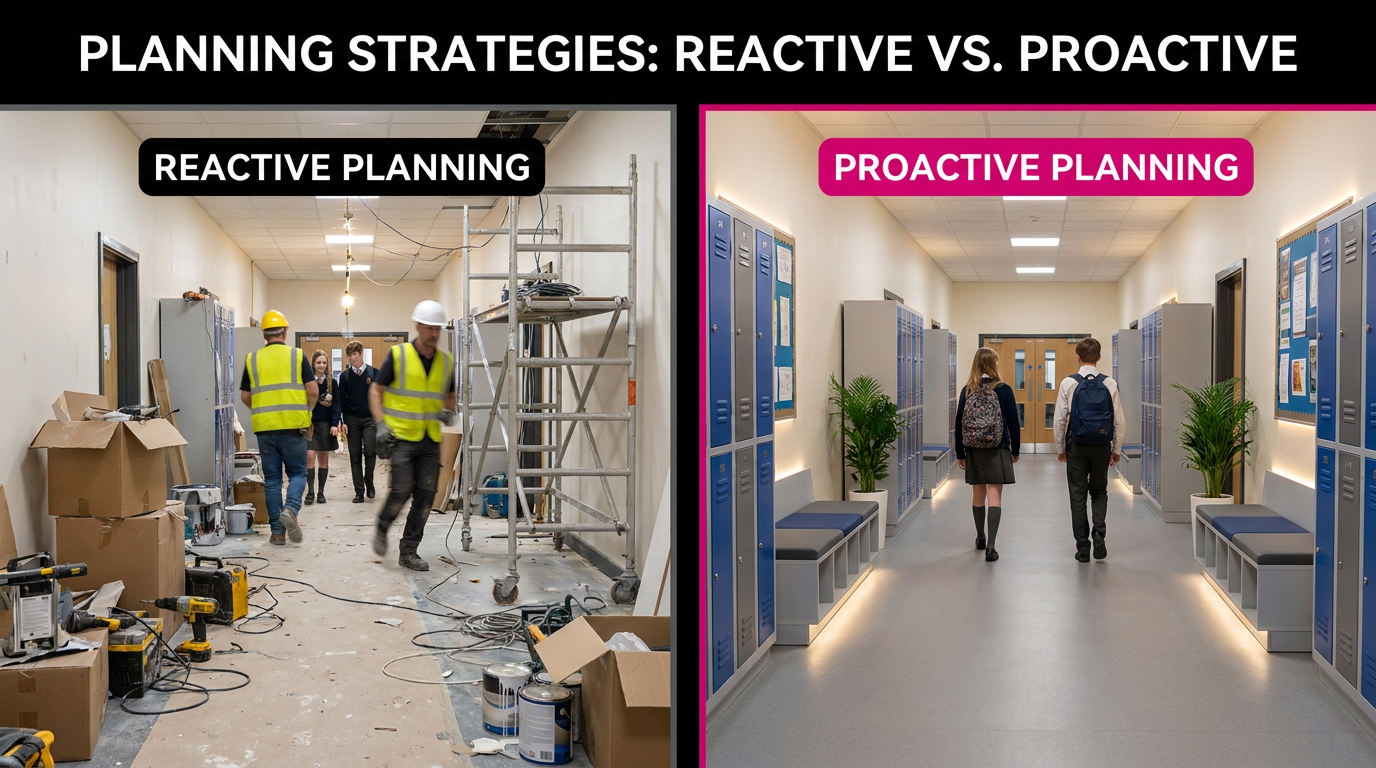
A proactive timeline looks something like this:
- Autumn Term (September-December): Review the success of the last summer’s projects. Walk the site with governors and staff to identify and prioritise needs for the next year. Begin initial cost estimates and scope definition.
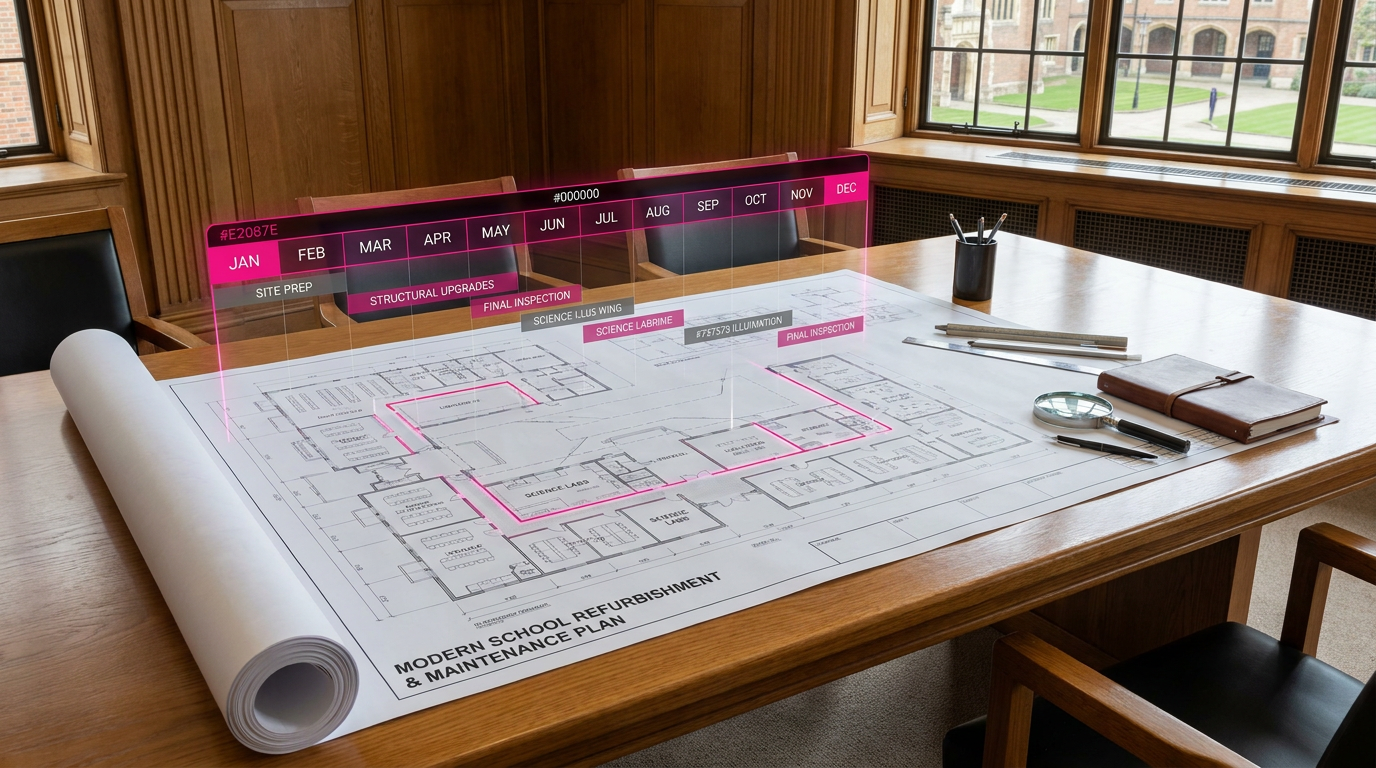
- Spring Term (January-April): Finalise the project scope and budget. Go out to tender for contractors and place orders for long-lead-time items. This is the critical window for procurement.
- Summer Term & Holidays (May-August): Finalise contractor schedules, manage the project execution on-site, and plan for handover and snagging before the new term begins.
This strategic approach aligns with guidance from the Department for Education (DfE). The DfE, the UK government department responsible for education, provides the ‘Good Estate Management for Schools’ (GEMS) tool which emphasises the importance of a strategic estate management plan. According to research from the Royal Institution of Chartered Surveyors (RICS) (2024) in an analysis of public sector projects, poor initial planning is linked to over 60% of project delays and budget overruns.
Case Study: A Tale of Two Timelines
Challenge: A local authority primary school consistently faced project delays and budget overruns of 15-20% on their summer works. The last-minute rush caused significant stress and disruption to the start of the autumn term.
Solution: We helped them transition to a proactive 12-month planning cycle. Instead of starting in May, they began identifying needs in October, finalising procurement in March, and scheduling contractors by April.
Results: Their next summer refurbishment project came in 5% under budget and was completed two weeks ahead of schedule. There was zero disruption to the new school term, and staff morale improved significantly.
Key Insight: Shifting the planning phase for seasonal school preparation to the autumn term is the single most effective way to de-risk projects and achieve better value for money.
Mistake 2: Misjudging Procurement & Delivery Lead Times
A common and costly assumption is that furniture and equipment can be ordered in June for a July delivery. This is rarely the case, especially in the peak pre-summer period when the entire education sector is ordering at once. Misjudging lead times is a primary cause of project failure, leaving classrooms empty or incomplete for the new term.
Here are realistic lead times you must factor into your planning:
- Bespoke Furniture (e.g., reception desks, library shelving): 10-12 weeks.
- Standard Stock Furniture (e.g., classroom tables, chairs): 2-4 weeks (but can extend significantly in June/July).
- IT Hardware & Infrastructure: 8-10 weeks, particularly for large network rollouts.
- Specialist Equipment (e.g., science labs, design technology): 12-16 weeks.
To navigate this, we advise using established procurement frameworks. A procurement framework is a pre-vetted list of suppliers that have already been assessed for quality, price, and compliance. Organisations like the Crescent Purchasing Consortium (CPC) provide compliant routes to market, saving you the time and risk of running a full tender process. In our experience, ordering items like modern breakout furniture in the spring term is an effective way to guarantee delivery before the summer holidays begin.
Mistake 3: Overlooking Statutory Compliance & Safety Audits
Nothing can derail a refurbishment project faster or more expensively than an unexpected compliance issue. Scheduling statutory checks as an afterthought, rather than a prerequisite, is a high-risk gamble. The Health and Safety Executive (HSE), Great Britain’s national regulator for workplace health and safety, provides clear guidance for schools on their legal duties.
Before finalising your scope of work, you must schedule and review key safety audits. Key statutory checks for UK schools include:
- Asbestos Survey: A legal requirement before any work that could disturb the fabric of the building. Discovering asbestos mid-project can halt work for weeks and add thousands to the cost.
- Fire Risk Assessment (FRA): Refurbishment work can impact escape routes and fire integrity. Your FRA must be reviewed and updated.
- Electrical Installation Condition Report (EICR): A mandatory check of the school’s wiring, typically every five years.
- Gas Safety Checks: Annual checks on all gas appliances are legally required.
- Legionella Risk Assessment: Water systems must be assessed, especially if sections of the building have been unused.
A report from the HSE (2025) analysing workplace incidents highlights that failure to manage contractors and pre-work safety checks is a leading cause of accidents in the education sector. By integrating these audits into your spring term planning, you can budget for any required remedial work and avoid costly surprises. It’s a key part of our commitment to safety, backed by our UK safety and quality certifications.
Mistake 4: Inflexible Budgeting & Forgetting Contingency Funds
A realistic school refurbishment budget is more than just a list of desired items. It must be a detailed financial plan that accounts for direct costs, indirect costs, and the unexpected. The most common budgeting failure we see is the lack of a sufficient contingency fund.
We strongly recommend building a contingency of 10-15% of the total project cost into every school refurbishment budget. This isn’t ‘spare money’; it’s an essential buffer for unforeseen issues that will almost generally arise. These can include:
- Discovering asbestos after removing a wall.
- Needing to re-plaster and decorate after electrical rewiring.
- Unexpected increases in material costs or waste disposal fees.
- The need for temporary classroom or storage solutions.
Also, smart budgeting involves looking for savings. Planning ahead allows you to take advantage of our Bulk Buy Discounts. Working with a supplier who can provide a comprehensive quote for furniture, installation, and decorating simplifies financial management. Our flexible payment options, including the ability to set up Credit Accounts Or Pay Flexibly, also help schools manage their cash flow effectively throughout the project lifecycle.
Here is a sample cost breakdown for a typical classroom refurbishment:
| Item / Service | Typical Cost per Classroom (£) | Key Consideration | Source |
|---|---|---|---|
| New Furniture (Tables & Chairs) | £2,500 – £4,000 | Durability, ergonomics, warranty. | Specialist Supplier |
| Interactive Whiteboard / Display | £2,000 – £3,500 | Software compatibility, training needs. | IT Contractor |
| Redecoration (Painting) | £800 – £1,500 | Low-VOC paint for air quality. | Contractor |
| New Flooring (Carpet Tiles/Vinyl) | £1,200 – £2,500 | Heavy-contract rating for durability. | Contractor |
| Contingency (15%) | £975 – £1,725 | Essential for unforeseen issues. | In-house Budget |
Mistake 5: Scrimping on Deep Cleaning and Essential Maintenance
At the end of a major project, it’s tempting to cut corners on the final clean-up. However, a proper deep clean is not just about tidiness; it’s about protecting assets and ensuring a healthy learning environment. Effective school maintenance planning integrates this crucial step into the project timeline.
A professional classroom deep cleaning checklist goes far beyond what daily cleaners can achieve. It should include:
- High-level cleaning: Dusting of lights, vents, and tops of cupboards.
- Floor maintenance: Stripping and resealing hard floors or professional carpet extraction cleaning.
- Window and glass cleaning: Both internal and external.
- Sanitisation: Thorough cleaning of all surfaces, touchpoints, and furniture to improve hygiene.
According to standards set by the British Institute of Cleaning Science (BICSc) (2024), a structured deep cleaning programme can extend the life of flooring and furniture by up to 40%, representing a significant return on investment. This should be scheduled alongside other essential school maintenance planning tasks like boiler servicing, gutter clearing, and playground safety inspections. It’s the final piece of the puzzle in preparing the building for another year of use.
Your Proactive Seasonal School Preparation Checklist
To bring this all together, here is a practical checklist to guide your school holiday project management. This isn’t just about summer; it’s a year-round approach to estate management.
Autumn Term (September – December)
- Review & Learn: Debrief on the previous summer’s projects. What went well? What were the challenges?
- Needs Assessment: Walk the school site with the Senior Leadership Team (SLT) and teaching staff to compile a ‘wish list’ and a ‘needs list’.
- Strategic Prioritisation: Prioritise projects based on health and safety, curriculum needs, and strategic goals.
- Initial Scoping: Develop a basic scope of work for the top-priority projects.
- Early Budgeting: Create ballpark budget estimates to inform the school’s overall financial planning.
Spring Term (January – April)
- Finalise Scope: Lock down the detailed scope of work for all approved projects.
- Secure Funding: Finalise the school refurbishment budget and secure all necessary financial approvals.
- Compliance Audits: Commission and complete all necessary statutory checks (Asbestos, EICR, etc.).
- Procurement: Go to tender for contractors. Place orders for all long-lead-time furniture and equipment. This is the most critical action of this term.
- Appoint Lead: Designate a single point of contact for project management (e.g., SBM, external consultant).
Summer Term & Holidays (May – August)
- Pre-Start Meetings: Hold meetings with all contractors to confirm schedules, site rules, and safeguarding procedures.
- Site Preparation: Prepare the site for contractor access. Move and protect existing furniture and equipment.
- Project Execution: Manage the works on-site, holding regular progress meetings.
- Quality Control: Conduct regular site inspections and snagging checks.
- Handover & Deep Clean: Formally accept handover from contractors and schedule the final deep clean before staff return.
- Final Touches: Use your new school year preparation checklist to ensure every classroom is set up and ready for teaching.
Frequently Asked Questions
What is seasonal school preparation?
Seasonal school preparation is the strategic, year-round process of planning, budgeting, and executing maintenance, refurbishment, and procurement projects during school holidays. This ensures the school is safe, compliant, and ready for pupils and staff. While it’s most intensive for the summer break, the principles apply to all holiday periods to minimise disruption and maximise value.
When should we start planning for summer works?
Ideally, you should begin planning for major summer projects in the preceding autumn term, at least 9-12 months in advance. This allows ample time for needs assessment, budgeting, tendering, and securing reliable contractors before they are fully booked. Minor works can often be planned in the spring term, but early planning typically yields better results.
How much contingency should be in a school refurbishment budget?
A prudent school refurbishment budget should typically include a contingency fund of 10-15% of the total project cost. This is critical for covering unforeseen expenses, such as discovering asbestos, needing extra electrical work, or material price increases. Without it, you risk project delays or having to make compromises on quality.
Can we use our own contractors for everything?
While you can use trusted local contractors for basic tasks, specialised work like installing IT networks or certain compliance checks requires certified professionals. Using suppliers from a recognised procurement framework, like CPC, also gives you peace of mind that they are vetted, insured, and compliant with public sector rules, which is often a requirement for local authority schools.
What’s the most overlooked part of end of term preparation?
Scheduling statutory compliance checks after work has been planned is a common and costly oversight in end of term preparation for schools. An unexpected result from an asbestos survey or electrical test can force a complete rethink of the project scope and budget. Our advice is typically to conduct these essential audits before finalising any refurbishment plans.
Is a classroom deep clean really necessary every year?
Yes, an annual deep clean is essential for both hygiene and asset preservation, and should be on every classroom deep cleaning checklist. It goes far beyond daily cleaning to sanitise surfaces, remove ingrained dirt from floors, and tackle high-level dust. This improves air quality for pupils and staff and demonstrably extends the life of your school’s facilities and furniture.
How can we save money on school furniture?
Ordering in bulk, planning far in advance to access early-order discounts, and working with a supplier who offers Bulk Buy Discounts are key strategies. Also, consider multi-functional furniture that can serve different purposes, maximising the value of your investment. We firmly believe that investing in durable, warrantied furniture saves money in the long run compared to cheaper, less robust alternatives.
What is a school summer works checklist?
A school summer works checklist is a project management tool that itemises all tasks related to holiday projects, from initial planning to final handover. It typically includes sections for budget management, contractor liaison, safety checks, key dates, and a new school year preparation checklist. It transforms a complex process into a series of manageable steps for the SBM.
Who is responsible for school holiday project management?
Typically, the School Business Manager (SBM) or Estates Manager is responsible for overseeing school holiday project management. In smaller schools, this may fall to the Headteacher or a senior administrator. For large or complex projects, many schools outsource this role to a specialised project management company or a full-service supplier like Cost Cutters UK.
What DfE guidance exists for school maintenance?
The primary resource is the Department for Education’s (DfE) ‘Good Estate Management for Schools’ (GEMS) tool. It provides comprehensive, non-statutory guidance on strategic estate management, health and safety, energy efficiency, and managing school building projects. It’s an invaluable resource for any SBM looking to improve their school maintenance planning.
Important Considerations
This guide provides a strategic framework based on common UK school experiences. However, every school’s estate, budget, and local authority requirements are unique. The timelines and costs provided are estimates and should be adapted based on formal quotes and specific project needs. Research is based on publicly available data and our industry experience, which may not cover every niche scenario.
The primary alternative to managing projects in-house is to partner with a full-service provider. While this involves a management fee, it can save significant staff time, reduce stress, and often leads to better outcomes through established supplier relationships and expertise in navigating compliance. Another approach is to phase larger projects over several holiday periods to spread cost and disruption, which can be effective for managing cash flow.
For any significant refurbishment, we strongly recommend a professional consultation. An expert can conduct a site survey, help you define a clear scope of work, and provide accurate costings. For complex projects involving structural changes or multiple contractors, seeking professional guidance isn’t just advisable – it’s essential for ensuring safety, compliance, and budget control. That’s why we’re Rated Excellent On Trustpilot for our supportive, expert-led approach.
Transform Your Seasonal Works with a Proactive Partner
effective seasonal school preparation is the cornerstone of a well-managed, safe, and inspiring learning environment. By shifting from a reactive, last-minute rush to a proactive, year-round strategy, you can avoid the common mistakes of poor timeline management, procurement delays, and budget overruns. Creating a detailed new school year preparation checklist is the final, crucial step in this successful cycle, ensuring a smooth start for everyone.
With over 35 years of experience helping UK schools like yours, Cost Cutters UK understands these challenges intimately. We are more than just a supplier; we are a partner in planning and execution. Our “Design To Install We Do It All!” ethos means we’re with you at every stage. If you’re looking to ensure your next school holiday project is on time and on budget, we invite you to Book a Free Space Planning Consultation with our expert team today.
References
- Department for Education (DfE) – Good Estate Management for Schools (GEMS) – UK Government Guidance. Provides a framework for schools to manage their estates strategically, covering health and safety, project management, and maintenance planning.
- Health and Safety Executive (HSE) – Education Information Sheet – UK Government Agency Guidance. Outlines the legal responsibilities of schools in managing health and safety, including asbestos management, fire safety, and contractor control.
- Crescent Purchasing Consortium (CPC) – About Us – Public Sector Buying Organisation. Details the benefits of using procurement frameworks for educational institutions to achieve compliance and value for money.
- Royal Institution of Chartered Surveyors (RICS) – Construction Journal – Professional Body Publication. Analysis from RICS (2024) suggests a 10-20% contingency is best practice for public sector refurbishment projects to cover unforeseen risks.
- British Institute of Cleaning Science (BICSc) – Standards – Industry Body Standards. This body’s 2024 publications define best practices and standards for professional cleaning, including deep cleaning processes relevant to educational buildings.
CONCLUSION
Transform Your Seasonal Works with a Proactive Partner
In summary, seasonal school preparation is the cornerstone of a well-managed, safe, and inspiring learning environment. By shifting from a reactive, last-minute rush to a proactive, year-round strategy, you can avoid the common mistakes of poor timeline management, procurement delays, budget overruns, and compliance failures. Creating a detailed new school year preparation checklist is the final step in this successful cycle, ensuring