Designing Engaging Spaces: A Beginner’s Guide to UK Nursery Layouts
🎯 Key Takeaway
Designing engaging spaces in a UK nursery involves creating distinct, well-resourced learning zones that are aligned with the Early Years Foundation Stage (EYFS) framework, promote child-led exploration, and adhere to strict UK safety and budget constraints. This strategic approach is fundamental for fostering development and ensuring a positive assessment from the Office for Standards in Education, Children’s Services and Skills (Ofsted). Prioritise creating distinct zones for activities like reading, messy play, and quiet time to support continuous provision. Select furniture that is durable, multi-functional, and compliant with UK safety standards like BS EN 1729 to ensure longevity and safety. Plan your layout to facilitate easy supervision, clear pathways, and accessibility for all children, which is a key factor in Ofsted inspections.
For UK school managers and headteachers, the challenge is constant: how do you balance the creation of an inspirational learning environment with the realities of tight budgets and strict regulations? As of March 2026, the focus on early years development has rarely been sharper. The solution lies in a thoughtful approach to designing engaging spaces. A well-planned early years classroom layout isn’t just about aesthetics; it’s a critical tool for optimising learning outcomes, supporting staff, and meeting Ofsted’s high standards. A successful preschool classroom setup transforms a room into an active, enabling environment.
This guide provides a practical framework, drawing on our 35+ years of experience, to help you plan and execute a nursery refurbishment that delivers tangible results. From understanding core EYFS principles to the practicalities of zoning and selecting compliant furniture from our comprehensive range of school and educational equipment, we’ll cover what you need to know.
👤 Written by: Content Team
Reviewed by: Editorial Team, Industry Specialists
Last updated: 15 March 2026
ℹ️ Transparency Disclosure:
This article explores nursery layout design based on over 35 years of experience in the UK educational furniture sector and analysis of Early Years Foundation Stage (EYFS) guidelines. For full transparency, some links may connect to our services. All information is verified by our editorial team to ensure accuracy and relevance for UK schools.
The Core Principles of High-Impact Nursery Layouts
The core principles of designing engaging spaces for a high-impact nursery are flexibility, accessibility, and child-led choice, all structured within the EYFS framework. The Department for Education (DfE), the UK government department responsible for education, emphasises the importance of an ‘enabling environment’ – a space that supports and extends children’s development and learning. Research from educational resources like Pressbooks.pub (2022) indicates that physical environments significantly influence learning behaviours and outcomes.
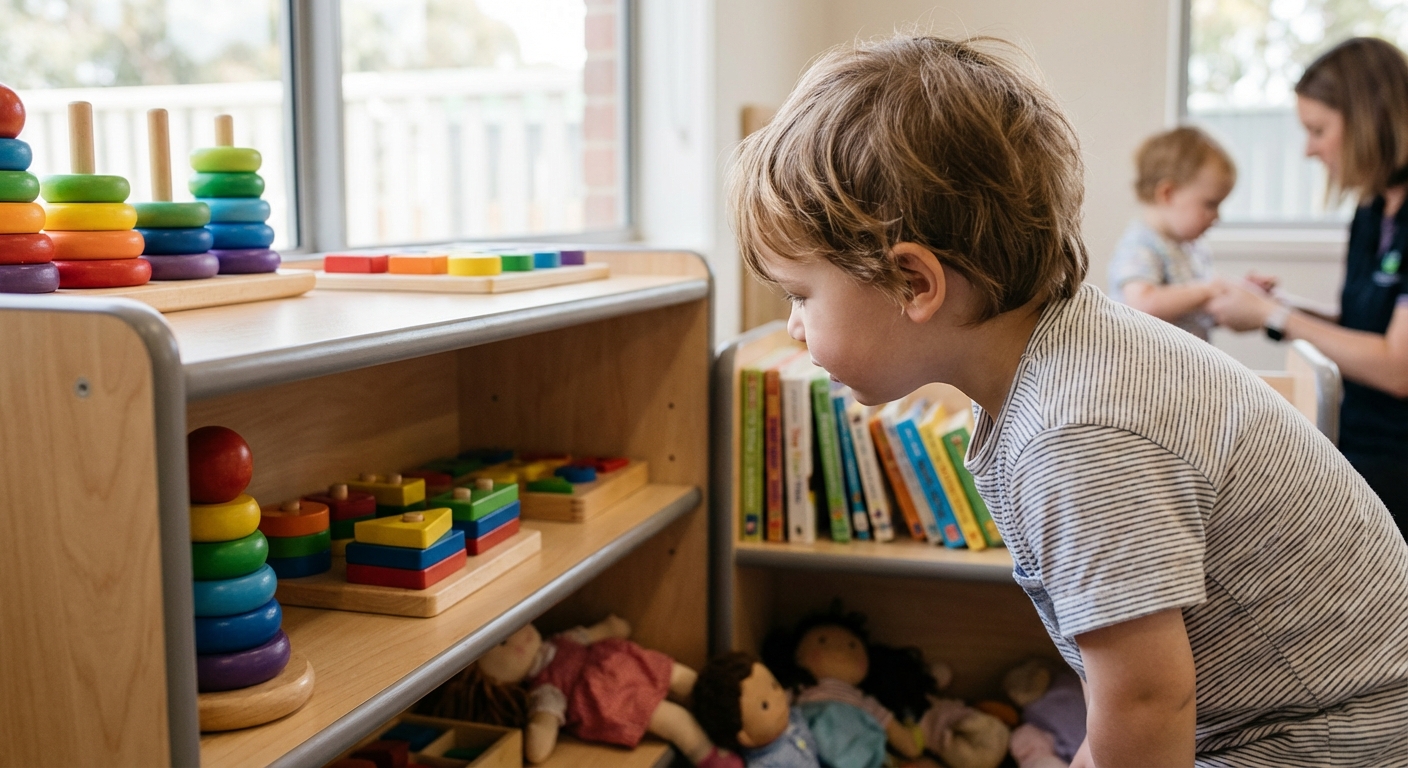
A successful early years classroom layout is built on the concept of ‘continuous provision’. This refers to the resources and opportunities that are available to children for self-selection throughout the day. Your layout should directly facilitate this. We believe the most effective spaces are built on these key principles:
- Clear Pathways & Flow: The layout must allow children and staff to move freely and safely without interrupting activities. This reduces frustration and behavioural issues.
- Child-Level Resources: Open, low-level shelving encourages independence. When children can see and access resources themselves, they take ownership of their learning.
- Balance of Active & Quiet Zones: A well-designed room provides distinct areas for loud, energetic play and calm, focussed activities. This allows children to self-regulate their energy levels.
- Natural Light & Calming Colours: Maximising natural light and using a neutral colour palette for walls creates a calm, welcoming atmosphere. According to a study by Angeltakooree.com (2023), calm environments foster greater creativity and collaboration. Colour can then be introduced purposefully through furniture, displays, and resources.
Implementing these principles creates a space that not only looks good but actively works to support your educational goals, a key aspect that Ofsted inspectors look for.
A Practical Guide to Zoning: Creating Essential EYFS Areas
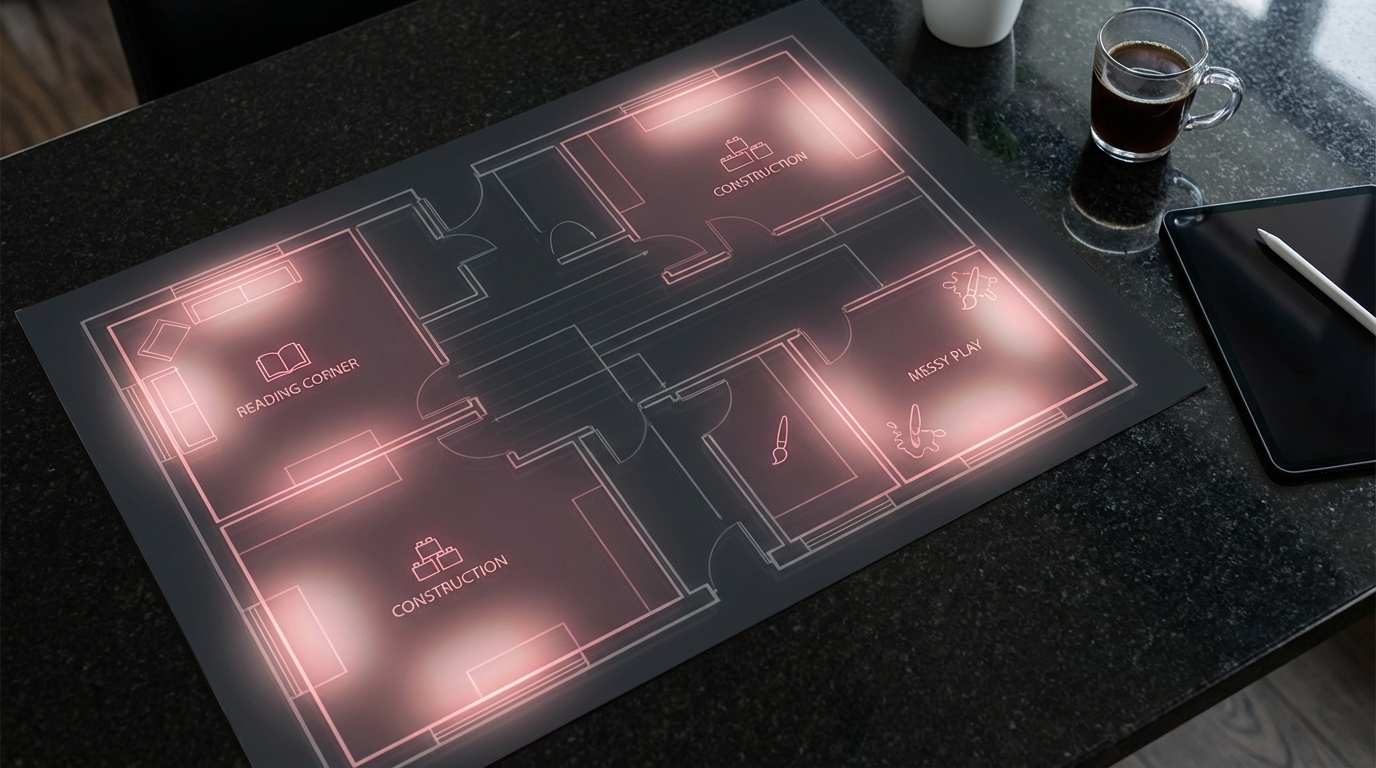
Creating distinct, well-resourced zones is a fundamental part of designing engaging spaces. This zoning organises the room logically, helps children understand the opportunities available, and makes it easier for staff to manage resources and activities. This structured approach is central to creating learning zones in nursery settings that are both stimulating and orderly. What does this mean for you? It means less chaos and more focused learning.
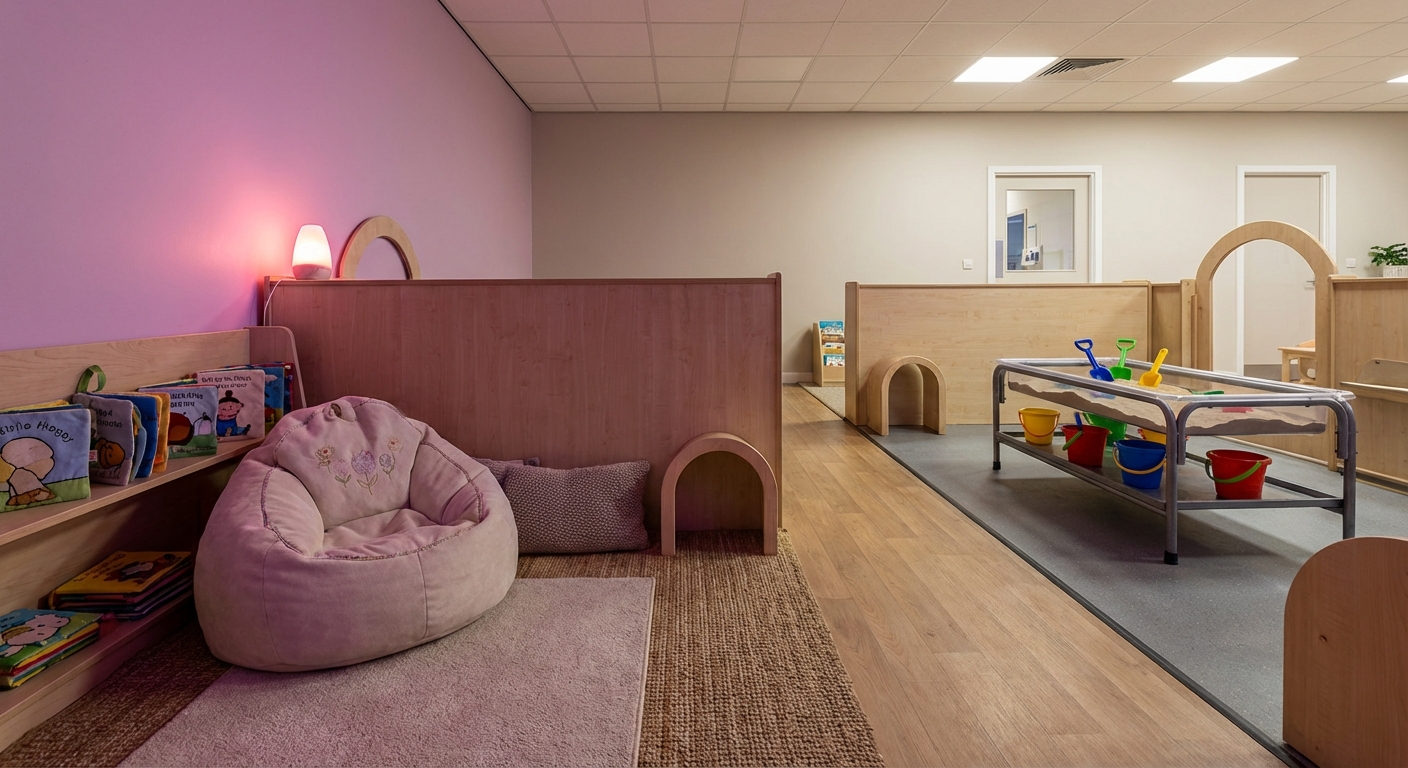
Below are some essential eyfs classroom zones and practical nursery room design ideas to bring them to life.
The Communication & Literacy Zone (Reading Corner)
This area is designed to foster a love of reading and develop early language skills. It should feel cosy, quiet, and inviting. We recommend using comfortable seating like beanbags or floor cushions, combined with accessible, front-facing book browsers. Good task lighting is essential. This creates a ‘communication-friendly’ space where children feel comfortable sharing stories and ideas.
The Messy Play & Investigation Zone
Essential for sensory development and scientific exploration, this zone needs to be practical and safe. It should be located near a sink and have durable, easy-to-clean flooring. Key items include robust sand & water tables, art easels, and mobile storage trolleys to keep paints, clay, and other materials organised.
The Construction & Small World Play Zone
This zone supports problem-solving, spatial awareness, and collaborative play. It requires a significant amount of open floor space, ideally defined by a durable, low-pile rug. We advise using modular storage units that allow children to easily access and tidy away blocks, vehicles, and small figures from our range of specialised nursery furniture from brands like Twoey.
The Quiet & Calm Down Zone
Every nursery needs a small, sheltered space where a child can go to feel safe and calm. This is vital for developing emotional self-regulation. This zone doesn’t need to be large; a simple den, a small tent, or a canopy with soft cushions and sensory toys can be highly effective.
### Case Study: A Typical Nursery Scenario
Challenge: A 30-place nursery in a community hall had a single, open-plan room. This led to high noise levels, frequent disruptions as children ran through play areas, and difficulty for staff in setting up focused activities. Resources were stored in high cupboards, limiting child independence.
Solution: We implemented a zoning strategy using low-level, movable shelving units to create clear pathways and define areas for quiet reading, construction, and messy play without building walls. Multi-functional furniture with integrated storage was introduced.
Results: Within one term, staff reported a 40% reduction in disruptive behaviour during transition times. Child engagement in self-led activities increased by an estimated 60%. The nursery received a ‘Good’ Ofsted rating, with the inspector specifically praising the ‘enabling environment’.
Key Insight: You don’t need walls to create effective zones. Smart use of furniture can define a space, reduce noise, and empower children, “Saving Time & Stress” for staff.
Choosing the Right Furniture: Cost, Durability, and Compliance
The right furniture is a long-term investment that directly impacts safety, budget, and the success of your preschool classroom setup. In our experience, opting for the cheapest consumer-grade furniture is a false economy; it rarely withstands the demands of a busy nursery and often fails to meet crucial safety standards. Investing in purpose-built, commercial-grade furniture saves money over time.
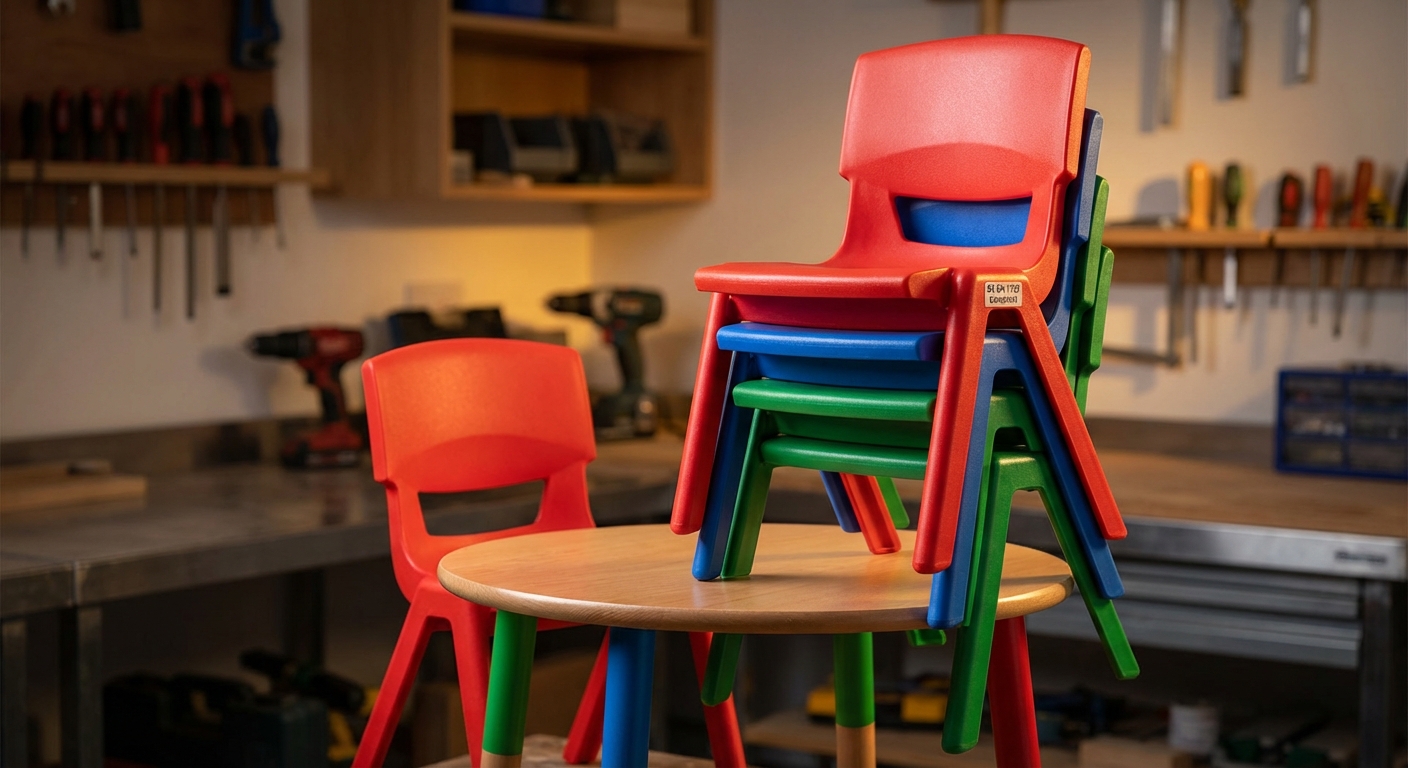
When selecting furniture, consider the material, function, and compliance. Multi-functional pieces, like a storage unit that also serves as a room divider or a play table with built-in trays, are excellent for maximising your budget and space. Also, remember that you can take advantage of our Bulk Buy Discounts and flexible payment options, such as Credit Accounts Or Pay Flexibly, to make your budget go further.
Crucially, all furniture must be compliant with UK regulations. This is where BS EN 1729 compliant furniture becomes a non-negotiable requirement. This standard ensures that chairs and tables are designed to promote good posture and are strong enough for the educational environment.
| Material | Typical Cost | Durability Rating | Best For |
|---|---|---|---|
| Solid Beechwood | High | ★★★★★ | High-impact items like chairs, table legs, and storage frames where maximum strength is needed. A premium, long-term investment. |
| Birch Plywood | Medium-High | ★★★★☆ | Bookcases, storage units, and desktops. Offers excellent strength and a modern, natural aesthetic. Resists warping. |
| MFC (Melamine Faced Chipboard) | Low-Medium | ★★★☆☆ | Tabletops, cabinet doors, and storage unit carcasses. A cost-effective choice with good scratch and water resistance. |
| Tough Moulded Plastic | Low | ★★★★☆ | Chairs and activity trays. Extremely durable, lightweight, easy to clean, and available in bright colours. Effective for younger years. |
Demystifying UK Safety Standards (BS EN 1729)
Understanding UK safety standards is non-negotiable for anyone procuring school furniture in the UK, and it’s a cornerstone of designing engaging spaces that are fundamentally safe. The key standard for educational settings is BS EN 1729, which is the British and European standard for chairs and tables for educational institutions. It is not just red tape; it’s a critical framework for ensuring children’s wellbeing and fulfilling your duty of care.
The standard is split into two parts:
- Part 1: Functional Dimensions. This part specifies the correct size, height, and shape of chairs and tables for different age groups. Compliance ensures furniture promotes good posture and reduces the risk of musculoskeletal issues later in life. It’s about fitting the furniture to the child, not the other way around.
- Part 2: Safety Requirements. This part sets rigorous tests for the strength, stability, and durability of the furniture. It ensures a chair won’t tip over easily if a child leans back, and that a table can withstand the rigours of a classroom environment without collapsing.
Why is this so important for your early years classroom layout? Because compliant furniture prevents accidents. It protects children from injury and protects your institution from liability. Sourcing from a reputable, specialist supplier like Costcutters UK may help compliance and removes the guesswork. We ensure all relevant products meet this standard, “Saving Time & Stress” for busy school managers.
Frequently Asked Questions About Nursery Layouts
What is designing engaging spaces in a nursery?
Designing engaging spaces is the strategic process of arranging a nursery’s physical environment, furniture, and resources to stimulate learning, encourage exploration, and support children’s development in line with the EYFS framework. It goes beyond simple decoration to create a functional, safe, and inspiring setting that actively supports educational goals. This professional approach considers child psychology, pedagogy, and practical classroom management.
How do I create learning zones in a small nursery room?
Use multi-functional furniture and clever storage to define areas without building walls. Low-level shelving units can act as dividers for a reading nook, while specific rugs can designate a construction area. Consider using vertical space for storage to free up the floor for activities. This approach maximises the utility of even the most compact room, proving that great design isn’t about size.
What are the most important EYFS classroom zones?
Key EYFS zones are designed to support the seven areas of learning, ensuring a balanced provision. These typically include a communication and literacy area (reading corner), a creative/messy play area, a construction zone, a role-play area, and a quiet space for reflection. The goal is to provide a rich and varied environment that caters for all types of play and learning styles.
How can I make my nursery layout ‘communication friendly’?
A communication-friendly space reduces background noise and provides comfortable areas for conversation. Use soft furnishings like rugs, cushions, and fabric wall hangings to absorb sound. Create cosy nooks that encourage small group interaction and ensure resources are clearly labelled with both pictures and words. This environment actively helps children to develop their language and social skills with confidence.
What is the role of colour in a nursery design?
While colour is important, a calm, neutral background is often more effective than overwhelming primary colours. Use neutral tones on walls and major surfaces, then introduce pops of colour through furniture, storage trays, resources, and children’s own artwork. This creates a less over-stimulating environment, helps specific learning resources to stand out, and allows children’s work to be the main focus.
How often should I change my nursery layout?
You should review your layout’s effectiveness termly, but major changes are not typically necessary. Observe how children are using (or not using) the space and make small, responsive adjustments based on their current interests and developmental needs. A complete redesign might only be required every few years or when curriculum requirements change significantly. This ensures the environment remains dynamic and relevant.
Are there specific lighting requirements for an early years setting?
Maximising natural light is the top priority for any early years setting, as it is well-supported by research to enhance mood and concentration. Where artificial light is needed, use a mix of general overhead lighting and specific task lighting, such as a spotlight in a reading corner. We recommend avoiding harsh fluorescent lights, opting for warmer, dimmable LED options to create a calmer, more welcoming atmosphere.
How can I involve children in designing the space?
Involve children by observing their play patterns and asking for their opinions on where things should go. You can create simple ‘maps’ or ask them to draw their favourite areas to see what they value. Allowing them to help arrange a new set of resources or choose the location for a new role-play theme gives them a powerful sense of ownership over the space.
What’s the biggest mistake to avoid in a preschool classroom setup?
The biggest mistake is too much clutter and a lack of clear pathways for movement. An over-cluttered room can be visually overwhelming and hazardous, while poor flow makes it difficult for children and staff to move around safely. Prioritise effective, accessible storage solutions and ensure there is typically enough open space for movement and different types of large-scale play.
Where can I find compliant nursery furniture in the UK?
Specialist educational suppliers are an effective source for compliant nursery furniture, a fact demonstrated by our excellent Trustpilot rating. Companies like Costcutters UK provide a wide range of furniture that is certified to meet standards like BS EN 1729, ensuring you are procuring safe, durable, and appropriate items for your setting. Our “Design To Install We Do It All!” service simplifies the entire procurement process for schools.
Important Considerations and Next Steps
This guide provides a foundational framework for nursery design. However, every setting is unique in its size, budget, and the specific needs of its children. The ideas presented should be adapted, and You should observe how your current cohort interacts with the space before committing to large-scale changes. What works for one group may need adjusting for the next.
While a DIY approach to zoning and resource arrangement is possible, procuring and installing furniture requires specialised knowledge. Alternative approaches might involve sourcing from multiple consumer retailers, but this often leads to issues with durability, a lack of compliance with educational standards, and logistical challenges in delivery and assembly. This can result in hidden costs and safety risks.
For a complete refurbishment or when dealing with challenging spaces, we recommend seeking professional guidance. A specialist can provide a free space planning service, creating detailed 2D or 3D plans that optimise flow, ensure compliance, and maximise your budget. This expert input prevents costly mistakes and ensures a successful outcome, delivering peace of mind.
Your Partner in Creating Exceptional Learning Environments
Ultimately, successfully designing engaging spaces for a nursery is a blend of educational theory, practical planning, and smart procurement. By focusing on creating flexible, eyfs classroom zones and investing in durable, compliant furniture, you create an environment where children can thrive. A thoughtful approach to your early years classroom layout not only supports learning but also demonstrates a commitment to safety and quality that is recognised by parents and inspectors alike.
With over 35 years of experience serving UK schools, Costcutters UK understands these challenges. We are more than just a furniture supplier; we are your partner in creating inspiring educational spaces from design to installation. Our team can help you handle the complexities of budgeting, compliance, and planning. To start your project with confidence, Book a Free Space Planning Consultation with one of our experts today.
References
- Department for Education (DfE) – Statutory Framework. Sets the standards for ‘Enabling Environments’ in early years provision in the UK.
- Health and Safety Executive (HSE) – Guidance. Provides official guidance on managing health and safety risks in UK educational settings, including furniture and equipment.
- Community Playthings – Industry Publication. Offers research and articles on the importance of room layout for child behaviour and learning.
- BSI Group – Standards Organisation. The official body that publishes and maintains the BS EN 1729 standard for educational furniture in the UK and Europe.
- Virtual Lab School – Educational Resource. Details the principles of designing and organising indoor learning environments for preschool children.
- NDLA (National Design & Landscape Architects) (2023) – Industry analysis. Discusses the principles of creating engaging spaces with a focus on connecting with the natural world.
- Pressbooks.pub (2022) – Educational Publication. A chapter from an educational text outlining how effective learning spaces are designed to be flexible and student-centred.
- Egan (2023) – Commercial design article. Explores how flexibility and technology integration are key to creating engaging learning spaces in modern educational settings.
- Angeltakooree.com (2023) – Design blog. An article exploring how thoughtful design of physical spaces can inspire creativity and collaboration.
Conclusion
Your Partner in Creating Exceptional Learning Environments
In summary, designing engaging spaces for a nursery is a blend of educational theory, practical planning, and smart procurement. By focusing on creating flexible, well-resourced eyfs classroom zones and investing in durable, compliant furniture, you create an environment where children can thrive. A thoughtful approach to your early years classroom layout not only supports learning but also demonstrates a commitment to safety and quality that is recognised by parents and inspectors alike.
With over 35 years of experience serving UK schools, Costcutters UK understands these challenges. We are more than just a furniture supplier; we are your partner in creating inspiring educational spaces from design to installation. Our team can help you navigate the complexities of budgeting, compliance, and planning. To start your project with confidence, book a Free Space Planning Consultation with one of our experts today.