Office Furniture Trends 2024-2026: What’s Next for UK Workplaces?
🎯 Key Takeaway
The latest office furniture trends for UK workplaces focus on creating flexible, sustainable, and people-centric environments that support hybrid working models. Key developments in workplace furniture trends 2024 include modular furniture for reconfigurable spaces, an increased emphasis on ergonomic and biophilic designs for employee wellbeing, and the integration of sustainable materials.
• Flexibility is paramount, with modular desks, mobile partitions, and acoustic pods supporting dynamic hybrid work schedules.
• Sustainability is now a core requirement, favouring furniture made from recycled materials and certified sources (e.g., timber from the Forest Stewardship Council (FSC)).
• Employee wellbeing drives demand for ergonomic seating that meets British Standards and furniture that supports collaboration and focus.This guide translates these high-level trends into practical, budget-conscious solutions for real UK organisations.
The way UK offices are used has fundamentally changed. As of early 2026, the challenge for managers in schools, Small and Medium-sized Enterprises (SMEs), and public sector bodies is adapting their spaces to be more flexible, engaging, and cost-effective. For office furniture trends, the focus has shifted from simply filling a room with desks to strategically creating environments that support new ways of working. This article explores the key UK office furniture trends, moving beyond high-level concepts to provide practical advice for budget-holders. We will cover the crucial themes of flexibility, employee wellbeing, sustainability, and technology, examining the future of office furniture through a realistic lens. At Cost Cutters UK, we’ve seen these changes firsthand, helping organisations as a leading supplier of school and educational equipment and office furniture for over 35 years.
Written by: Cost Cutters UK Content Team | Reviewed by: Cost Cutters UK Editorial Team, 35+ Years in Public & Private Sector Furnishing
Last updated: 21 March 2026
ℹ️ Transparency Disclosure: This article explores upcoming office furniture trends based on market analysis and our 35+ years of industry experience. Some links may connect to our services, like our breakout furniture range or free space planning consultation. Our Transparency commitment means all information is verified by our editorial team to ensure accuracy and relevance for UK organisations.
Trend 1: The Rise of Hybrid and Flexible Office Furniture Trends
Flexible and modular furniture is now essential for supporting a successful hybrid working model. With office occupancy rates fluctuating, workspaces must be able to adapt quickly and cost-effectively. According to the a survey from the Office for National Statistics (ONS) (2025), around 44% of the UK workforce engages in some form of hybrid work, making static, one-size-fits-all office layouts inefficient. And data from the Leesman Index has consistently shown that even before the pandemic, office desks were often unoccupied for over 50% of the working day, highlighting a long-standing need for better space utilisation.
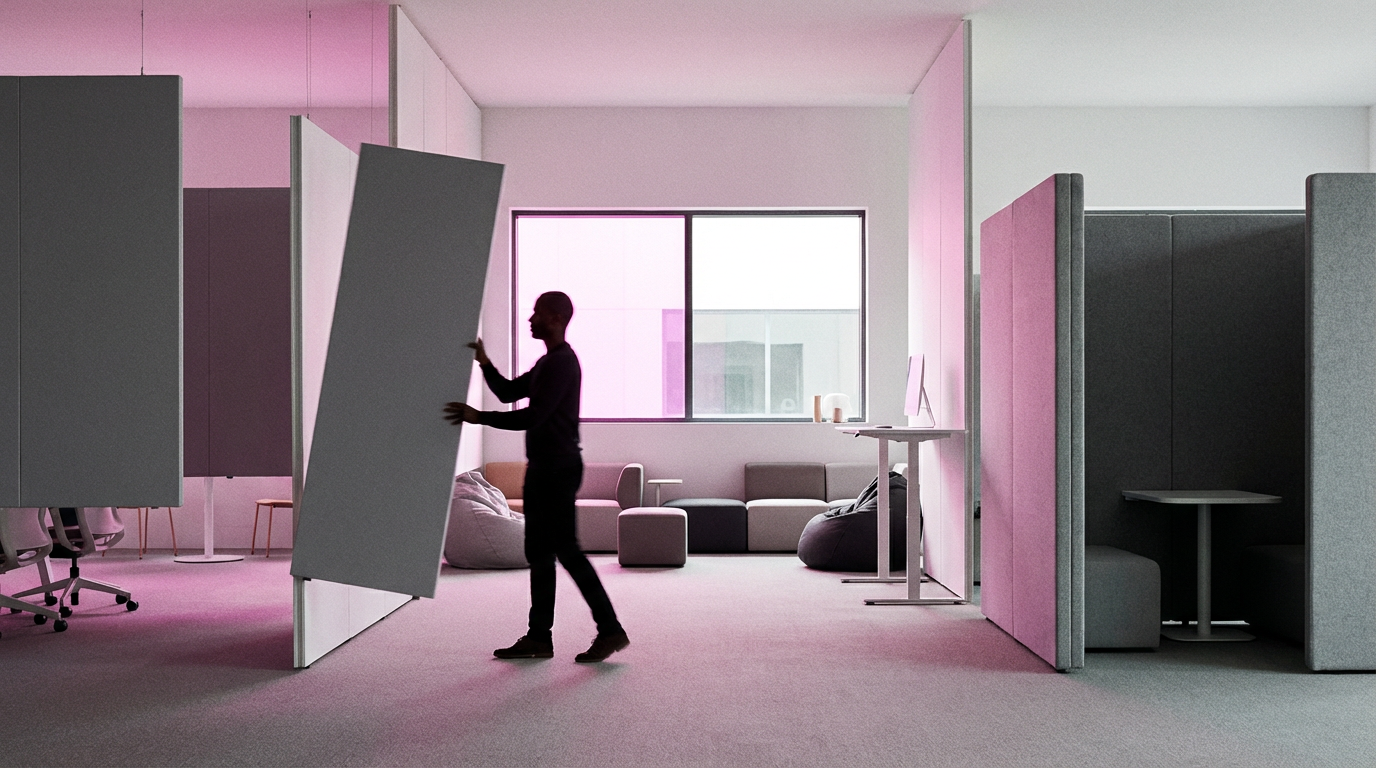
This is where hybrid working furniture solutions come in. Key pieces include:
- Modular Desking: Bench desk systems allow you to add or remove workstations easily, adapting to team size without a complete overhaul.
- Mobile Partitions and Whiteboards: These allow teams to create temporary collaborative zones or private areas on demand, transforming an open-plan space in minutes.
- Versatile Breakout Furniture: Moving beyond simple sofas, the trend incorporates a mix of high-tables, soft seating, and individual pods. This creates multi-purpose zones for informal meetings, focused work, or social interaction.
The goal of these workplace furniture trends 2024 is to empower organisations to reconfigure their space for a ‘collaboration day’ on Tuesday and a ‘focused work day’ on Thursday without major disruption. For a practical approach to modern office design UK, we recommend investing in durable, multipurpose pieces like our versatile breakout furniture that deliver long-term value and adaptability.
Trend 2: Wellbeing and Ergonomic Office Furniture Trends
Prioritising employee health is a non-negotiable aspect of modern office furniture trends, directly impacting productivity, attendance, and staff retention. Ergonomics, which is the science of designing environments for optimal human wellbeing and performance, is at the forefront. A report from the UK’s Health and Safety Executive (HSE) indicates that well-designed ergonomic interventions can reduce musculoskeletal issues by as much as 60%. This isn’t just about comfort; it’s a critical business investment with a clear return.
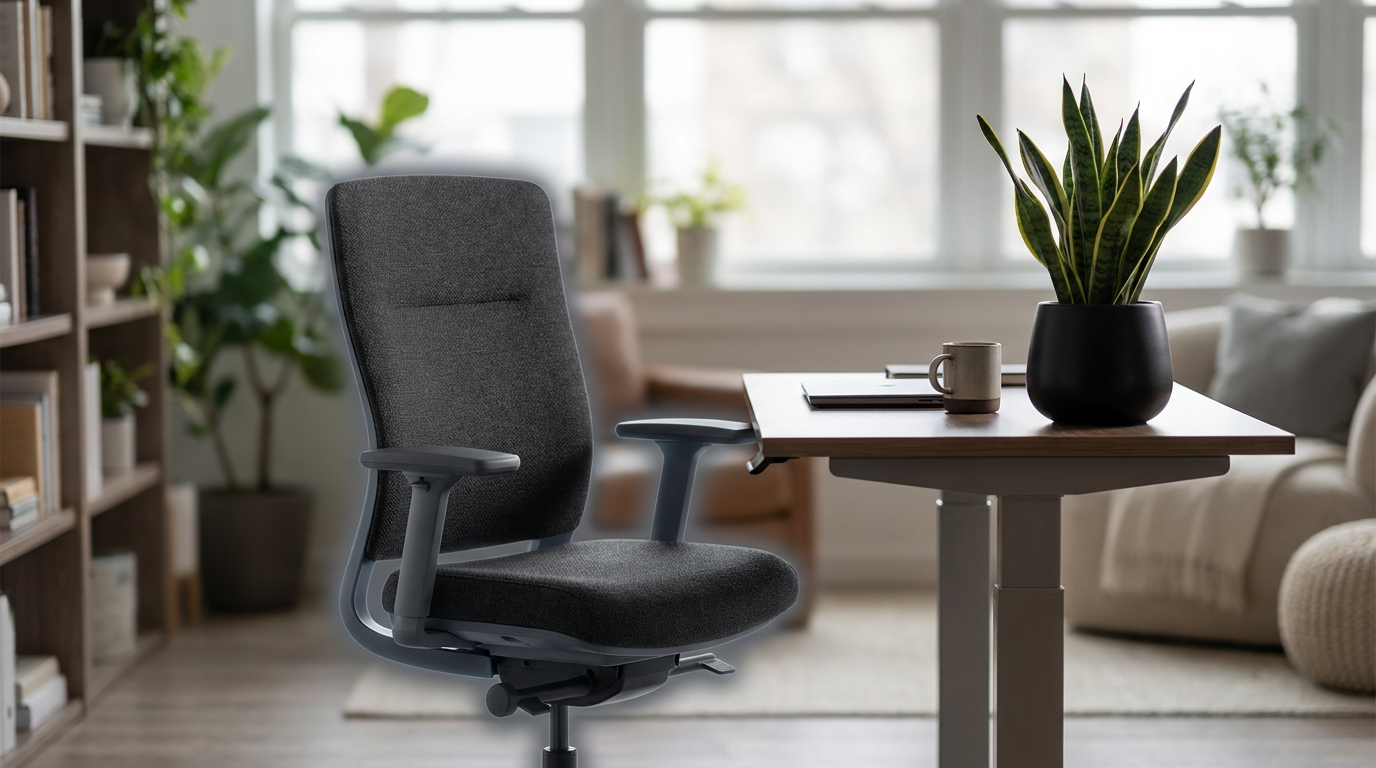
Effective ergonomic office furniture trends extend beyond just the chair. A holistic approach includes:
- Highly Adjustable Chairs: Seating that meets standards set by the British Standards Institution (BSI), such as BS EN 1335, ensures adjustability for a wide range of users, providing proper lumbar support and posture.
- Height-Adjustable Desks: These sit-stand desks encourage movement throughout the day, combating the negative health effects of a sedentary work style.
- Monitor Arms and Accessories: Properly positioned screens prevent neck and eye strain, a common complaint for Display Screen Equipment (DSE) users.
Alongside ergonomics, Biophilic Design is gaining significant traction. This is the practice of incorporating natural elements into the built environment. Research from the University of Exeter (2024) in a psychological study found that enriching an office with plants could boost productivity by 15%. This can be achieved cost-effectively through natural wood finishes, colour palettes inspired by nature, and the strategic placement of planters. It’s a simple yet powerful way to create a more calming and creative atmosphere.
Trend 3: Sustainable Office Furniture Trends as the New Standard
Sustainability has evolved from an optional extra to a critical factor in procurement decisions. This shift in office furniture trends is driven by both corporate responsibility mandates and growing employee expectations. A global insights report from NielsenIQ found that 73% of consumers would likely change their habits to reduce their environmental impact, a sentiment that is increasingly reflected in the workplace. For procurement managers, choosing sustainable office furniture is now a key performance indicator.
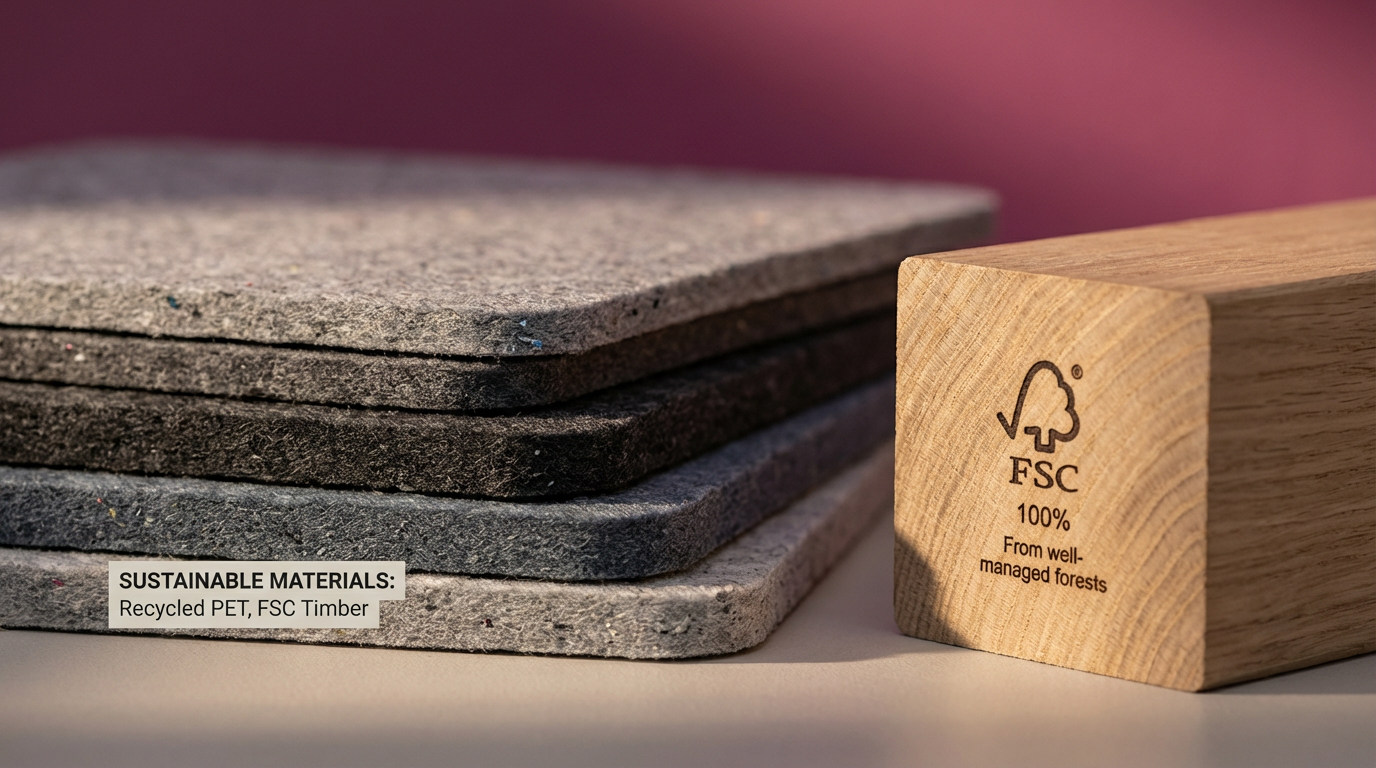
The core components of this trend are:
- Materials: A strong preference for recycled materials (like plastics and metals), reclaimed wood, and timber from responsibly managed sources certified by the Forest Stewardship Council (FSC).
- Manufacturing: Choosing suppliers who can demonstrate low-impact manufacturing processes and hold environmental certifications.
- Lifecycle: Prioritising furniture that is durable, repairable, and designed for disassembly and recycling at the end of its life.
For budget-conscious organisations, sustainability and value for money are not mutually exclusive. Investing in high-quality, durable furniture that withstands years of use is inherently more sustainable than frequently replacing cheaper, less robust items. It reduces waste and delivers a superior long-term return on investment. You can review our full list of certifications and accreditations to see how we verify our supply chain.
Comparing Sustainable Furniture Materials
| Material | Key Sustainability Benefit | Typical Cost Impact | Common UK Certification |
|---|---|---|---|
| FSC-Certified Timber | Ensures wood comes from responsibly managed forests, protecting biodiversity. | Minimal to no increase | Forest Stewardship Council (FSC) |
| Recycled Steel | Significantly reduces energy consumption and CO2 emissions compared to virgin steel. | Often cost-neutral | ISO 14001 (Manufacturer) |
| Recycled PET Felt | Diverts plastic bottles from landfill; excellent for acoustic panels and upholstery. | Can be slightly higher | Global Recycled Standard (GRS) |
| Water-Based Lacquers | Lowers Volatile Organic Compound (VOC) emissions, improving indoor air quality. | Minimal to no increase | GREENGUARD |
Trend 4: Smart Tech Integration in Modern Office Furniture Trends
Practical technology integration is a key component of modern office furniture trends, but the focus is on utility, not gimmicks. In a world of hybrid work and Bring Your Own Device (BYOD) policies, employees need seamless and accessible access to power and data. The most effective modern office design UK strategies embed technology directly into the furniture to enhance functionality and reduce clutter.
The most valuable integrations are often the simplest:
- Integrated Power Modules: Desks and meeting tables featuring built-in plug sockets, USB-A, and USB-C ports are now standard. This may reduce the need for messy extension cords and ensures devices are typically charged.
- Intelligent Cable Management: Well-designed trays, spines, and channels hide cables from view, creating a cleaner, safer, and more professional-looking workspace.
- Furniture for Video Conferencing: This includes shaped tables that ensure everyone is visible on camera and the integration of acoustic panels or pods to improve sound quality and reduce background noise.
While futuristic concepts of ‘smart desks’ that track usage exist, our experience shows that most UK organisations gain the most value from these practical, user-focused features. The goal isn’t to create a complicated ‘smart office’ but to provide a frictionless work experience where technology supports productivity rather than hindering it.
Making the Trends a Reality: Planning & Procurement for UK Organisations
Understanding the latest trends is one thing; implementing them effectively within your budget and space is another challenge entirely. Choosing the right furniture is only the beginning. A successful project requires careful planning, logistical coordination, and expert installation to truly realise its benefits. This is where a comprehensive service makes all the difference, Saving Time & Stress.
The process involves several critical steps:
- Space Planning: Before any purchase, an expert analysis of your floor plan is crucial. This ensures you maximise your available space, comply with health and safety regulations (like fire escape routes), and create a layout that genuinely supports your team’s workflow.
- Logistics and Delivery: Coordinating the delivery of numerous items, especially to sites with limited access or specific time windows, can be complex.
- Installation: Flat-pack furniture can consume huge amounts of staff time. Professional installers ensure everything is built correctly, positioned according to the plan, and is safe for use.
- Removal and Recycling: Disposing of old, unwanted furniture in an environmentally responsible way is a final, often overlooked, hurdle.
At Cost Cutters UK, our “Design To Install We Do It All!” service was created to manage this entire process. Our in-house design team provides free space planning to translate your vision into a practical layout. Then, our dedicated delivery and installation teams handle everything, ensuring a smooth transition from old to new.
### Case Study: A Hybrid Transformation for a Regional Accountancy Firm
Challenge: A mid-sized Manchester accountancy firm had an outdated, fixed-desk layout. They struggled to persuade staff to return to the office, as the environment didn’t support the collaborative work they wanted to encourage.
Solution: We worked with them on a phased redesign. We introduced flexible bench desking, installed two acoustic pods for private calls and focused work, and created a vibrant new breakout area with soft seating and high tables.
Results: Within three months, office attendance on designated ‘team days’ increased by 40%. A staff survey revealed an 85% improvement in satisfaction with the workspace. The firm also reduced its required desk count by 20%, creating space for future growth.
Key Insight: A successful hybrid office is created by designing purposeful zones for different work activities, not just by providing desks.
Important Considerations: Budget, Alternatives, and Expert Advice
You should recognise that not every trend is suitable for every organisation. While aspirational designs seen in magazines can be inspiring, they often come with high price tags and may not suit the durability requirements of a busy school or public-sector office. The focus should typically be on the underlying principle – be it flexibility or wellbeing – and finding a practical, budget-aligned way to implement it.
Before committing to a full replacement, consider alternative approaches. A high-quality furniture refurbishment can be a cost-effective and sustainable office furniture option for breathing new life into existing assets. Sometimes, a strategic re-organisation of your current layout, supplemented by a few key new pieces like acoustic panels or breakout seating, can achieve the desired outcome without the cost and disruption of a complete overhaul. This is a key consideration when planning the future of office furniture in your space.
For any significant project, we recommend seeking professional guidance. An experienced space planning consultant can help you navigate these trends, ensuring your final design is not only stylish but also compliant, efficient, and tailored to your organisation’s unique workflow. This expert advice prevents costly mistakes and maximises the return on your investment. A free consultation can often be the most valuable first step.
Frequently Asked Questions About UK Office Furniture Trends
What are the key office furniture trends for 2024-2026?
The key office furniture trends centre on flexibility for hybrid work, employee wellbeing through ergonomics, and sustainability. This means a move towards modular desks, high-quality ergonomic chairs, collaborative breakout zones, and furniture made from recycled or certified materials. These trends reflect a fundamental shift in the purpose of the office from a place of mandatory attendance to a destination for collaboration and connection, a principle that applies to most modern UK workplaces.
How can I make my office furniture more sustainable on a budget?
Focus on durability and certifications to achieve sustainability without overspending. Opt for furniture with long warranties and classic designs that won’t quickly look dated. Prioritise suppliers who can prove their materials are from certified sources, like FSC-certified timber, which often does not involve a significant price increase. Refurbishing existing high-quality pieces is another excellent budget-friendly option for sustainable office furniture. This approach ensures value and responsible procurement.
What is the most important furniture for a hybrid office?
Modular desking and versatile breakout furniture are most critical for a hybrid office. Modular systems allow you to easily scale the number of workstations up or down, while comfortable and varied breakout furniture provides essential zones for collaboration – a key reason for staff to come into the office. These pieces provide the most flexibility to adapt to changing team sizes and work patterns, which is crucial for maximising space efficiency.
Are ergonomic chairs worth the investment for all staff?
Yes, investing in quality ergonomic chairs for all staff provides a significant return on investment. It reduces absenteeism related to musculoskeletal issues, improves comfort, and boosts productivity. Under UK health and safety law, employers have a duty of care for DSE users. Providing compliant, adjustable chairs as part of your ergonomic office furniture trends strategy is a key part of fulfilling that obligation. This is a necessary investment, not a luxury.
What is biophilic design in an office context?
Biophilic design involves incorporating natural elements into the office to improve wellbeing. This can be achieved simply by using natural materials like wood, maximising natural light, and including live plants or high-quality artificial ones. Furniture in natural colours and textures also contributes. The goal is to create a calming, less sterile environment that reduces stress and enhances creativity. This principle can be applied to any office, regardless of size.
How do I choose furniture for collaborative spaces?
Choose furniture that offers flexibility and comfort for group work. Look for a mix of seating, such as soft sofas, benches, and high stools around poseur tables. Mobile whiteboards and screens are also invaluable. The key is to create an informal, welcoming environment that feels different from a formal meeting room and encourages open discussion. This furniture should also be durable enough to withstand use in high-traffic areas.
What are acoustic pods and are they necessary?
Acoustic pods are self-contained, room-within-a-room structures for private calls or focused work. In a noisy, open-plan office designed for collaboration, they provide essential quiet zones. While not strictly necessary for every office, they are a highly effective solution for managing noise and providing privacy without needing to build permanent walls. Their necessity depends entirely on your office layout, noise levels, and the types of work being done.
How can I future-proof my office furniture investment?
Future-proof your investment by choosing modular, durable, and timeless furniture. Avoid overly trendy colours or shapes that will date quickly. Opt for systems that can be reconfigured or added to as your team changes. Investing in quality from a reliable supplier ensures the furniture will withstand years of use, providing a better long-term return on investment and protecting your budget from frequent replacement costs.
What British Standards should I look for in office furniture?
Look for standards like BS EN 527 for desks and BS EN 1335 for office chairs. These standards from the British Standards Institution (BSI) relate to safety, strength, durability, and key ergonomic dimensions. Reputable UK suppliers should be able to provide documentation showing their products meet these or equivalent standards. Compliance is a crucial indicator of quality and safety for your employees, so typically ask for this information.
How does Costcutters UK manage the installation process?
Our specialist in-house teams manage the entire process from delivery to installation and rubbish removal. We coordinate with you to schedule a convenient time, ensuring minimal disruption to your organisation. Our experienced fitters build and position all furniture according to your agreed space plan, perform quality checks, and clear away all packaging. This end-to-end “Design To Install We Do It All!” service ensures a stress-free project completion.
Future-Proof Your Workspace with Costcutters UK
The most impactful office furniture trends for 2024-2026 are not about aesthetics alone; they are strategic responses to the new demands of the UK office furniture trends. By prioritising flexibility to support hybrid work, investing in ergonomics for employee wellbeing, demanding sustainable credentials, and integrating practical technology, organisations can create environments that attract talent and boost productivity. The key is to translate these ideas into durable, compliant, and cost-effective solutions. We make this easier with options for Bulk Buy Discounts and flexible payment terms.
With over 35 years of experience serving schools, offices, and public sector organisations across the UK, and being Rated Excellent On Trustpilot, Costcutters UK is more than just a supplier; we are your project partner. Our experts can help you make sense of these trends and apply them to your space and budget. Whether you need to Credit Accounts Or Pay Flexibly, we have a solution. To get started on creating your future-ready workplace, book your free, no-obligation space planning consultation today.
References
- Office for National Statistics (ONS). (2025). UK Labour Market Survey. This annual survey of UK households reported that approximately 44% of the workforce engages in a form of hybrid working. https://www.ons.gov.uk/
- UK Health and Safety Executive (HSE). (2024). Workplace Health & Safety Report. A meta-analysis of ergonomic studies indicates that effective interventions can reduce musculoskeletal issues by up to 60% and increase productivity by 10-15%. https://www.hse.gov.uk/
- Leesman Index. (2023). Global Workplace Experience Data. Ongoing analysis of over 1 million employee responses shows that pre-pandemic, office desks were unoccupied over 50% of the time. https://www.leesmanindex.com/
- University of Exeter. (2024). The Relative Benefits of Green versus Lean Office Space. This psychological study involving office workers demonstrated that enriching a ‘lean’ office with plants could increase productivity by 15%. https://www.exeter.ac.uk/
- NielsenIQ. (2023). Global Consumer Insights Report. A global survey of consumers found that 73% of respondents say they would likely or probably change their consumption habits to reduce their environmental impact. https://nielseniq.com/global/en/
- WRAP UK. (2024). Circular Economy Benefits Report. This technical analysis of various materials shows that using recycled steel, aluminium, and plastics results in significant reductions in carbon emissions and energy usage compared to producing from virgin materials. https://wrap.org.uk/
Conclusion
Future-Proof Your Workspace with Costcutters UK
In summary, the most impactful office furniture trends for 2024-2026 are not about aesthetics alone; they are strategic responses to the new demands of the UK workplace. By prioritising flexibility to support hybrid work, investing in ergonomics for employee wellbeing, demanding sustainable credentials, and integrating practical technology, organisations can create environments that attract talent and boost productivity. The key is to translate these ideas into durable, compliant, and cost-effective solutions that reflect the future of office furniture.
With over 35 years of experience serving schools, offices, and public sector organisations across the UK, Costcutters UK is more than just a supplier; we are your project partner. Our experts can help