A Practical Case Study: How One UK School Implemented its Mobile Phone Policy
🎯 Key Takeaway
A successful case study provides a detailed, evidence-based analysis of a specific problem, solution, and outcome, such as the implementation of a new school mobile phone policy. Effective policy change requires strong leadership and comprehensive consultation with parents, staff, and pupils. The physical logistics of storing devices are paramount; secure phone storage for schools ranges from simple pouches to powered lockers. Success is measured through tangible data, including reduced behaviour incidents and improved classroom concentration. This article breaks down the entire process, providing a replicable framework for school leaders and business managers.
As of May 2026, schools across the United Kingdom continue to grapple with creating an optimal learning environment, a challenge often complicated by the presence of mobile phones. For developing a robust case study, analysing a real-world project provides a far more valuable roadmap than theoretical discussion. This article serves as a practical case study example, dissecting how one UK secondary academy successfully navigated the complexities of rolling out a new mobile phone policy in schools UK. We will explore their journey from initial challenge to measurable success, aligning with the latest Department for Education mobile phone guidance and providing actionable insights for school business managers and leadership teams.
👤 Written by: Costcutters UK Content Team
Reviewed by: Costcutters UK Editorial Team, Experts in Educational Furniture and Procurement
Last updated: 27 May 2026
ℹ️ Transparency: This article explores the implementation of a school mobile phone policy, drawing from our 35 years of experience supplying UK educational institutions. Some links may connect to our services, such as secure phone storage solutions. All information has been verified by our editorial team for accuracy as of the publication date. Our commitment to transparency is central to the trust we’ve built, reflected in our status as being Rated Excellent On Trustpilot.
The Challenge: Aligning with DfE Guidance in a Real School Setting
The starting point for this project was a familiar one for many UK schools. A 1,200-pupil secondary academy in the Midlands was facing a rising tide of issues directly linked to mobile phone use. Despite an existing policy that restricted phone use in lessons, the reality was constant, low-level disruption. Teachers reported spending significant time managing pupils who were covertly using their devices, detracting from valuable teaching time.
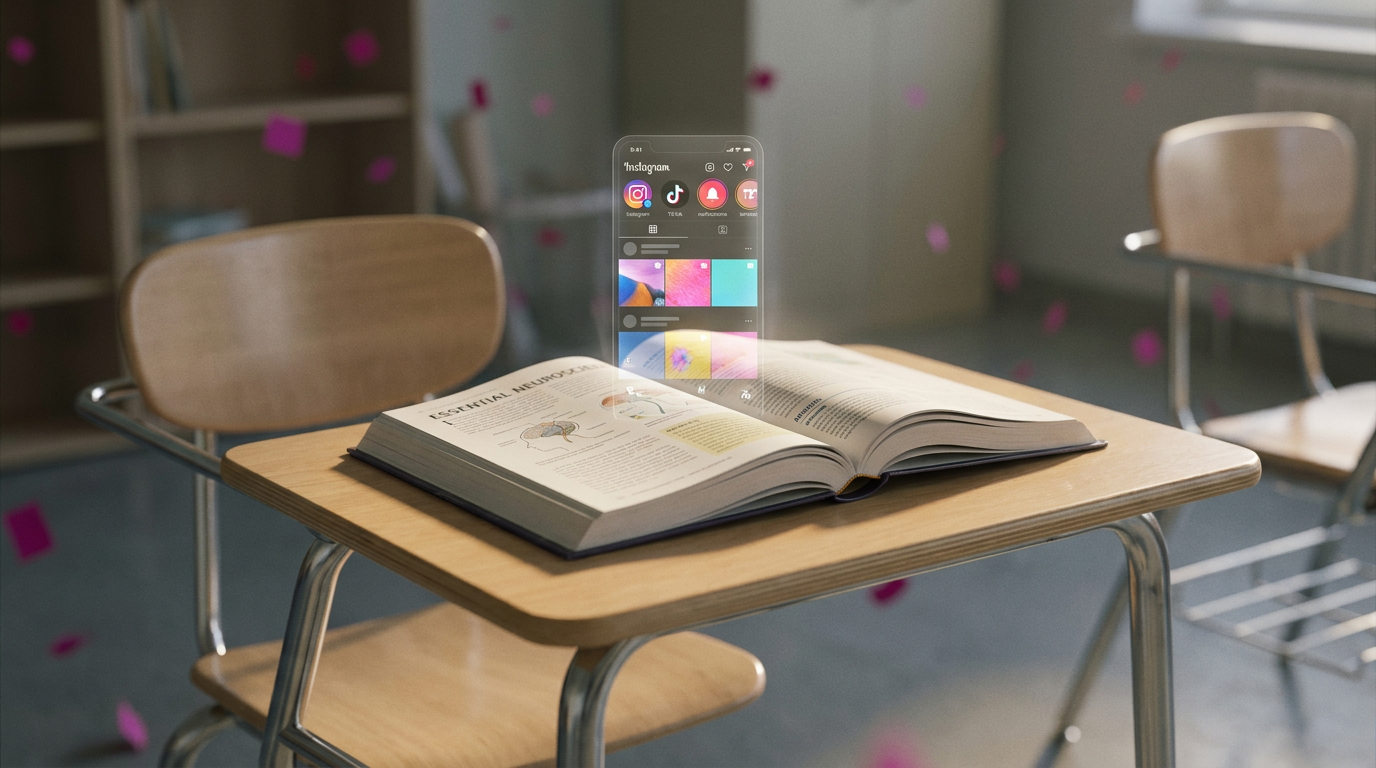
Data from the school’s behaviour logs indicated a 40% increase in incidents related to phone misuse over the previous academic year. These ranged from classroom distraction to social conflicts during lesson changeovers and break times, often fuelled by social media. Also, leadership was concerned about the growing potential for in-school cyberbullying and the digital inequality highlighted by varying device ownership amongst pupils.
The situation was compounded by new Department for Education mobile phone guidance, published by the UK government, which strongly encouraged headteachers to implement policies that create a mobile-phone-free school day. A study from the London School of Economics (2015) had already found that after a phone ban, student test scores improved by 6.4%, lending academic weight to the government’s stance. The challenge for the academy was clear: how to translate this national guidance into a practical, effective, and well-supported mobile phone policy in schools UK within their specific community. They needed a plan that addressed not just the rules, but the culture and logistics of a significant operational change.
Understanding the 5 Core Components of This Case Study
To understand how to write a case study, it’s essential to break it down into its core components. A case study is a detailed analysis of a real-life event or project, structured to provide clear, actionable insights. In this instance, we use the school’s mobile phone project as a running case study example. A research review from the National Center for Biotechnology Information (NCBI) (2011) defines the case study approach as a tool for in-depth explorations of complex issues in their real-life settings. This structure provides a logical narrative that moves from problem to resolution.
The Problem: Distraction and Disruption
This component establishes the initial context and the reasons for change. For the Midlands academy, the problem was multifaceted: declining classroom focus, a sharp rise in behaviour incidents linked to phones, and growing concerns about pupil wellbeing and cyberbullying. This sets the stage for the entire project, defining the negative baseline that the school aimed to improve upon.
The Stakeholders: A Community-Wide Issue
No school policy exists in a vacuum. The stakeholders are all the individuals and groups invested in the outcome. In this scenario, they included pupils (whose daily habits would change), parents (concerned about emergency contact), teaching staff (tasked with enforcement), and school governors (responsible for strategic oversight). Recognising each group’s perspective was crucial for successful implementation.
The Proposed Solution: Policy and Infrastructure
The solution must directly address the identified problem. The academy proposed a two-pronged approach. The first part was a new, stricter policy: ‘Off and away all day’. The second, and equally critical, part was the physical infrastructure to support it: a system for securely storing every pupil’s phone from the start to the end of the school day.
The Implementation: A Phased Rollout
This section details the ‘how’. It’s the project plan in action. For the school, implementation involved a carefully phased rollout over several months. This included extensive communication campaigns, staff training sessions, procurement and installation of storage lockers, and a pilot phase with a single year group before a full school launch. This methodical approach was key to Saving Time & Stress.
The Results: Measurable Improvements
The final component provides the evidence of success or failure. The results must be tangible and, where possible, quantitative. For the academy, this meant tracking data on behaviour incidents, academic performance, and qualitative feedback from staff, pupils, and The Office for Standards in Education, Children’s Services and Skills (Ofsted). These outcomes validate the entire project.
The Process: Developing a Collaborative Mobile Phone Policy
The academy’s leadership understood that a top-down mandate would likely fail. The success of their new mobile phone policy in schools UK hinged on community buy-in, so they initiated a comprehensive consultation process. This wasn’t just a box-ticking exercise; it was a genuine effort to listen and adapt.
The process began with the Parent-Teacher Association (PTA), an organisation of parents and staff. In a series of dedicated meetings, the headteacher presented the data on behaviour and distraction, explaining the ‘why’ behind the proposed change. Parents’ primary concern was emergency contact, which the school addressed by reinforcing its existing, robust system for urgent communication via the main office.
Next, they engaged the teaching staff. Training sessions focussed not on the ‘what’ of the policy but the ‘how’ – specifically, how the new system would reduce their daily burden of classroom management. By demonstrating that the policy was designed to support them, leadership secured crucial support from the staff who would be on the front line of its implementation.
Finally, the school worked with its student council. They didn’t pretend the pupils would love the idea, but by involving them in discussions about the logistics – like the design of the collection/return process – they gave them a sense of ownership.
As the Headteacher explained, “Communication was everything. We had to show this wasn’t a punishment, but a positive step towards a better learning environment for everyone. We started with a standard policy template, but the final version was shaped by the dozens of conversations we had with parents, staff, and the pupils themselves.”
The Solution: Procuring Secure Phone Storage for the School
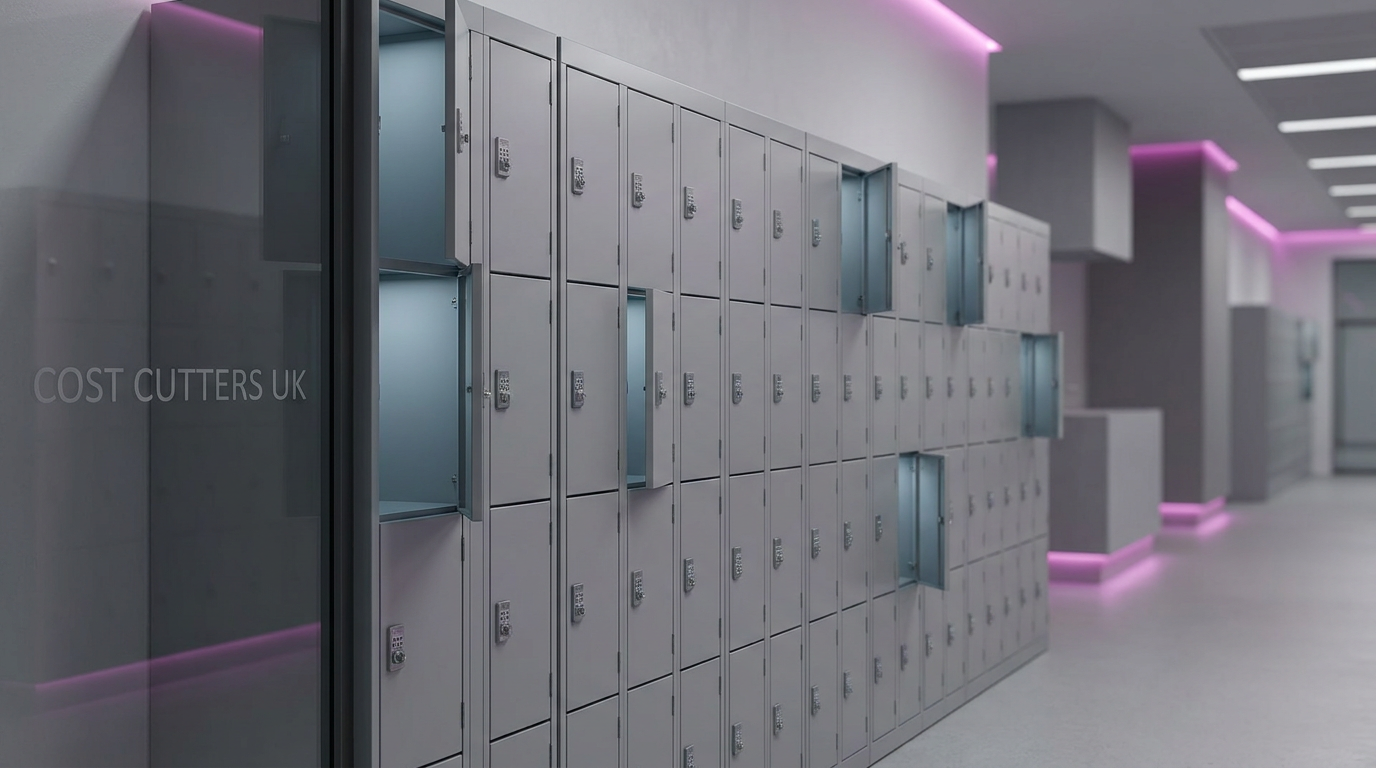
The most practical challenge of a ‘no phones’ policy is a simple one: where do over a thousand devices go every day? The answer lies in procuring the right secure phone storage for schools. In our experience, this is where many policies falter. The academy evaluated several options, balancing cost, security, and logistical efficiency. This is a critical step where our “Design To Install We Do It All!” service provides immense value, ensuring schools get a solution that truly fits their space and process.
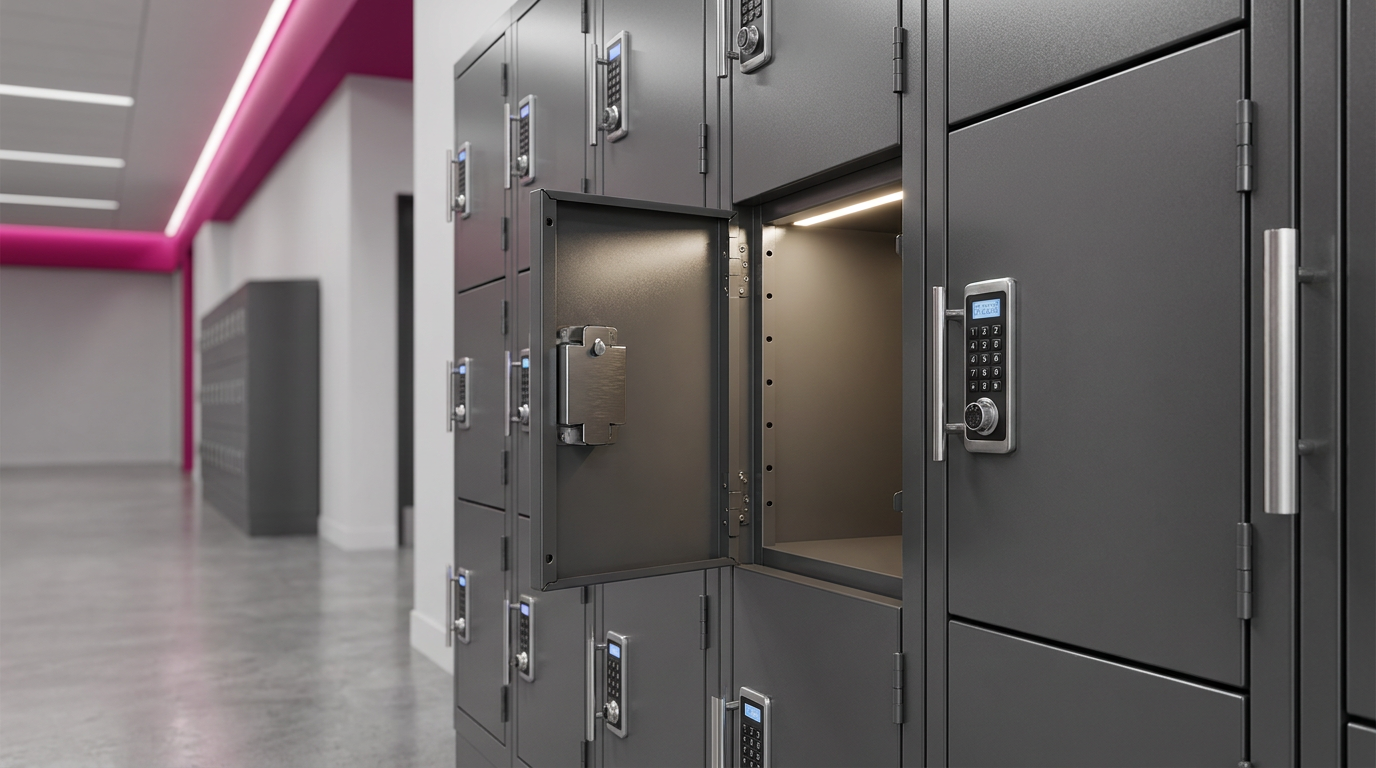
The options considered included:
- Fabric Pouches: Low cost, but offer minimal security and can be cumbersome to manage.
- Simple Collection Boxes: Inexpensive but lack individual security, raising issues of liability.
- Secure Non-Charging Lockers: A mid-range option providing excellent individual security. Pupils are assigned a specific locker, ensuring privacy and accountability.
- Powered Charging Lockers: The premium option, offering both secure storage and the ability to charge devices during the day. This can be a significant benefit but comes at a higher cost.
After a thorough review, the school opted for secure non-charging lockers for each form group, finding it offered an effective balance of security and affordability. The procurement was handled through a list of approved suppliers on public sector procurement frameworks, which ensures compliance and competitive pricing. This is an area where we often help schools, offering Bulk Buy Discounts and flexible payment options like Credit Accounts Or Pay Flexibly.
| Storage Solution | Estimated Cost per Pupil | Security Level | Key Advantage | Key Disadvantage |
|---|---|---|---|---|
| Fabric Phone Pouches | £3 – £7 | Low | Very low initial cost; portable. | No real security; easily lost or damaged. |
| Unsecured Collection Boxes | £1 – £2 | Very Low | Cheapest option; simple to deploy. | No individual security; high risk of theft/mix-ups. |
| Multi-Door Lockers (Non-Charging) | £25 – £45 | High | Each pupil has a secure, lockable space. | Higher upfront cost; requires fixed space. |
| Powered Charging Lockers | £60 – £100+ | High | Secure storage plus device charging. | Highest cost; requires electrical installation. |
Implementation & Logistics: A Step-by-Step Rollout
With the policy defined and the hardware procured, the school moved to the implementation phase. This was managed like a dedicated project, with a clear timeline to ensure a smooth transition at the start of the new academic year.
The rollout was structured over four weeks leading up to the Autumn term:
- Weeks 1-2: Final Policy Communications: The finalised policy, along with a detailed FAQ document addressing parental concerns, was sent out via email, the school’s app, and a physical letter. The message was clear, consistent, and positive.
- Week 3: Staff Training & Locker Allocation: Staff received final training on the daily logistics. Form tutors were given key management responsibilities for their group’s locker unit, and the process was rehearsed.
- Week 4: Locker Installation: The locker banks were installed in designated areas for each year group, minimising congestion. Our installation team worked outside of school hours to avoid any disruption.
- Start of Term: Policy Live: On the first day of term, the new routine began. Pupils arrived, placed their phones in their assigned locker, and form tutors secured the units for the day. The process was reversed 15 minutes before the end of school.
The School Business Manager commented on the process: “The key was planning for every eventuality. What happens if a pupil forgets their key? What’s the protocol for a parent needing to make urgent contact? We war-gamed the logistics for weeks. It seemed tedious at the time, but it meant that when we went live, we had an answer for everything. That preparation was invaluable.”
The Results: Measurable Outcomes One Year On
The ultimate measure of the project’s success is found in the data one year after implementation. The results were immediate and significant, providing compelling evidence that the new policy had achieved its goals. The school leadership team tracked key metrics and collected qualitative feedback to build a complete picture of the impact.
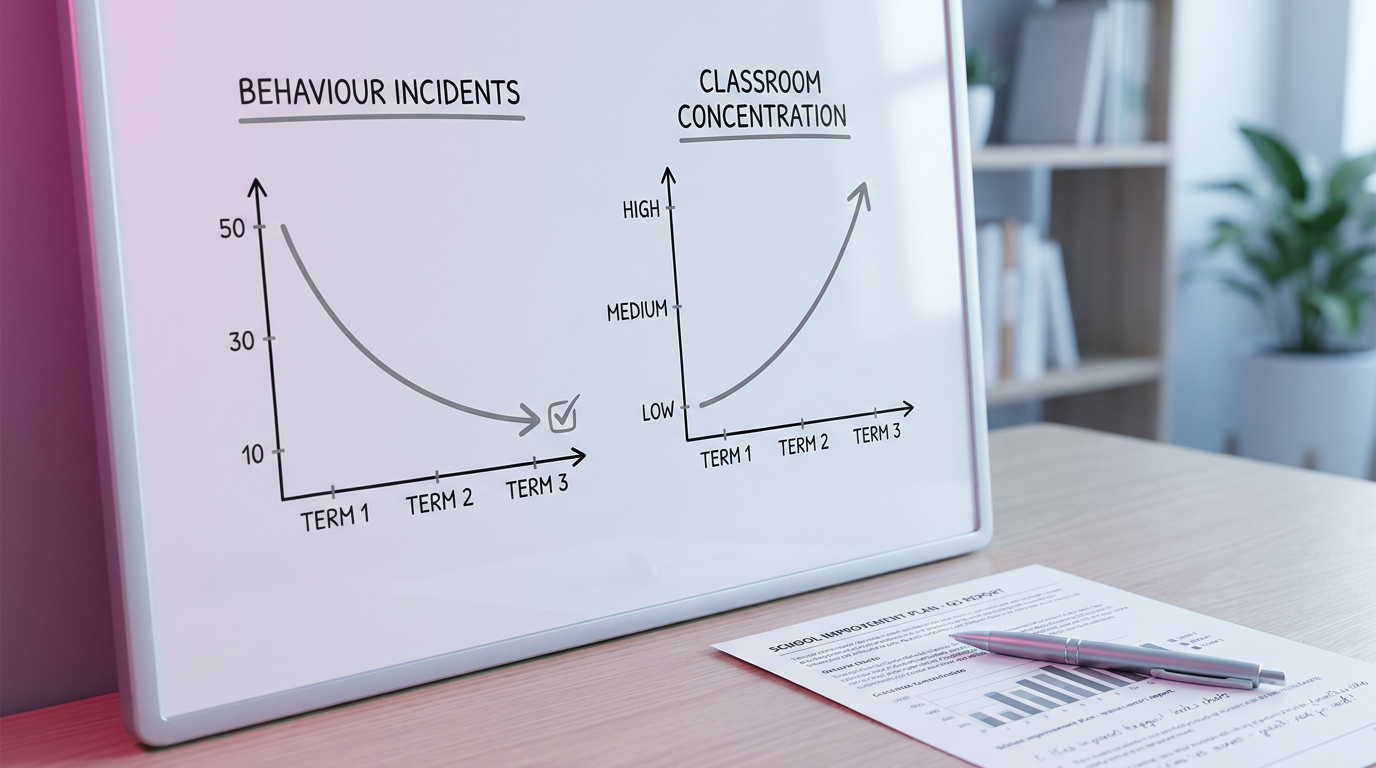
Within the first full academic year, the school recorded:
- A 72% reduction in behaviour incidents logged for mobile phone misuse. This directly translated into less time spent by staff on discipline and more time on teaching and learning.
- Internal data showed a 15% increase in the rate of homework completion across Key Stage 4, which teachers attributed to improved focus in class and fewer distractions.
- A post-implementation survey of teaching staff revealed that 88% felt their ability to teach without interruption had ‘significantly improved’. One Head of Department noted, ‘The atmosphere in the classroom is transformed. It’s calmer, more focused, and engagement has visibly increased.’
Also, a subsequent visit from Ofsted noted the ‘calm and orderly’ environment throughout the school. The official report from the visit highlighted the positive learning atmosphere as a key strength, a point Amanda Spielman of Ofsted (2019) has emphasised as a prerequisite for effective education. The policy had successfully moved the school from a reactive state of managing disruption to a proactive one of fostering concentration.
Important Considerations
You should recognise that this case study represents the experience of one specific UK secondary school. While the principles are broadly applicable, outcomes can vary based on factors such as school size, pupil demographics, existing behaviour standards, and the strength of the school leadership team. This report should be used as an illustrative guide, not a likely to support blueprint for success.
The ‘no phones at all during the school day’ policy described here is one of several possible approaches. Other schools opt for policies that allow phone use during break and lunch times, or permit phones for specific, teacher-led educational tasks. These alternative models present different challenges, often requiring more complex supervision and creating clearer distinctions between appropriate and inappropriate use.
Before embarking on a significant policy change, we recommend school leaders conduct a thorough internal audit of their specific challenges and resources. For complex logistical problems, such as planning for the installation of large-scale storage solutions, consulting with a specialist supplier can be invaluable. An expert can help with space planning, product selection, and budgeting to ensure a smooth and cost-effective implementation.
Key Learnings and Your Next Steps
This case study demonstrates that a successful school mobile phone policy is built on two pillars: a well-communicated, collaborative policy and robust physical infrastructure. By addressing both the human and logistical elements, the school transformed its learning environment, reduced staff workload in managing behaviour, and created a more focused atmosphere for pupils. The key is a planned, phased approach rather than a sudden mandate.
If your school is considering a new policy and needs to solve the practical challenge of where to store hundreds or thousands of devices, the expert team at Costcutters UK can help. With over 35 years of experience, we provide everything from simple lockers to bespoke, powered storage solutions for secure phone storage for schools. Book a free, no-obligation space planning consultation today to explore an effective options for your budget and your school.
Frequently Asked Questions
What is a case study?
A case study is an in-depth, detailed examination of a specific instance or event, project, or person. This entire article, which analyses a school’s implementation of a mobile phone policy, serves as a practical example. It moves beyond theory to show a real-world problem, the applied solution, and the final results, offering valuable lessons for others facing similar situations.
What are the 5 components of a case study?
The five core components are the problem, the stakeholders, the proposed solution, the implementation, and the results. This structure creates a clear narrative arc that is easy for readers to follow. It begins by establishing the initial challenge and concludes by demonstrating the measurable impact of the solution, providing a complete picture of the project or event being studied.
How do I structure a case study?
A strong case study is typically structured chronologically, following the problem-solution-result format. Start with an introduction to the subject and the core problem they faced. Follow this with an analysis of the stakeholders involved and the solution chosen. Detail the step-by-step implementation process, and conclude with a clear presentation of the results, supported by data, and a summary of the key lessons learned.
How to write a case study example?
To write an effective case study example, begin by gathering all relevant data, including interviews, statistics, and project documents. Structure your narrative around the problem-solution-result framework, as demonstrated in this article. Use direct quotes and specific data points to build credibility and tell a compelling story. Typically focus on the lessons that a reader can apply to their own situation, making the example both informative and actionable.
What is the goal of a school mobile phone policy?
The primary goal is to create a safe, focused, and equitable learning environment. By managing or removing the distraction of personal devices, schools aim to improve pupil concentration, reduce opportunities for cyberbullying during the school day, and minimise the social pressures associated with phone ownership. An effective policy supports both academic achievement and pupil wellbeing, as guided by the DfE.
What are the main types of secure phone storage for schools?
The main types range from low-cost fabric pouches to more robust multi-door metal lockers and powered charging stations. Fabric pouches are cheap but offer low security. Simple collection boxes are similar. Secure metal lockers provide high individual security for each pupil, while powered versions add the convenience of charging. An effective choice depends on the school’s budget, space, and specific policy requirements.
What are the four types of case studies?
The four main types are illustrative, exploratory, cumulative, and critical instance case studies. Illustrative studies describe a situation (like this article). Exploratory studies are preliminary investigations. Cumulative studies synthesise information from several sites, and critical instance studies examine a unique situation. Each type serves a different research purpose, from simple description to theory testing.
Can ChatGPT write a case study?
Yes, AI tools like ChatGPT can generate a generic case study structure but lack genuine insight. It can be a useful assistant for drafting or outlining. However, it cannot replicate the authentic, first-hand experience, specific data, and nuanced details that come from a real-world project. For a credible and authoritative study, human expertise and real data are essential.
What are the 4 parts of a case study?
A common four-part structure is Situation, Task, Action, and Result (the STAR method). The ‘Situation’ outlines the context and problem. The ‘Task’ defines the specific goal to be achieved. The ‘Action’ describes the steps taken to address the task. Finally, the ‘Result’ quantifies the outcome, demonstrating the impact of the actions taken. This framework creates a concise and powerful narrative.
How do I get buy-in from parents for a new school policy?
Gaining parental buy-in requires clear, early, and consistent communication. Start by explaining the ‘why’ behind the policy, using data on learning and wellbeing. Hold consultation meetings, run surveys to gather feedback, and create a clear FAQ document addressing common concerns like emergency contact. Demonstrating that you have listened to and considered their perspectives is key to building trust.
References
- Department for Education – Mobile phones in schools Guidance – Government Guidance. Provides guidance for headteachers in England to support them in creating a mobile phone-free school day.
- London School of Economics – A large-scale study on the effect of banning mobile phones in schools – Academic Study. Study found that following a ban on mobile phones, student test scores improved by 6.4% of a standard deviation.
- The Case Study Approach – NCBI – Methodology Review (2011). Defines the case study approach as a tool for in-depth, multi-faceted explorations of complex issues in their real-life settings.
- Ofsted – ‘Calm, orderly and purposeful’: a priority for all schools – Speech Transcript (2019). Emphasises that a calm and orderly environment is a prerequisite for effective learning.
- Wikipedia – Case study – Encyclopedia Entry. Provides a general overview of the case study as a research method across various disciplines.
- Yale School of Management – Case Study Basics – Educational Resource. Outlines the fundamental principles of using and analysing case studies in a business education context.
Important Considerations & Alternative Approaches
It is important to recognise that this case study represents the experience of one specific UK secondary school. While the principles are broadly applicable, outcomes can vary based on factors such as school size, pupil demographics, existing behaviour standards, and the strength of the school leadership team. This report should be used as an illustrative guide, not a guaranteed blueprint for success.
The ‘no phones at all during the school day’ policy described here is one of several possible approaches. Other schools opt for policies that allow phone use during break and lunch times, or permit phones for specific, teacher-led educational tasks. These alternative models present different challenges, often requiring more complex supervision and creating clearer distinctions between appropriate and inappropriate use.
Before embarking on a significant policy change, we recommend school leaders conduct a thorough internal audit of their specific challenges and resources. For complex logistical problems, such as planning for the installation of large-scale storage solutions, consulting with a specialist supplier can be invaluable. An expert can help with space planning, product selection, and budgeting to ensure a smooth and cost-effective implementation.
Conclusion
Key Learnings and Your Next Steps
This case study demonstrates that a successful school mobile phone policy is built on two pillars: a well-communicated, collaborative policy and robust physical infrastructure. By addressing both the human and logistical elements, including the procurement of secure phone storage for schools, the school transformed its learning environment, reduced staff workload in managing behaviour, and created a more focused atmosphere for pupils. The key is a planned, phased approach rather than a sudden mandate.
If your school is considering a new policy and needs to solve the practical challenge of where to store hundreds or thousands of devices, the expert team at Costcutters UK can help. With over 35 years of experience, we provide everything from simple lockers to bespoke, powered storage solutions. Book a free, no-obligation space planning consultation today to explore the best options for your budget and your school.