Troubleshooting Early Years Environment Challenges: A Practical Guide for UK Schools
🎯 Key Takeaway
The most common early years environment challenges involve limited space, inadequate or unsafe furniture, tight budget constraints, and meeting EYFS compliance, which can all be solved through strategic planning and smart procurement.• An ‘outstanding’ EYFS environment is safe, stimulating, and flexible, supporting all areas of learning as defined by the statutory framework.
• Key hazards include unstable furniture, trip risks, and poor hygiene; using compliant equipment (BS EN 1729) is crucial for risk mitigation.
• Cost-effective solutions like multi-functional furniture and partnering with a full-service supplier can help you achieve a high-quality finish within budget.This guide provides school leaders with actionable strategies to transform their early years spaces effectively and affordably.
For school leaders and business managers, creating an inspiring Early Years Foundation Stage (EYFS) setting whilst navigating tight budgets is a significant undertaking. As of May 2026, the pressure to deliver exceptional outcomes for the youngest learners has rarely been greater. Overcoming common early years environment challenges is fundamental to achieving a ‘Good’ or ‘Outstanding’ rating from Ofsted (The Office for Standards in Education, Children’s Services and Skills). This is because the physical space is not just a backdrop for learning; it’s an active participant.
This practical guide is designed for UK school decision-makers. We’ll provide actionable strategies to solve issues related to space, safety, and budget, helping you create a positive learning environment where children can thrive. At Cost Cutters UK, we’ve spent over 35 years helping schools build these exact spaces, and we’re here to share what we’ve learned. You can explore our complete catalogue of school equipment to see the possibilities.
Written by: Content Team | Reviewed by: Editorial Team, Industry Specialists with 35+ Years Experience; Rated Excellent On Trustpilot
Last updated: 23 May 2026
ℹ️ Transparency Disclosure: This article explores common challenges in early years settings based on UK government guidelines, Ofsted reports, and our 35 years of specialised experience as an educational supplier. For transparency, some links may connect to our services. All information is verified by our editorial team. Cost Cutters UK is a trusted supplier for schools and public sector organisations.
What is an ‘Outstanding’ Enabling Environment in EYFS?
An ‘Outstanding’ enabling environment, as defined by the Early Years Foundation Stage (EYFS) statutory framework, is one that provides a rich, varied, and safe space for children to play, explore, and learn. It’s more than just a room with toys; it is a carefully curated space that actively supports development. The Early Years Alliance, a leading charity, reinforces that these enabling environments eyfs are fundamental to practice. According to their guidance, the environment functions as a ‘third teacher’, profoundly influencing behaviour and learning outcomes.
The key principles of such an environment are broken down into three interconnected areas:
- The Emotional Environment: This is built on positive, respectful relationships between practitioners and children. A secure emotional base is essential for children to feel confident enough to explore. The Department for Education’s guidance on mental health for early years children highlights the critical link between a secure environment and a child’s wellbeing.
- The Indoor Environment: This space should be flexible, allowing for different types of play and learning. It must be organised with accessible, age-appropriate resources that encourage curiosity and independence.
- The Outdoor Environment: Offering opportunities that can’t be replicated indoors, the outdoor space is vital for large-scale physical activity, risk-taking, and connecting with the natural world.
Ultimately, a good eyfs environment is one that is responsive to children’s needs and interests. Ofsted inspectors look for evidence that the space is being used intentionally by practitioners to build on children’s development across all seven areas of learning.
Analysing the Top 5 Early Years Environment Challenges
The top five early years environment challenges that schools typically face are: 1) Limited Space and Poor Layout, 2) Inadequate or Unsafe Furniture, 3) Lack of Engaging, Multi-Sensory Resources, 4) Severe Budget Constraints, and 5) High Noise Levels and Overstimulation. These issues rarely exist in isolation; they often create a domino effect that can compromise both safety and the quality of education.
- Limited Space & Poor Layout: Many schools, particularly in older buildings, struggle with small or awkwardly shaped classrooms. A poor layout can restrict ‘free-flow’ play, create bottlenecks where children congregate, and make it difficult for practitioners to supervise effectively.
- Inadequate or Unsafe Furniture: Using furniture that isn’t purpose-built for an educational setting is a major risk. It may not withstand the rigours of daily use, leading to breakages, or it could present serious safety hazards from sharp edges or instability.
- Lack of Engaging Resources: A stimulating environment requires a variety of resources that appeal to different senses and support different types of learning. Without this, children can become bored or disengaged, and crucial developmental opportunities are missed.
- Severe Budget Constraints: This is perhaps the most pervasive challenge. Tight budgets can force schools to delay necessary upgrades, opt for cheaper, less durable furniture, or cut back on essential learning resources. This is often a false economy, leading to higher replacement costs and a subpar environment.
- High Noise Levels & Overstimulation: An environment that is too cluttered, noisy, or visually chaotic can be overwhelming for young children. This can lead to behavioural issues and make it difficult for them to concentrate, particularly for children with sensory processing needs.
Solution 1: Overcoming Limited Space with Smart Layouts
Even the smallest room can become an effective learning space with thoughtful design. The key is to think multi-functionally and use every available surface. We recommend starting with the concept of ‘zoning’.
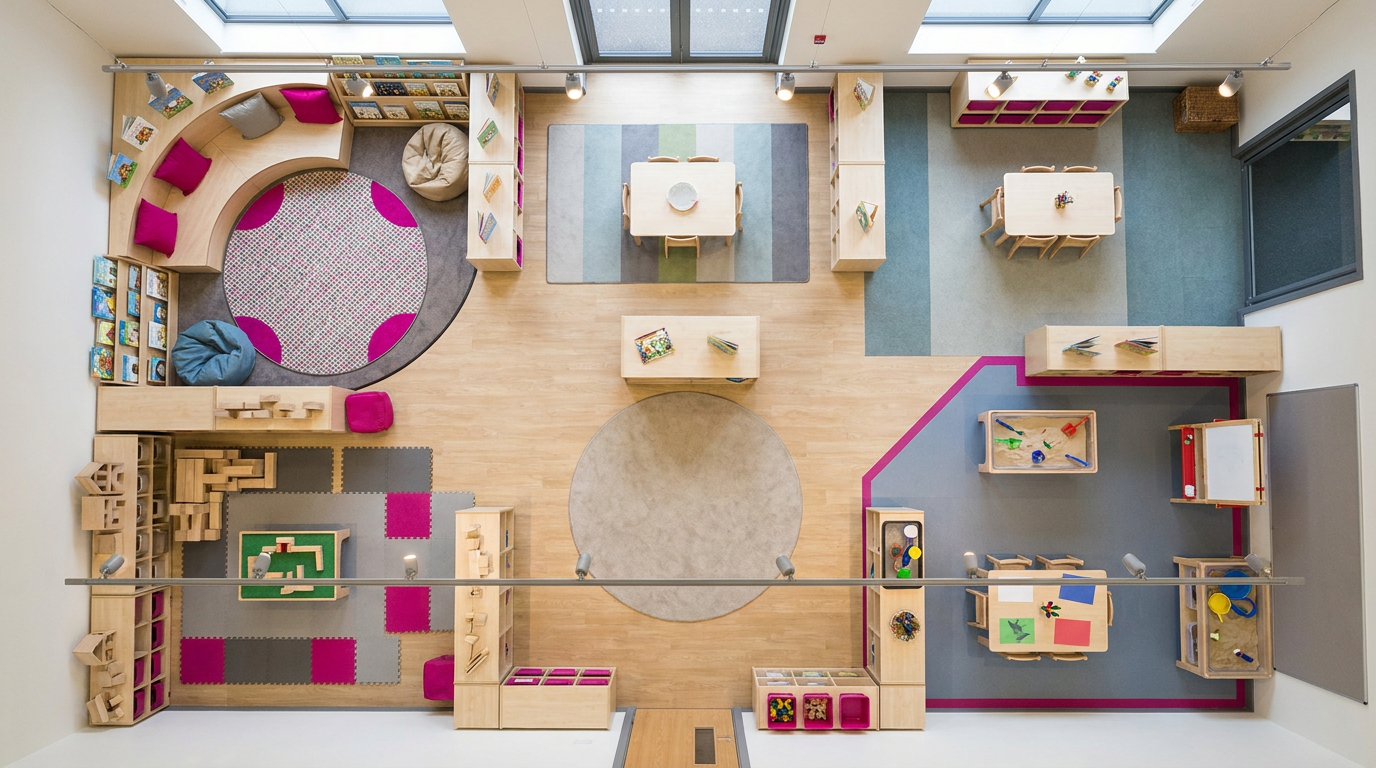
Zoning involves creating distinct areas within the classroom for different activities. This helps children understand the purpose of each space and manage their own behaviour accordingly. You don’t need solid walls; you can use low-level shelving, colourful rugs, or even furniture to define zones for:
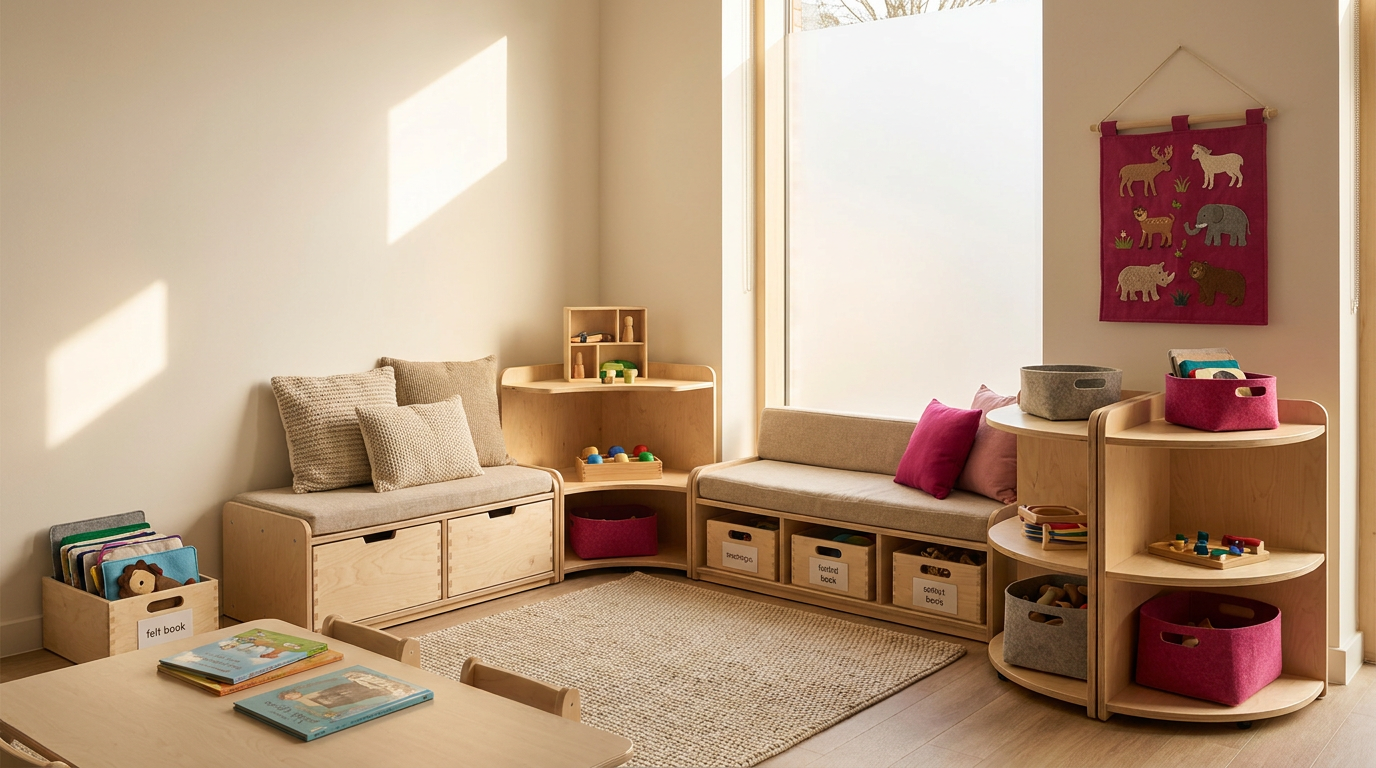
- A quiet reading corner with soft furnishings.
- A construction area with space to build.
- A messy play or art zone with easy-to-clean surfaces.
- A role-play area to spark imagination.
To maximise floor space, choose furniture that works harder. Multi-functional pieces are a smart investment. Think of storage benches that double as seating, tables with built-in trays for sand or water play, or modular units that can be reconfigured as your needs change. Our range of flexible breakout furniture includes many items well-suited for creating these adaptable zones.
Finally, don’t forget to look up! Vertical space is often underutilised. Wall-mounted display boards for children’s artwork, magnetic whiteboards for mark-making, or high-level shelving for storing less frequently used items can free up valuable floor area. This approach helps create one of an effective enabling environments eyfs by making the room feel larger and more organised. Some of the most effective early years classroom ideas are simply about using space more intelligently.
Solution 2: Mitigating Hazards with Compliant, Safe Furniture
Yes, mitigating hazards in childcare environment settings requires a systematic approach that prioritises compliance with national safety standards. Under the Health and Safety at Work etc. Act 1974, schools have a legal duty of care to protect children and staff from harm. This responsibility is overseen by the Health and Safety Executive (HSE), Great Britain’s national regulator for workplace health and safety.
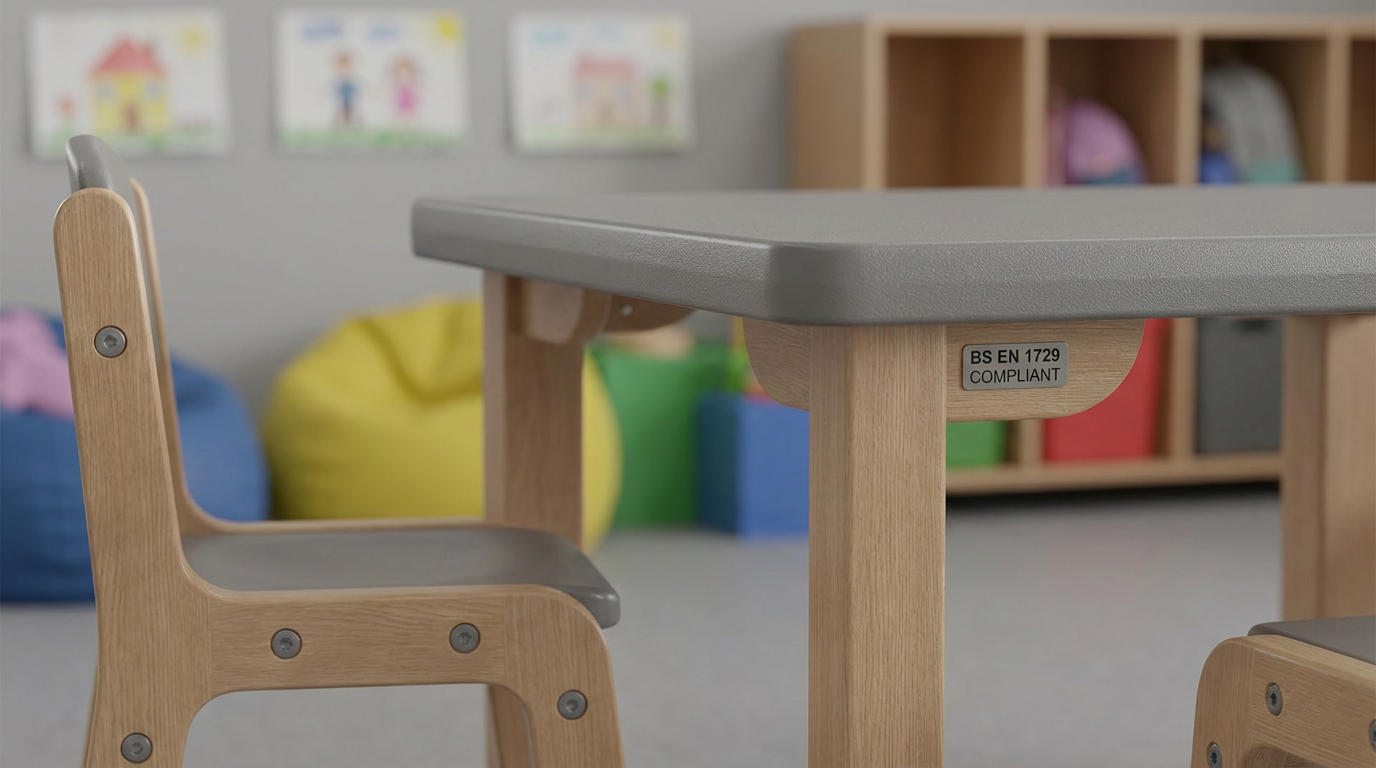
Common hazards in childcare environment settings include unstable furniture that can tip over, sharp edges on tables and chairs, toxic materials in paints or finishes, and trip hazards. A risk assessment should identify these potential dangers. However, the most effective control measure is proactive: procuring furniture that is specifically designed and certified for educational use.
The critical standard to look for is BS EN 1729. This is the British and European standard that specifies dimensions, strength, and stability requirements for furniture used in educational institutions. Furniture that meets this standard has been rigorously tested to ensure it is:
- Ergonomically sound: Sized correctly for the age group, promoting good posture.
- Strong and durable: Able to withstand the demands of a busy classroom.
- Stable and safe: Designed to prevent tipping and free from dangerous sharp edges or finger traps.
When purchasing furniture, we advise you to typically ask the supplier for proof of certification. At Cost Cutters UK, we are committed to safety and compliance, as detailed in our official certifications and accreditations.
| Common Hazard | Potential Risk to Children | Relevant UK Standard/Guidance | Compliant Solution Example |
|---|---|---|---|
| Unstable shelving units | Tipping, causing crush injuries | BS EN 1729 (Strength & Stability) | Low-level, wide-base shelving units or units fixed securely to a wall. |
| Chairs/tables with sharp corners | Cuts, bruises, head injuries from falls | BS EN 1729 (Safety Requirements) | Furniture with rounded or chamfered edges, made from impact-resistant materials. |
| Toxic materials in finishes | Poisoning if ingested, skin irritation | The Toys (Safety) Regulations 2011 | Using furniture and resources with certified non-toxic, child-safe paints and lacquers. |
| Clutter and poor storage | Slips, trips, and falls | HSE Guidance on Childcare Settings | Integrated storage solutions like tray units or storage benches to keep floors clear. |
Solution 3: Creating a Positive Learning Environment on a Tight Budget
Creating a positive learning environment doesn’t have to mean an unlimited budget. It’s about making smart, value-led decisions. Our experience shows that choosing the cheapest, non-specialised furniture is a false economy; it rarely lasts and can compromise safety. Instead, we recommend investing in a few key, high-quality pieces that are durable and versatile.
A core principle of a good eyfs environment is sensory engagement. As stated by the Ambition Institute in their article on the seven conditions for an effective EYFS environment, the space must enable exploration and communication. Sensory resources are not just ‘toys’; they are vital tools for cognitive development. Some of an effective early years classroom ideas centre on sensory exploration.
Here are some cost-effective strategies:
- Invest in a ‘Hero’ Product: Instead of buying dozens of small, cheap plastic items, invest in one high-impact piece like a Sensory Mood Sand and Water Table. A single item like this can be used for sand, water, soil, leaves, or light exploration, offering endless learning opportunities.
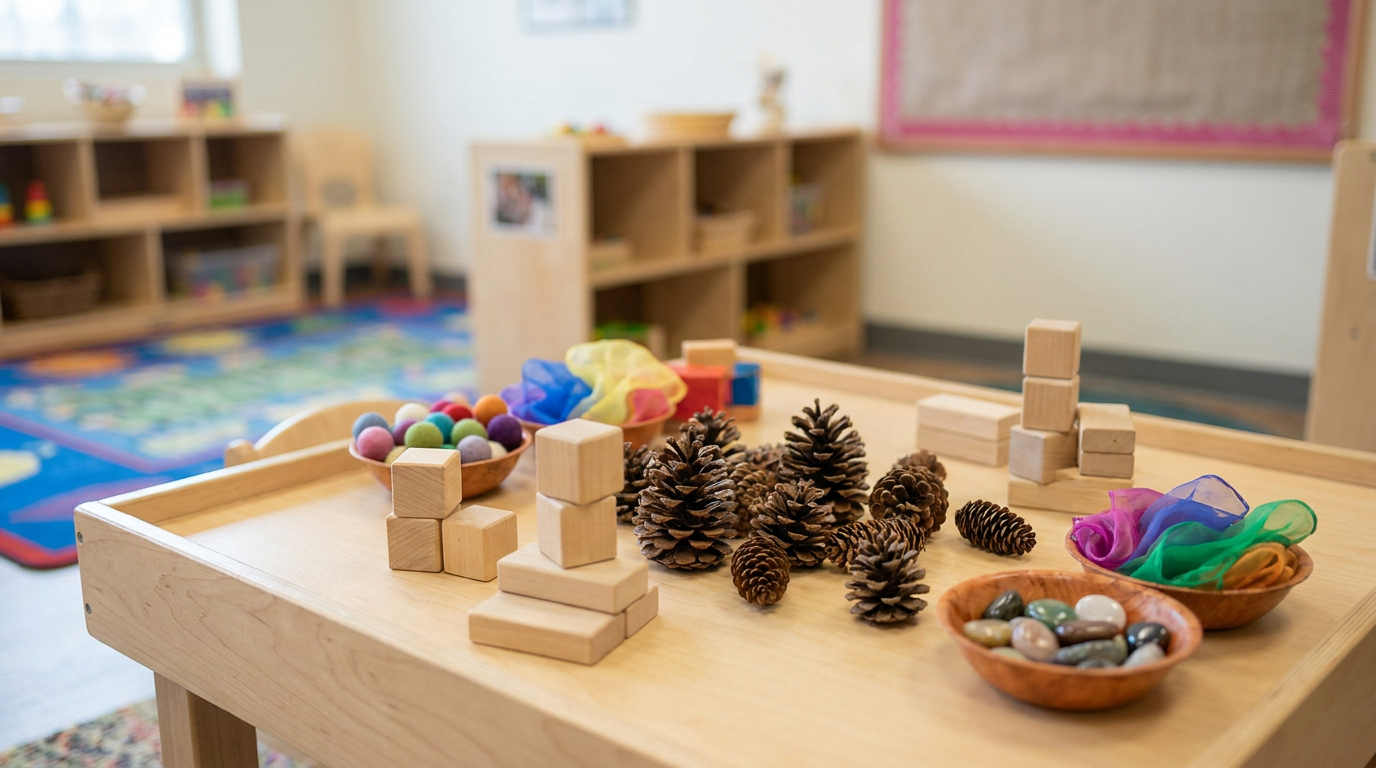
- Focus on Open-Ended Resources: Prioritise materials that can be used in multiple ways, such as wooden blocks, natural materials (pinecones, shells), and fabrics. These encourage more creativity than single-purpose toys.
- Choose Specialist Suppliers: Partner with suppliers who understand education. Our range of specialised Early Years furniture and toys, for example, is designed by experts to be both engaging and durable, ensuring you get an effective long-term value.
By focusing on quality and versatility, you can build a rich, stimulating environment that will stand the test of time, even with a limited budget.
Streamlining Procurement for Your EYFS Refurbishment
The process of sourcing, purchasing, and managing the delivery of furniture for a new or refurbished EYFS space can be complex and time-consuming. Juggling multiple suppliers for different items often leads to logistical headaches, inconsistent quality, and spiralling delivery costs. This is where partnering with a single, full-service supplier can be a significant improvement, “Saving Time & Stress”.
At Cost Cutters UK, we offer a “Design To Install We Do It All!” service. The benefits of this consolidated approach are clear:
- Simplified Project Management: You have one point of contact for everything, from initial design to final installation.
- Cohesive Design: We ensure all elements, from furniture to storage, work together to create a unified and effective learning environment.
- Cost Efficiency: By consolidating your order, you can access our Bulk Buy Discounts, ensuring your budget goes further. We also offer flexible payment options, including Credit Accounts Or Pay Flexibly, which we know is crucial for school budgeting cycles.
- Expert Guidance: Our team has over 35 years of experience and can provide free space planning and 3D visuals to help you envision the final result before committing.
This comprehensive service ensures that your project is completed on time, within budget, and to the highest standard, freeing you up to focus on what matters most: the children. You can easily get the process started and request a no-obligation quote online.
### Case Study: A Typical Primary School Scenario
Challenge: A primary school in the North of England needed to refurbish its outdated EYFS classroom. The space was small, the furniture was non-compliant, and the budget was a strict £8,000. They were overwhelmed by the prospect of managing the project themselves.
Solution: They engaged our “Design To Install” service. We provided a free site survey and 3D design, showing them how to use zoning and multi-functional furniture to maximise the space. We specified BS EN 1729 compliant furniture and durable storage, all within their budget thanks to our bulk buy pricing.
Results: The project was completed in just four weeks, from initial call to final installation. The school received a fully compliant, vibrant, and functional learning environment. The headteacher reported a 95% satisfaction rating from staff and a noticeable improvement in child engagement.
Key Insight: Using a single expert supplier streamlined the entire process, preventing costly mistakes and delivering a superior result faster than managing multiple vendors would have allowed.
Frequently Asked Questions About Early Years Environments
What are the most common early years environment challenges?
The most common early years environment challenges include limited space, tight budgets, ensuring safety and compliance, and providing sufficient stimulation. These issues often intersect, forcing schools to find creative, multi-faceted solutions that maximise value and meet stringent Ofsted and Health and Safety Executive (HSE) standards for childcare settings.
What makes a good EYFS environment?
A good EYFS environment is a safe, stimulating, and flexible space that supports children’s development across all seven areas of learning. It should offer a balance of child-led and adult-guided activities, with accessible resources and clearly defined zones for different types of play. The emotional atmosphere must also be positive, supportive, and welcoming.
What are the most common hazards in a childcare environment?
The most common hazards include unstable furniture that can be tipped over, sharp corners on tables, finger traps in doors, trip hazards from trailing wires or clutter, and poor hygiene. Conducting regular risk assessments and choosing certified, purpose-built furniture are essential steps to mitigate these dangers effectively.
What are environmental factors in the early years?
Environmental factors include the physical space (layout, light, noise), the resources available (toys, books, materials), and the emotional climate (relationships, sense of belonging). These factors work together to create an ‘enabling environment’ that either supports or hinders a child’s learning, well-being, and development as outlined in the EYFS framework.
What does the EYFS say about the environment?
The EYFS framework states that the environment is a crucial aspect of pedagogy, referring to it as one of the key elements for creating an effective learning experience. It mandates that settings must provide a rich learning environment that is safe, stimulating, and responsive to each child’s individual needs, supporting their exploration and development.
What are the top elements of a positive learning environment?
The top elements are safety, positive relationships, a sense of belonging, engaging resources, and opportunities for exploration and challenge. A space that is well-organised, celebrates children’s work, and is responsive to their interests is fundamental. It must be a place where children feel secure, valued, and motivated to learn.
What are three examples of physical hazards in an early years setting?
Three key examples are poorly maintained play equipment which can cause falls, unsecured shelving units that pose a tipping risk, and access to toxic materials like certain paints or cleaning supplies. Each of these requires specific control measures, such as regular safety checks and using certified, non-toxic resources appropriate for young children.
How do workplace hazards apply to a childcare setting?
Workplace hazards like slips, trips, falls, and manual handling injuries apply to staff, while unique risks for children are paramount. The setting is both a workplace for adults and a development space for children, so risk assessments must cover both staff safety (e.g., lifting children) and child-specific dangers (e.g., choking hazards).
How can I make my early years classroom more engaging on a budget?
Focus on versatile, open-ended resources and invest in one or two high-quality ‘hero’ items that offer maximum play value. Use natural materials, create a cosy reading nook with cushions, and rotate resources to maintain interest. A single sensory table can provide endless activities, offering better long-term value than numerous cheap toys.
What are the main types of learning environment?
In early years, the main types are the indoor environment, the outdoor environment, and the emotional environment. The physical spaces should be rich with learning opportunities, while the emotional environment, created by practitioners, must be warm, supportive, and secure to enable children to thrive and take risks in their learning.
Important Considerations and Next Steps
This guide provides general solutions to common challenges. However, every early years setting is unique, with its own specific spatial constraints, cohort needs, and budgetary realities. The effectiveness of these strategies will depend on a thorough assessment of your specific context, and the solutions presented here should be adapted accordingly.
While this article focuses on furniture and layout, a successful enabling environment also depends heavily on practitioner pedagogy, outdoor provision, and parental engagement. The physical environment is a critical component, but it works in concert with these other factors. For a holistic approach, consider professional development for staff on how to best utilise the new space.
For large-scale refurbishments or settings with complex needs (e.g., extensive SEN provision), we strongly recommend a professional consultation. An expert can conduct a detailed site survey, ensure full regulatory compliance, and create a tailored plan that maximises your space and budget. This initial investment can prevent costly mistakes and deliver a better long-term outcome.
Transform Your Space, Transform Their Learning
Effectively managing early years environment challenges is achievable with a strategic and informed approach. By focusing on creating a safe, compliant, and stimulating space through smart design and procurement, you can build a positive learning environment that meets Ofsted expectations and, more importantly, allows children to flourish. The key is to balance ideals with budgets, prioritising durable, versatile, and compliant solutions.
With over 35 years of experience and being Rated Excellent On Trustpilot, Cost Cutters UK specialises in helping schools like yours navigate these challenges. Our team provides everything from free space planning and 3D visuals to a complete design-and-installation service. Let us help you create an outstanding EYFS environment without the stress. Book your free, no-obligation space planning consultation today to get started.
References
- Department for Education – Government Guidance. Emphasises the link between a secure environment and children’s mental health and wellbeing.
- Ambition Institute – Blog Post/Article. Outlines seven key conditions for an effective EYFS environment, including belonging, communication, and exploration.
- Gov.uk – Health protection in schools – Public Health Guidance. Provides specific health and safety considerations for early years and childcare facilities, including hygiene and risk assessment.
- Early Years Alliance – Charity Guidance. Defines ‘enabling environments’ and provides practical advice for practitioners on creating them.
- Early Education – Charity Research Summary. Discusses the direct impact of well-designed environments on children’s learning behaviours and outcomes.
Conclusion
Transform Your Space, Transform Their Learning
In summary, early years environment challenges are not insurmountable; they are strategic problems that can be solved with careful planning and smart investment. By focusing on creating a safe, compliant, and stimulating space through intelligent design and procurement, you can build a positive learning environment that meets Ofsted expectations and, more importantly, allows every child to flourish. The key is to balance ideals with budgets, prioritising durable, versatile, and compliant solutions.