The Ultimate School Cleaning Checklist: Ensuring a Healthy Learning Environment
🎯 Key Takeaway
A comprehensive school cleaning checklist is a vital management tool for UK schools to ensure a hygienic, safe, and compliant learning environment for pupils and staff. It systematises daily, weekly, and termly tasks. Prioritise daily disinfection of high-touch surfaces like door handles, desks, and light switches to reduce illness transmission. Implement a termly school deep cleaning checklist during holidays to tackle accumulated grime and perform essential maintenance. Ensure all cleaning activities adhere to UK-specific regulations, including COSHH and DfE guidelines, to maintain compliance and pass inspections.
A clean school is fundamental to a successful learning environment. Poor hygiene directly impacts pupil and staff health, leading to increased absenteeism which disrupts education. As of June 2026, maintaining high standards is non-negotiable, especially with ongoing attention to public health. A well-structured school cleaning checklist is the most effective tool a facilities manager can use to move from reactive cleaning to proactive hygiene management. It’s not just a list; it’s a strategic document essential for meeting stringent school hygiene requirements UK. At Cost Cutters UK, we’ve spent over 35 years helping educational institutions create optimal learning environments, and we know that a clean space is the foundation. This guide provides a definitive framework, including daily, weekly, and termly checklists, to ensure your school is safe, compliant, and conducive to learning.
Written by: Content Team | Reviewed by: Editorial Team, 35+ Years Experience; Rated Excellent On Trustpilot
ℹ️ Transparency Disclosure: This article explores school cleaning best practices based on an analysis of UK government guidelines, industry standards, and our 35 years of experience supplying UK schools. Some links may connect to our furniture and equipment services. All information is verified by our editorial team. Costcutters UK is a leading supplier of school equipment and educational supplies.
What Should a Daily School Cleaning Checklist Include?
Yes, a daily checklist is the cornerstone of any effective school hygiene programme. Its primary purpose is to control the spread of germs by focusing on high-traffic areas and high-touch surfaces throughout the school day. According to guidance from Public Health England (PHE), surfaces frequently touched by many people, such as door handles, light switches, and shared desks, are primary vectors for illness transmission. A robust daily classroom cleaning checklist is therefore essential.
The daily routine should be systematic, ensuring that classrooms, corridors, and reception areas are cleaned and disinfected at the end of each day. This isn’t just about looking tidy; it’s a critical health and safety measure. We’ve seen in our work with schools that a clear, documented process empowers cleaning staff and provides clear accountability. An effective school cleaning schedule UK specifies not just the task, but the required standard.
Key tasks include:
- Surface Disinfection: Wiping down all desks, chairs, tables, and worktops with a certified disinfectant.
- High-Touch Points: Sanitising door handles, light switches, bannisters, and push plates.
- Floor Care: Sweeping or vacuuming all hard floors and carpets to remove daily debris.
- Waste Removal: Emptying all classroom and office bins, replacing liners, and disinfecting the bins themselves.
| Task | Focus Area | Frequency | Rationale / UK Guideline |
|---|---|---|---|
| Disinfect High-Touch Surfaces | Door handles, light switches, bannisters, communal keyboards | Daily (minimum) | Reduces cross-contamination. A core recommendation from Public Health England (PHE) for infection control. |
| Clean & Sanitise Desks/Chairs | All classroom furniture | Daily | Removes dirt and germs from primary pupil contact areas, supporting DfE advice for a clean environment. |
| Empty All Bins | Classrooms, offices, corridors, staff rooms | Daily | Prevents odours, pest attraction, and overflowing waste. A basic Health and Safety Executive (HSE) expectation. |
| Sweep/Vacuum Floors | All floor surfaces, especially in high-traffic corridors | Daily | Removes dirt and debris that can become airborne or transferred onto surfaces. |
| Restock & Clean Washrooms | Toilets, sinks, soap dispensers, paper towel holders | Daily (plus checks) | Maintains hygiene in a high-risk area. Essential for meeting DfE standards for pupil welfare. |
What Tasks Go on the Weekly Cleaning Schedule?
While daily cleaning manages immediate hygiene, weekly tasks are designed to prevent the gradual accumulation of dirt and grime. These scheduled activities go beyond a simple wipe-down to address areas that don’t require daily attention but are crucial for maintaining the overall cleanliness and condition of the school building. Think of it as resetting the baseline of cleanliness each week.
This part of the school cleaning schedule UK typically involves more intensive work. For example, instead of just spot-cleaning floors, the weekly schedule might include machine buffing or polishing to restore shine and remove scuffs. It also covers tasks that are easily overlooked in the daily rush. A well-planned weekly checklist ensures a deeper, more thorough clean that contributes to a healthier environment and better-preserved facilities.
Weekly tasks often include:
- Thorough polishing of hard floors in corridors and halls.
- Dusting high-level fixtures, such as light fittings, vents, and the tops of cupboards.
- Wiping down windowsills, ledges, and skirting boards.
- Deep cleaning and disinfecting computer equipment, including keyboards, mice, and monitors.
- Cleaning internal glass on doors and partitions.
Why is a Termly School Deep Cleaning Checklist Crucial?
School holidays present a golden opportunity for the most intensive cleaning tasks that are impossible to perform when the building is occupied. A school deep cleaning checklist is your battle plan for this period. This isn’t about tidying; it’s a programme of restorative and preventative maintenance that tackles deep-seated grime, ensures long-term asset preservation, and prepares the entire facility for a fresh start. Research from the UK Health Security Agency (UKHSA) indicates that periodic deep cleaning can significantly reduce the environmental microbial load, contributing to a healthier space when pupils return.
This process is vital for the longevity of your school’s assets. For instance, professional carpet shampooing removes abrasive dirt particles that degrade fibres over time, whilst stripping and re-sealing hard floors protects them from damage. In our experience, schools that invest in termly deep cleans see a noticeable reduction in wear and tear on their facilities, ultimately saving money on replacements. It’s an investment in the building itself.
A comprehensive checklist should cover:
- Professional steam cleaning or shampooing of all carpets and rugs.
- Stripping, polishing, and re-sealing hard floor surfaces.
- Washing walls and scrubbing tiles to remove marks and stains.
- Deep cleaning and sanitising upholstery on all fabric chairs and soft furnishings.
- Descaling all washroom fixtures, including toilets, urinals, and taps.
- High-level cleaning of windows, vents, and lighting fixtures.
How Should You Clean Specialised Areas Like Toilets and Canteens?
Specialised areas in a school present unique and heightened hygiene challenges that demand specific protocols beyond the standard classroom clean. Toilets, canteens, and gyms are hotspots for bacteria and require their own detailed checklists to manage risks effectively. A generic approach is simply not sufficient.
For washrooms, a dedicated school toilet cleaning checklist is non-negotiable. These areas require frequent attention throughout the day, with a focus on disinfection to combat the high risk of germ transmission. According to the Health and Safety Executive (HSE), inadequate toilet facilities can be a significant source of illness. The checklist must include cleaning toilets, sinks, floors, and all touchpoints with a powerful disinfectant and descaler.
Canteens and kitchens operate under even stricter rules, governed by the Food Standards Agency (FSA). Cleaning here is about food safety. Tasks must include degreasing surfaces, sanitising food preparation areas, and ensuring all equipment is hygienically maintained.
Gyms and sports halls have their own requirements. The focus is on cleaning shared sports equipment to prevent skin infections, sanitising changing room benches and floors, and maintaining the specialised flooring of the sports hall itself to ensure it remains safe and performs correctly. Each of these zones needs a dedicated cleaning strategy documented in your master plan.
What are the UK Compliance Rules for a School Cleaning Checklist?
In the United Kingdom, a school cleaning checklist is more than a guide – it’s a key part of your legal and regulatory obligations. Compliance is managed by several bodies, and your cleaning schedule must reflect their requirements. The Health and Safety Executive (HSE) provides the overarching legal framework. A critical component of this is the Control of Substances Hazardous to Health (COSHH) regulations. This law, defined by the HSE, requires you to assess the risks of cleaning chemicals, ensure they are stored and used safely, and provide staff with appropriate training and Personal Protective Equipment (PPE).
Also, the Department for Education (DfE) sets standards for school premises, stating that they must be maintained in a clean and hygienic condition. A documented school cleaning schedule UK serves as direct evidence that you are meeting this requirement. During an inspection, Ofsted (the Office for Standards in Education, Children’s Services and Skills) views a well-managed and clean environment as an indicator of a well-run school. While inspectors don’t review cleaning checklists line-by-line, a visibly clean, safe, and orderly school contributes positively to their overall judgement. Your checklist demonstrates a proactive approach to pupil welfare and safety, aligning with Ofsted’s safeguarding focus. You can view our Certifications & Accreditations to see how we align with these standards.
How Does Furniture Choice Impact Cleaning Efficiency?
This is a question we’re passionate about because it’s where smart procurement directly impacts your operational budget and hygiene standards. The furniture and surfaces you choose can either be a daily cleaning battle or a strategic advantage. In our experience, selecting materials and designs with cleanability in mind can dramatically reduce labour costs and improve hygiene outcomes over the long term.
Consider the difference between a traditional wooden desk with intricate joints and a modern desk with a seamless, non-porous laminate top. The former has dozens of crevices where dirt and germs can accumulate, requiring detailed, time-consuming cleaning. The latter can be wiped down and disinfected in seconds. The same principle applies to chairs. Moulded polypropylene chairs are far easier to sanitise than upholstered fabric chairs, which can harbour allergens and require specialist deep cleaning.
When planning a refurbishment, we recommend you prioritise:
- Non-Porous Surfaces: Materials like Trespa or solid-grade laminate for worktops and tables with wipe-clean laminate surfaces are impervious to liquids and bacteria.
- Simple Designs: Avoid furniture with unnecessary ridges, joints, or dirt traps.
- Antimicrobial Finishes: Some modern materials incorporate antimicrobial agents that inhibit the growth of bacteria.
- Mobility: Lightweight, stackable chairs or furniture on castors make it easier for cleaning staff to access floor space for thorough cleaning.
Thinking about cleanability during procurement is a long-term strategy for optimising your budget and creating a healthier school. It’s a core part of our “Design To Install We Do It All!” philosophy.
Case Study: A Hypothetical Primary School Scenario
Challenge: A 400-pupil primary school was experiencing high cleaning staff turnover and consistently failed to meet hygiene standards in shared areas, leading to parental complaints. Their old, heavy wooden furniture made effective floor cleaning nearly impossible, and cleaning times were exceeding budget by 15%.
Solution: During a summer refurbishment, the school worked with us to replace furniture in 12 classrooms and the dining hall. They chose lightweight, stackable polypropylene chairs and seamless laminate tables. This was combined with a new, structured cleaning checklist.
Results: The new furniture reduced room-clearing time for floor cleaning by 70%. The simplified cleaning process allowed the existing staff to meet the new checklist standards within their contracted hours, eliminating overtime costs. Post-refurbishment hygiene audits showed a 95% compliance score, up from 60%.
Key Insight: Choosing furniture with cleanability in mind simplified the cleaning process so much that it enabled the existing team to succeed without needing more staff or hours.
Important Considerations
This school cleaning checklist provides a comprehensive framework based on UK best practices. However, it is not a substitute for a site-specific risk assessment. Every school has unique layouts, materials, and usage patterns that may require adjustments to this schedule. You should adapt these guidelines to your specific environment and consult the latest guidance from the HSE and Public Health England, especially during public health emergencies.
School leaders must decide between maintaining an in-house cleaning team or outsourcing to a specialist contractor. An in-house team offers greater control and flexibility, but carries the full burden of recruitment, training, payroll, and COSHH compliance. Outsourcing can transfer this risk and provide access to specialised equipment and expertise, but may come at a higher cost and offer less flexibility day-to-day. We believe a thorough cost-benefit analysis is essential.
For major refurbishments, new builds, or persistent hygiene challenges, we recommend seeking professional guidance. A facilities management consultant or a hygiene specialist can provide expert advice on workflow optimisation, product selection, and long-term maintenance strategies. Also, involving a specialist school furniture supplier early in the planning process can ensure that procured items support, rather than hinder, your cleaning and hygiene goals.
Building a Healthier School Through a Smarter Cleaning Strategy
Implementing a structured school cleaning checklist is a powerful step towards a healthier, safer, and more effective learning environment. Moving beyond reactive cleaning to a planned schedule of daily, weekly, and termly tasks ensures compliance, protects pupils and staff, and preserves the value of your facilities. This strategic approach transforms cleaning from a simple chore into a core component of successful school management. It’s about “Saving Time & Stress” by creating a system that works.
As you review your school’s environment, consider how your furniture contributes to your cleaning challenges. For over 35 years, Costcutters UK has helped schools select durable, easy-to-clean furniture that reduces maintenance costs and enhances hygiene. We are Rated Excellent On Trustpilot for our service. If you’re planning a refurbishment and want to create a space that is as easy to maintain as it is inspiring, book a free space planning consultation with our experts. We also offer Bulk Buy Discounts and flexible payment options like Credit Accounts Or Pay Flexibly.
Frequently Asked Questions
What is a school cleaning checklist?
A school cleaning checklist is a structured document outlining all necessary cleaning tasks, frequencies, and standards for a school. It serves as a guide for cleaning staff and a management tool for ensuring compliance and consistency. A robust checklist helps guarantee that no area is overlooked, from daily classroom tidies to termly deep cleans, ensuring a consistent standard of hygiene across the entire premises.
How often should school toilets be cleaned?
School toilets should be inspected multiple times daily, with at least one deep clean performed every day. High-traffic periods, such as break and lunch times, may require additional checks to restock supplies and address immediate issues. A documented school toilet cleaning checklist is essential for demonstrating due diligence and managing one of the highest-risk areas for germ transmission in a school.
What are the main school hygiene requirements in the UK?
The main school hygiene requirements UK are guided by the Health and Safety Executive (HSE) and the Department for Education (DfE). These require schools to have clean, well-lit, and ventilated premises, with particular attention to toilets and drinking water facilities. Schools must also comply with COSHH regulations for cleaning chemicals. Maintaining these standards is crucial for pupil welfare and for passing Ofsted inspections.
What is the difference between a daily clean and a deep clean?
A daily clean focuses on maintaining hygiene by addressing high-traffic areas and immediate messes, such as wiping surfaces and emptying bins. In contrast, a school deep cleaning checklist outlines a much more intensive, periodic process, usually done during holidays. It involves tasks like steam-cleaning carpets, washing walls, and descaling fixtures. Both are essential components of a complete cleaning programme.
How can schools manage cleaning during a virus outbreak?
During an outbreak, schools must increase cleaning frequency for high-touch surfaces to at least two or three times a day. It is vital to use a virucidal disinfectant well-supported by research effective against the specific pathogen, following Public Health England (PHE) guidance. Enhanced hand hygiene protocols for pupils and staff are also critical. Consulting with public health officials is recommended for specific advice during such events.
What are COSHH regulations for school cleaners?
COSHH regulations require schools to protect staff from hazardous substances like bleach or heavy-duty descalers. This involves conducting risk assessments, providing training on safe use, and supplying appropriate Personal Protective Equipment (PPE) like gloves. Secure storage and clear labelling of chemicals are also mandatory under these UK workplace laws, which apply fully to schools.
Should a school hire its own cleaners or outsource?
The decision depends on the school’s size, budget, and management capacity. Hiring an in-house team allows for direct control and integration, but you manage all staff, training, and compliance. Outsourcing to a professional cleaning company can provide specialised expertise and reduce administrative burden, though often at a higher cost. A cost-benefit analysis is essential to determine an effective approach.
What cleaning supplies are essential for a school?
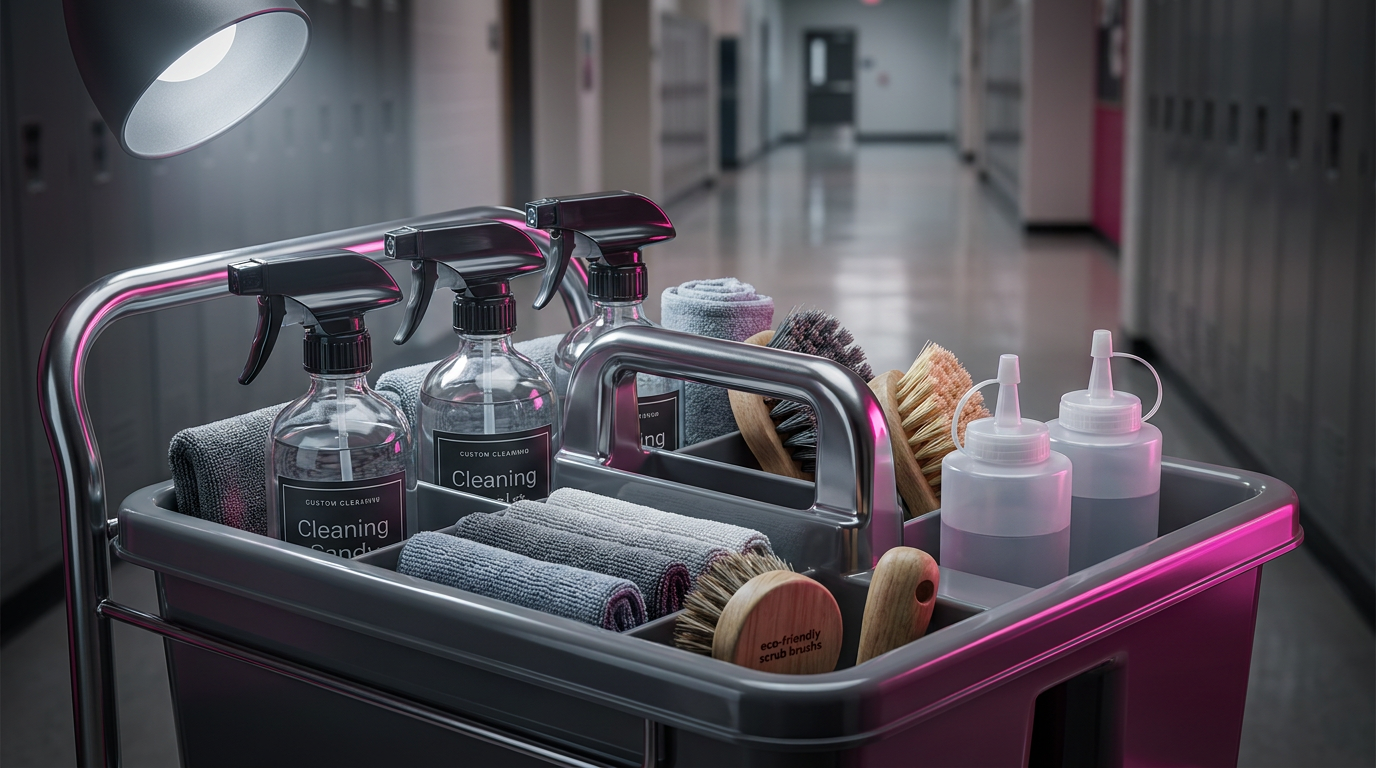
Essential supplies include a multi-surface cleaner, a certified disinfectant, glass cleaner, floor cleaner, and toilet descaler. You will also need colour-coded microfibre cloths, mops, buckets, and a commercial-grade vacuum cleaner. Personal Protective Equipment (PPE) such as gloves and eye protection is also non-negotiable for staff safety. Typically ensure products comply with UK safety standards.
How does a clean school impact learning?
A clean school directly impacts learning by reducing pupil and staff absenteeism from illness. It also creates a more pleasant and orderly environment, which research suggests improves focus, morale, and respect for school property. A visibly clean and well-maintained building sends a positive message to pupils, parents, and staff about the school’s high standards, contributing to a positive educational atmosphere.
Who is responsible for creating the school cleaning schedule?
The School Business Manager or Facilities Manager is typically responsible for creating and overseeing the school cleaning schedule. This involves collaborating with the headteacher and cleaning staff to ensure the plan is practical, comprehensive, and compliant with all health and safety regulations. The final schedule should be a working document, reviewed and updated regularly to ensure its effectiveness.
References
- Health and Safety Executive (HSE) – UK Government Guidance. Provides the legal framework and practical advice for controlling substances hazardous to health (COSHH) in the workplace, including schools.
- Department for Education (DfE) – UK Government Advice for Schools. Outlines the standards for health and safety in schools, including requirements for the maintenance and cleanliness of the school premises.
- UK Health Security Agency (UKHSA) – Public Health Guidance. Issues guidance on infection prevention and control in educational settings, including enhanced cleaning protocols during outbreaks.
- Food Standards Agency (FSA) – UK Government Guidance. Details the hygiene requirements for businesses that serve food, applicable to school canteens and kitchens.
Conclusion
Building a Healthier School Through a Smarter Cleaning Strategy
In summary, implementing a structured school cleaning checklist is a powerful step towards a healthier, safer, and more effective learning environment. Moving beyond reactive cleaning to a planned schedule of daily, weekly, and termly tasks ensures compliance, protects pupils and staff, and preserves the value of your facilities. This strategic approach transforms cleaning from a simple chore into a core component of successful school management.
As you review your school’s environment, consider how your furniture contributes to your cleaning challenges. For over 35 years, Costcutters UK has helped schools select durable, easy-to-clean furniture that reduces maintenance costs and enhances hygiene. If you’re planning a refurbishment, book a free space planning consultation with our experts