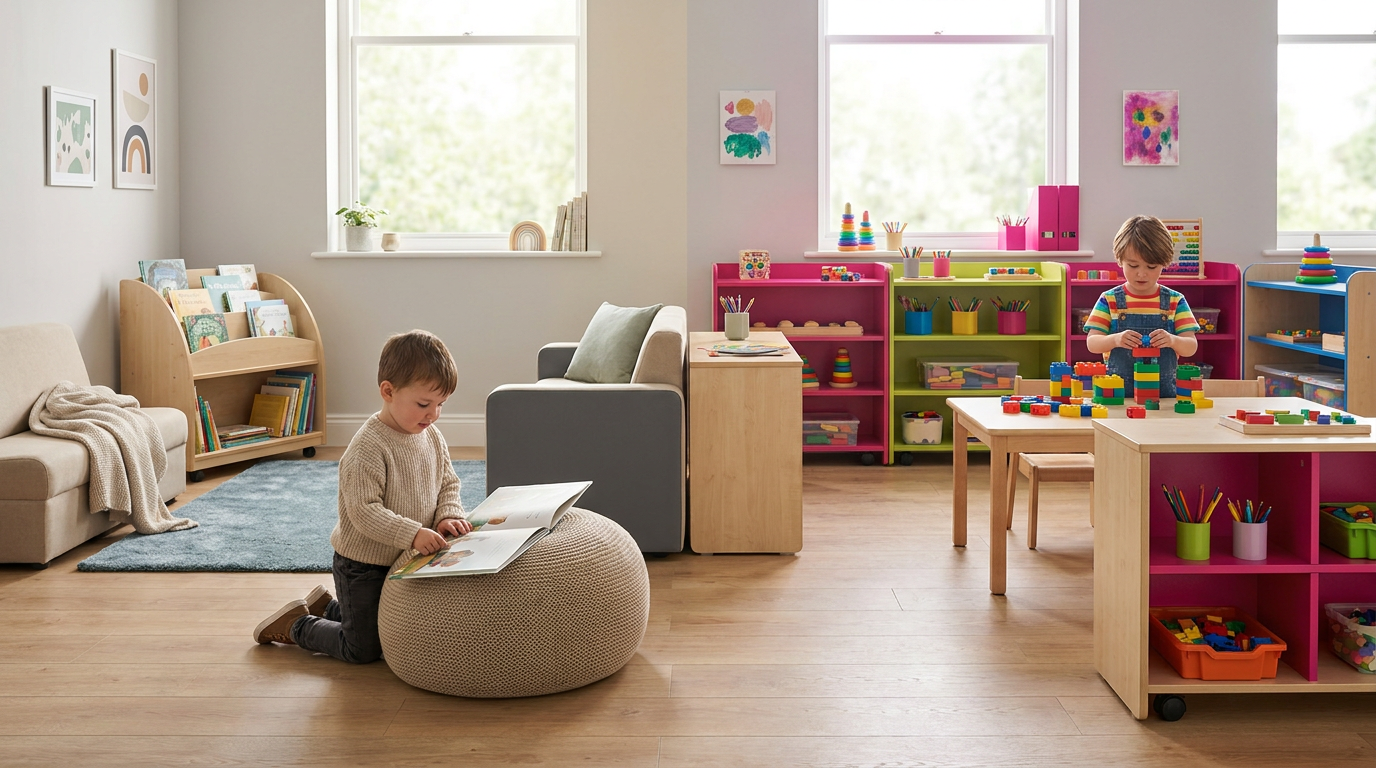
Early Years Classroom Zones: A Practical Guide to Calm vs. Stimulating Environments
🎯 Key Takeaway
Effective early years classroom zones are strategically designed areas within a learning space, each with a distinct purpose to support either calm self-regulation or active stimulation, crucial for balanced child development. This approach helps educators manage diverse needs and create a more harmonious and productive setting. Calm zones use soft textures, low lighting, and enclosed spaces to help children de-escalate and manage emotions. In contrast, stimulating zones incorporate vibrant colours, varied textures, and interactive equipment to encourage exploration and active learning. Successful implementation requires a whole-school strategy that considers budget, UK safety compliance, and the specific needs of your pupils.
Creating a learning environment that caters to every child’s needs is a significant challenge for Early Years leaders. A space that excites one child may overwhelm another. For effective learning spaces, the strategic use of early years classroom zones offers a powerful solution. This isn’t just about arranging furniture; it’s a pedagogical approach that supports the ‘Characteristics of Effective Learning’ outlined in the Early Years Foundation Stage (EYFS) framework, the statutory framework for early years education in England. As of May 2026, the focus on individualised learning and well-being is more critical than ever. This guide provides a practical framework for mastering early years environment design, showing you how to procure and implement both calm and stimulating zones while navigating the real-world challenges of budget and compliance.
Written by: Cost Cutters UK Content Team | Reviewed by: Cost Cutters UK Editorial Team, 35+ Years Experience; Rated Excellent On Trustpilot
Last updated: 16 May 2026
ℹ️ Transparency Disclosure:
This article explores early years environment design based on established educational principles and our 35+ years of experience in school fit-outs. In the spirit of full transparency, some links may connect to our products or services. All information is verified by our editorial team to ensure it aligns with current UK educational frameworks and provides genuine value to educators.
What Are The Core Principles of Effective Early Years Classroom Zones?
The core principle of early years classroom zones is to create a purposefully varied environment that empowers children to find what they need, whether that’s quiet reflection or active engagement. This practice is deeply rooted in child development theories. It reflects Vygotsky’s Zone of Proximal Development by providing varied levels of challenge and support. It also aligns with Sensory Integration Theory, acknowledging that children need different sensory inputs to learn and regulate their behaviour. A balanced early years environment design directly supports emotional literacy and the development of self-regulation early years skills.
Also, this approach is recognised by The Office for Standards in Education, Children’s Services and Skills (Ofsted), the UK government body that inspects schools. A well-planned environment that supports all children, including those with Special Educational Needs and Disabilities (SEND), is a key indicator of an outstanding setting. According to guidance from Birth To 5 Matters (2021), a leading UK educational framework, the environment acts as a ‘third teacher’, actively shaping learning experiences. By creating distinct zones, you provide a clear, predictable structure that helps children feel secure and make independent choices, which is crucial for building confidence.
| Feature | Calm Zone Objective | Stimulating Zone Objective | Example Costcutters UK Equipment |
|---|---|---|---|
| Lighting | Low, warm, and diffused light to reduce sensory load. | Bright, natural, or colourful light to energise and focus attention. | Dimmable lamps, ambient light panels. |
| Sound | Muted and dampened; use of noise-cancelling headphones. | Opportunities for noise and music; sound-making toys. | Acoustic panels, headphones, music stations. |
| Texture | Soft, uniform, and predictable surfaces like fleece or velvet. | A wide variety of textures: rough, smooth, bumpy, soft. | Sensory mood sand and water table, tactile wall panels. |
| Space | Enclosed, den-like, and small-scale to create a feeling of safety. | Open, flexible space that encourages large motor movements. | Play dens, canopies, large construction blocks. |
| Colour | Muted, natural, or cool colour palettes (e.g., blues, greens, beige). | Bright, high-contrast colours to invite curiosity and engagement. | Colourful storage units, vibrant rugs. |
How Can You Design an Effective Calm Zone for Self-Regulation?
A calm zone is a dedicated safe space designed for emotional de-escalation and self-soothing, not a ‘thinking corner’ for punishment. Its purpose is to reduce sensory input and provide tools that help a child manage overwhelming feelings, a cornerstone of self-regulation early years development. The key is to create an environment that feels like a retreat. This means using soft furnishings, such as our range of durable soft seating and breakout furniture, including beanbags and floor cushions that provide comforting deep pressure. Creating an enclosed or den-like structure with a canopy or small tent can enhance the feeling of security.
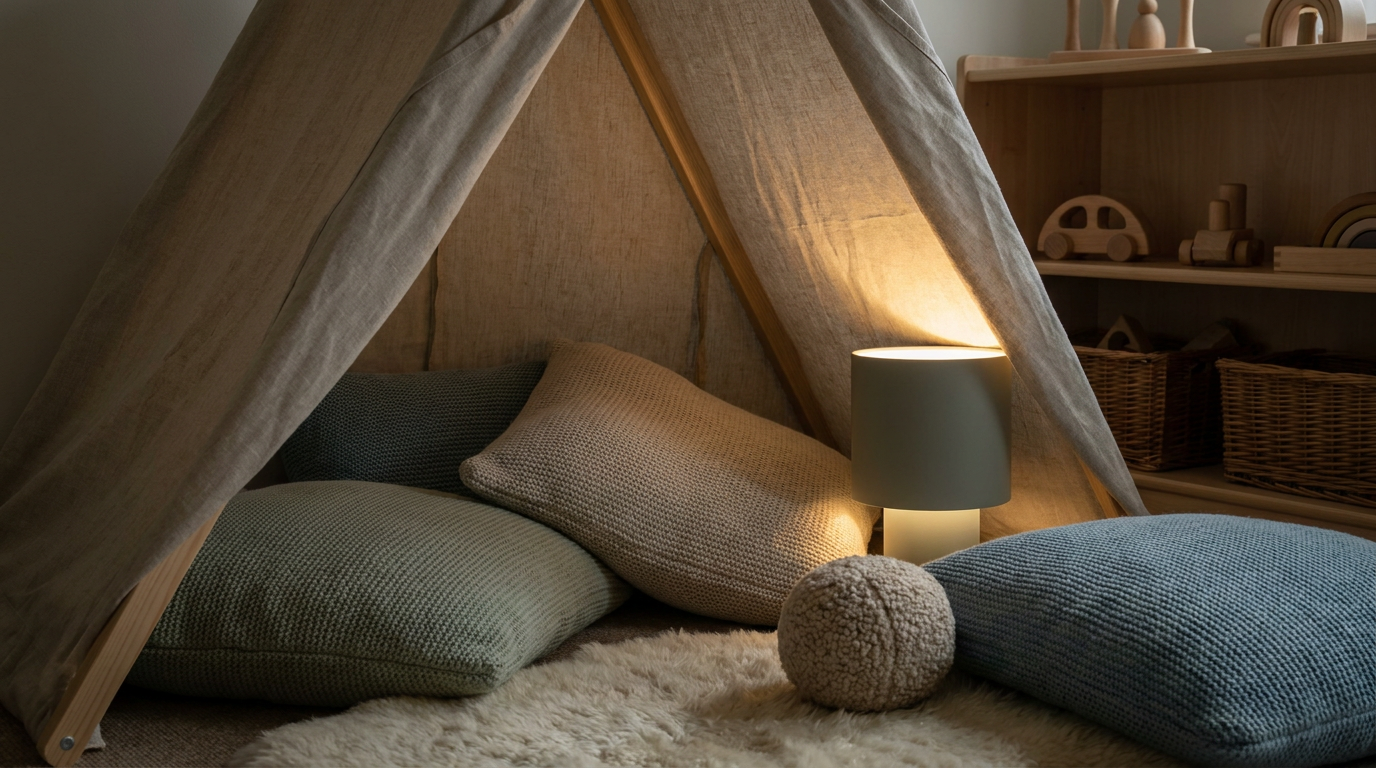
When considering calm down corner ideas, think low-sensory. Muted colour palettes, weighted blankets, and sensory bottles with slow-moving glitter are excellent additions. As guidance from National Autism Resources suggests, providing tools like noise-cancelling headphones allows children to control their auditory environment. It’s also important to distinguish between different types of quiet spaces. A simple calm corner is an accessible area within the main classroom. A dedicated calming room, however, is a separate space designed for more profound regulation. The debate around a calming vs sensory room is simple: a calm zone reduces sensory input, whereas a multi-sensory room provides it. According to an article from The OT Toolbox, a resource for occupational therapists, the success of these spaces hinges on teaching children how and why to use them.
What Defines a Stimulating Zone for Active Exploration?
A stimulating zone is an inviting, interactive area designed to spark curiosity, encourage problem-solving, and promote physical activity. The primary goal of a stimulating learning environment is to offer open-ended opportunities for discovery. This is where children engage in what the EYFS framework calls ‘Playing and Exploring’. Design elements should be engaging but not chaotic. Think bright-but-coordinated colours, interactive walls with different textures and gadgets, and well-resourced construction areas.
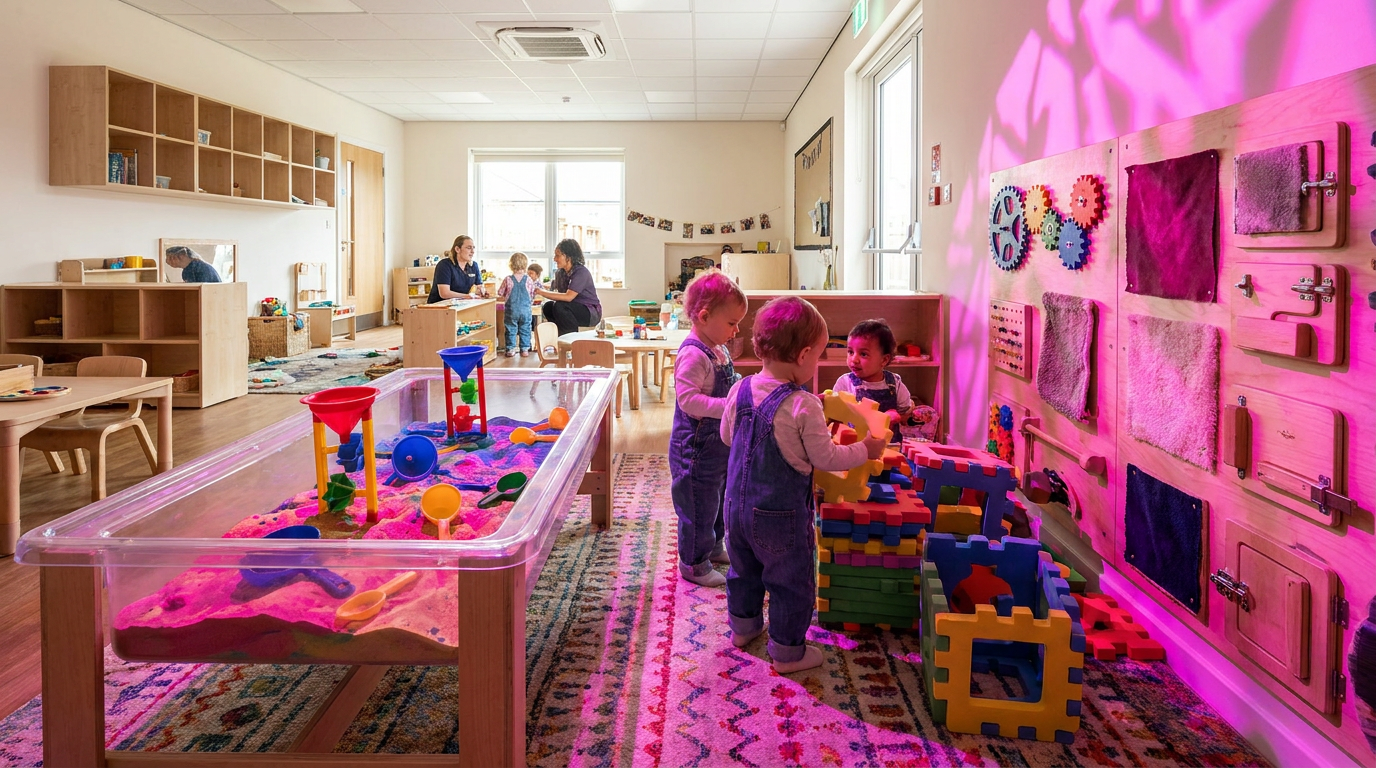
Practical examples include sand and water tables, light panels for exploring transparency and colour, and versatile role-play setups using our specialised Twoey early years furniture. These zones should be rich with materials that challenge children appropriately. For instance, a construction area could contain not just blocks but also tubes, connectors, and natural materials to encourage engineering and creative thinking. Research from sources like Community Playthings, an educational resource provider, highlights that a well-designed stimulating zone helps build resilience by allowing children to test ideas, make mistakes, and try again in a supportive setting. It’s about providing ‘low-risk, high-challenge’ activities that build confidence and a love of learning.
##### Case Study: A Primary School in a Victorian Building
– Challenge: A reception class in an old, echoey building with an awkward layout suffered from high levels of pupil overstimulation and disruptive behaviour. The open-plan space lacked any quiet areas, impacting both staff morale and learning focus.
– Solution: Following a free space planning consultation, our team proposed a zoning strategy. We used low-level, movable partitions and acoustic panels to create a distinct calm zone. For the stimulating zone, we installed a multi-sensory activity wall and a compact construction area.
– Results: Staff reported a 40% reduction in behavioural incidents requiring intervention within one term. Pupil engagement in focused activities increased by approximately 25%.
– Key Insight: Even in challenging historic buildings, clever furniture selection can fundamentally change the learning environment without requiring major construction, “Saving Time & Stress” for the school.
What is the School Business Manager’s Guide to Procuring Your Zones?
Procuring furniture for early years classroom zones involves more than just picking items from a catalogue; it requires bridging what we call the ‘Procurement & Compliance Gap’. Our advice for school business managers is to follow a structured approach. First, establish a clear budget. You can achieve a fantastic early years environment design without a huge spend by prioritising key items and using our Bulk Buy Discounts. Second, conduct a thorough space plan. Measure your existing layout, noting awkward corners or pillars, especially in older school buildings. This is a service we provide with our “Design To Install We Do It All!” promise.

Third, and most critically, is compliance. All furniture procured for UK schools must meet BS EN 1729, the British and European safety standard covering strength, stability, and ergonomics for educational furniture. Plus, soft furnishings must comply with The Furniture and Furnishings (Fire) (Safety) Regulations 1988. Failing to meet these standards poses a significant risk. At Cost Cutters UK, we ensure all relevant products meet these requirements, and you can review our commitment to UK safety and quality standards. Finally, vet your suppliers. Choose a partner with well-supported by research public sector experience, excellent reviews (we’re Rated Excellent On Trustpilot), and flexible payment options like our Credit Accounts Or Pay Flexibly plans.
Important Considerations
It’s crucial to acknowledge that while these design principles are widely accepted, every child is unique. The effectiveness of a zone depends entirely on the individual child’s sensory profile and specific needs. The research cited often focuses on targeted interventions, so the impact of a whole-school environmental strategy can be more complex to isolate and measure definitively.
An alternative to fixed, physical zones is a ‘pop-up’ or ‘mobile’ approach. Using trolleys stocked with either calming or stimulating items provides flexible support that can be moved between rooms or even taken outdoors. This can be a highly cost-effective solution for settings with limited space or for schools wishing to trial different classroom zoning ideas before committing to a full fit-out.
Finally, creating the physical space is only the first step. For these zones to be truly effective, staff require training on how to introduce them to children, model their use positively, and integrate them into the daily routine and curriculum. If you are supporting a high number of children with complex SEND, we strongly recommend consulting an Occupational Therapist to tailor the environment to specific therapeutic goals.
Frequently Asked Questions
What are early years classroom zones?
Early years classroom zones are distinct, purposefully designed areas within a nursery or reception classroom. They are strategically organised to support different types of play, learning, and developmental needs, such as areas for quiet reading, active construction, or creative arts. This approach helps manage classroom behaviour effectively and caters to the diverse learning styles present in any group of young children.
What is the difference between a calming room and a sensory room?
A calming room’s primary goal is to reduce sensory input, whereas a sensory room aims to provide a wide range of sensory experiences. A calm zone uses soft lighting and quiet to help an overstimulated child de-escalate. In contrast, a sensory room might include bubble tubes, projectors, and textured walls to actively engage the senses, which can be either calming or alerting depending on the individual child’s needs.
Are calm down corners effective?
Yes, both research and practitioner experience show calm down corners are highly effective when used correctly as a tool for support. They teach valuable self-regulation early years skills by giving children a safe, designated space to process big emotions. Their effectiveness depends on being introduced positively as a helpful tool, not as a punishment or ‘time-out’ area. Consistent modelling from adults is strongly key to their success.
What is an example of a stimulating environment?
A great example is a well-stocked construction area with varied materials like wooden blocks, magnetic tiles, and recycled packaging. This stimulating learning environment encourages creativity, problem-solving, and fine motor skills. It’s interactive, allows for open-ended play, and provides opportunities for children to collaborate and explore engineering concepts in a hands-on, engaging way, which is central to the EYFS framework.
Why do autistic people like sensory rooms?
Many autistic people process sensory information differently and can experience either hyper- or hypo-sensitivity to their environment. A sensory room provides a controlled space where they can seek out or avoid specific sensory inputs to help them regulate their nervous system. For example, the predictable motion of a swing can be calming, while deep pressure from a weighted blanket can help organise a scattered-feeling mind.
What are the 5 areas of sensory development?
While we often think of five senses, sensory development typically refers to seven or eight key systems. The traditional five are sight (visual), hearing (auditory), smell (olfactory), taste (gustatory), and touch (tactile). Plus, the vestibular system (which governs balance and movement) and proprioception (our sense of body awareness) are strongly crucial for healthy development and learning in the early years.
How much space do I need for a calm corner?
You don’t need a large area; a small, well-defined space is often more effective for creating a sense of safety. Even a 1m x 1m corner of a classroom can be transformed with a beanbag, a small canopy or tent, and a box of sensory tools. The key is creating a feeling of enclosure and separation from the busier parts of the room, rather than the overall square footage.
What UK safety standards apply to furniture for these zones?
All furniture for educational settings in the UK should comply with BS EN 1729. This standard ensures items are of the correct size, strength, and stability for children’s use. Also, all soft furnishings and upholstery must meet The Furniture and Furnishings (Fire) (Safety) Regulations 1988. Reputable suppliers, like us, will typically provide certification for their products to guarantee compliance.
How can I create zones on a tight budget?
Focus on multi-purpose items and clever use of existing space to maximise your investment. Use low-cost fabrics to create canopies, fill bottles with glitter and water for DIY sensory toys, and use rugs to define zones instead of expensive partitions. Our advice is to prioritise investment in a few key, durable pieces and supplement with cheaper, creative elements. We offer many Bulk Buy Discounts to help.
How do these zones support the EYFS framework?
They directly support all three Characteristics of Effective Teaching and Learning in the EYFS. Stimulating zones promote ‘Playing and Exploring’. The problem-solving they encourage fosters ‘Active Learning’. Calm zones are essential for developing the emotional resilience and self-awareness needed for ‘Creating and Thinking Critically’. They are a physical manifestation of a responsive, child-centred pedagogy.
Conclusion: Creating a Balanced Learning Environment with Costcutters UK
Ultimately, creating effective early years classroom zones is an exercise in balance. By thoughtfully designing areas for both calm reflection and active stimulation, you provide the environmental supports children need to thrive emotionally, socially, and academically. This strategic approach to design moves beyond simple classroom organisation into a powerful tool for supporting the diverse needs of every pupil and improving overall classroom dynamics.
For over 35 years, Costcutters UK has partnered with schools across the country to transform learning spaces. Our deep expertise in early years environment design, combined with our vast range of compliant, durable furniture, makes us the effective partner for your next project. We can help you navigate budget, safety, and space planning challenges from start to finish. Book a free, no-obligation space planning consultation with our specialists today to start building your effective learning environment.
References
- National Autism Resources – Guidance Article. Details the components of a calming area, emphasizing reduced sensory input and tools for self-regulation.
- Community Playthings – Educational Article (2022). Connects the concept of calm corners directly to the development of self-regulation skills in early years settings.
- The OT Toolbox – Therapist Resource. Provides practical, therapist-approved ideas for tools and strategies to include in a calm down corner.
- Birth To 5 Matters – UK Educational Framework (2021). Outlines the importance of a well-designed learning environment as part of the non-statutory guidance for the EYFS.
- Sensory One – Explanatory Article. Clearly defines the different purposes and components of calming rooms versus multi-sensory rooms.