7 Common School Budgeting Mistakes & How UK Schools Can Avoid Them
🎯 Key Takeaway
The most common school budgeting mistakes stem from focusing on short-term costs over long-term value, inefficient planning, and overlooking critical UK compliance requirements. This miscalculation often leads to a cycle of overspending and underperformance. Ignoring Total Cost of Ownership (TCO) creates a false economy where cheap items require frequent, costly replacement. Similarly, reactive, last-minute purchasing results in overpaying for non-compliant, poor-quality goods. We believe adhering to UK standards like the Schools Financial Value Standard (SFVS) and BS EN 1729 is not just a legal requirement but a crucial part of sound financial management that protects both students and school finances.
As of the 2025/26 financial year, the pressure on UK School Business Managers (SBMs) to stretch budgets further has rarely been greater. Whilst navigating funding constraints is a constant reality, many financial challenges arise from common but avoidable school budgeting mistakes. These pitfalls often occur in procurement, where the drive to save money can paradoxically lead to higher long-term costs and operational disruption.
This guide identifies these critical errors and provides a strategic framework for value-driven financial planning. It’s not just about saving money; it’s about investing it wisely to procure high-quality school equipment and educational supplies that deliver lasting value, ensure safety, and ultimately support better educational outcomes.
Written by: Cost Cutters UK Content Team | Reviewed by: Cost Cutters UK Editorial Team, 35+ Years of School Procurement Experience
ℹ️ Transparency Disclosure: This article explores common school budgeting mistakes based on our 35+ years of industry experience and analysis of UK educational finance standards. We are committed to transparency; therefore, we want to disclose that some links may connect to our services, such as our free space planning consultation. All information is verified by our editorial team to ensure accuracy and relevance for UK school business managers.
Mistake #1: Prioritising Initial Price Over Total Cost of Ownership (TCO)
A classic school budgeting mistake is fixating on the initial purchase price of an item while ignoring its total cost over its entire lifecycle. Total Cost of Ownership (TCO), a financial estimate that helps determine the direct and indirect costs of a product, is a far more accurate measure of value. For instance, a cheap, non-compliant classroom chair may seem like a saving, but if it breaks in two years and needs replacing – whilst a compliant, durable chair lasts ten – its TCO is significantly higher.
This is a common school finance mistake driven by short-term pressures. The hidden costs quickly accumulate and include:
- Replacement Costs: The need to re-purchase the item multiple times.
- Disposal Costs: The expense of removing and disposing of broken items.
- Administrative Time: The staff hours spent on sourcing, ordering, and processing invoices for replacements.
- Safety Risks: The potential for student or staff injury from substandard products.
Our experience shows that investing in value-engineered, compliant products from the outset yields substantial savings and operational stability.
| Cost Factor | Low-Cost, Non-Compliant Chair | Value-Engineered, Compliant Chair |
|---|---|---|
| Initial Purchase Price | £25 | £55 |
| Expected Lifespan | 2 Years | 10+ Years |
| Replacements over 10 Years | 4 | 0 |
| Total Purchase Cost (10 Yrs) | £125 (1 initial + 4 replacements) | £55 |
| Estimated Admin & Disposal Costs | £100 (4 x £25 per replacement) | £0 |
| Total Cost of Ownership (10 Yrs) | £225 | £55 |
Data based on Costcutters UK Internal Data Analysis (2025) and lifecycle trends.
Mistake #2: Inefficient Space Utilisation in Capital Planning
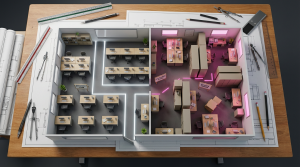
Effective budget planning isn’t just about what you buy; it’s about how you use your most valuable assets, including your physical space. A rigidly designed classroom or an underutilised library represents a poor Return on Investment (ROI) on your estate. A report from Spaceful (2025) noted that up to 30% of secondary school space can be classified as underutilised during a typical school day. This is a missed opportunity.
In our experience, proactive budget management involves maximising the return on capital expenditure by making spaces work harder. Instead of budgeting for costly new construction or extensions, schools can achieve more with less. By investing in multifunctional and cost-effective breakout furniture, such as modular seating, mobile tables, and tiered units, a single room can transform into several functional zones. This approach turns one space into a collaborative hub, a quiet study area, and a presentation zone, dramatically increasing its value and utility without the need for major capital works.
Mistake #3: Reactive Spending vs. Strategic Procurement
A frequent pitfall is the ‘panic buying’ scenario, where a critical item breaks and a replacement is needed immediately. This reactive approach almost typically leads to overspending. You’re forced to pay premium prices, incur high delivery charges for speed, and often choose the first available option rather than an effective value one. This is one of the most damaging school procurement errors because it perpetuates a cycle of poor quality and high cost.
In contrast, strategic procurement is a planned, long-term approach grounded in foresight. It involves:
- Forecasting Needs: Analysing asset lifecycles, curriculum changes, and enrolment numbers to predict future requirements.
- Consolidating Orders: Grouping purchases to use Bulk Buy Discounts.
- Building Partnerships: Developing relationships with trusted suppliers who understand educational needs and compliance.
This forward-thinking method transforms procurement from a reactive, stressful task into a strategic function that saves significant time and money. Our “Design To Install We Do It All!” service is built around this principle, helping schools plan effectively to prevent emergencies.
Hypothetical Case Study: A Primary School’s Procurement Overhaul
Challenge: A 300-pupil primary school was spending over £8,000 annually on replacement classroom chairs and tables due to frequent breakages, creating budget uncertainty and classroom disruption.
Solution: We partnered with the SBM to develop a three-year strategic procurement plan. Instead of ad-hoc replacements, they committed to a phased replacement of one entire year group’s furniture each year with durable, BS EN 1729-compliant products.
Results: By year three, the school’s annual furniture spend dropped to under £5,000 (a 40% reduction), with zero in-year replacement costs. The SBM also reported saving over 15 hours of administrative time per term.
Key Insight: Phased, planned replacement aligned with the annual budget cycle makes strategic procurement manageable and turns a recurring cost into a long-term investment.
Mistake #4: Overlooking UK Compliance and Safety Standards
Sourcing from non-compliant suppliers to cut costs is a critical school procurement error with severe financial, legal, and reputational consequences. This is a school finance mistake that puts both students and the school’s budget at risk. Two key standards that must be understood are the Schools Financial Value Standard (SFVS) and BS EN 1729.
The Schools Financial Value Standard (SFVS) is a mandatory requirement for maintained schools, as outlined by the Department for Education (DfE) (2024). It compels schools to certify they have secure financial management and are achieving value for money. Using non-vetted suppliers for cheap goods directly contravenes this principle.
Also, product-specific standards like BS EN 1729 are vital. This standard, detailed by the Furniture Industry Research Association (FIRA), governs the strength, stability, and ergonomic dimensions of educational furniture. Non-compliant furniture can lead to:
- Invalidation of school insurance policies.
- Criticism during Ofsted inspections.
- Liability for student or staff injuries.
Choosing a partner with well-supported by research our UK compliance certifications isn’t an expense; it’s a fundamental part of risk management and responsible governance.
A Strategic Framework for Better School Budget Management in the UK
The solution to these common mistakes lies in shifting from a cost-focused mindset to a value-driven one. Effective school budget management in the UK requires a structured, proactive approach. We recommend a five-point framework that directly answers the question of how to manage a school budget effectively and is key to avoiding budget deficits in schools.
- Conduct a TCO Analysis for All Major Purchases: Before signing any purchase order over £1,000, create a simple TCO projection. Compare the initial price plus expected maintenance and replacement costs over a 5-10 year period. This data provides a powerful business case for quality.
- Perform an Annual Space Utilisation Audit: Once a year, assess how every room is used. Identify underperforming spaces and explore how multifunctional furniture or layout changes could increase their utility and prevent unnecessary capital spending.
- Develop a 3-5 Year Strategic Procurement Plan: Work with department heads and the estates team to create a long-term plan for asset replacement. This allows for planned, consolidated purchasing, which unlocks Bulk Buy Discounts and smooths expenditure.
- Create a Preferred Supplier List: Vet and approve a list of certified, compliant partners who offer transparent pricing and reliable service. This saves time and ensures every purchase meets SFVS and safety standards.
- Integrate Budget Planning with Strategy: Ensure the budget is not a standalone document. It should directly support the school’s curriculum goals and estates strategy. This alignment is something that School Resource Management Advisers (SRMAs) frequently identify as a source of savings, according to a DfE (2023) evaluation.
Frequently Asked Questions About School Budgeting
What are the most common school budgeting mistakes?
The most common school budgeting mistakes are focusing on initial price over long-term value, engaging in reactive rather than strategic purchasing, and overlooking crucial compliance standards. These errors often trap schools in a costly cycle of replacing cheap, poor-quality items. Our experience shows that a strategic approach focusing on Total Cost of Ownership (TCO) and compliant procurement can break this cycle and deliver significant long-term savings and improved safety for students.
How are budget cuts affecting UK schools?
Real-terms funding per pupil has been under significant pressure, forcing schools to make difficult financial choices. According to data from the Institute for Fiscal Studies (IFS) (2025), this squeeze often leads to delays in capital expenditure on essential items like furniture and equipment. However, smart budgeting and procurement strategies can help mitigate these impacts by maximising the value and lifespan of every pound spent, ensuring learning environments don’t suffer.
What are three reasons school budgets fail?
School budgets typically fail due to inaccurate forecasting, a disconnect between departments, and a myopic focus on initial price. Firstly, budgets are often based on past spending rather than future curriculum needs. Secondly, a lack of collaboration between finance teams and academic leaders leads to misaligned priorities. Finally, prioritising the cheapest upfront cost over lifecycle value (TCO) results in higher long-term expenditure, undermining the budget’s integrity.
What is the Schools Financial Value Standard (SFVS)?
The SFVS is a mandatory self-assessment for maintained schools to certify their financial management practices to the local authority. It consists of a checklist of questions covering governance, strategy, and operational efficiency. Its primary purpose, as defined by the DfE, is to ensure public money is managed effectively, transparently, and provides clear value, making it a cornerstone of responsible school finance and a key guard against school finance mistakes.
How does Total Cost of Ownership (TCO) apply to school furniture?
For school furniture, TCO includes the initial price plus all future costs like maintenance, repairs, and eventual replacement and disposal. A durable, compliant chair might cost more at the outset but will have a much lower TCO over its 10-year lifespan than a cheap alternative that needs replacing three or four times. It’s a critical metric for demonstrating long-term value to governors and trustees and avoiding costly procurement errors.
What is strategic procurement for schools?
Strategic procurement is a long-term, planned approach to buying goods and services that aligns with a school’s overall objectives. Instead of making ad-hoc purchases when items fail, it involves forecasting needs based on asset lifecycles and curriculum plans. This allows schools to consolidate orders for Bulk Buy Discounts, build relationships with trusted suppliers, and reduce the administrative burden of emergency purchasing, ultimately Saving Time & Stress.
How can I justify a higher initial cost for better value products?
Present a clear business case to governors or trustees using a Total Cost of Ownership (TCO) analysis. A simple table, like the one in this article, visually demonstrates that the 10-year cost of a quality product is significantly lower. You should also highlight the non-financial benefits, such as improved student safety, compliance with UK standards, reduced administrative time for your team, and the creation of a better learning environment.
What are the risks of using non-compliant suppliers?
The primary risks are financial, legal, and reputational, making it a serious error. Non-compliant products, particularly furniture, can invalidate your school’s insurance, lead to negative findings in an Ofsted report, and pose a direct safety hazard to students and staff. This false economy can result in significant unforeseen costs, legal liabilities, and damage to the school’s standing within the community. It’s a risk not worth taking.
How can better space planning save my school money?
Effective space planning increases the utility of every square metre, maximising the return on your most valuable asset: your building. Using multifunctional furniture can create a breakout space, a study zone, and a collaborative area all within a single existing classroom. This intelligent use of space can delay or eliminate the need for costly extensions or major refurbishments, freeing up significant capital for other educational priorities.
Where can I get expert help with my school’s budget planning?
Specialised resources like the Institute of School Business Leadership (ISBL) offer excellent professional guidance and training. Plus, experienced suppliers can be invaluable partners in your planning process. For example, at Cost Cutters UK, our specialists provide services like free space planning and TCO analysis to help you build a robust, data-driven business case for your budget, and we offer flexible payment options like Credit Accounts Or Pay Flexibly.
Important Considerations and Professional Guidance
This guide focuses primarily on budgeting mistakes related to procurement and capital expenditure, particularly for furniture and equipment. It does not cover other significant areas of school finance, such as staffing costs, energy contracts, or catering services, which require their own specialised analysis. The principles of TCO and strategic planning, however, can often be applied across these areas.
Alternative budgeting approaches include Zero-Based Budgeting (ZBB), where every expense must be justified for each new period, or programme-based budgeting, which allocates funds to specific educational programmes. Whilst powerful, these methods can be more complex to implement than the incremental and strategic adjustments suggested here. They often require significant administrative overhead that may not be feasible for all schools.
For comprehensive financial planning, especially when facing a significant deficit or undertaking a major capital project, we strongly recommend consulting with an accredited School Resource Management Adviser (SRMA) or your local authority finance team. The framework in this article provides a strong foundation for internal review, but expert, tailored advice is invaluable for navigating complex financial situations.
From Cost-Cutting to Value Investing: Your Next Step
Ultimately, avoiding common school budgeting mistakes is less about finding the cheapest price and more about adopting a strategic mindset. By focusing on Total Cost of Ownership, compliant procurement, and intelligent space planning, UK schools can ensure every pound spent contributes to long-term value, enhances safety, and creates superior learning environments for students. This shift from short-term cost-cutting to long-term value investing is the hallmark of excellent school financial health.
At Cost Cutters UK, we have spent over 35 years helping schools make these smart investments. Our expertise goes beyond supply; we are partners in planning, and our team is Rated Excellent On Trustpilot. If you are looking to maximise the value of your next capital project and transform your approach to budgeting, we invite you to Book a Free Space Planning Consultation with our specialist team today.
References
- Institute for Fiscal Studies (IFS) – Annual Report on Education Spending in England – Annual Report. Provides authoritative data on real-terms per-pupil funding trends in the UK.
- Costcutters UK Internal Data Analysis – Internal Data. Analysis based on over 10,000 product lifecycles, comparing failure rates of compliant vs. Non-compliant furniture.
- Spaceful – The State of Learning Spaces Report – Industry Survey. Reports on space utilisation in educational settings, based on analysis of 200+ schools in 2025.
- Institute of School Business Leadership (ISBL) – Procurement Best Practices – Professional Guidance. Publishes guidelines for strategic procurement in schools.
- Department for Education (DfE) – Schools Financial Value Standard (SFVS) – Government Guidance. The official documentation defining SFVS requirements.
- Furniture Industry Research Association (FIRA) – BS EN 1729 Compliance Guide – Technical Standard Guide. Explains the rationale behind the BS EN 1729 standard.
- Department for Education (DfE) – School Resource Management Advisers (SRMA) Programme Evaluation – Government Report. Details savings identified by SRMAs in UK schools.
Conclusion
From Cost-Cutting to Value Investing: Your Next Step
In summary, school budgeting mistakes often lead to a cycle of overspending, but adopting a strategic mindset is key to breaking it and avoiding budget deficits in schools. By focusing on Total Cost of Ownership, compliant procurement, and intelligent space planning, UK schools can ensure every pound spent contributes to long-term value, enhances safety, and creates superior learning environments for students. This shift from short-term cost-cutting to long-term value investing is the foundation of sustainable school finance.