Workplace Productivity and Wellbeing: The Ultimate Office Design Guide
🎯 Key Takeaway
Achieving high workplace productivity and wellbeing requires strategic office design that creates a physically comfortable, psychologically safe, and flexible environment for your employees.
• Ergonomics and DSE compliance form the foundation, directly reducing physical strain and absenteeism.
• Biophilic design, proper lighting, and acoustic control are well-supported by research to lower stress and improve focus.
• Zoning your office for different workstyles – focus, collaboration, and relaxation – is essential for modern hybrid teams.This guide provides a practical blueprint for UK businesses to design an office that delivers a measurable return on investment.
Poor employee wellbeing is costing UK businesses billions. As of early 2024, data from Vitality indicates that an average of 50 days of productive time are lost per employee each year due to health-related issues, a significant portion of which stems from stress and musculoskeletal problems (8). For workplace productivity and wellbeing, the physical office environment is not just a backdrop; it’s an active participant. Investing in smart office design for wellbeing isn’t an abstract goal but a tangible strategy for improving performance, reducing absenteeism, and retaining top talent. This guide moves beyond theory to provide a practical, actionable blueprint for UK office managers and business leaders. At Costcutters UK, we provide a complete furniture solution from design to installation, and we’re here to show you how.
Written by: Cost Cutters UK Content Team | Reviewed by: Cost Cutters UK Editorial Team, 35+ Years of Workplace Design Experience
ℹ️ Transparency Disclosure: This article explores the connection between office design and employee performance based on industry research, case studies, and our 35+ years of experience. For transparency, some links may connect to our services. All information is verified by our editorial team. Costcutters UK is a trusted supplier for businesses and public sector organisations across the UK.
The Ergonomic Imperative: Building a Foundation for Workplace Productivity and Wellbeing
The most critical foundation for workplace productivity and wellbeing is ergonomics. Before considering aesthetics, you must ensure the physical environment supports the health of your team. In the UK, this begins with compliance with the Health and Safety Executive (HSE), Britain’s national regulator for workplace health and safety. Their Display Screen Equipment (DSE) regulations are not optional; they are a legal requirement to protect employees who use screens for a significant part of their day.
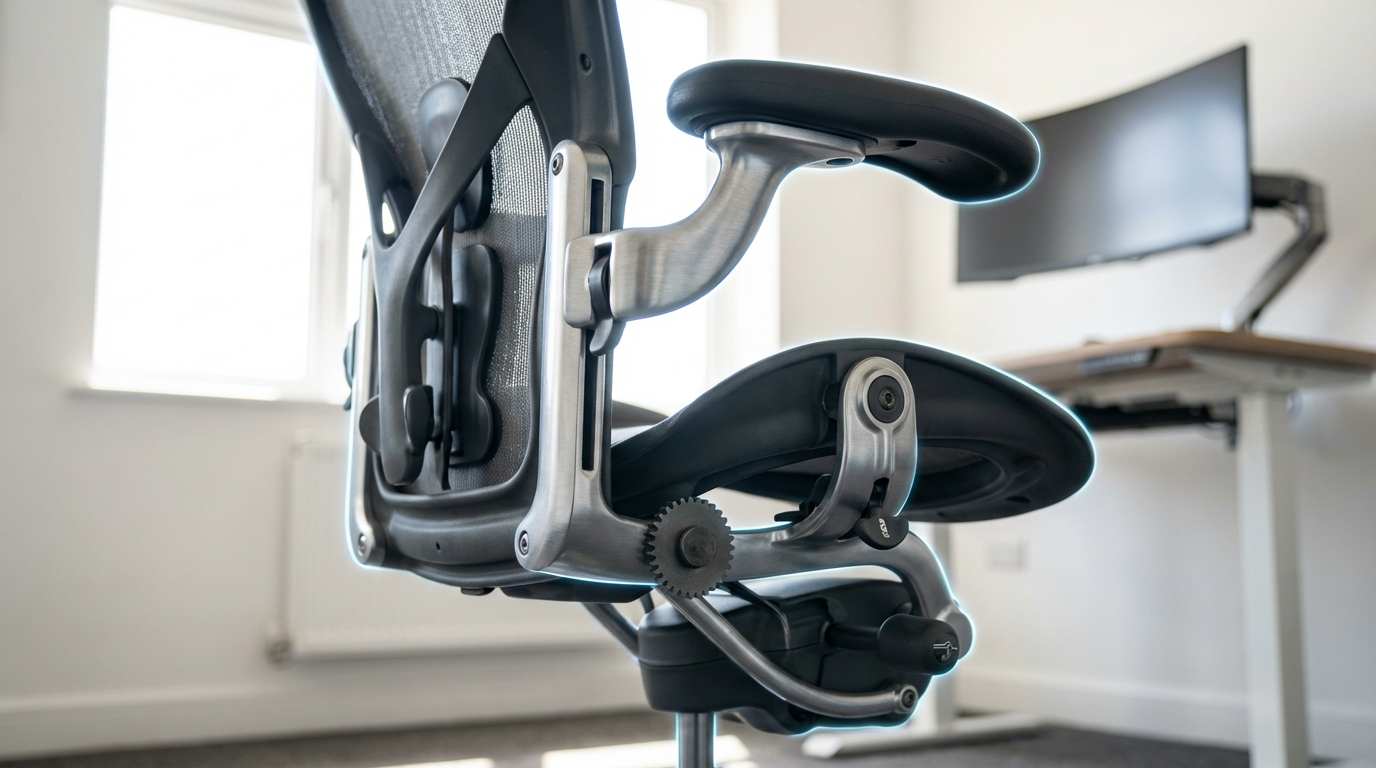
According to the HSE‘s annual report data, work-related musculoskeletal disorders are a leading cause of sickness absence in Great Britain. Poorly designed workstations are a primary contributor, leading to back pain, neck strain, and repetitive strain injuries. These physical ailments translate directly into business costs through absenteeism, reduced output, and lower morale. To improve productivity through office design, you must start here.
Actionable steps include:
- DSE Assessments: Conduct and document a DSE assessment for every user.
- Adjustable Chairs: Invest in high-quality, adjustable office chairs that provide lumbar support and allow for correct posture.
- Proper Desk Setup: Ensure desks are at the right height and provide enough space. Consider monitor arms to position screens at eye level.
- Dynamic Workstations: Introduce options like sit-stand desks. This encourages movement, which is crucial for preventing the health risks of a sedentary workday.
By investing in quality, compliant ergonomic office furniture UK businesses can trust, you’re not just buying chairs and desks; you’re investing in your team’s health and your company’s bottom line. It’s a non-negotiable step, and our products meet our UK safety and quality accreditations.
Designing for the Mind: Light, Acoustics & Biophilia for Mental Wellbeing
A psychologically comfortable office is just as important as a physically comfortable one. To truly enhance office design for wellbeing, you must address the sensory experience of your workspace, focusing on light, sound, and our innate connection to nature. This is where Biophilic Design, an architectural approach connecting buildings with nature, becomes a powerful tool.
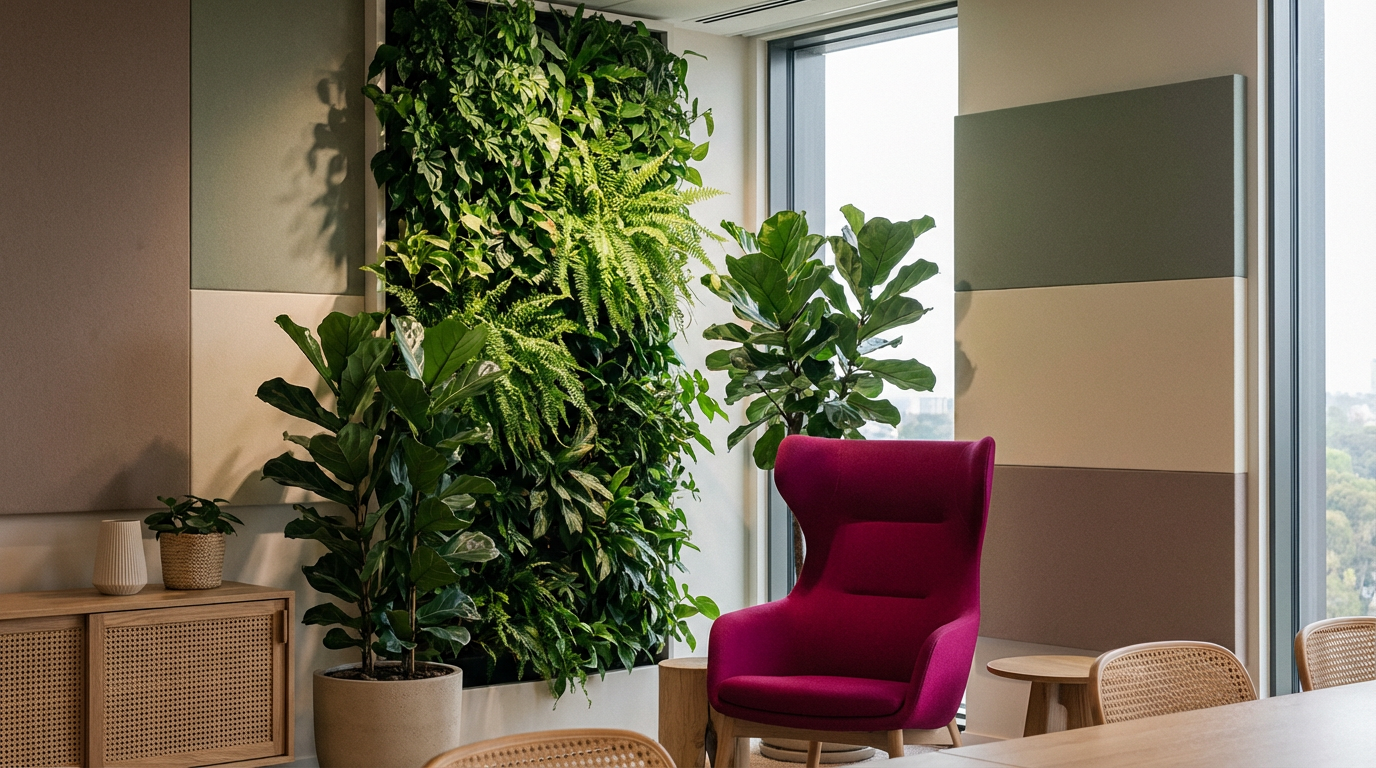
The Human Spaces Report, a global study involving 7,600 workers, found that those in offices with natural elements reported a 15% higher level of well-being and a 6% higher level of productivity (3). The biophilic office design benefits are clear: it reduces stress and improves cognitive function. Practical applications don’t require a forest in your office. You can start with:
- Low-maintenance plants and living walls.
- Using natural materials like wood and stone in furniture and finishes.
- Maximising natural light and providing views of the outdoors.
- Using colours and artwork that evoke nature.
Acoustics are another major factor. Unwanted noise is one of the biggest killers of focus and productivity. Open-plan offices are notorious for this, but solutions are readily available. Acoustic pods create private sanctuaries for calls and focused work, whilst high-back sofas and strategically placed desk dividers can absorb sound and create quieter zones.
Finally, lighting has a profound impact on mood and energy. Maximise natural light wherever possible. For the UK’s often-overcast days, a layered lighting strategy is essential. Combine ambient overhead lighting with task lighting at individual desks and accent lighting to create a varied, visually appealing environment. Using lights with the correct colour temperature (cooler for focus areas, warmer for relaxation zones) can further support your team’s mental wellbeing.
Zoning for Modern Workstyles: Supporting Hybrid and Collaborative Teams
The modern office must be more than just a sea of desks; it needs to be a flexible destination that supports various tasks and work preferences. An effective employee wellbeing office layout is zoned to accommodate the diverse needs of a team, especially in a hybrid working office setup where employees split time between home and the office. Hybrid Working, a flexible model combining office and remote work, demands a more intentional use of physical space.
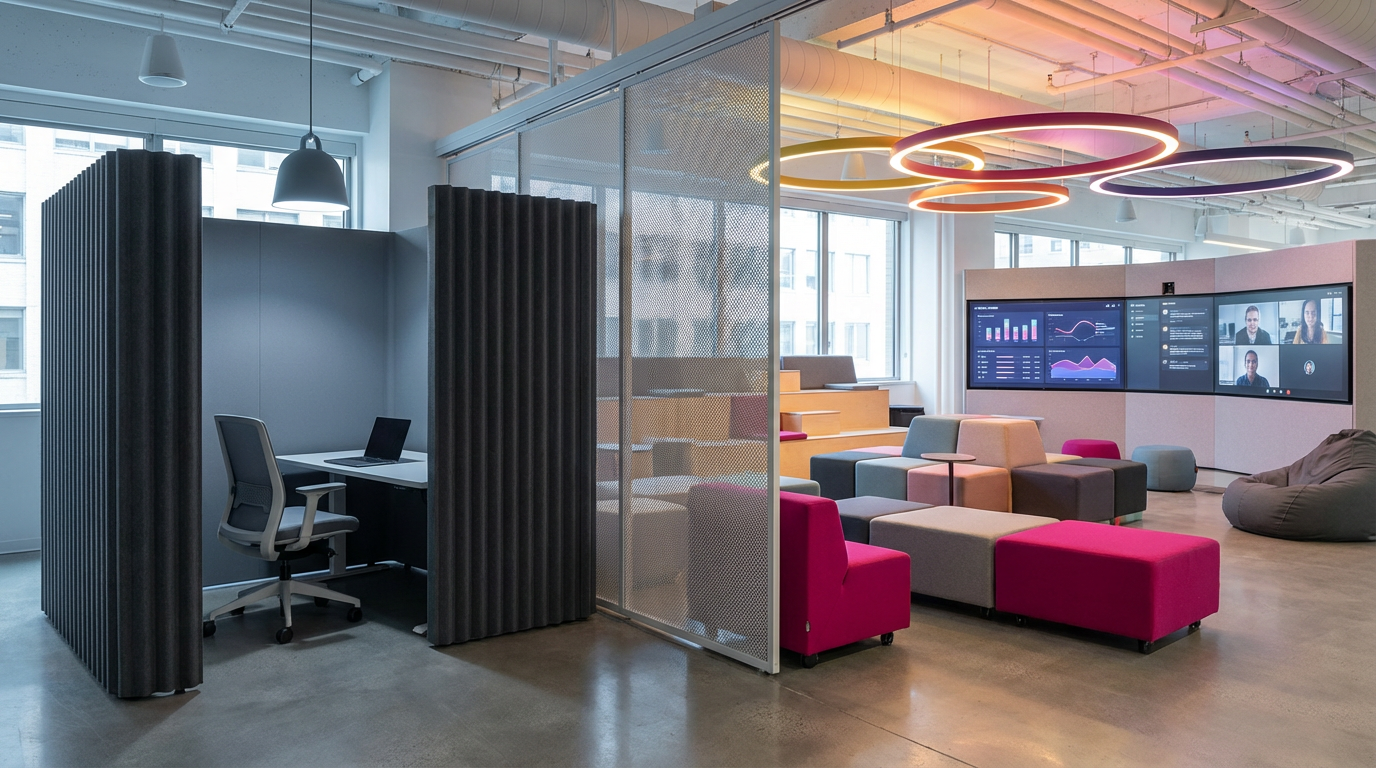
A zoned approach empowers employees with choice, which is a key driver of satisfaction and wellbeing. We recommend creating three distinct zones:
- Focus Zones: These are quiet areas designed for deep concentration. They should be free from distractions and high foot traffic. Solutions include single-person work pods, desks with acoustic screens, and library-style rules about noise. This is essential for tasks that require uninterrupted thought.
- Collaboration Zones: These are dynamic spaces built for teamwork. They feature flexible furniture like modular seating, mobile whiteboards, and large project tables. The goal is to create an energetic environment where ideas can be shared freely. These zones are the heart of office culture and innovation.
- Breakout Zones: These are crucial for mental and social wellbeing. They are comfortable, informal areas for relaxation and social connection, physically separate from work areas. Good office breakout area ideas include soft seating, coffee tables, kitchen facilities, and even games. These spaces encourage staff to take proper breaks, reducing burnout and fostering stronger team bonds. A study by CBRE UK on real estate trends highlights the increasing demand for amenity-rich buildings that prioritise these social and collaborative spaces (5).
Designing for Everyone: An Introduction to Neurodiversity in Office Design
A truly inclusive workplace is designed for everyone, and this includes accommodating neurodiversity. Neurodiversity, the recognition of natural variations in human brain function (including conditions like autism, ADHD, and dyslexia), is a critical consideration for modern office design. A report from Deloitte suggests that teams with neurodivergent professionals can be up to 30% more productive in certain roles (6). Creating an environment where they can thrive is a competitive advantage.
The great news is that good neurodiversity in office design is often just good design for everyone. It’s about providing choice and control over one’s environment. Instead of a one-size-fits-all approach, offer a variety of spaces and settings.
Practical, furniture-led solutions include:
- Varied Lighting: Offer dimmable overhead lights and individual task lamps so employees can control the brightness of their personal space.
- Quiet Sanctuaries: Provide enclosed acoustic pods or small, quiet rooms as an escape from the sensory stimulation of a busy office.
- Clear Zoning & Wayfinding: Use distinct colours, textures, and clear signage to define different zones. This creates a predictable and easy-to-navigate employee wellbeing office layout.
- Diverse Seating Options: Offer a range of seating, from traditional task chairs to high-back sofas, stools, and beanbags. This allows individuals to choose what best suits their sensory needs.
By embracing these principles, you create a workplace that not only attracts and retains a wider pool of talent but also empowers every single employee to do their best work.
Budgeting for Wellbeing: Smart Procurement & Calculating ROI
Addressing workplace wellbeing through design is often perceived as a significant expense. However, we believe it’s one of the smartest investments a business can make. The key is to shift the mindset from “cost” to “Return on Investment (ROI)”, the ratio of net profit to cost of investment. High-quality ergonomic office furniture UK businesses purchase isn’t a sunk cost; it’s a tool to improve productivity through office design.
A simple way to approach budgeting is with a ‘Good, Better, Best’ framework for key items.
- Good: A DSE-compliant, adjustable chair that meets all legal health and safety standards.
- Better: A chair with more advanced ergonomic features, like dynamic synchro-mechanisms and adjustable armrests.
- Best: A premium ergonomic chair with memory foam, fully customisable adjustments, and superior materials, designed for intensive all-day use.
This allows you to allocate budget strategically. You can invest in ‘Best’ for employees with specific needs or who spend the most time at their desks, while still ensuring everyone has a ‘Good’ baseline. At Cost Cutters UK, we offer Bulk Buy Discounts and flexible payment options like Credit Accounts Or Pay Flexibly to make these investments more manageable.
Calculating a precise ROI can seem daunting, but a simple estimate is powerful. According to research from the University of Oxford’s Wellbeing Research Centre, happy workers are 13% more productive (2). If you reduce absenteeism by just a few days per employee per year or see even a small uplift in output, the investment quickly pays for itself.
| Wellbeing Intervention | Typical Cost per Employee (Low-High) | Key Impact Area | Potential ROI Metric |
|---|---|---|---|
| Fully Adjustable Ergonomic Chair | £150 – £700 | Physical Health, Focus | Reduced absenteeism, fewer musculoskeletal complaints |
| Sit-Stand Desk | £250 – £800 | Physical Health, Energy Levels | Increased employee energy, reduced sedentary time |
| Acoustic Desk Dividers (per desk) | £80 – £250 | Focus, Mental Wellbeing | Fewer distractions, higher output on focus tasks |
| Biophilic Elements (Plants/Art) | £50 – £200 | Mental Wellbeing, Creativity | Improved employee morale, higher creativity scores |
Frequently Asked Questions About Office Design, Productivity, and Wellbeing
What is workplace productivity and wellbeing?
Workplace productivity and wellbeing is a holistic business strategy recognising that employee health is directly linked to performance. It moves beyond simple output metrics to create a sustainable, supportive work environment where staff feel physically comfortable, psychologically safe, and socially connected. This comprehensive approach is now fundamental to attracting and retaining talent.
How does office layout affect employee wellbeing?
An employee wellbeing office layout directly influences stress, focus, and interaction by providing varied spaces. A good layout offers quiet zones for concentration, collaborative areas for teamwork, and comfortable breakout spaces for rest. This reduces sensory overload and empowers employees with choice over how and where they work, which is crucial for mental wellbeing.
What are the main benefits of biophilic office design?
The primary biophilic office design benefits include reduced stress, increased creativity, and improved cognitive function. By incorporating natural elements like plants, light, and wood textures, it helps lower blood pressure and create a calmer, more engaging atmosphere. Studies consistently show this leads to higher reported levels of wellbeing and productivity.
Are standing desks really better for you?
Yes, standing desks are beneficial as part of a varied routine, but standing all day isn’t the goal. Their main advantage is encouraging movement and changing posture, which combats the negative health effects of a sedentary workday. An effective setup allows employees to easily alternate between sitting and standing, which is key for DSE compliance.
How can I improve office acoustics on a budget?
You can significantly improve acoustics without a full renovation by adding soft materials to absorb sound. Start with rugs, upholstered furniture, and fabric noticeboards. For a modest investment, high-quality acoustic desk dividers or freestanding screens offer targeted noise reduction in open-plan areas. These are highly effective first steps.
What is the first step in redesigning an office for wellbeing?
The first step is typically to survey your employees to understand their needs and pain points. Before purchasing any furniture, a simple questionnaire can provide invaluable data on issues like noise, comfort, and preferred workstyles. This ensures your investment addresses real problems and prevents costly design mistakes.
How do I make my office suitable for neurodiverse employees?
To support neurodiversity in office design, focus on providing a range of sensory environments and user control. This means offering quiet, low-lit focus pods, workstations with adjustable task lighting, and clear, logical layouts. Avoid vast, uniform open-plan spaces with no escape from stimulation, empowering all employees with choice.
What are the key elements of a good office breakout area?
An effective breakout area needs comfortable seating, different table heights, and access to amenities like coffee or water. It should be physically and visually separate from main work areas to clearly signal a space for rest and informal collaboration. Good lighting, biophilic elements, and accessible power sockets are also essential.
How do I comply with UK DSE regulations?
Compliance involves conducting DSE workstation assessments for all users, providing adjustable furniture, and ensuring adequate training. You must provide fully adjustable chairs and ensure screens are positioned correctly. Using DSE-compliant furniture is the simplest way to meet your legal obligations as a UK employer.
How can I measure the ROI of investing in office wellbeing?
Measure ROI by tracking key metrics before and after your design changes are implemented. Key performance indicators to monitor include staff turnover rates, absenteeism figures, and scores from employee satisfaction surveys. You can also track productivity metrics relevant to your business, providing a clear business case for the investment.
Important Considerations: Design, Policy, and Expert Guidance
You should recognise that while office design is a powerful tool, it is only one component of a comprehensive wellbeing strategy. The research cited shows strong correlations, but a beautifully designed office cannot fix a toxic work culture, excessive workloads, or poor management. The physical environment must be supported by positive organisational policies and leadership.
Alternative approaches to boosting wellbeing and productivity can complement office design. These include implementing flexible working policies, investing in mental health first aid training, offering wellness programmes, and promoting clear communication channels. A hybrid working office setup, for example, is only effective when supported by the right technology and management trust.
While this guide provides a strong foundation, complex projects or workplaces with specific health challenges may require specialist advice. For detailed DSE assessments or support for employees with declared disabilities, consulting an occupational health professional or a chartered ergonomist is recommended. For large-scale fit-outs, a dedicated space planning consultant can ensure optimal results.
Your Next Step Towards a Healthier, More Productive Workplace
Investing in workplace productivity and wellbeing through thoughtful office design is one of the most effective strategies for long-term business success. By focusing on the core pillars of ergonomics, mental wellbeing, and flexible zoning, you create an environment where employees can thrive. This guide demonstrates that a healthier workplace is not a luxury, but a strategic asset that reduces costs and boosts performance. You can improve productivity through office design.
Transforming your office from a simple workspace into a driver of growth can feel complex. That’s where we come in. With over 35 years of experience, Costcutters UK provides a complete solution, from expert advice to supply and installation. We’re “Rated Excellent On Trustpilot” because we deliver. From “Design To Install We Do It All!”, “Saving Time & Stress” for our clients. To begin creating a space that works for your people and your budget, book a free, no-obligation space planning consultation with our team today.
References
- Health and Safety Executive (HSE) – Annual Report. Data on work-related stress, depression or anxiety and musculoskeletal disorders in Great Britain.
- University of Oxford Wellbeing Research Centre – Research Study (2019). A landmark study which found a causal link indicating that happy workers are 13% more productive.
- Gallup – Workplace Analysis. Ongoing research highlights the strong link between employee wellbeing and key business outcomes like engagement, profitability, and lower turnover.
- CBRE UK – Market Report (2024). Analysis on the evolution of office space demand, noting the flight to quality and amenity-rich buildings post-pandemic.
- Deloitte – Industry Report. Found that teams with neurodivergent professionals can be 30% more productive than those without them in certain roles.
- Forbes – Council Post (2023). Expert analysis confirming that investments in wellbeing directly correlate with productivity gains and are essential for a modern business strategy.
- Vitality – Industry Research (2024). A study quantifying the days of productive time lost per employee per year due to health-related issues, including stress and poor physical health.
Your Next Step Towards a Healthier, More Productive Workplace
In summary, workplace productivity and wellbeing are inextricably linked, and investing in them through thoughtful office design is one of the most effective strategies for long-term business success. By focusing on the core pillars of ergonomics, mental wellbeing, and flexible zoning, you create an environment where employees can thrive. This guide demonstrates that a healthier workplace is not a luxury, but a strategic asset that reduces costs, boosts performance, and helps you to improve productivity through office design.
Transforming your office from a simple workspace into a driver of growth can feel complex. With over 35 years of experience, Costcutters UK provides a complete solution, from expert advice to supply and installation. To begin creating a space that works for your people and your budget, book a free, no-obligation space planning consultation with our team today.
Frequently Asked Questions About Office Design, Productivity, and Wellbeing
What is workplace productivity and wellbeing?
Workplace productivity and wellbeing is a holistic business approach recognising that employee mental, physical, and social health are directly linked to their performance, creativity, and overall business success. It moves beyond simple output metrics to advocate for creating a sustainable, supportive work environment. This integrated approach is now considered fundamental to a modern, resilient business strategy and talent retention.
How does office layout affect employee wellbeing?
An employee wellbeing office layout directly influences stress, focus, and interaction by providing varied spaces for different tasks and moods. A well-designed layout offers quiet zones for deep concentration, dynamic collaborative areas for teamwork, and comfortable breakout spaces for rest. This empowers employees with choice