School Library Design: 7 Common Pitfalls and How UK Schools Can Avoid Them
🎯 Key Takeaway
Successful school library design focuses on creating flexible, multi-functional spaces that support the curriculum, not just storing books. It requires strategic planning around zoning, furniture, and technology. By avoiding common pitfalls like poor planning and non-compliant furniture, schools create an inspiring, cost-effective library that enhances student engagement and learning outcomes. We’ve found the most effective spaces prioritise flexible zoning for quiet study, collaboration, and relaxed reading to cater to diverse learning styles. They also future-proof the space by integrating accessible power, robust Wi-Fi, and adaptable layouts for new technologies.
The role of the school library has transformed. It’s no longer a silent repository for books but a dynamic, vibrant hub for learning, collaboration, and discovery. As of May 2026, a well-executed school library design is a critical investment that directly impacts student outcomes and aligns with the Office for Standards in Education, Children’s Services and Skills (Ofsted) criteria for ‘quality of education’. However, embarking on a refurbishment project is fraught with potential missteps that can lead to wasted budgets and underutilised spaces. This guide details the most common pitfalls we’ve seen in our 35+ years of experience and provides practical advice on how your school can avoid them.
Written by: Cost Cutters UK Content Team | Reviewed by: Cost Cutters UK Editorial Team, Specialists in UK Education Furniture & Space Planning
Credentials: 35+ Years Experience; Rated Excellent On Trustpilot
ℹ️ Transparency Disclosure: This article explores best practices in school library design based on our 35+ years of experience in the UK education sector. Some links may connect to our services, which support the creation of this expert content. All information is verified by our editorial team to ensure accuracy and relevance for UK school leaders.
Pitfall 1: Inadequate Planning and Unrealistic Budgeting
The most common mistake is rushing into a refurbishment without a detailed plan. A successful project begins with a comprehensive brief, not a furniture catalogue. You need to ask critical questions: Who will use this space and when? What specific learning activities must it support-from individual research to group presentations? Failing to define these user needs from the outset often results in a space that looks good but functions poorly.
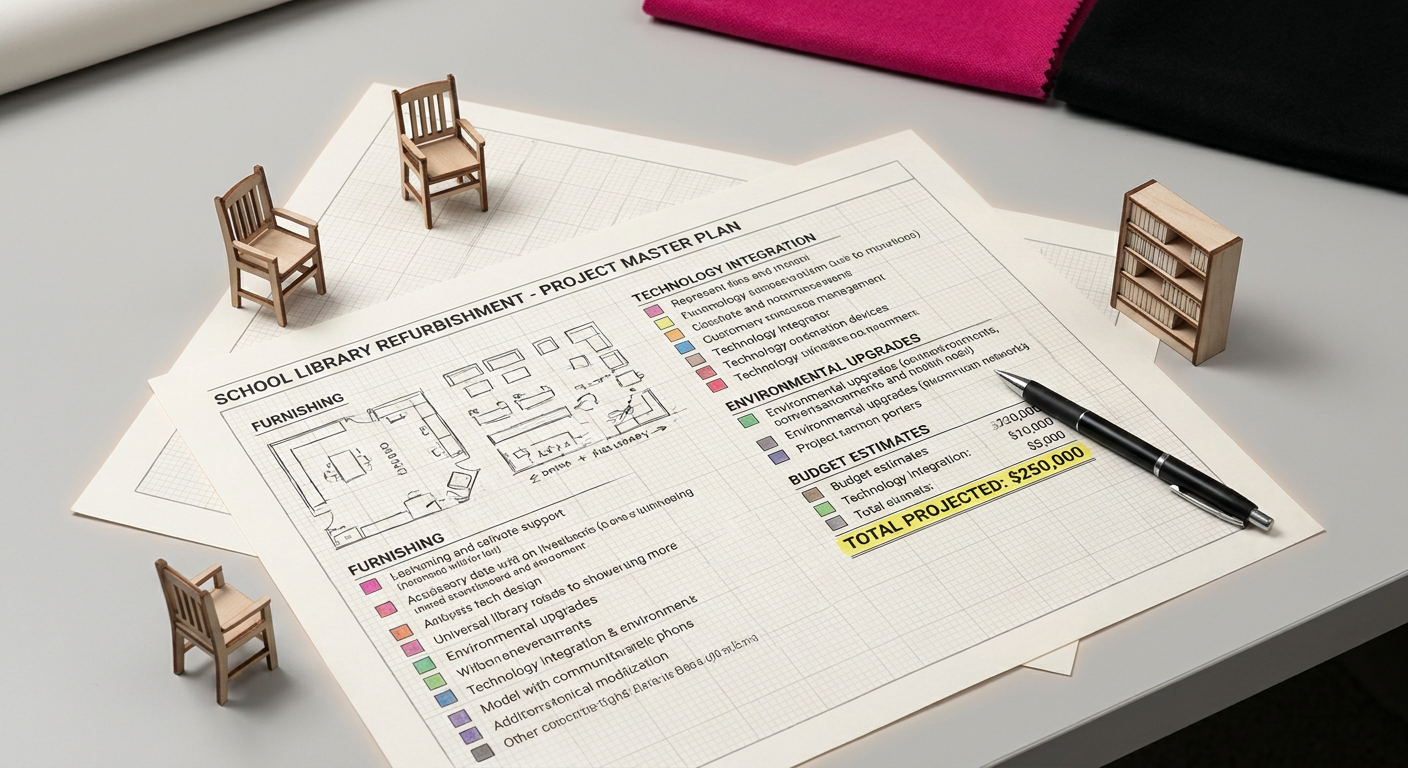
Another major issue is an unrealistic budget. Many schools only account for the visible costs, like furniture, overlooking crucial expenses such as installation, delivery, decorating, new flooring, and technology infrastructure. It’s also vital to think about lifetime value, not just initial price. Cheaper, domestic-grade furniture may save money upfront but will likely need replacing within a few years, costing more in the long run.
Our advice is to create a thorough school library refurbishment checklist that outlines every potential cost. This should include a 10-15% contingency fund to cover unexpected issues. By planning meticulously, you can source cost effective school library furniture that delivers durability and long-term value, ensuring your investment is sound. We believe this initial planning phase is the single most important factor for success.
Pitfall 2: Neglecting Dynamic Flow and Zoning
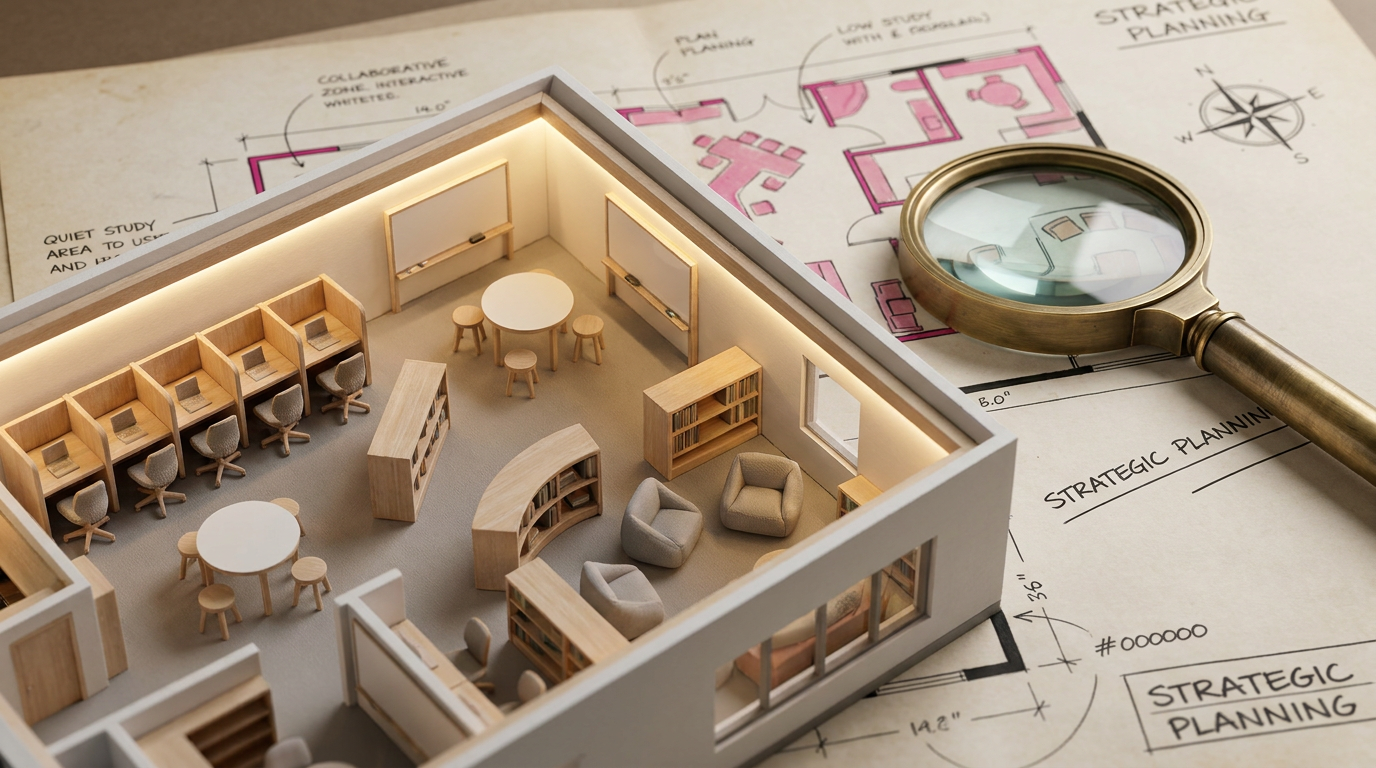
A library designed as one large, monotonous room fails to meet the diverse needs of modern learners. Effective school libraries are zoned, meaning they have distinct areas designed for different activities. Without clear zoning, quiet study is disrupted by group work, and collaborative energy is dampened by a need for silence. This lack of functional separation results in a space that satisfies no one completely.
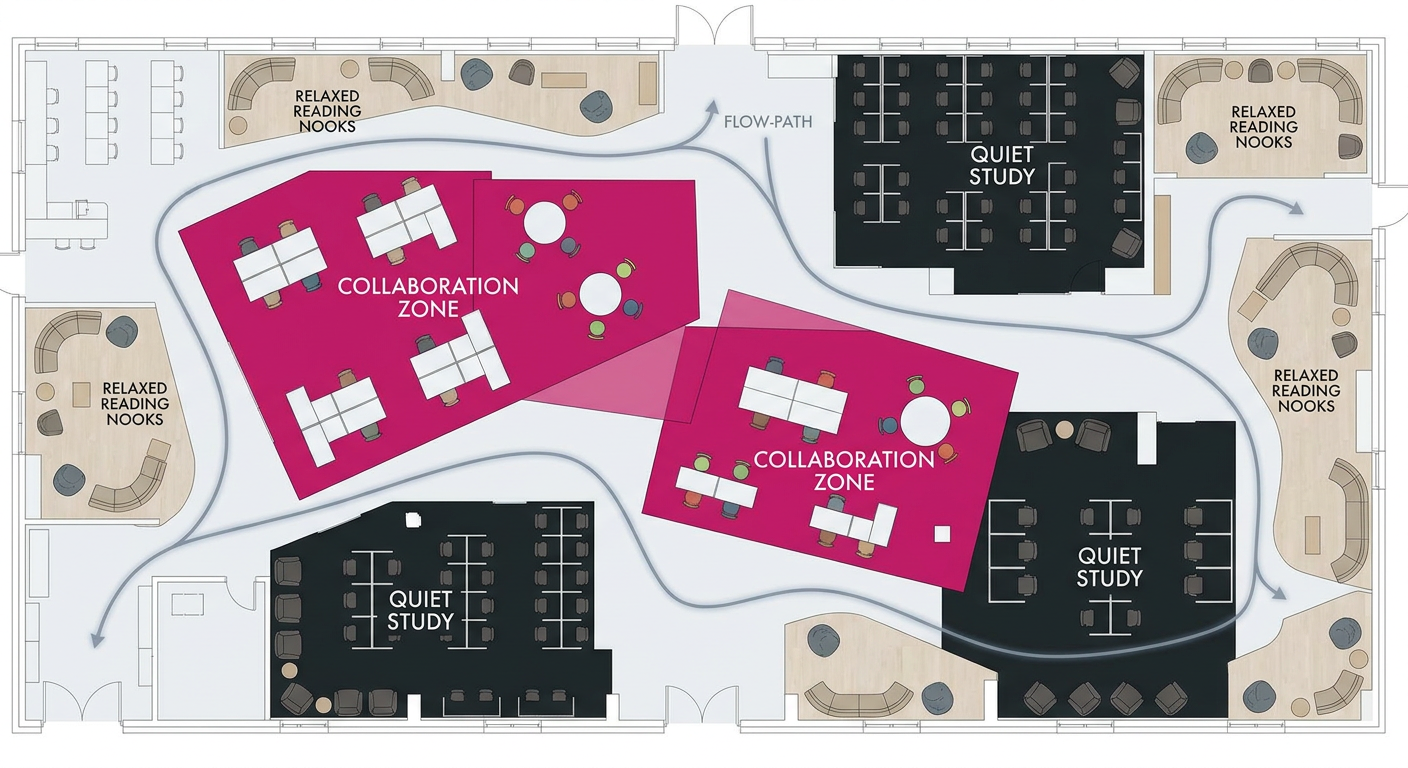
Modern school library design ideas centre on creating a ‘multi-space’ environment. Consider these essential zones:
- Quiet Study Zone: Equipped with individual study carrels and acoustic panels to minimise distractions for students who need to concentrate.
- Collaborative Zone: Features large tables, mobile whiteboards, and flexible seating to encourage group projects and peer-to-peer learning.
- Relaxed Reading Zone: A comfortable, informal area with soft seating, beanbags, and browsing bins to foster a love of reading. You’ll find that quality, comfortable breakout furniture is key here.
- Tech Hub: A dedicated space with access to PCs, charging stations, and other digital tools.
Achieving this doesn’t require building walls. You can use clever furniture arrangements, such as mobile shelving, modular seating, and different flooring or rugs, to create visual and functional divides. This approach ensures the library is an agile, adaptable resource for the entire school.
Pitfall 3: Subpar School Library Design with Impractical or Non-Compliant Furniture
Choosing the wrong furniture is a costly and potentially dangerous error. The temptation to purchase cheaper, domestic-grade items to stretch a budget is understandable, but it’s a false economy. This type of furniture isn’t built to withstand the intense daily use of a school environment and will quickly show wear, break, or become unsafe. Also, it may not meet the UK’s strict safety standards for educational settings.
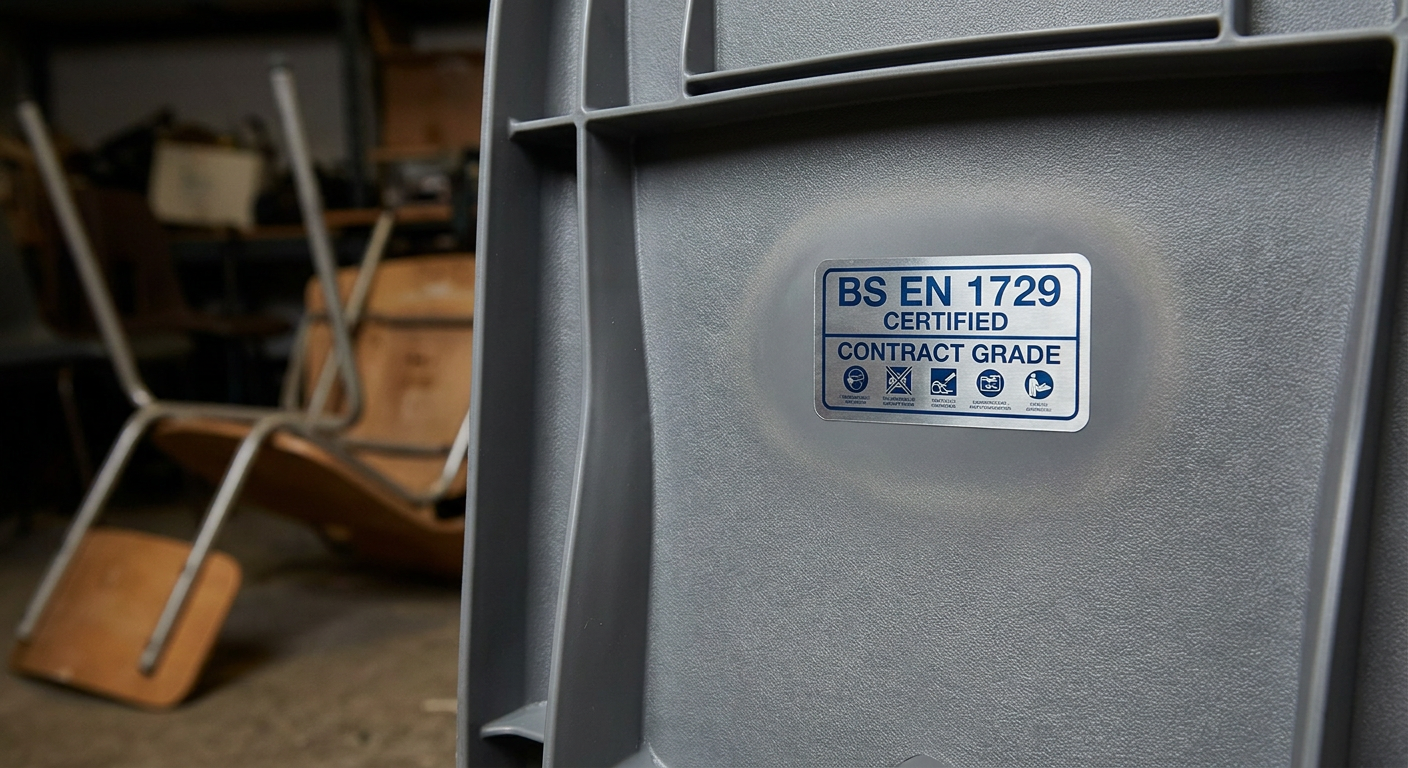
All school library furniture UK suppliers must ensure their products adhere to specific regulations. The most important of these is BS EN 1729, a British and European standard that dictates the correct ergonomic dimensions, strength, and stability for furniture used in educational institutions. Compliance isn’t just a recommendation; it’s a crucial aspect of your school’s duty of care. Using non-compliant furniture could pose a risk to students and create liability issues. We’re proud to list our UK safety and quality certifications for complete peace of mind.
When selecting furniture, look for contract-grade materials: impact-resistant edges, heavy-duty frames, and easy-to-clean, flame-retardant fabrics. Partnering with a specialist supplier ensures every item is fit for purpose, durable, and safe.
| Furniture Type | Best For | Durability | Flexibility | Cost Indicator |
|---|---|---|---|---|
| Mobile Shelving | Maximising floor space in smaller libraries; creating flexible zones. | High | Very High | £££ |
| Study Carrels | Individual quiet study; exam preparation; minimising distractions. | High | Low | ££ |
| Modular Soft Seating | Relaxed reading zones; informal group work; adaptable layouts. | Medium-High | Very High | £££ |
| Tilt-Top Tables | Multi-purpose rooms; collaborative work; easy storage. | High | High | ££ |
| Kinderbox Browsers | Primary schools; promoting book discovery; easy access for young children. | High | Medium | £ |
Pitfall 4: Ignoring Technology and Future-Proofing
Designing a library for 2026 without planning for 2030 is a significant oversight. Technology in education evolves rapidly, and a library that can’t adapt will quickly become dated. A common mistake is treating technology as an add-on, resulting in a tangle of extension cords and inadequate Wi-Fi coverage. This creates practical problems and safety hazards.
A future-proofed design integrates technology from the very beginning. This means planning for robust, reliable Wi-Fi that covers every corner of the space. More importantly, it requires a strategic approach to power access. You’ll need more than just a few wall sockets. Consider integrated power modules in tables, floor boxes in open-plan areas, and dedicated charging stations or lockers for devices. This ensures students can use their laptops and tablets wherever they choose to work.
Flexibility is also a key component of future-proofing. The rise of tablets may one day be supplemented by virtual or augmented reality tools. By choosing mobile shelving and modular furniture, you create a layout that can be easily reconfigured to accommodate new technologies and teaching methods as they emerge. This adaptability ensures the library remains a relevant and vital resource for years to come.
Pitfall 5: A ‘One-Size-Fits-All’ Approach to Key Stages
The learning needs and physical requirements of a six-year-old are vastly different from those of a sixteen-year-old. Applying a single design template across an all-through school or using secondary-style furniture in a primary setting is a recipe for an ineffective space. Each of the Key Stages (KS), the defined phases of the UK’s National Curriculum, requires a tailored approach.
For primary school library design (KS1 and KS2), the focus should be on creating a sense of wonder and accessibility. This means:
- Low-level, forward-facing shelving so children can easily see and reach the book covers.
- Imaginative and themed areas, like reading nooks or ‘caves’, to spark curiosity.
- Durable, colourful, and comfortable soft seating like floor cushions and beanbags.
- Tables and chairs sized appropriately according to BS EN 1729 guidelines for their age group.
For secondary schools (KS3, KS4, and Sixth Form), the design must balance social learning with the need for focused, individual study. This involves providing a mix of informal, cafe-style zones for group work alongside formal, quiet areas that mimic exam conditions. The furniture should be more mature in style and sized for teenagers and young adults. Ignoring these developmental differences results in a library that fails to properly support the curriculum and student wellbeing at any level.
The Solution: Partnering with a Design & Installation Expert
Avoiding these pitfalls can feel overwhelming for busy school business managers and headteachers. The most effective way to guarantee a successful outcome is to partner with a specialist who understands the unique demands of the education sector. As a leading supplier of school and educational equipment, we offer a comprehensive service designed to manage the entire process for you, “Design To Install We Do It All!”
An expert partner mitigates every risk outlined above:
- Planning & Budgeting: We conduct a thorough needs analysis and provide a detailed, transparent quote, helping you secure an effective value. We offer Bulk Buy Discounts and flexible payment options, including Credit Accounts Or Pay Flexibly, to make your budget go further.
- Zoning & Flow: Our free space planning service uses 2D and 3D visuals to help you see exactly how zoning will work in your specific space before you commit.
- Furniture & Compliance: We have an extensive knowledge of compliant school library furniture UK standards, ensuring every piece is safe, durable, and fit for purpose.
- Future-Proofing: We design with technology integration in mind, advising on an effective solutions for power and data.
- Project Management: We handle everything from the initial design to the final installation, coordinating all logistics and saving you significant time and stress.
By working with an experienced team, you gain a trusted partner dedicated to creating a library that will inspire students for years to come.
Frequently Asked Questions About School Library Design
What is school library design?
Modern school library design is the strategic process of planning a multi-functional learning space. It goes far beyond simply housing books to create an environment that actively supports reading for pleasure, digital literacy, collaborative projects, and quiet, focused study. It involves careful consideration of layout, zoning, furniture, technology, and lighting to maximise the educational impact of the space.
How much does a school library refurbishment cost in the UK?
The cost varies significantly, typically ranging from £5,000 for a simple furniture refresh to over £50,000 for a complete overhaul. Factors influencing the final price include the size of the room, the quality and quantity of furniture selected, technology integration, flooring, lighting, and decoration. A reputable supplier can provide a detailed, itemised quote based on a thorough brief and your specific requirements.
How can I make a small school library feel bigger?
You can create a sense of space by using mobile shelving to free up the floor when needed. Also, choose light colour schemes for walls and furniture, use vertical space effectively with taller shelving units, and select multi-functional pieces like storage benches. Ensuring the space is well-lit and has clear, uncluttered walkways is also crucial for making it feel more open and inviting.
What is the most important furniture for a primary school library?
The most essential items are those that promote accessibility and engagement for young readers. This includes low, forward-facing book browsers (often called kinderboxes) that display colourful covers, durable and comfortable soft seating like beanbags or floor cushions, and tables and chairs correctly sized for their age group. Everything should be chosen with the highest standards of safety, stability, and durability in mind.
How do you create zones in a school library?
You can effectively create zones using furniture and flooring as visual and functional dividers. Use low-level shelving units or mobile whiteboards to partition areas without blocking sightlines. Different coloured rugs or flooring can define a relaxed reading area from a collaborative zone. Arranging modular seating in clusters also helps to create distinct spaces for different activities without building permanent walls.
Why is BS EN 1729 compliance so important for school furniture?
This standard is vital for both student safety and product longevity. BS EN 1729 ensures that furniture is ergonomically sized to support good posture and prevent strain. It also may help that items have been rigorously tested for strength, stability, and durability to withstand the demanding environment of a school, preventing accidents and ensuring the school’s investment lasts for many years.
What’s the difference between library shelving and standard shelving?
Library shelving is a specialised product designed specifically to bear the heavy, concentrated weight of books. It is built to contract-grade standards for safety and durability in a public space. It often includes features like reinforced shelves to prevent sagging, integrated book supports, and a design that complies with safety standards, unlike most domestic or general office shelving units.
How long does a school library refurbishment take?
The timeline depends entirely on the project’s scope. A simple furniture replacement might be completed within 2-4 weeks from order to installation. However, a full refurbishment involving design work, decoration, new flooring, and technology installation could take a full school term or longer to plan and execute. Scheduling the main installation work during school holidays is often the most efficient approach.
Can I use existing furniture in a new design?
Yes, it is sometimes possible to integrate high-quality existing pieces into a new design. However, it’s crucial to professionally assess their condition, safety compliance, and whether their style and function fit the new, flexible layout you aim to create. An expert space planner can help you decide what is genuinely cost-effective to keep versus what should be replaced for a cohesive result.
Where do I start with a school library refurbishment checklist?
Start by consulting the key stakeholders: librarians, teachers, and pupils. Then, work with them to define the clear educational goals you want the new space to achieve. The next steps are to measure the room accurately, assess the existing power and data points, and establish a realistic preliminary budget. This foundational information will form the core of your brief for any potential design partner.
Important Considerations Before You Begin
This guide provides a strategic framework based on extensive industry experience. However, every school building is unique. The specific dimensions, structural limitations (especially in older UK schools), and existing electrical and data infrastructure can only be fully assessed with a professional site survey. These physical constraints will inevitably influence the final design and budget.
While a DIY or piecemeal approach might seem cheaper initially, our experience shows it often leads to unforeseen costs, compliance issues with standards like BS EN 1729, and a disjointed result that fails to meet objectives. An alternative is a phased refurbishment with a single expert partner. This approach ensures a cohesive design and strict budget control over time, balancing cost management with a professional, long-lasting outcome.
We strongly recommend consulting with an educational space planning specialist before committing a significant budget. An expert can help you avoid costly mistakes, maximise your space’s potential, ensure all furniture and layouts are compliant with UK standards, and manage the entire project from start to finish. This professional oversight is invaluable for saving you and your staff precious time and stress.
Transform Your Library from a Pitfall to a Hub of Learning
A successful school library design is entirely achievable by navigating the common pitfalls with strategic foresight. By focusing on detailed planning, creating dynamic zones, and selecting compliant, future-proof furniture, you are making a direct and powerful investment in your school’s educational heart. This considered approach, which we champion, transforms a simple room of books into a vibrant, multi-purpose learning environment that supports students and staff for years to come, confirming why we are Rated Excellent On Trustpilot.
Navigating this process can be complex. The Cost Cutters UK team has over 35 years of experience helping UK schools like yours create inspiring and functional libraries. Our free space planning service removes the stress, providing you with 3D visuals and a detailed, no-obligation quote to bring your vision to life, on budget and on time. Request a free, no-obligation design consultation today to get started.
References
- British Standards Institution (BSI) – Standards Body. The BSI is the governing body responsible for crucial standards such as BS EN 1729, which sets the benchmark for strength, stability, and ergonomic sizing of educational furniture in the UK.
- Department for Education (DfE) – Government Body. The DfE provides statutory guidance for schools in England, including advice on designing and managing school premises to create safe and effective learning environments that support educational outcomes.
- CILIP: The Library and Information Association – Professional Body. As the UK’s leading professional body for librarians and information specialists, CILIP provides guidelines and research on creating effective library spaces that support learning, literacy, and community engagement.
- School Library Association (SLA) – Charitable Body. The SLA provides guidance, training, and advocacy for school libraries in the UK. Their research offers practical advice on library design that supports reading for pleasure and curriculum delivery.
- Jisc – Not-for-Profit Organisation. Jisc offers digital solutions for UK education and research. Their reports on digital transformation and learning spaces provide key insights into future-proofing libraries with appropriate technology infrastructure.
Frequently Asked Questions About School Library Design
What is school library design?
**Modern school library design is the strategic process of planning a multi-functional learning space that supports reading, digital literacy, collaboration
, and quiet study, going far beyond simply housing books. It’s about creating an inspiring and functional hub that enhances the entire educational experience.
How much does a school library refurbishment cost in the UK?
A school library refurbishment can cost anywhere from £5,000 for a light refresh to over £50,000 for a comprehensive redesign. The final price depends entirely on the library’s size, the scope of work, the quality of furniture selected, and the level of technology integration required. A reputable supplier can provide a detailed, itemised quote based on a specific brief and floor plan to ensure budget clarity.
How can I make a small school library feel bigger?
To make a small library feel larger, prioritise mobile furniture, light colours, and vertical space. Use mobile shelving that can be moved to open up the floor for events. Lighter paint colours and good lighting create an airy feel. Use wall-mounted shelving to draw the eye upward and free up floor space. Selecting multi-functional furniture, like storage benches, also maximises utility in a compact area.
What is the most important furniture for a primary school library?
The most crucial furniture for a primary school library includes low, forward-facing book browsers, durable soft seating, and correctly sized tables and chairs. Kinderboxes and tilted display shelves make books more inviting for young children. Beanbags, floor cushions, and sturdy sofas create comfortable reading nooks. All items must be BS EN 1729 compliant to ensure they are safe, ergonomic, and built to withstand a primary school environment.
How do you create zones in a school library?
Zones are created by strategically using furniture, flooring, and acoustic panels to define different activity areas without building walls. Use low shelving units or modular seating to act as soft dividers between a quiet study area and a collaborative group work space. Different coloured carpets or rugs can visually signal a new zone, such as a relaxed reading corner. This maintains an open feel while providing functional separation.
Why is BS EN 1729 compliance so important for school furniture?
Compliance with BS EN 1729 is critical for student safety, comfort, and the school’s legal liability. This standard ensures furniture has the correct ergonomic dimensions for different age groups, reducing physical strain. It also guarantees the furniture has passed rigorous tests for strength and stability, preventing accidents from breakages and ensuring it can withstand the heavy use typical in a school environment.
What’s the difference between library shelving and standard shelving?
Library shelving is specifically engineered for the high-density weight of books and the safety requirements of a public space. Unlike standard office or domestic shelving, it is built to contract-grade standards to prevent collapse or tipping. It often includes features like reinforced shelves, integrated book supports, and durable finishes designed for high-traffic environments, making it a safer and more durable long-term investment.
How long does a school library refurbishment take?
A school library refurbishment timeline can range from a few weeks to a full school term or more. A simple furniture replacement might be completed within 2-4 weeks from order to installation. However, a full redesign involving decoration, new flooring, and technology installation will require several months of planning and execution. Scheduling the main installation work during school holidays is the most common and efficient approach.
Can I use existing furniture in a new design?
Yes, it is sometimes possible to integrate existing furniture, but it must be carefully assessed first. An expert should evaluate its condition, safety compliance (e.g., BS EN 1729), and whether it truly fits the flexible, multi-functional goals of the new design. Often, retaining old, rigid furniture can compromise the entire project. It’s about balancing cost-saving with achieving the desired educational outcome.
Where do I start with a school library refurbishment checklist?
Your school library refurbishment checklist should begin with stakeholder consultation and defining clear goals. First, talk to pupils, teachers, and the librarian to understand their needs. Next, define the educational objectives for the space. Then, accurately measure the room and establish a realistic preliminary budget. This foundational information is essential for creating a successful design brief for any potential partner or supplier.
Conclusion
Transform Your Library from a Pitfall to a Hub of Learning
In summary, a successful school library design is achievable by avoiding these common pitfalls. By focusing on strategic planning, dynamic zoning, and selecting compliant, future-proof furniture, you invest directly in your school’s educational heart. This considered approach transforms a simple room of books into a vibrant, multi-purpose learning environment that supports students and staff for years to come.
Navigating this process can be complex. The Costcutters UK team has over 35 years of experience helping UK schools like yours create inspiring and functional libraries. Our free space planning and design service removes the stress, providing you with 3D visuals and a detailed, no-obligation quote to bring your vision to life, on budget and on time. Request a free, no-obligation design consultation today to get started.