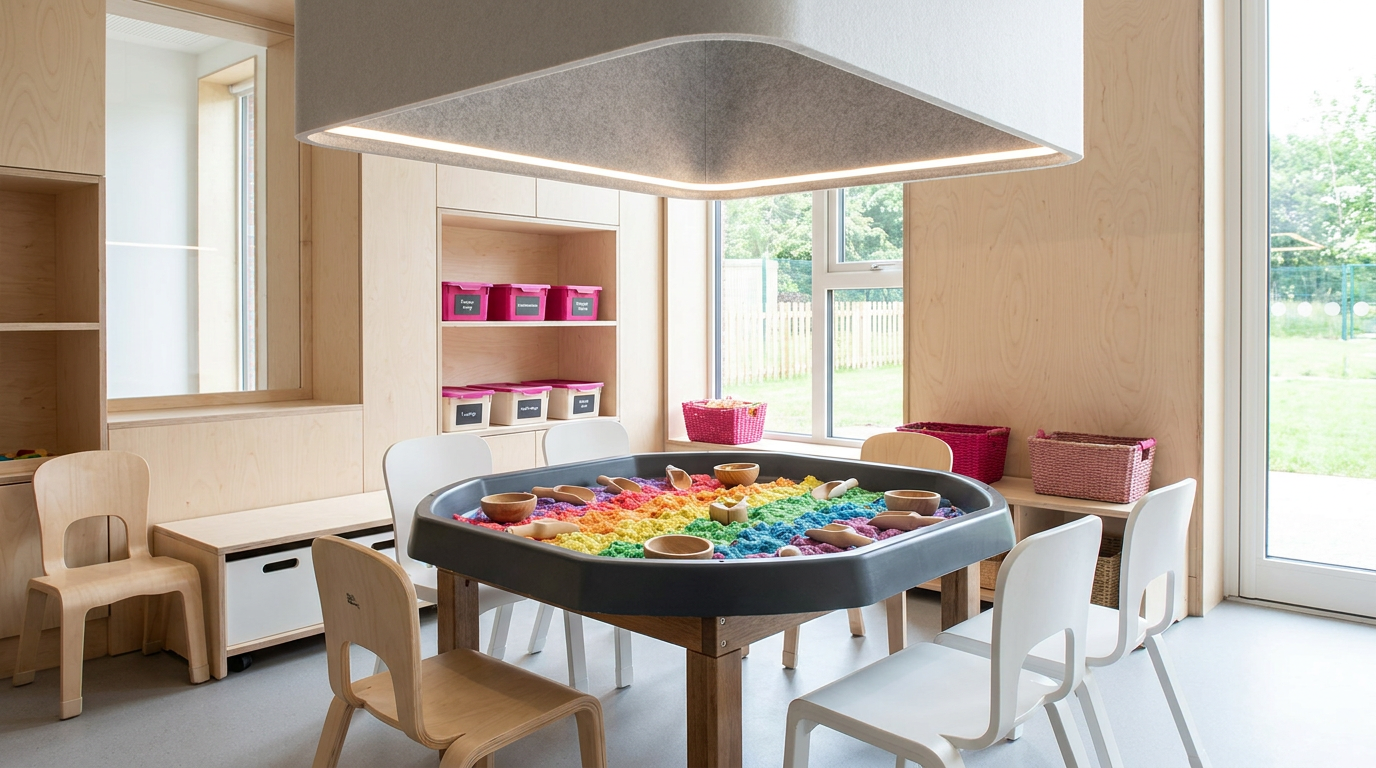
Messy Play Myths vs. Facts: A Guide for UK Early Years Settings
🎯 Key Takeaway
Effective messy play is a vital pedagogical tool that supports multiple EYFS learning goals by encouraging children to explore materials in an unstructured, hands-on way. It directly supports cognitive development, problem-solving, and scientific thinking. Common concerns about cost, safety, and hygiene can be successfully mitigated with proper planning, risk assessment, and investment in compliant, durable equipment. Also, adapting activities is key to ensuring messy play is inclusive and beneficial for all children, including those with Special Educational Needs (SEN). This guide unpacks the evidence, debunks the myths, and provides a practical framework for implementation in UK schools.
For many school leaders and early years practitioners, the term ‘messy play’ can trigger visions of chaos, cleanup, and cost. However, a significant body of educational research supports messy play as a critical, evidence-backed strategy for child development. As of May 2026, its principles are deeply embedded within the UK’s educational frameworks. The challenge for school business managers and headteachers isn’t whether to implement it, but how to do so in a way that is manageable, safe, and cost-effective. At Cost Cutters UK, our 35+ years of experience has shown us that the right environment and equipment are the keys to unlocking its potential. This guide will separate fact from fiction, aligning the practice with both curriculum goals and budget realities.
Written by: The Cost Cutters UK Content Team | Reviewed by: Our Editorial Team, Specialists in UK Educational Furniture & Supplies with 35+ Years Experience; Rated Excellent On Trustpilot
Transparency Disclosure: This article explores the role of messy play in early years education, based on established pedagogical research and our 35 years of experience supplying UK schools. Some links may connect to our comprehensive range of school and educational equipment. All information is verified by our editorial team to ensure accuracy and relevance for UK educational settings. Cost Cutters UK is a leading supplier of school and educational equipment, Rated Excellent On Trustpilot.
The Science Behind Messy Play: Cognitive and Motor Development
Yes, there is a strong scientific basis supporting the benefits of messy play. This type of play, which is child-led and focuses on exploring materials, acts as a powerful catalyst for building neural pathways. When a child squishes mud, pours water, or smears paint, they are engaging multiple senses simultaneously. This multi-sensory experience is crucial for brain development, as it creates stronger, more complex connections between different areas of the brain. A meta-analysis published in the Journal of Early Childhood Research (2022) found a significant link between regular sensory activities and improved fine motor skills.

The science behind messy play also connects to physical development. Activities like scooping, squeezing, and manipulating materials directly support the proprioceptive system (body awareness) and vestibular system (balance and spatial orientation). It’s important to distinguish between ‘messy play vs sensory play’. Sensory play is a broad category of activity that stimulates any of the senses. Messy play, a specific type of sensory play, involves malleable materials and an unstructured process, which research shows enhances problem-solving skills and memory retention. By allowing children to experiment with cause and effect in a hands-on way, messy play lays the foundational cognitive architecture for later scientific and mathematical thinking.
The Educational Case for Messy Play: Aligning with EYFS Goals
Yes, messy play directly supports all seven areas of the Early Years Foundation Stage (EYFS), the UK’s statutory framework for early childhood education. Far from being just ‘fun’, these activities are a targeted method for achieving recognised messy play learning outcomes. When planned with intention, a simple messy play station becomes a dynamic learning environment that addresses multiple curriculum goals at once, offering excellent value for both time and resources.
For example, a water table with jugs and funnels doesn’t just entertain; it allows children to explore concepts of volume and capacity, directly hitting ‘Mathematics’ objectives. Adding coloured dyes introduces ‘Understanding the World’ through basic scientific observation of colour mixing, whilst also covering ‘Expressive Arts and Design’. The very act of pouring and controlling the flow of water develops the fine and gross motor skills essential for ‘Physical Development’. This integrated approach is one of the key benefits of messy play. Our experience shows that framing activities around EYFS goals helps secure budget and stakeholder buy-in.
The table below maps common messy play ideas for early years to specific EYFS areas, showing the clear educational justification.
| Messy Play Activity Idea | Primary EYFS Area Targeted | Specific Learning Goal Achieved | Recommended Equipment |
|---|---|---|---|
| Coloured Sand Art | Expressive Arts and Design | Exploring and using media and materials; developing imagination. | Tuff Tray, Coloured Sand, Funnels, Brushes |
| Mud Kitchen Creations | Understanding the World | Making observations of animals and plants; understanding processes. | Mud Kitchen, Pots, Pans, Utensils |
| Water & Bubble Play | Physical Development | Developing fine and gross motor skills; handling equipment and tools. | Sand and Water Table, Whisks, Jugs |
| Playdough Sculpting | Communication and Language | Developing vocabulary through describing textures and actions. | Playdough, Rolling Pins, Cutters, Mats |
Debunking Common Messy Play Myths: Safety, Cost, and Cleanup
One of the biggest barriers to implementing a robust messy play programme is overcoming persistent myths about its drawbacks. However, these perceived disadvantages of messy play are almost typically logistical challenges that can be solved with proper planning and the right equipment. Let’s tackle the three most common concerns.
Myth 1: It’s unhygienic and unsafe.
Fact: This is perhaps the most significant concern, but it is easily managed. A well-run messy play session adheres to clear risk assessments. By using non-toxic, age-appropriate materials and ensuring constant supervision, the environment remains safe. Regular cleaning protocols and teaching children hand-washing as part of the activity instil good hygiene habits. All our recommended equipment meets all relevant UK safety certifications, ensuring that the physical environment itself poses no undue risk. A report from the Health and Safety Executive (HSE) (2023) encourages sensible risk management, not the elimination of beneficial activities.
Myth 2: It’s too expensive for our budget.
Fact: While initial setup has a cost, messy play can be one of the most budget-friendly activities. Many core materials are low-cost (water, sand, mud, recycled packaging) or can be made in-house (playdough, slime). The key is to make smart, long-term investments in durable, reusable equipment. A high-quality tuff tray or sand and water table will last for years, contain the mess effectively, and facilitate hundreds of different activities, offering a superb return on investment and qualifying for our Bulk Buy Discounts.
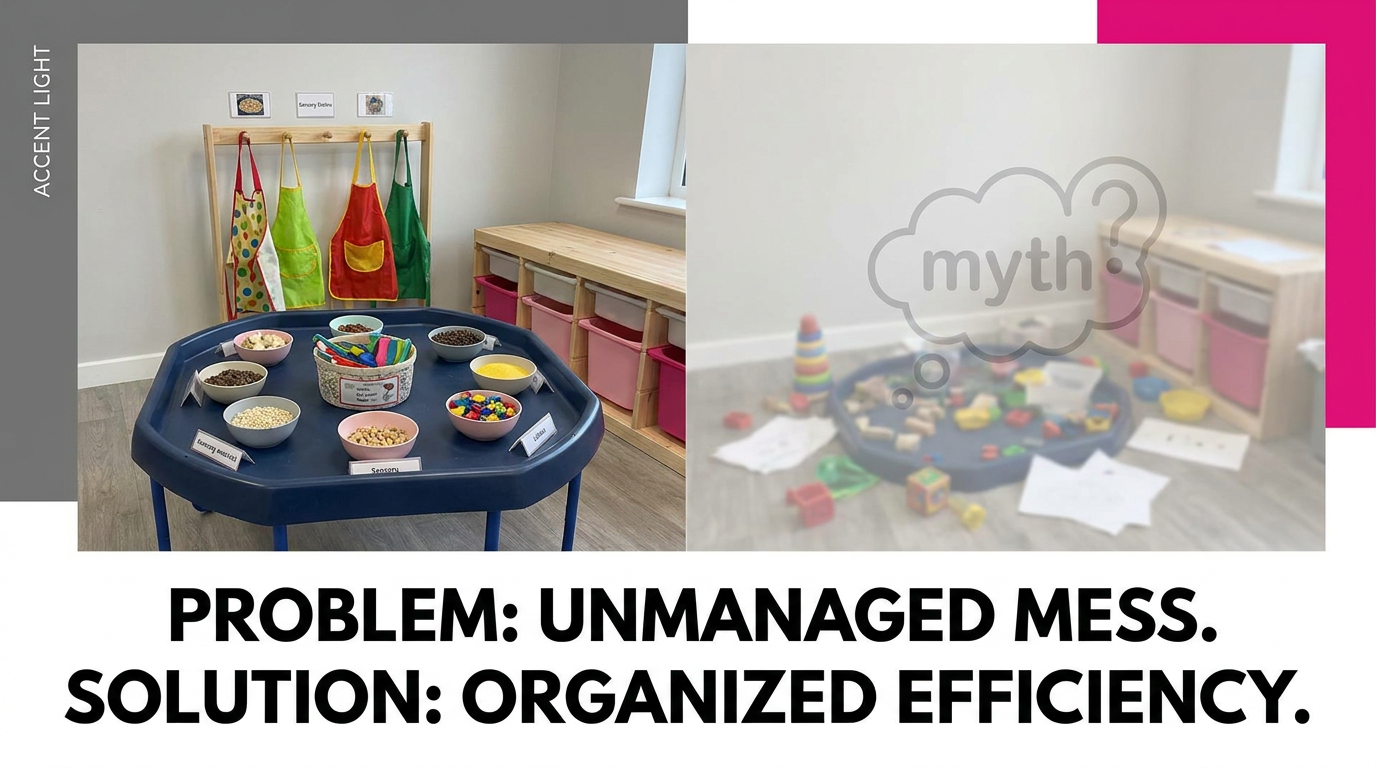
Myth 3: The cleanup is unmanageable and wastes staff time.
Fact: An uncontained mess is indeed a problem. A managed mess is an asset. Creating a dedicated messy play zone with wipe-clean flooring, using large tuff trays to contain materials, and having children wear protective aprons makes a huge difference. When cleanup is built into the routine, it becomes a valuable learning activity in itself, teaching children responsibility. With accessible storage and the right tools, a complete reset of the area can take less than 15 minutes, “Saving Time & Stress” for your staff.
### Case Study: A Primary School’s Messy Play Transformation
Challenge: A local primary school’s Early Years team was hesitant to expand messy play due to concerns over cleanup time consuming valuable staff hours and the perceived cost of new equipment. Their existing setup was inefficient, leading to more mess outside the play area than inside it.
Solution: We worked with them on a ‘Design To Install’ project. We helped them designate a specific corner of the classroom with wipe-clean vinyl flooring. They invested in two large Tuff Trays and a mobile storage unit on wheels, stocked with clearly labelled bins for different materials.
Results: The school reported a 75% reduction in cleanup time, from over 30 minutes to under 10 minutes per session. The containment offered by the Tuff Trays minimised spillages, and the mobile unit meant everything was packed away swiftly. The initial investment of £450 was offset by the reclaimed staff time within the first term.
Key Insight: Investing in containment and storage solutions is not an ‘extra’ cost; it’s the core component that makes messy play sustainable and efficient.
Making Messy Play Inclusive for Every Child (SEN Focus)
Yes, messy play is not only suitable but can be highly beneficial for many children with Special Educational Needs (SEN), which refers to learning difficulties or disabilities requiring special provision. However, it requires thoughtful adaptation to be successful and inclusive. The key is moving away from a one-size-fits-all approach and towards a personalised one that respects individual sensory profiles.
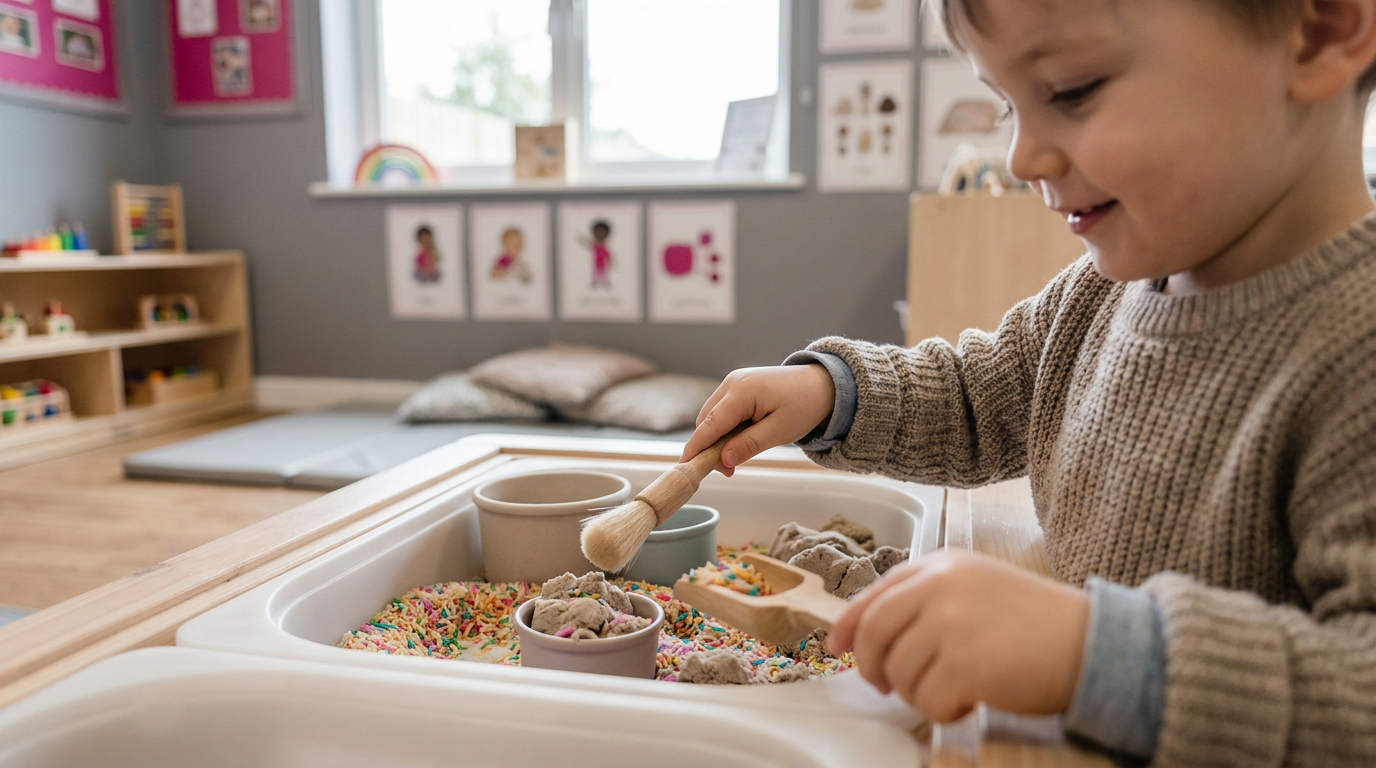
For example, a common question is whether messy play for autistic children is appropriate. The National Autistic Society (UK) notes that while many autistic individuals have sensory sensitivities (like tactile defensiveness, which is associated with an aversion to certain textures), many others find the predictable, repetitive nature of sensory activities to be calming and regulating. The solution isn’t to avoid messy play, but to introduce it carefully.
Here are some practical strategies we recommend:
- Start with Dry Mess: Begin with materials like coloured rice, dried pasta, or kinetic sand before introducing wet or sticky textures like paint or slime.
- Provide Tools: Offer scoops, brushes, and tongs. These tools allow a child to engage with the material without initial direct skin contact, giving them control over their level of interaction.
- Gradual Introduction: Introduce one new texture at a time in a predictable, safe space. Allow the child to observe first before inviting them to participate.
- Honour ‘No’: rarely force a child to touch something they don’t want to. Providing an alternative, related activity nearby allows them to participate at their own comfort level.
For children with ADHD, the kinesthetic, hands-on nature of messy play can be particularly effective for maintaining focus and engagement. The goal is to adapt the environment so every child can access the rich developmental benefits.
A Procurement Checklist for a Manageable Messy Play Zone
Creating an effective messy play area is less about the ‘mess’ and more about strategic procurement. Investing in the right foundational equipment transforms a potentially chaotic activity into a structured, manageable, and highly effective learning station. Based on our 35 years of expertise, we recommend prioritising durability, ease of cleaning, and safety compliance. Here is our essential checklist for setting up a successful zone.
1. Containment is Key:
This is the most critical element. Containing the materials prevents widespread mess and defines the play space.
- Tuff Trays: A Tuff Tray, a large, heavy-duty octagonal plastic tray, is the cornerstone of modern messy play. It’s robust, easy to wipe down, and its raised edges keep sand, water, and paint contained.
- Sand and Water Tables: These are brilliant for providing play at a comfortable height. Look for models with sturdy frames, lids for covering when not in use, and drainage plugs for easy cleaning, like the TickiT Sensory Mood Sand and Water Table.
2. Protective & Practical Surfaces:
Protecting your classroom infrastructure is vital for long-term maintenance.
- Wipe-Clean Flooring: If possible, designate an area with vinyl or lino flooring. If not, large, non-slip PVC floor mats are an excellent alternative.
- Wipeable Tables: Choose tables with laminate tops that won’t be damaged by water or paint.
3. Personal Protection for Children:
Keeps clothes clean and reduces laundry-related issues for parents.
- Waterproof Aprons: Long-sleeved, waterproof aprons are non-negotiable. Opt for easy-to-clean materials that can be quickly wiped down and hung to dry.
4. Smart, Accessible Storage:
An organised space encourages an organised cleanup process.
- Mobile Storage Units: A wheeled trolley with clear, labelled tubs allows materials to be brought to the play area and packed away quickly. This makes setup and cleanup efficient and part of the child’s routine. We offer a range of specialised early years furniture from brands like Twoey designed for this purpose.
5. Durable, Safe Seating:
- Stackable Plastic Chairs: Lightweight, durable, and easy-to-clean chairs are well-suited for seating at tuff trays or tables. They can be quickly stacked and moved out of the way.
Investing in these core items creates a robust foundation. From there, you can add a wealth of messy play ideas for early years using low-cost consumables. Our flexible payment options, including ‘Credit Accounts Or Pay Flexibly’, can help your school budget for these important long-term assets.
Frequently Asked Questions About Messy Play
What is messy play?
Messy play is a form of hands-on, child-led activity where the main goal is exploring the properties of materials rather than creating a finished product. It focuses on the process of interacting with substances like sand, water, mud, or paint. This approach encourages curiosity, experimentation, and discovery. Because it is unstructured, messy play allows children to follow their own interests and develop creativity and problem-solving skills at their own pace.
What is the science behind messy play?
The science behind messy play lies in its ability to stimulate multiple senses at once, which strengthens neural connections in a child’s brain. This multi-sensory input helps to build and reinforce pathways related to cognitive function. According to information from NHS Children’s Health (2024), this process supports the development of fine motor skills, body awareness, and problem-solving abilities. It effectively provides a rich learning experience that integrates physical action with cognitive processing.
What are the learning outcomes of messy play?
The primary messy play learning outcomes span all areas of the EYFS framework, including physical, cognitive, and social-emotional development. Children enhance fine motor skills through scooping and pouring and gross motor skills through larger movements. They engage with early mathematical concepts like volume and shape and scientific principles like cause and effect. Language develops as they describe textures, and collaborative play fosters crucial social skills like sharing and negotiation, as noted in a YouTube educational feature (2023) on the topic.
What is the difference between messy play and sensory play?
Sensory play is a very broad category of activity designed to stimulate any of the five senses, whereas messy play is a specific sub-type of it. While a sensory bin with different fabrics stimulates touch, it isn’t ‘messy’. Messy play specifically involves malleable, often wet or gooey materials like paint, slime, or mud. The key distinction is that messy play focuses on the process of manipulating these transformable substances, making the exploration itself the primary goal.
Is there any disadvantage to messy play?
The perceived disadvantages of messy play, such as cleanup, cost, and safety, are typically logistical challenges rather than inherent flaws in the activity itself. These issues can be almost entirely eliminated with strategic planning. By creating a dedicated, well-equipped zone with tuff trays, protective mats, and aprons, the mess is contained. Using budget-friendly materials and integrating cleanup into the learning routine makes it both affordable and manageable for any early years setting.
Do autistic children like messy play?
Responses to messy play among autistic children vary significantly, as each child has a unique sensory profile. While some children may have sensory aversions that make them dislike certain wet or sticky textures, many others find the predictable sensory input from materials like sand or water to be calming and highly enjoyable. The key is to introduce textures gradually, provide tools to mediate contact, and typically respect the child’s choice to participate or not.
Is being messy an ADHD thing?
While a tendency towards disorganisation can be a trait associated with Attention Deficit Hyperactivity Disorder (ADHD), messy play as an activity is a separate and highly beneficial learning tool. The hands-on, kinesthetic nature of messy play can be extremely engaging for children with ADHD, helping to improve focus and concentration. The activity provides an appropriate outlet for physical energy, channelling it into a constructive and educational experience, rather than being a symptom of the condition itself.
What is Tina Bruce’s theory of play?
Educationalist Tina Bruce’s theory identifies 12 features of ‘true play’, emphasising that it must be child-led and allow for first-hand exploration of ideas and materials. Her work suggests that for play to be valuable, children need the freedom to “wallow” in experiences to achieve mastery. Messy play aligns perfectly with this theory because it is process-oriented and gives children control to experiment, problem-solve, and repeat actions until they fully understand the properties of the materials they are using.
How do you manage the clean-up effectively?
Effective cleanup management relies on preparation and routine, turning it into a quick and structured part of the activity. We recommend using a dedicated area with a protective floor mat and ensuring all children wear aprons. Tuff trays are essential for containing materials. Keeping storage bins, cloths, and a dustpan nearby makes the process efficient. Involving children in the cleanup teaches them responsibility and makes the transition to the next activity much smoother.
What are some budget-friendly messy play ideas?
Many of an effective messy play ideas for early years are extremely low-cost or even free, making it accessible for any budget. Water is a fantastic free resource; simply add recycled pots, jugs, and funnels for hours of learning. Natural materials gathered from outside, such as mud, leaves, stones, and pinecones, are also excellent. You can also make your own playdough or slime at a low cost or use dried goods like rice and pasta for ‘dry’ messy play.
Important Considerations and Alternatives
While the benefits are well-documented, the success of messy play is highly dependent on the quality of adult facilitation and the environment provided. Research often relies on observation, and quantifying a direct causal link to specific long-term academic outcomes can be complex. The impact of any activity will also vary significantly based on individual child preferences, developmental stage, and unique sensory profiles, which must be respected.
For children with severe tactile defensiveness or specific phobias, a gradual approach is a valid alternative. This could start with ‘dry’ messy play using materials like kinetic sand or coloured rice, or by providing tools so the child can interact without direct skin contact. Plus, structured sensory activities, where specific sensory bins are created with pre-defined learning objectives, can serve as a useful stepping stone towards the more open-ended nature of true messy play.
If you are setting up a new early years space or have significant concerns about implementing activities for children with complex SEN profiles, it is typically best to seek professional guidance. Our advice is to consult with an occupational therapist or an educational consultant who specialises in early years environments. They can help you create a plan and physical space that is safe, inclusive, and effective for every child in your care.
From Mess to Milestone: Investing in Your Early Years Environment
Ultimately, embracing messy play transforms a perceived inconvenience into a cornerstone of early years pedagogy. By moving past the myths, school leaders can unlock a powerful, cost-effective tool for hitting key EYFS targets, fostering scientific curiosity, and developing crucial motor skills. The evidence shows that with strategic planning and the right equipment, the developmental rewards of messy play far outweigh the logistical challenges. It’s an investment in a child’s cognitive and physical development.
At Cost Cutters UK, we have over 35 years of experience helping schools and nurseries create learning environments that are both inspiring and practical. We’re Rated Excellent On Trustpilot because we understand the unique challenges of the education sector. If you’re ready to design a manageable and effective messy play area, our team can help with everything from ‘Design To Install We Do It All!’. Book a free space planning consultation to explore durable, compliant, and budget-friendly furniture solutions for your setting.
References
- NHS Children’s Health (cambspborochildrenshealth.nhs.uk) (2024) – Guidance page. Highlights how messy play helps children develop hand skills, body awareness, and problem-solving.
- The Infant’s Home (theinfantshome.org.au) (2023) – Article. Discusses strategies for supporting children who are hesitant to engage in messy play, emphasising a child-led approach.
- YouTube (www.youtube.com) (2023) – Educational Video. Explains how messy play is beneficial for child development, covering cognitive, physical, and creative benefits.
- Department for Education (DfE) UK (2023) – EYFS Statutory Framework. Emphasises providing enabling environments where children can learn through play and exploration with a wide range of materials.
- Health and Safety Executive (HSE) UK (2023) – Guidance Document. Outlines principles of sensible risk management in schools, focusing on managing real risks, not eliminating beneficial activities.
- National Autistic Society (UK) (2022) – Position Paper. Reports that while sensory sensitivities are common in autistic individuals, sensory-based activities can be a key tool for regulation when adapted correctly.
- Journal of Early Childhood Research (2022) – Meta-Analysis. Found a significant positive correlation between regular sensory play and the development of fine motor skills in children aged 3-5.
- British Educational Research Journal (2021) – Qualitative Study. Observed that child-led messy play activities fostered higher levels of problem-solving and peer collaboration compared to adult-directed tasks.
Conclusion
From Mess to Milestone: Investing in Your Early Years Environment
Ultimately, embracing messy play transforms a perceived inconvenience into a cornerstone of early years pedagogy. By moving past the myths, school leaders can unlock a powerful, cost-effective tool for hitting key EYFS targets, fostering scientific curiosity, and developing crucial motor skills. The evidence shows that with strategic planning and the right equipment, the developmental rewards far outweigh the logistical challenges.
At Costcutters UK, we have over 35 years of experience helping schools and nurseries create learning environments that are both inspiring and practical. If you’re ready to design a manageable and effective messy play area, our team can help. Book a free space planning consultation to explore durable, compliant, and budget-friendly furniture solutions for your setting.