Employee Feedback: The Key to a Productive Office Environment
🎯 Key Takeaway
Effective employee feedback is a structured communication process where insights on performance, behaviour, and the work environment are shared to drive improvement and foster a productive office. This feedback extends beyond performance reviews to include crucial insights about the physical office, such as comfort, noise levels, and layout. Acting on environmental feedback-for example, addressing poor seating or a lack of quiet zones-directly tackles productivity bottlenecks and improves staff well-being. Translating this feedback into a business case for furniture upgrades can deliver a significant return on investment through higher retention and efficiency.
Many managers diligently focus on performance reviews, yet overlook a constant stream of valuable data: everyday comments about the office itself. For employee feedback, complaints about uncomfortable chairs or noisy conditions are often dismissed as minor grievances rather than treated as critical insights into productivity barriers. This is a missed opportunity. As of May 2026, creating a responsive and comfortable workplace isn’t just a perk; it’s a competitive advantage. This guide provides a practical framework for not just gathering but acting on this specific type of feedback, showing you how to give employee feedback a central role in shaping a more productive and supportive physical environment.
👤 Written by: Content Team
Reviewed by: Editorial Team, Industry Specialists
Last updated: 27 May 2026
ℹ️ Transparency Disclosure: This article explores how to use employee feedback for office improvement, based on our 35+ years of industry experience and analysis of leading HR and workplace studies. All information is verified by our editorial team for transparency. Cost Cutters UK is a leading UK supplier of educational and office furniture, and some links may connect to our services. We are Rated Excellent On Trustpilot for our commitment to customer success.
The Manager’s Toolkit: How to Give and Receive Effective Employee Feedback
Giving and receiving effective employee feedback is a foundational management skill that hinges on clarity and trust. An effective approach is to create a culture of psychological safety where feedback is seen not as criticism, but as a commitment to mutual growth. To achieve this, we recommend managers adopt simple, memorable frameworks. One such framework is the ‘3 Cs’: feedback should typically be Clear (unambiguous), Concise (to the point), and Constructive (focused on improvement).

Building on this, the ‘5 Rs’ add another layer of best practice: ensure feedback is Relevant, Recent, Respectful, and delivered at the Right time and in the Right place. For instance, instead of generic praise, use specific positive feedback examples. A powerful phrase is, ‘I was impressed by how you organised the project data; it made our weekly meeting far more efficient.’ When addressing areas for improvement, use collaborative language. A guide from Qualtrics (2024) on employee feedback suggests framing it as a question: ‘I noticed the report was missing some key figures. What are your thoughts on creating a checklist to ensure everything is covered next time?’ This is one of many constructive feedback examples that opens a dialogue rather than issuing a directive, which is key to knowing how to give employee feedback that inspires change.
The Pivot: Translating Employee Feedback into a Productive Physical Environment
Listening to office environment feedback is one of the most direct ways to enhance productivity and employee well-being. Comments like ‘my back hurts from this chair’ or ‘I can’t concentrate with all the noise’ are not just complaints; they are critical data points highlighting tangible barriers to performance. An organisation has a duty of care under the regulations set by the Health and Safety Executive (HSE), Great Britain’s national regulator for workplace health and safety. These regulations, particularly concerning Display Screen Equipment (DSE), mandate that employers must protect workers from the health risks of working with DSE, which includes providing appropriate seating and workstations.
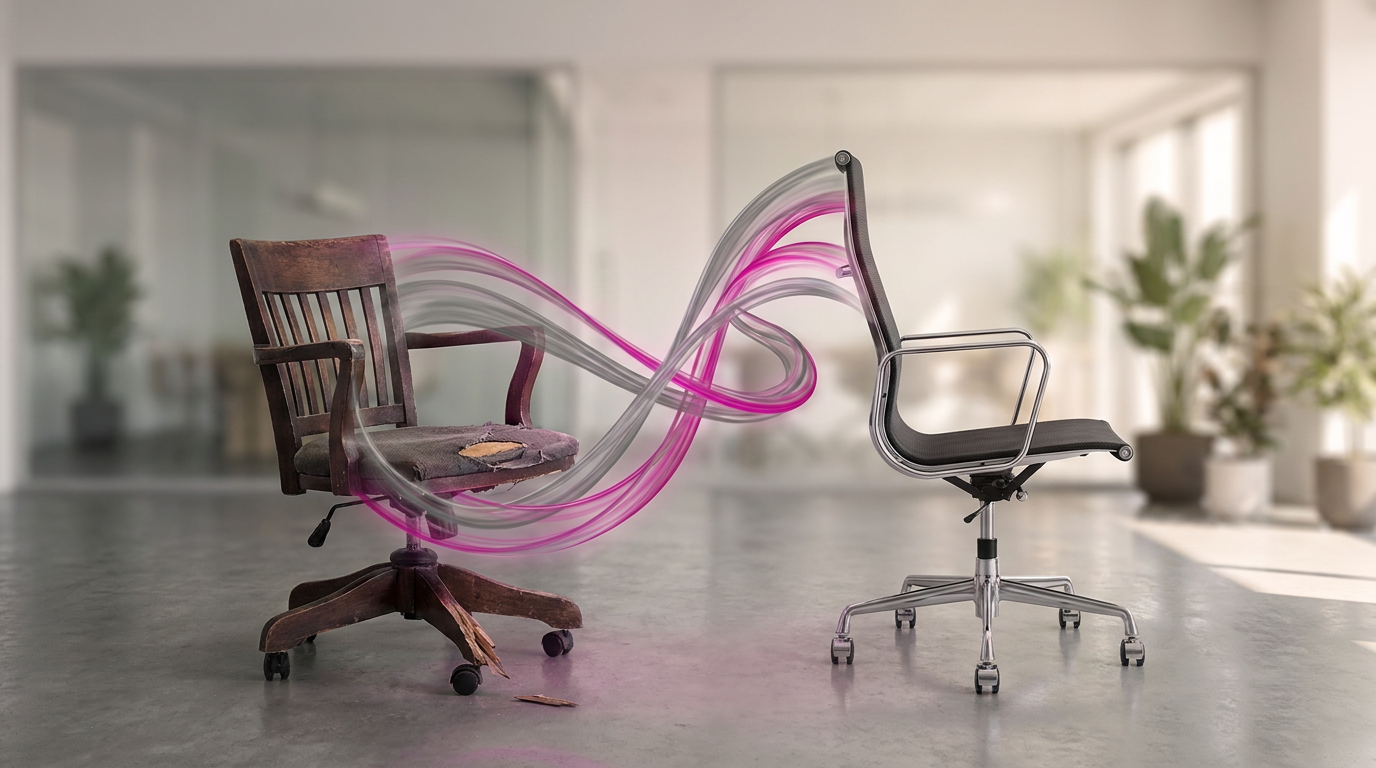
This is where Ergonomics, the science of designing workspaces to fit the user’s needs for safety and efficiency, becomes crucial. Poor ergonomics can lead to musculoskeletal issues, fatigue, and reduced concentration. A SurveyMonkey guide (2025) on the topic highlights that systematic collection of feedback is essential for identifying these patterns. When an employee mentions discomfort, they are providing direct office environment feedback that the current setup is failing. In our view, creating a continuous feedback loop for the physical workspace is essential. This means actively soliciting, tracking, and, most importantly, acting on comments about furniture, lighting, acoustics, and layout. It transforms the office from a static space into a dynamic environment that evolves with the needs of your team.
Data-Driven Decisions: Using a Feedback Matrix to Guide Office Investment
To effectively act on office environment feedback, you need a system to prioritise and quantify it. We recommend creating a simple feedback matrix to translate qualitative comments into a clear, data-driven case for investment. This tool helps facilities managers and decision-makers move from anecdotal evidence to actionable insights. The matrix should categorise each piece of feedback by the number of employees affected, the potential business impact (such as lost focus time or risk of absenteeism), and the proposed solution with an estimated return.
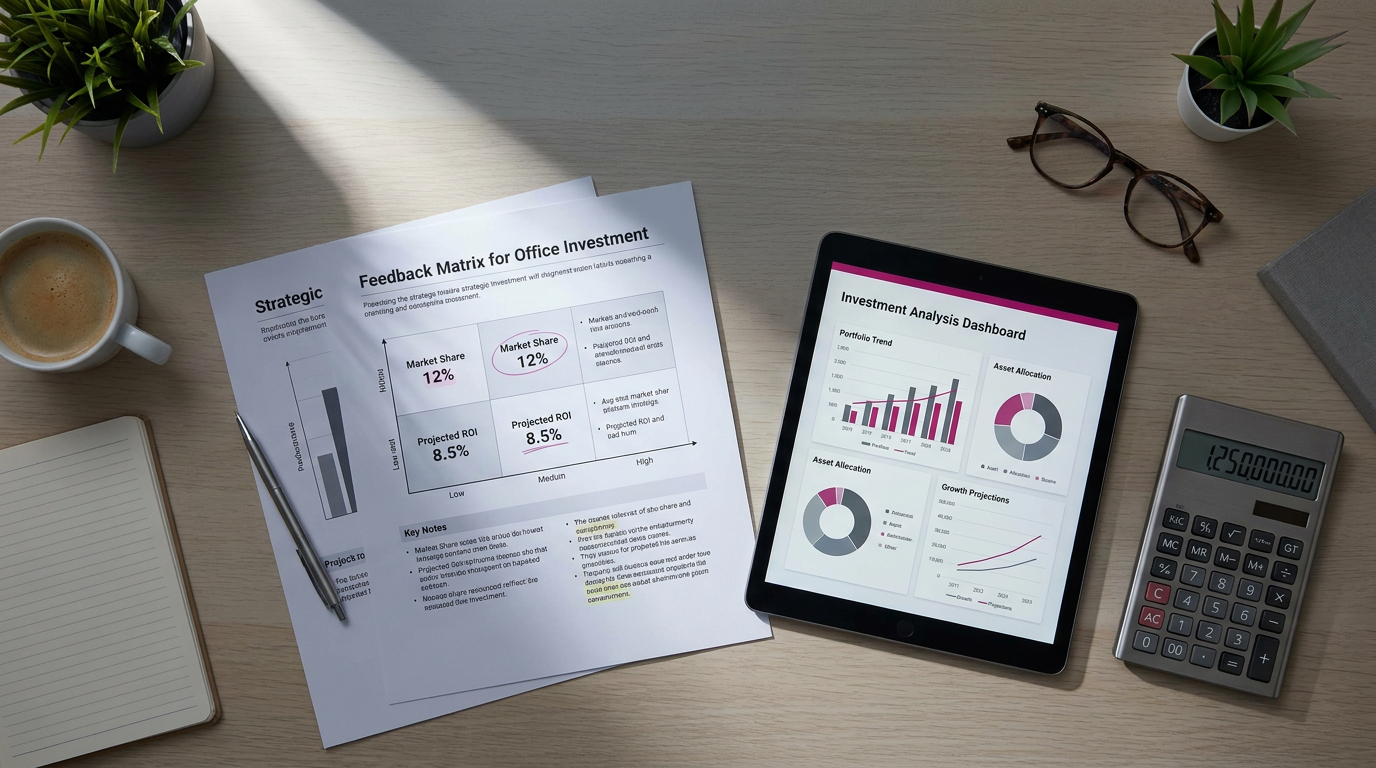
This process ensures that resources are allocated to the changes that will have the most significant positive impact on the workforce. For example, a single complaint about a broken chair is a maintenance issue. However, if 15% of your team reports back pain, you have a systemic ergonomic problem that requires a strategic investment. A study highlighted on YouTube (2023) notes that 58% of employees feel traditional performance reviews don’t improve their performance; this dissatisfaction often extends to how their environmental concerns are handled. A transparent matrix shows employees that their feedback is valued and being used to drive meaningful improvements.
Here is a sample matrix demonstrating how to structure this data:
| Common Feedback Point | Potential Business Impact | Proposed Furniture Solution | Estimated ROI (12 Months) |
|---|---|---|---|
| “It’s too loud to concentrate near the sales desk.” | Reduced deep work time; increased errors. | Acoustic pods or high-back sofas to create quiet zones. | 15% reduction in project errors; improved task completion times. |
| “My back and neck hurt by the end of the day.” | Increased absenteeism; lower morale; reduced productivity. | Fully adjustable ergonomic chairs with lumbar support. | 5% reduction in short-term sick leave; higher reported comfort. |
| “There’s nowhere to have a quick, informal team chat.” | Siloed communication; inefficient use of formal meeting rooms. | High-top collaboration tables and stools in an open area. | 20% faster resolution of minor issues; improved cross-team collaboration. |
| “The lighting gives me headaches.” | Eye strain and fatigue; decreased energy levels in the afternoon. | Task lighting for individual desks and anti-glare screen filters. | Fewer reported headaches; sustained afternoon productivity. |
Actioning Employee Feedback: Building the Business Case for Office Improvements
Once you’ve categorised your office environment feedback using a matrix, the next step is to build a compelling business case for the necessary improvements. Actioning employee feedback effectively requires translating staff needs into the language of business outcomes: cost, benefit, and Return on Investment (ROI). ROI is a performance measure used to evaluate the efficiency or profitability of an investment. A strong proposal doesn’t just ask for money; it demonstrates how the investment will solve problems and generate value.
Your business case should contain four key components:
- The Problem: Summarise the feedback data. For instance, ‘25% of our staff report physical discomfort due to inadequate seating, contributing to an estimated 40 lost workdays per year’.
- The Solution: Propose a specific, costed solution. For example, ‘Replace 50 standard office chairs with fully ergonomic chairs and provide DSE assessments for all team members’.
- The Costs: Detail the total investment, including furniture, delivery, and installation. We can help here by providing Bulk Buy Discounts to maximise your budget.
- The ROI: Project the financial return. A report from Breathe HR (2023) implies that retaining staff through better feedback mechanisms is highly valuable. If a new office setup prevents even one employee from leaving, the savings on recruitment costs (often estimated at £5,000-£10,000 for a mid-level role) can easily justify the investment in new furniture like modern and effective breakout furniture.
This structured approach transforms employee complaints into a strategic investment in your company’s most valuable asset: its people. It’s about Saving Time & Stress for everyone involved.
### Hypothetical Case Study: A Midlands-Based Tech Firm
– Challenge: A growing tech firm with 80 employees faced rising complaints about noise in their open-plan office and a noticeable dip in afternoon productivity. Exit interviews revealed that the uncomfortable and distracting environment was a contributing factor for two recent resignations.
– Solution: Using a feedback matrix, they identified that 40% of staff struggled with noise. We implemented a solution combining acoustic pods for focused work and a redesigned breakout area with high-back sofas, all part of our “Design To Install We Do It All!” service.
– Results: Within six months, a follow-up survey showed a 35% increase in reported concentration levels. Employee-logged productivity metrics showed a 12% improvement in task completion rates. The company avoided an estimated £15,000 in recruitment costs by improving retention over the next year.
– Key Insight: Addressing the physical environment based on feedback was a more effective retention tool than offering small salary increases, delivering a clear and rapid ROI.
Frequently Asked Questions About Employee Feedback
What is employee feedback?
Employee feedback is a two-way communication process for sharing observations and insights about job performance, behaviour, and the work environment. Its primary purpose is to reinforce positive actions and guide improvement in areas that need development. Ultimately, a strong employee feedback culture fosters professional growth, increases engagement, and helps build a more effective and supportive workplace for everyone involved.
What is an example of good employee feedback?
A great example of employee feedback is specific, timely, and focused on behaviour and impact. For instance: ‘During the client presentation yesterday, the way you clearly explained the technical data helped them understand the value immediately. That directly led to them signing the extension. It was a fantastic contribution.’ This example avoids vague praise and connects the employee’s action directly to a positive business outcome.
What are some examples of positive feedback?
Effective positive feedback examples focus on specific actions, effort, or teamwork rather than just results. You could say, ‘I really appreciate you staying a few minutes late to help the new team member get set up,’ or ‘The initiative you showed in organising the shared files has made things much easier for the whole department.’ These positive feedback examples, highlighted in guides from sources like Leapsome (2024), reinforce desirable behaviours.
What are the 3 C’s of feedback?
The 3 C’s of feedback are Clear, Concise, and Constructive. Clear means the message is unambiguous and easy to understand. Concise means it’s to the point, avoiding unnecessary waffle that can dilute the message. Constructive means the feedback is delivered with the goal of helping the person improve, rather than simply pointing out a flaw or criticising them.
What are the 5 R’s of feedback?
The 5 R’s provide a deeper framework for delivering feedback effectively: Relevant, Recent, Respectful, Right time, and Right place. Relevant to the person’s role and goals. Recent so the details are fresh. Respectful in tone and delivery. Right time when the person is receptive. Right place means in private for constructive points, and often in public for praise. Following these ensures feedback lands well.
How do you give constructive feedback?
To give constructive feedback, focus on the specific behaviour and its impact, not the person’s character. Use a model like Situation-Behaviour-Impact: ‘In yesterday’s team meeting (Situation), when you interrupted colleagues (Behaviour), it meant we couldn’t hear their full ideas (Impact).’ Then, shift to a collaborative solution: ‘Could we try to make sure everyone gets a chance to finish their point before we jump in?’
How does feedback improve the office environment?
Feedback directly improves the office environment by providing a clear roadmap for targeted, meaningful changes. When employees report issues like poor lighting, uncomfortable chairs, or a lack of quiet spaces, they are identifying specific productivity barriers. Acting on this office environment feedback allows an organisation to make strategic investments in ergonomics, layout, and amenities that directly address employee well-being and operational efficiency.
What are the 7 keys to effective feedback?
The seven keys to effective feedback are to be specific, timely, objective, goal-oriented, actionable, consistent, and to make it a two-way conversation. Being specific with examples is more helpful than being generic. It should also be part of a continuous dialogue, not a once-a-year event. Finally, an effective feedback includes listening to the employee’s perspective, making the process collaborative rather than one-sided.
What are 5 qualities of a good employee?
Five key qualities of a good employee are reliability, proactivity, strong communication skills, a collaborative spirit, and effective problem-solving. Reliability means they can be counted on to deliver. Proactivity involves taking initiative. Good communicators listen and articulate well. Team players collaborate effectively. Problem-solvers find solutions instead of just identifying issues. Regular feedback helps develop all these essential qualities.
How do you action employee feedback effectively?
To action employee feedback effectively, you must have a structured process in place. First, categorise the feedback to identify trends. Second, analyse the potential business impact. Third, create a data-driven business case for any required investment. Fourth, implement the changes transparently. Finally, and most importantly, communicate the results and the ‘why’ back to the staff to close the loop and encourage future input.
Important Considerations and Next Steps
This guide provides a robust framework, but every organisation’s culture is unique. The effectiveness of gathering feedback can be limited by low psychological safety or a history of inaction. If employees don’t trust that their input will be handled constructively and lead to change, they simply won’t offer it. The data presented here is based on broader industry studies, and while insightful, it may not perfectly reflect the specific nuances of every workplace.
While investing in new furniture is a powerful solution, other approaches can complement it. Alternative strategies include reviewing remote or hybrid work policies to reduce office density, introducing ‘quiet hours’ in open-plan spaces to facilitate deep work, or implementing new digital collaboration tools to streamline communication. These should be considered as part of a holistic strategy, not just isolated fixes. We believe a multi-faceted approach often yields an effective results.
For significant office redesigns or to ensure full compliance with complex HSE regulations, we recommend a professional consultation. An expert can conduct a formal ergonomic assessment and provide a detailed space plan that maximises both your budget and your team’s productivity. This ensures your investment is sound and aligns with both legal requirements and best practices. You can review our UK-recognised accreditations for peace of mind. Our “Design To Install We Do It All!” service is built for this.
Build a Better Workplace by Listening
Ultimately, effective employee feedback is the most valuable and cost-effective resource for creating a truly productive and supportive office. By moving beyond performance reviews and actively listening to what your team says about their physical workspace, you can unlock significant gains in morale, efficiency, and retention. The insights are already there in your organisation; this framework provides the means to listen, analyse, and act on them. It’s a straightforward path to a better workplace.
With over 35 years of experience helping UK businesses and public sector organisations transform their spaces, Cost Cutters UK understands how to translate feedback into reality. We offer flexible payment options, including Credit Accounts Or Pay Flexibly, to make improvements accessible. If you’re ready to build a workplace that truly works for your people, we invite you to book a free space planning consultation or get a free, no-obligation quote today.
References
- Qualtrics (2024) – Industry Guide. Provides frameworks and examples for delivering both positive and constructive feedback effectively.
- Leapsome (2024) – Blog Post / Guide. Offers numerous specific phrases for giving positive reinforcement to employees.
- Employment Hero (2023) – Guide. Details methods for creating a culture where honest feedback is encouraged and shared.
- Simpplr (2024) – Glossary Definition. Provides a foundational definition of employee feedback and its purpose within an organisation.
- SurveyMonkey (2025) – Guide with Templates. Discusses the use of surveys to systematically gather feedback on various aspects of the employee experience.
- Indeed UK (2023) – Career Advice Article. Connects feedback directly to performance and professional development outcomes.
- Breathe HR (2023) – Blog Post. Outlines the business benefits of a strong feedback culture, including improved performance and retention.
- People Insight UK (2022) – Consultancy Article. Focuses on the role of feedback in building trust and strong communication channels.
- YouTube (2023) – Video Statistic. Highlights the ineffectiveness of traditional, infrequent feedback mechanisms, noting 58% of employees feel they don’t improve performance.
Conclusion
Build a Better Workplace by Listening
In summary, employee feedback is the most valuable resource for creating a truly productive office. By moving beyond performance reviews and actively listening to what your team says about their physical workspace, you can unlock significant gains in morale, efficiency, and retention. The insights are already there; this framework provides the means to act on them.
With over 35 years of experience helping UK businesses and public sector organisations transform their spaces, Costcutters UK understands how to translate feedback into reality. If you’re ready to build a workplace that works for your people, consider our free space planning consultation to explore your options.