School Furniture Safety: A UK School’s Guide to Compliance & Procurement
🎯 Key Takeaway
Ensuring school furniture safety involves procuring items that meet specific UK standards, primarily BS EN 1729 for ergonomics and The Furniture Regulations for fire retardancy. This process is critical for legal compliance and protecting pupils. Key actions include verifying that chairs and tables conform to the BS EN 1729 standard for correct sizing and durability, and ensuring all upholstered items meet the Crib 5 fire resistance level. Partnering with a reputable supplier who can provide compliance certification is the most effective way for school business managers to guarantee safety and value.
As of July 2026, creating a safe learning environment is a paramount legal and moral duty for every UK school. A crucial, yet often overlooked, aspect of this responsibility is the furniture within your classrooms, labs, and common areas. Achieving reliable school furniture safety is more complex than simply ordering desks and chairs; it requires a detailed understanding of specific UK regulations that can challenge even the most experienced school business managers. The key standards involve school furniture compliance UK regulations like BS EN 1729 and stringent fire safety laws.
This guide serves as a direct, actionable roadmap for navigating these requirements with confidence. We’ll cover the essential standards, fire safety protocols, the importance of ergonomics, and a practical checklist for procurement. For a wider overview, you may also find our Beginner’s Guide to School Furniture Procurement & Tendering helpful. By following these steps, you can ensure your school is not only compliant but is also investing in the long-term wellbeing of its pupils and the durability of its assets.
Written by: Cost Cutters UK Content Team | Reviewed by: Editorial Team, 35+ Years Experience; Rated Excellent On Trustpilot
Last updated: 22 July 2026
ℹ️ Transparency Disclosure: This article explores school furniture safety based on official UK government guidance, European standards, and our 35+ years of industry experience. Some links connect to our services, designed to help schools implement these best practices. All information is editorially independent and verified for accuracy. Cost Cutters UK is a trading name of Fit Out Specialists Ltd.
What is the BS EN 1729 Standard for School Furniture?
The BS EN 1729 standard is the definitive European benchmark for chairs and tables intended for use in educational institutions, which has been fully adopted in the United Kingdom. It ensures furniture is ergonomically designed for pupils and reliable enough for the demands of a school environment. Compliance is a fundamental aspect of school furniture compliance UK and a key indicator that a product is fit for purpose.
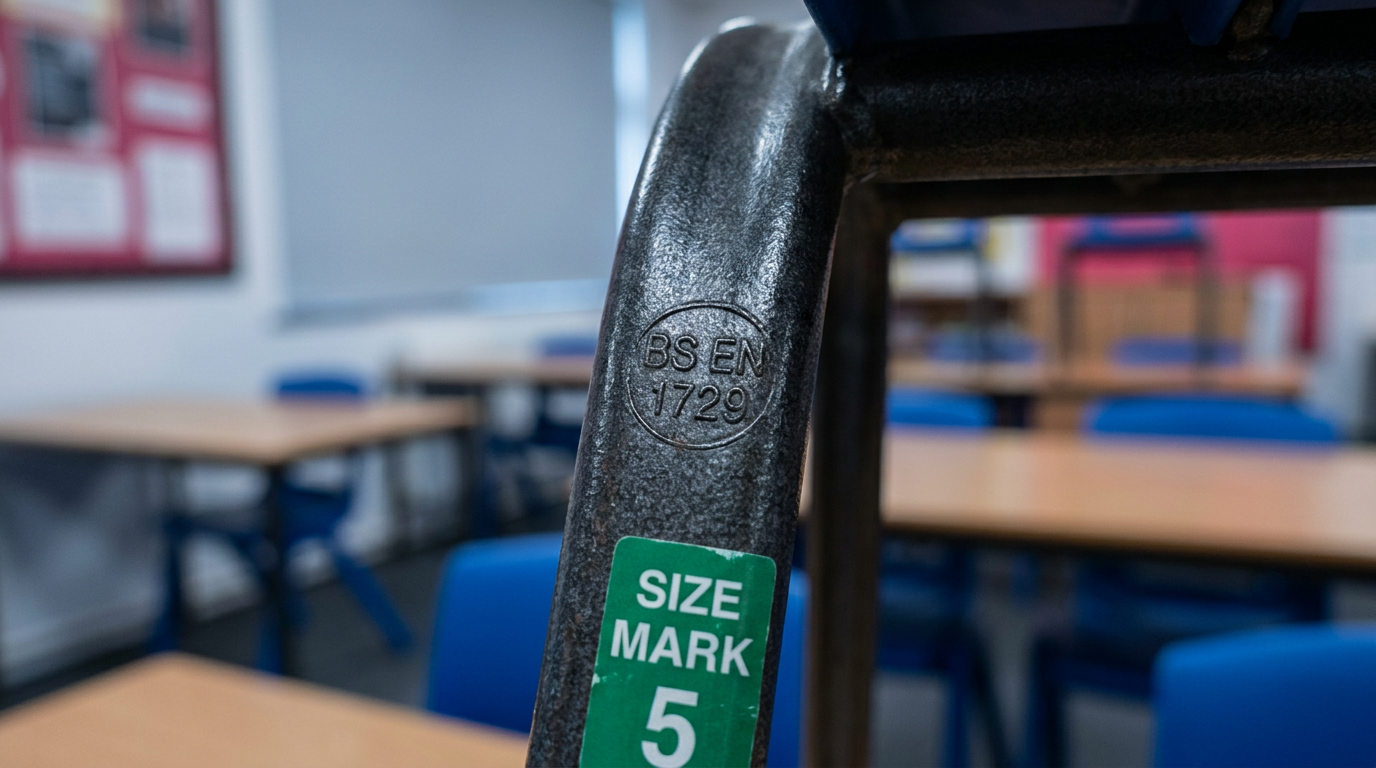
The standard is split into two critical parts:
- BS EN 1729 Part 1: Functional Dimensions. This part focuses on ergonomics. It specifies the correct height, depth, and width of chairs and tables based on the stature of the pupils using them. To simplify this, the standard uses a ‘size mark’ system, often represented by colour-coded labels, allowing schools to easily match furniture to specific age groups and prevent musculoskeletal strain.
- BS EN 1729 Part 2: Safety, Strength, and Durability. This section outlines rigorous testing requirements to ensure furniture can withstand the intense use expected in a school. Tests simulate real-world scenarios like rocking on chairs, dropping heavy weights on tables, and overall structural fatigue. Passing these tests suggests the furniture is less likely to fail and cause injury.
Organisations like the British Educational Suppliers Association (BESA), an entity representing over 400 educational suppliers, require their members to supply goods that comply with relevant standards like this one. According to guidance from suppliers like Edu-Quip, choosing furniture that meets both parts of the BS EN 1729 standard is the most reliable way to ensure you are buying safe, comfortable, and durable products.
| Size Mark (Colour Code) | Stature Range of User (mm) | Chair Seat Height (mm) | Desk/Table Height (mm) |
|---|---|---|---|
| Size Mark 1 (Orange) | 800 – 950 | 210 | 400 |
| Size Mark 2 (Violet) | 930 – 1160 | 260 | 460 |
| Size Mark 3 (Yellow) | 1080 – 1210 | 310 | 530 |
| Size Mark 4 (Red) | 1190 – 1420 | 350 | 590 |
| Size Mark 5 (Green) | 1330 – 1590 | 380 | 640 |
| Size Mark 6 (Blue) | 1460 – 1765 | 430 | 710 |
| Size Mark 7 (Brown) | 1590 – 1880 | 460 | 760 |
Source: Based on data from the BS EN 1729 standard.
How Do Fire Safety Regulations Affect School Furniture?
Yes, specific and mandatory fire safety regulations apply to all furniture used in UK schools, which fall under the category of non-domestic, contract environments. The primary legislation is The Furniture and Furnishings (Fire) (Safety) Regulations 1988, but for schools, the key requirement is that upholstered items meet a higher standard of fire resistance known as ‘Crib 5’ or ‘Ignition Source 5’. This is a critical component of classroom furniture fire safety.
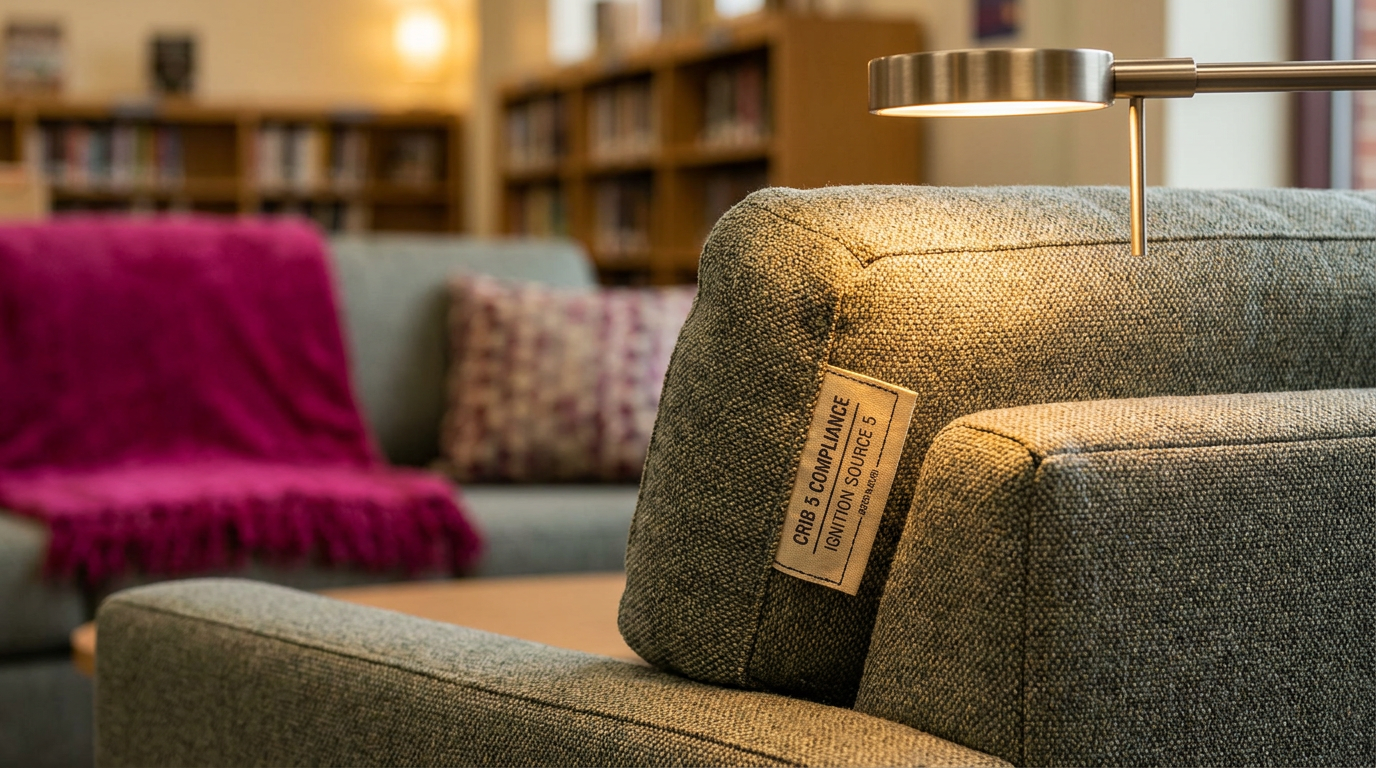
This standard is significantly more stringent than that required for domestic furniture. The Crib 5 test involves placing a small wooden crib, which is set on fire, onto the furniture item. To pass the test, the fabric and fillings must not catch fire or smoulder for an extended period. This ensures that in the event of a fire, the furniture does not contribute significantly to the blaze, allowing more time for safe evacuation. According to specialist suppliers like School Furniture Direct, non-compliant furniture can act as a dangerous accelerant.
It is illegal to use furniture in a school that does not meet the appropriate fire safety rating. Therefore, purchasing from domestic retail suppliers is a major risk, as their products typically only meet domestic standards. Typically ensure your supplier can provide a certificate confirming compliance with BS 7176:2007 for Medium Hazard environments, which is the technical standard that encompasses the Crib 5 test for classroom furniture fire safety.
Ergonomics and Durability: Protecting Pupils and Budgets
Ensuring furniture is ergonomically sound is not a luxury; it’s a core component of pupil welfare and effective learning. Poorly designed chairs and desks can lead to discomfort, fidgeting, and a lack of concentration. More seriously, they contribute to the risk of musculoskeletal disorders (MSDs), an issue the Health and Safety Executive (HSE), the UK government agency for workplace safety, takes very seriously. Research from the European Agency for Safety and Health at Work (EU-OSHA) consistently highlights that prolonged sitting in poorly designed workstations is a key risk factor for MSDs.
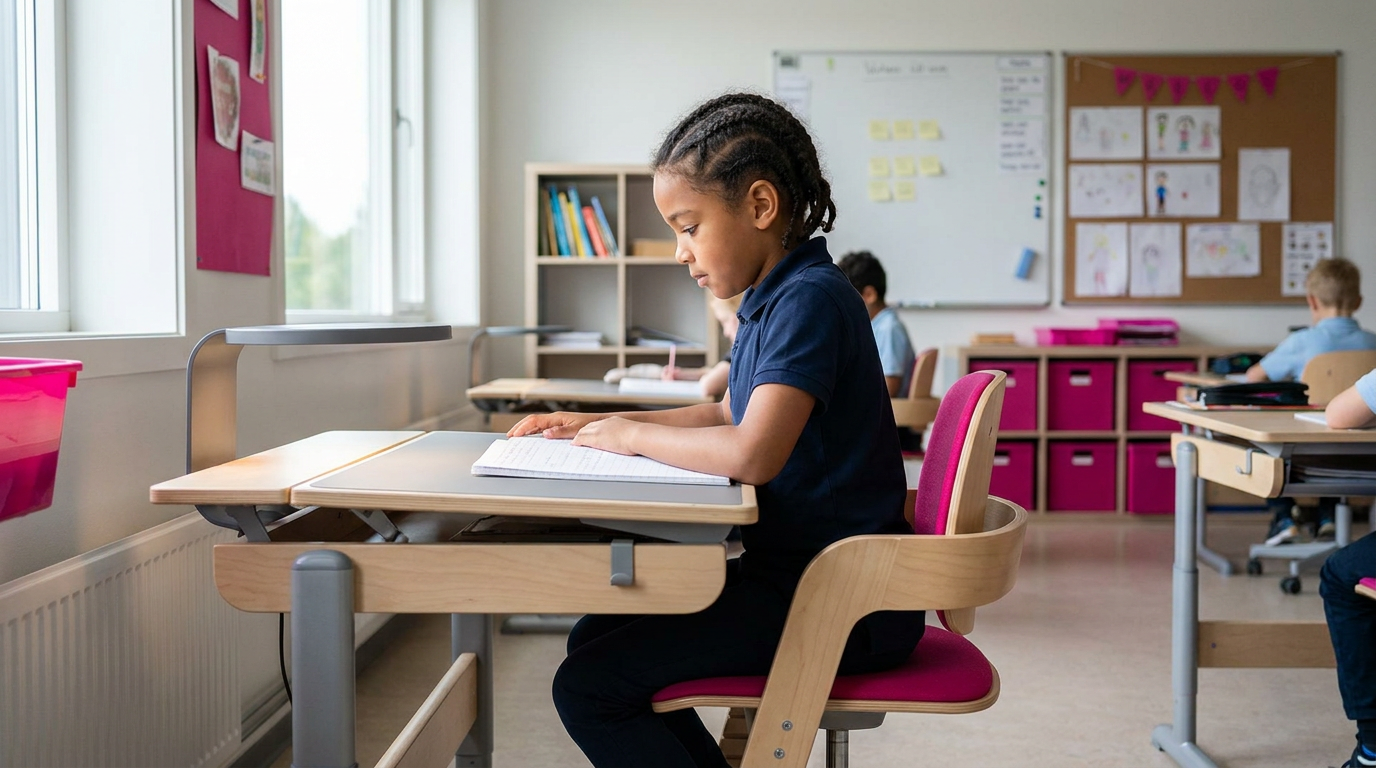
Properly designed ergonomic school chairs UK providers offer will feature lumbar support, appropriate seat height, and dimensions that align with the BS EN 1729 standard. This promotes better posture and supports student health, aligning with recommendations from the World Health Organization (WHO) in their 2020 guidelines to limit sedentary time and its negative effects.
Beyond ergonomics, durability is a crucial factor for both safety and financial prudence. A chair that breaks can cause serious injury and immediate replacement costs. When procuring furniture, we recommend you look for:
- reliable Materials: Solid wood or heavy-gauge steel frames are preferable to weaker alternatives. High-pressure laminate (HPL) tops on MDF core tables offer excellent resistance to impact and wear.
- Tamper-Proof Fixings: Ensure screws and bolts cannot be easily loosened by pupils.
- Long may help: A supplier offering a 5, 10, or even 15-year guarantee is demonstrating confidence in their product’s durability.
Investing in durable, ergonomic furniture lowers the ‘total cost of ownership’ by reducing replacements and repairs, representing a smarter, safer investment for your school’s budget. Explore our guide to Modern Classroom Furniture: A UK School’s Guide to Durable & Ergonomic Choices for more detailed options.
A Room-by-Room Guide to Specialised Furniture Safety
While general standards apply everywhere, certain areas of a school have unique safety requirements that demand specialised furniture and layouts.
Science Laboratories
Safety here is paramount. Workbenches must be incredibly stable and are often fixed to the floor. According to safety compliance experts like Tecomak, work surfaces should be made from chemically resistant materials like Trespa or solid grade laminate to prevent damage and corrosion from spills. Stools need to be heavy-duty and stable, without features that could cause tripping hazards around gas taps and electrical outlets. The Health and Safety Executive (HSE) provides extensive guidance on creating safe working environments, the principles of which are directly applicable to lab design.
Early Years Foundation Stage (EYFS) Classrooms
The Department for Education (DfE), the UK government department for education, mandates in its Early Years Foundation Stage (EYFS) Framework that all equipment must be safe and suitable. For furniture, this means:
- Rounded Corners: To prevent injuries from bumps and falls.
- Non-Toxic Finishes: All paints and varnishes must be certified as safe for children.
- Correct Heights: Low-level tables and chairs that match the stature of young children.
- Anti-Finger-Trap Hinges: A critical feature on storage units and toy boxes.
If you encounter issues, our Nursery Furniture Issues troubleshooting guide can offer practical solutions.
Libraries and Common Areas
The main concerns in these spaces are stability and fire safety. Bookshelves must be rated to carry heavy loads and should be securely fixed to a wall to prevent tipping. We’ve seen tragic accidents happen when this is overlooked. Soft seating, such as sofas and armchairs in common rooms or library reading corners, must be upholstered with Crib 5 compliant fabric. This is a high-traffic area where fire risk is a significant consideration.
Special Educational Needs (SEN) Environments
Safety in SEN settings is about creating an inclusive and supportive environment. This often requires adjustable-height desks to accommodate wheelchairs, specialised seating with postural support, and furniture built to be exceptionally reliable to withstand challenging behaviours. The goal is to provide a safe, comfortable, and empowering space for every student.
Choosing Safe School Furniture Suppliers: A Procurement Checklist
Selecting the right supplier is as important as selecting the right furniture. A reputable partner acts as your first line of defence in ensuring compliance and safety. We recommend using the following checklist when vetting potential safe school furniture suppliers:
- Verify All Compliance Claims: Don’t just accept a catalogue description. Ask for the official certificates that prove compliance with BS EN 1729 and BS 7176 (Crib 5). A trustworthy supplier will provide these without hesitation.
- Check for BESA Membership: The British Educational Suppliers Association (BESA) has a strict code of practice. Choosing a BESA member provides an extra layer of assurance that the supplier is reputable and knowledgeable about educational standards.
- Analyse Their Experience and Track Record: Look for suppliers with a long history of working specifically with UK schools. Ask for case studies or references. A supplier with decades of experience, like our team at Cost Cutters UK, understands the unique demands and challenges of the education sector.
- Request and Compare Product may help: A long structural guarantee (e.g., 5-10 years) is a strong indicator of a product’s quality and durability. It shows the manufacturer is confident it will withstand the school environment.
- Assess Their Full Service Offering: Do they offer more than just products? A comprehensive ‘Design To Install’ service, including free space planning and installation, ensures that layouts are safe, efficient, and make an effective use of your space. This level of support can be invaluable in preventing common procurement mistakes, which you can read about in our School Furniture Procurement: Avoid UK Mistakes Guide.
### Case Study: A Primary Academy’s Safety Overhaul
Challenge: A 200-pupil primary academy in the North West was using a mix of inherited and old furniture, some over 15 years old. Following a minor incident where a chair leg failed, an internal audit revealed widespread non-compliance with both BS EN 1729 and fire safety regulations, causing significant concern for governors.
Solution: The academy partnered with us. We conducted a full site audit and developed a three-phase replacement plan to fit their budget. Our team supplied fully compliant, colour-coded furniture matching the BS EN 1729 size marks for each year group, along with Crib 5 certified soft seating for their new library area.
Results: The academy achieved 100% compliance within 18 months. Furniture-related incidents reported by staff dropped to zero. The new, ergonomic furniture was praised by OFSTED for its positive impact on the learning environment.
Key Insight: Proactively partnering with specialist safe school furniture suppliers transforms procurement from a compliance burden into a strategic investment in pupil safety and educational outcomes.
Important Considerations
This guide covers the primary UK-wide standards for school furniture safety. However, you should be aware that some Local Education Authorities (LEAs) or large academy trusts may have their own additional procurement policies or preferred supplier lists. Furthermore, standards are periodically updated; it is crucial for schools to verify the current version of any standard at the time of purchase.
As an alternative to buying new, some schools consider professional refurbishment. Whilst this can be a viable option, it must be undertaken by specialists who can re-test and re-certify the items for both structural integrity and fire safety. This is very different from simply buying unverified second-hand furniture, which we believe carries significant risks as it is almost impossible to confirm its original compliance status or structural soundness.
For any large-scale procurement project, or if you are ever in doubt, our advice is to consult with a specialist education furniture supplier. An expert can provide a site survey, deliver a compliant space plan, and guarantee that all items are fit for purpose. This professional guidance is an effective way to protect your school from potential legal and financial risk, while also Saving Time & Stress.
Partnering for a Safer Learning Environment
Achieving comprehensive school furniture safety is a non-negotiable responsibility that goes beyond simple purchasing. It involves a clear understanding of the BS EN 1729 standard, strict adherence to UK fire regulations, and a commitment to providing ergonomic and durable furniture. By following a structured procurement process and thoroughly vetting safe school furniture suppliers, schools can create learning environments that are not only compliant but also actively support pupil wellbeing and protect the school’s budget in the long term.
For over 35 years, Cost Cutters UK has partnered with schools across the country to navigate these complexities. As our ‘Excellent’ rating on Trustpilot shows, we pride ourselves on our expert service. Our team can help you ensure every piece of furniture is safe, compliant, and right for your space. With our “Design To Install We Do It All!” promise, plus options for Bulk Buy Discounts and flexible payments, we make the process straightforward. To discuss your project, you can Credit Accounts Or Pay Flexibly. Contact us for a free space plan and no-obligation quote.
Frequently Asked Questions
What is school furniture safety?
School furniture safety is the practice of selecting, procuring, and maintaining furniture that meets stringent UK legal and advisory standards. This includes structural integrity (BS EN 1729), fire retardancy (Crib 5), and ergonomic design. The core goal is to prevent pupil injury, support health and wellbeing, and ensure the school is demonstrating its duty of care.
Is BS EN 1729 a legal requirement in the UK?
While not a law itself, adhering to the BS EN 1729 standard is considered essential best practice for demonstrating due diligence. Under the Health and Safety at Work etc. Act 1974, schools must provide a safe environment. Procuring non-compliant furniture could be cited as a failure in this duty should an incident occur, creating significant legal exposure for the school.
How can I check if a chair is Crib 5 compliant?
Look for a permanent label on the furniture, typically underneath, stating compliance with BS 7176:2007 for Medium Hazard. Reputable contract suppliers, like us, must provide this. You should also request a formal certificate of compliance from your supplier for your school’s health and safety records to ensure you have a clear audit trail.
What is the most durable material for classroom tables?
Tables with a heavy-gauge, fully-welded steel frame and a high-pressure laminate (HPL) top generally offer an effective durability. The HPL surface is scratch and heat-resistant, bonded to a solid MDF core. This combination, finished with a tough, impact-resistant edging like Duraform PU, provides excellent longevity and value in a demanding school environment.
Does school furniture need to be ergonomic?
Yes, providing ergonomic furniture is vital for supporting pupils’ musculoskeletal health, comfort, and ability to concentrate. The principles of the Health and Safety Executive’s (HSE) guidance on Display Screen Equipment (DSE) are best practice for all classrooms. Using furniture that conforms to BS EN 1729 height guidelines is the most effective way to achieve this.
How much should we budget for safe school furniture?
Costs vary widely, so focusing on ‘total cost of ownership’ rather than the initial ticket price is key. A cheap, non-compliant chair that breaks in two years is far more expensive than a compliant one with a 10-year guarantee. We typically recommend getting detailed quotes from specialist suppliers who can offer Bulk Buy Discounts.
Are there specific furniture rules for SEN students?
While no single standard covers all needs, the Equality Act 2010 requires schools to make ‘reasonable adjustments’ for pupils with disabilities. This often translates to providing specialised furniture. Examples include height-adjustable desks for wheelchair users, chairs with advanced postural support, or exceptionally reliable items designed to withstand specific behaviours, ensuring a safe and inclusive space.
Can we buy second-hand school furniture?
We strongly advise against this as it carries significant risk. It is extremely difficult to verify the original compliance certificates for fire safety and structural strength. Furthermore, wear and tear may have compromised the item’s integrity. If you do consider it, you must have the items professionally assessed and re-certified to ensure they meet all current safety standards.
What’s the biggest safety risk with school furniture?
The two greatest risks are structural failure leading to collapse and rapid fire spread from non-compliant upholstery. A chair collapsing can cause immediate, serious injury to a pupil. In a fire, non-Crib 5 furniture can release toxic fumes and accelerate the blaze dramatically, severely compromising evacuation routes and posing a grave risk to life.
How often should school furniture be replaced?
There is no fixed timeline; replacement should be dictated by regular risk assessments that identify when items become unsafe or worn. However, high-quality, compliant furniture often comes with may help of 5 to 15 years. This can serve as a useful benchmark for the expected lifespan, helping you to plan and budget for future replacement cycles.
References
- Health and Safety Executive (HSE) – UK Government Guidance. Provides the legal framework and practical advice for complying with health and safety regulations, including those applicable to seating and workstations.
- European Agency for Safety and Health at Work (EU-OSHA) – EU Research Body. Publishes extensive research highlighting that poor workstation design is a key risk factor for musculoskeletal disorders.
- Department for Education (EYFS Framework) – UK Government Statutory Framework. Section 3.54 of the framework mandates that ‘premises, furniture and equipment must be safe and suitable for their purpose’.
- British Educational Suppliers Association (BESA) – Professional Organisation Code of Practice. The code requires members to supply goods that are ‘fit for their intended purpose’ in an educational setting and comply with relevant safety standards.
- World Health Organization (WHO) – Global Health Guidelines (2020). The WHO’s guidelines on physical activity recommend that children and adolescents should limit the amount of time spent being sedentary.
- Statista – Market Research Data (2024). Projects that revenue in the UK Office Furniture market, a related sector, will be approximately £1.81bn in 2024.
- School Furniture Direct – Industry Supplier Guidance. Provides expert articles explaining the critical importance of Crib 5 fire retardancy for upholstered furniture in UK schools.
- Edu-Quip – Industry Supplier Guide. Offers practical buying guides that break down the BS EN 1729 standard and its importance for procuring correctly sized school furniture.
- Tecomak – Health & Safety Compliance Specialists. Details the specific requirements for science lab furniture, including chemical resistance and stability, to ensure a safe learning environment.
Partnering for a Safer Learning Environment
In summary, school furniture safety is a non-negotiable responsibility that goes beyond simple purchasing. It involves a clear understanding of the BS EN 1729 standard, strict adherence to UK fire regulations, and a commitment to providing ergonomic and durable furniture. By following a structured procurement process and thoroughly vetting safe school furniture suppliers, schools can create learning environments that are not only compliant but also actively support pupil wellbeing and protect the school’s budget in the long term.
For over 35 years, Costcutters UK has partnered with schools across the country to navigate these complexities. Our team of experts can help you ensure every piece of furniture is safe, compliant, and right for your space. To discuss your project and ensure complete peace of mind, contact us for a free space plan and no-obligation quote.
Frequently Asked Questions About School Furniture Safety
What is school furniture safety?
School furniture safety is the practice of selecting, procuring, and maintaining furniture that meets stringent UK legal standards for structural integrity (BS EN 1729), fire retardancy (Crib 5), and ergonomic design. This ensures the physical environment actively prevents injury, supports pupil health and concentration, and demonstrates the school’s commitment to its duty of care. It is a critical component of overall health and safety management within an educational setting.
Is BS EN 1729 a legal requirement in the UK?
**While the BS EN 1729 standard is not a direct piece of legislation itself, adhering to it is considered essential for demonstrating due diligence under the Health and Safety