Common Classroom Problems: How to Solve Them with Smarter Design
🎯 Key Takeaway
Many common classroom problems stem directly from underlying classroom design flaws, not just student behaviour. By addressing issues with layout, ergonomics, acoustics, and storage, schools can create environments that proactively reduce disruption and improve focus.
• Reframe behavioural issues like fidgeting and noise as symptoms of poor environmental design.
• Focus on four pillars for improvement: flexible layouts, ergonomic furniture, acoustic control, and smart storage.
• Invest in compliant, adaptable furniture to create a future-proof learning space that supports diverse needs.This guide provides a practical framework for identifying these flaws and implementing effective, design-led solutions.
Teachers across the UK grapple daily with student disruption, disengagement, and the constant challenge of maintaining focus. Conventional wisdom often points towards behavioural management strategies, but what if the room itself is part of the problem? As of May 2026, a growing body of evidence suggests that many common classroom problems are symptoms of correctable classroom design flaws. A poor layout, uncomfortable furniture, and bad acoustics can create an environment that actively works against learning.
This article provides a practical framework to identify and solve these issues through intelligent design. We’ll explore how to transform your learning spaces from sources of friction into catalysts for engagement. With our complete range of school equipment and furniture, we help schools implement these changes effectively, Saving Time & Stress.
👤 Written by: Content Team
Reviewed by: Editorial Team, Industry Specialists
Last updated: 1 May 2026
ℹ️ Transparency: This article explores common classroom problems based on over 35 years of industry experience and analysis of educational design principles. Some links may connect to our services or product pages. All information is verified by our editorial team to ensure accuracy and relevance for UK educational institutions.
Re-examining Common Classroom Problems as Design Flaws
Many persistent classroom challenges are direct results of the physical environment, not failures in student behaviour or teaching. By reframing these issues as design flaws, we can move from reactive management to proactive problem-solving. An exploratory study published in the PMC – National Library of Medicine (2012) categorised various misbehaviours, many of which can be linked to environmental triggers. When a space isn’t fit for purpose, it can manifest as common classroom behavior problems.
Consider these direct correlations:
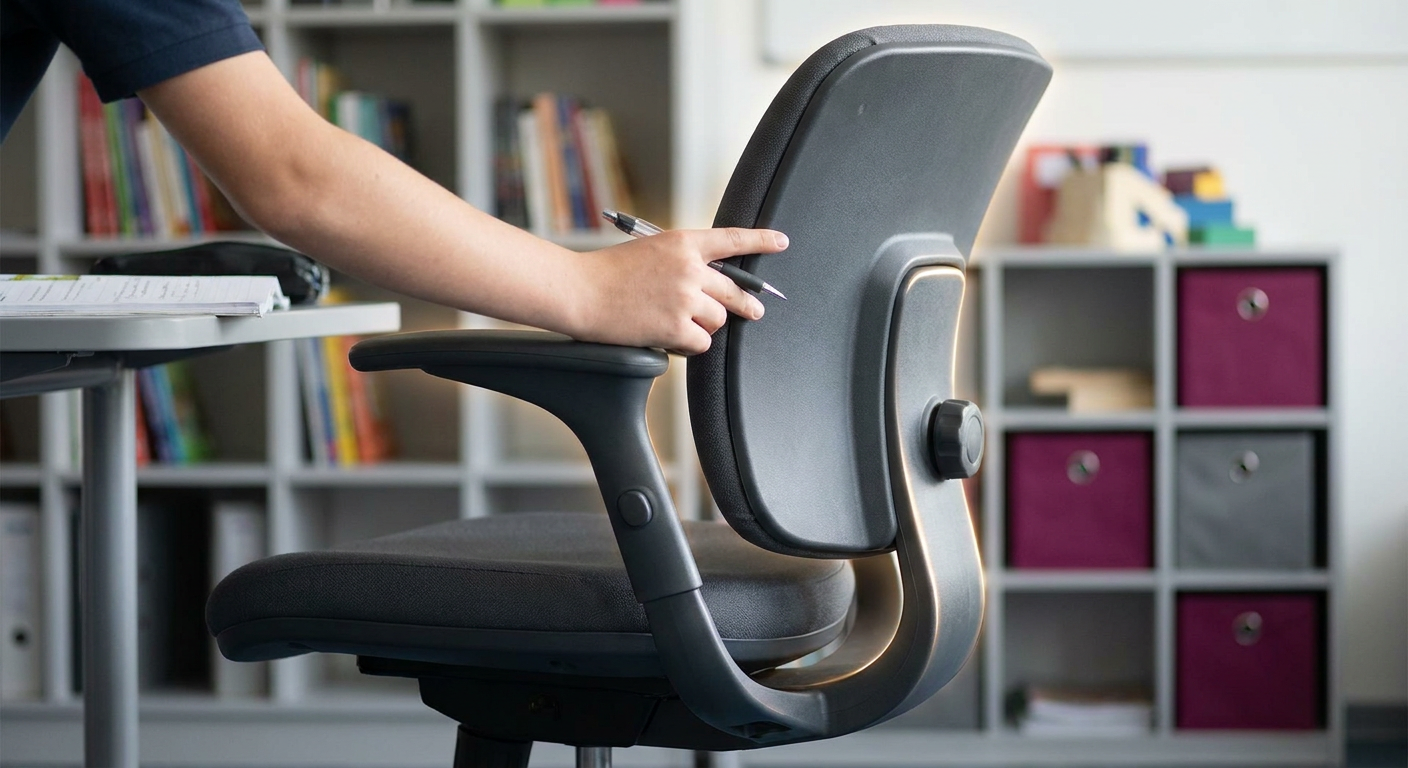
- The Problem: Constant Fidgeting & Lack of Focus. Students rocking on chairs, slouching, or being unable to sit still are often reacting to physical discomfort. The underlying classroom design flaw is poor ergonomics. One-size-fits-all furniture that doesn’t support a healthy posture forces students to constantly readjust, pulling their attention away from the lesson.
- The Problem: High Noise Levels & Disruption. When students can’t hear the teacher or each other clearly, they talk louder, creating a cycle of escalating noise. This isn’t just a discipline issue; it’s a flaw in acoustic design. Hard, reflective surfaces and open-plan layouts without defined zones amplify sound, making concentration difficult. Research on ERIC (2024) notes that such problems often require constant teacher intervention, draining valuable instruction time.
- The Problem: Messy Spaces & Wasted Transition Time. Classrooms filled with clutter, with bags blocking walkways and resources being hard to find, are a product of inadequate storage. This flaw leads to wasted time during transitions between activities and creates a visually chaotic, stressful environment that impedes learning.
We believe that by addressing these core design flaws, schools can significantly reduce the frequency and intensity of these common classroom problems.
The 4 Pillars of a Well-Designed Classroom
A truly effective learning environment is built upon four foundational pillars that work together to minimise disruption and maximise engagement. Addressing a poor classroom layout is about more than just rearranging desks; it involves a holistic approach. Success in solving classroom layout problems comes from systematically evaluating and improving each of these areas.

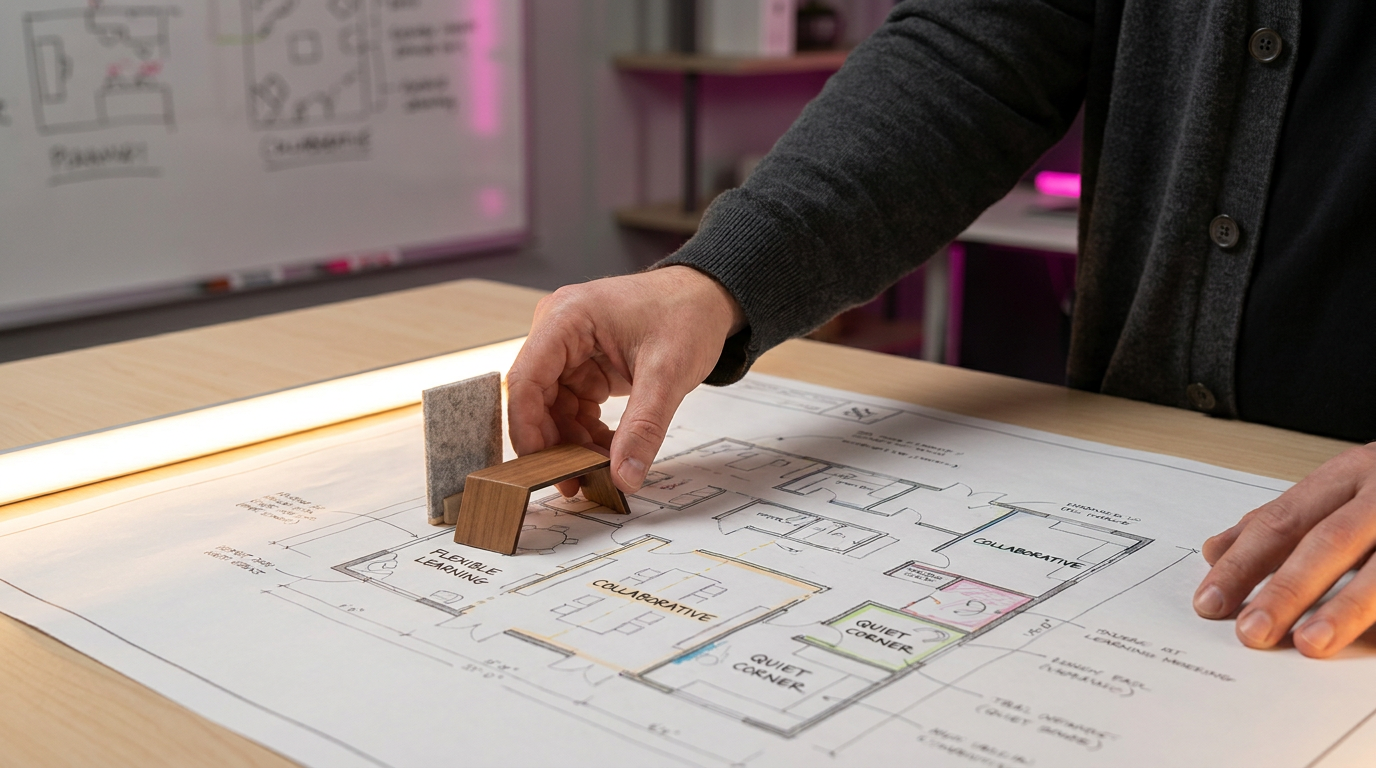
- Layout & Flow: The layout dictates how a space is used. Rigid rows may suit direct instruction but hinder collaboration. A flexible layout, using modular furniture, allows for seamless transitions between different teaching styles. Creating distinct zones for quiet work, group projects, and resource access helps manage noise and movement, giving students clear behavioural cues. Clear sightlines are also essential for both teacher oversight and student focus.
- Ergonomics & Comfort: Ergonomics is the science of designing environments to fit the people who use them. In a classroom, this means furniture that supports a healthy posture and reduces physical strain. Uncomfortable students are distracted students. As expert Tom Sherrington notes on Teacherhead (2019), student apathy is a significant challenge, and an uncomfortable environment can be a major contributor. Investing in size-appropriate, adjustable furniture is fundamental.
- Acoustics & Sensory Input: Excessive noise is a primary barrier to learning. Sound-absorbing materials, such as acoustic panels, rugs, and even certain types of furniture, can dramatically reduce ambient noise and reverberation. This makes it easier for students to hear instruction and reduces the sensory overload that can lead to distraction and anxiety, particularly for students with Special Educational Needs (SEN).
- Storage & Organisation: A well-organised classroom runs more efficiently. Accessible, logical, and sufficient storage for student belongings and teaching materials is critical. Solutions like mobile tray units, personal lockers, and wall-mounted shelving reduce clutter, free up floor space, and minimise time spent searching for resources.
Why BS EN 1729 Compliance is Non-Negotiable
BS EN 1729 is the British and European standard that specifies the functional dimensions, strength, and stability for furniture in educational institutions. It ensures that chairs and desks are ergonomically designed to fit the specific size of the students using them, promoting good posture and comfort. Choosing furniture that meets this standard isn’t just about ticking a box; it’s a foundational step in solving ergonomic-related problems. It may help the furniture is safe, durable, and fit for purpose, representing a sound investment in student well-being and focus. We ensure our products hold all recognised UK safety certifications.
Practical Solutions: From Problem to Resolution
The most effective way to start solving classroom layout problems is to analyse current issues and implement targeted changes. It’s not about a complete overhaul overnight; small, strategic adjustments can yield significant results. Our “Design To Install We Do It All!” service helps schools navigate this process smoothly. Let’s look at two common scenarios.
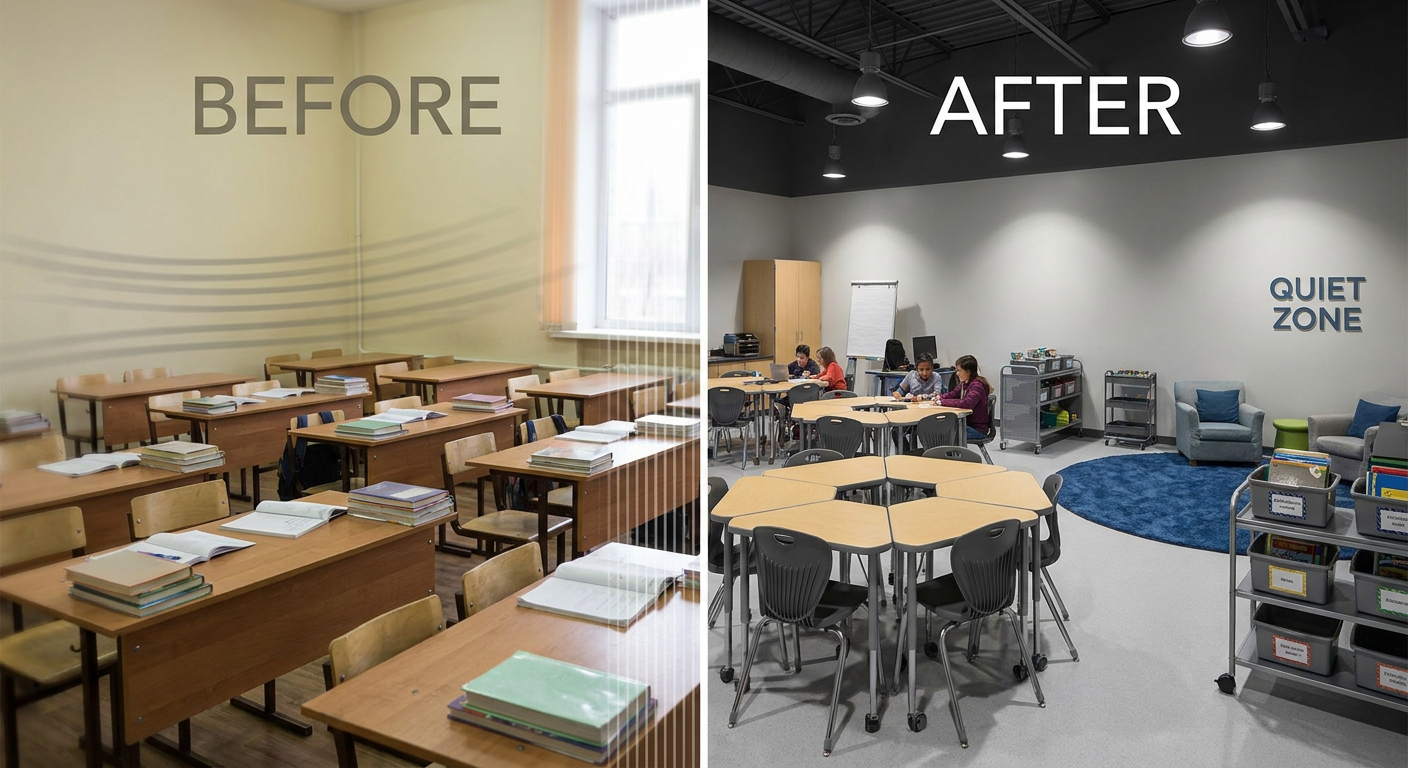
Scenario 1: The ‘Noisy & Chaotic’ Classroom
- Before: Desks are in static rows. There are no defined areas, so noise from one group activity disrupts students trying to read quietly. Bags and coats create trip hazards, and resources are piled in a corner.
- After (The Solution): Desks are replaced with modular, trapezoidal tables that can be arranged in pairs, small groups, or rows. A low-level bookcase and a rug create a designated ‘quiet reading zone’. A mobile whiteboard acts as a divider for a collaborative ‘project zone’. Wall-mounted bag hooks and labelled tray units clear the floor and organise supplies.
Scenario 2: The ‘Unfocused & Slouching’ Classroom
- Before: All students use identical, rigid plastic chairs, regardless of their height. Many are seen slouching, rocking their chairs, or kneeling to get comfortable.
- After (The Solution): The old chairs are replaced with BS EN 1729 compliant seating in a variety of sizes appropriate for the age group. A few alternative seating options, like wobble stools or soft seating, are added to a breakout area for students who benefit from active sitting. The immediate result is improved posture and reduced fidgeting.
The table below connects these common symptoms to their underlying is associated with and our recommended solutions.
| Common Problem (Symptom) | Underlying Classroom Design Flaw | Recommended Furniture Solution |
|---|---|---|
| High noise levels & calling out | Poor acoustics & lack of zoning | Acoustic panels, modular breakout furniture, mobile partitions |
| Fidgeting, slouching, rocking chairs | Poor ergonomics / one-size-fits-all furniture | BS EN 1729 compliant height-adjustable chairs & desks |
| Clutter, messy floors, lost time | Inadequate or inaccessible storage | Mobile tray units, personal lockers, wall-mounted shelving |
| Disruption during group work | Rigid, inflexible layout | Modular tables, writeable surfaces, lightweight stackable chairs |
Designing for Specialised Needs: SEN and Collaborative Spaces
A modern classroom must cater for a diverse range of learning styles and needs. A one-size-fits-all approach is no longer effective. Thoughtful design can create an inclusive environment that supports every student, from those with Special Educational Needs (SEN) to those thriving in collaborative settings.
For SEN classroom design, the goal is to create a safe, predictable, and sensory-friendly environment. This involves more than just accessible furniture. Key principles include:
- Creating ‘Calm-Down’ Corners: A small, partially enclosed space with soft seating, weighted blankets, or sensory toys can provide a vital retreat for students feeling overwhelmed.
- Minimising Sensory Overload: Using muted colour palettes, reducing visual clutter, and implementing acoustic controls can help students with sensory processing sensitivities to focus.
- Providing Specialist Furniture: Options like height-adjustable desks for wheelchair users or chairs that allow for gentle movement can make a significant difference to a student’s comfort and ability to engage.
At the same time, there is a growing emphasis on collaborative learning. To facilitate this, classrooms need to be agile. Static rows of desks are restrictive. Instead, we recommend incorporating:
- Modular Tables: Tables in shapes like trapezoids or triangles can be quickly reconfigured from individual workstations into large group settings.
- Writeable Surfaces: Desks, tables, and even walls with whiteboard surfaces encourage spontaneous brainstorming and visual thinking.
- Modern Breakout Furniture: Beanbags, soft benches, and tiered seating create informal, comfortable zones that foster communication and teamwork outside the traditional desk setup.
By blending structured SEN support with flexible collaborative spaces, you create a truly differentiated learning environment.
Frequently Asked Questions About Classroom Design
What are the most common classroom problems?
The most common classroom problems often cited are disruptive behaviour, student disengagement, high noise levels, and inefficient transitions between tasks. However, we believe many of these are symptoms, not root is associated with. The underlying issues are frequently design flaws like poor ergonomics, bad acoustics, and inflexible layouts. By addressing the physical environment, schools can proactively reduce these behavioural and engagement challenges at their source.
What is the biggest problem in classrooms today?
While opinions vary, a critical and widespread problem is persistent student disengagement linked to an unsuitable learning environment. A static, uncomfortable, and over-stimulating classroom can directly inhibit a student’s motivation and ability to focus. This environmental factor is arguably a larger issue than individual misbehaviour because it affects every student in the room, making it a powerful point of intervention for widespread improvement.
What are the 5 P’s of classroom behavior?
The ‘5 P’s’ are a classroom management framework standing for Prompt, Prepared, Productive, Polite, and Patient. While these are excellent behavioural standards for students, their success is heavily dependent on the classroom’s design. For example, it is difficult for a child to be ‘Productive’ in a loud, cluttered, or uncomfortable space. A well-designed classroom provides the physical foundation that enables students to meet these behavioural expectations.
How can I improve my classroom layout without a big budget?
You can start by decluttering ruthlessly and creating defined zones for different activities using your existing furniture. Simply rearranging desks from rows into small group pods can immediately encourage collaboration. Then, consider making one or two high-impact purchases, such as a mobile whiteboard to create a flexible partition or some durable floor cushions for a simple reading corner. Strategic, small changes are often very effective.
What are common classroom behavior problems linked to design?
Many common classroom behavior problems are directly linked to environmental triggers. For instance, constant fidgeting and rocking on chairs often stem from non-ergonomic seating that is associated with discomfort. High noise levels and students calling out can be worsened by poor acoustics. A general lack of focus or ‘zoning out’ can be a direct result of visual clutter or physical unease. Fixing the design can often mitigate the behaviour.
What are the 4 pillars of education?
The four pillars of education, as defined by UNESCO, are Learning to Know, Learning to Do, Learning to Live Together, and Learning to Be. A thoughtfully designed classroom directly supports each pillar. For example, ‘Learning to Live Together’ is fostered through layouts that encourage collaboration, while ‘Learning to Be’ is supported by providing comfortable, individual spaces for quiet reflection and personal development. The physical space is integral to these educational goals.
Is flexible seating a solution for all students?
No, while flexible seating can significantly boost engagement for many, it isn’t a universal solution. Some students, particularly those with certain SEN requirements, often thrive on the structure and predictability of an assigned ‘home base’ desk. The most effective approach is typically a balanced one: provide a designated desk for every student alongside a variety of optional seating zones to accommodate different tasks and learning preferences.
How important is colour in classroom design?
Colour psychology plays a surprisingly significant role in setting the tone and energy of a learning environment. Calming colours like light blues and greens are excellent for areas requiring concentration, such as a reading corner. Brighter, more energetic colours like yellow or orange can be used strategically to stimulate creativity in collaborative or art zones. We recommend using a neutral base with purposeful pops of colour to avoid sensory overload.
What is the first step in solving classroom layout problems?
The essential first step is to observe and analyse how the current space is actually being used by students and staff. Watch for traffic bottlenecks, underutilised areas, and places where noise tends to concentrate. Where do students naturally congregate? This diagnostic observation provides the critical data needed to make targeted, effective changes, ensuring you’re solving real problems rather than just shuffling furniture.
Where can I get help with designing our school’s classrooms?
Expert educational furniture suppliers with in-house design teams offer an invaluable resource. At Costcutters UK, we provide free space planning and consultation services. Our experts can help you analyse your needs, create 2D and 3D layout plans, and recommend furniture that meets your pedagogical goals, budget, and all UK safety standards. This expert guidance helps you avoid costly mistakes and ensures a successful outcome.
Important Considerations
You should recognise that while intelligent classroom design has a profound impact, it is not a panacea for all classroom challenges. Deep-seated behavioural issues, lack of teaching resources, or external factors affecting students will also require targeted intervention. Also, the scope of a redesign is often constrained by budgets and existing building architecture, which may limit the feasibility of certain solutions like altering a poor classroom layout structurally.
Alternative or complementary approaches should typically be considered alongside environmental changes. These include established classroom management techniques (like the ‘5 P’s’), curriculum adjustments to enhance engagement, and targeted professional development for teaching staff. Often, the most powerful results come from combining a well-designed physical space with strong pedagogical and behavioural strategies.
For significant refurbishment projects or when dealing with complex needs such as advanced SEN classroom design, we recommend seeking professional guidance. A specialist can conduct a thorough needs analysis, ensure compliance with all regulations (like building codes and the SEND Code of Practice), and help you maximise your return on investment. A free space planning consultation is an excellent, no-obligation first step.
Design a Better Learning Environment Today
Tackling common classroom problems requires a shift in perspective – from managing behaviour to designing for it. By focusing on the four pillars of layout, ergonomics, acoustics, and storage, you can systematically resolve the environmental flaws that foster disruption and disengagement. This proactive approach creates a supportive, efficient, and inclusive space where both students and teachers can thrive. We are Rated Excellent On Trustpilot for helping schools achieve just that.
Transforming your learning spaces doesn’t have to be a complex challenge. With over 35 years of experience, the team at Costcutters UK provides expert guidance from concept to completion. We offer Bulk Buy Discounts and flexible payment options like Credit Accounts Or Pay Flexibly. To explore how we can help you solve your classroom challenges, request a free space planning consultation and quote today.
References
- ERIC – Students’ Behavioral Problems in the Classroom and Coping Strategies – PDF Research Paper (2024). Identifies common behavioural problems and notes that they often require teacher intervention, highlighting the need for preventative environmental strategies.
- PMC – Student Classroom Misbehavior: An Exploratory Study – Academic Study (2012). An exploratory study that categorises different types of classroom misbehaviour, providing a basis for linking specific actions to environmental triggers.
- Teacherhead – 7 Significant and Common Challenges in Teaching – Expert Blog Post (2019). Outlines common difficulties faced by teachers, including student apathy and behaviour, which can be mitigated by a more engaging physical environment.
- Department for Education – Building Bulletin 103: Area guidelines for mainstream schools – UK Government Guidance (2014). Provides non-statutory guidance for the design of school buildings and layouts, serving as an authoritative benchmark for best practice in the UK.
Conclusion
In summary, common classroom problems require a fundamental shift in perspective—from reactively managing behaviour to proactively designing for it. By focusing on the four pillars of layout, ergonomics, acoustics, and storage, you can systematically resolve the environmental flaws that foster disruption and disengagement. This proactive approach creates a supportive, efficient, and inclusive space where both students and teachers can thrive.