
Buying Furniture Mistakes: A Cost-Effective UK Guide for Businesses
🎯 Key Takeaway
The most significant buying furniture mistakes for businesses involve prioritising low initial prices over long-term value, inadequate planning, and ignoring critical UK compliance standards. These errors lead to higher overall costs, operational disruption, and potential legal liabilities.
• Focusing on sticker price instead of Total Cost of Ownership (TCO) results in frequent replacements and repairs.
• Neglecting a proper space analysis leads to poorly fitting, inefficient, and non-functional work environments.
• Overlooking commercial-grade durability and UK safety standards (e.g., BS EN 1729) creates safety risks and invalidates insurance.This guide details seven key mistakes and provides a strategic framework to ensure your next furniture procurement is a cost-effective success.
Purchasing furniture for a business, school, or public sector organisation is a major capital investment with significant operational consequences. Unlike buying for a home, the stakes are much higher. As of April 2026, making the right choices impacts everything from legal compliance and staff well-being to your long-term budget. For buying furniture mistakes, the most common errors are often the most expensive. These are not just aesthetic missteps; they are strategic financial blunders that can cost thousands in replacements, repairs, and lost productivity.
At Costcutters UK, we’ve spent over 35 years helping organisations avoid these pitfalls. We believe that understanding common procurement errors is the first step towards a successful project. This comprehensive office furniture buying guide UK professionals can trust will walk you through the seven most critical mistakes we see and, more importantly, how to avoid them with your specialised school and office furniture projects.
👤 Written by: Content Team
Reviewed by: Editorial Team, Industry Specialists
Last updated: 28 April 2026
ℹ️ Transparency: This article explores common furniture procurement errors based on over 35 years of industry experience and analysis of UK regulatory standards. Some links may connect to our specialised school and office furniture services. All information is verified for accuracy by our editorial team. This Disclosure ensures full transparency. Costcutters UK is a trading name of Findel Education Limited.
Mistake 1: Focusing on Price, Not Total Cost of Ownership (A Critical Furniture Buying Mistake)
One of the most frequent buying furniture mistakes is fixating on the initial purchase price while ignoring the long-term financial impact. Total Cost of Ownership (TCO), a financial estimate to help determine the direct and indirect costs of a product, is the correct metric for any commercial procurement. A cheap, residential-grade chair might seem like a bargain, but it’s a classic example of one of the most common procurement errors furniture buyers make. These items are not designed for the intensive use of an office or classroom and will likely fail within a year or two.
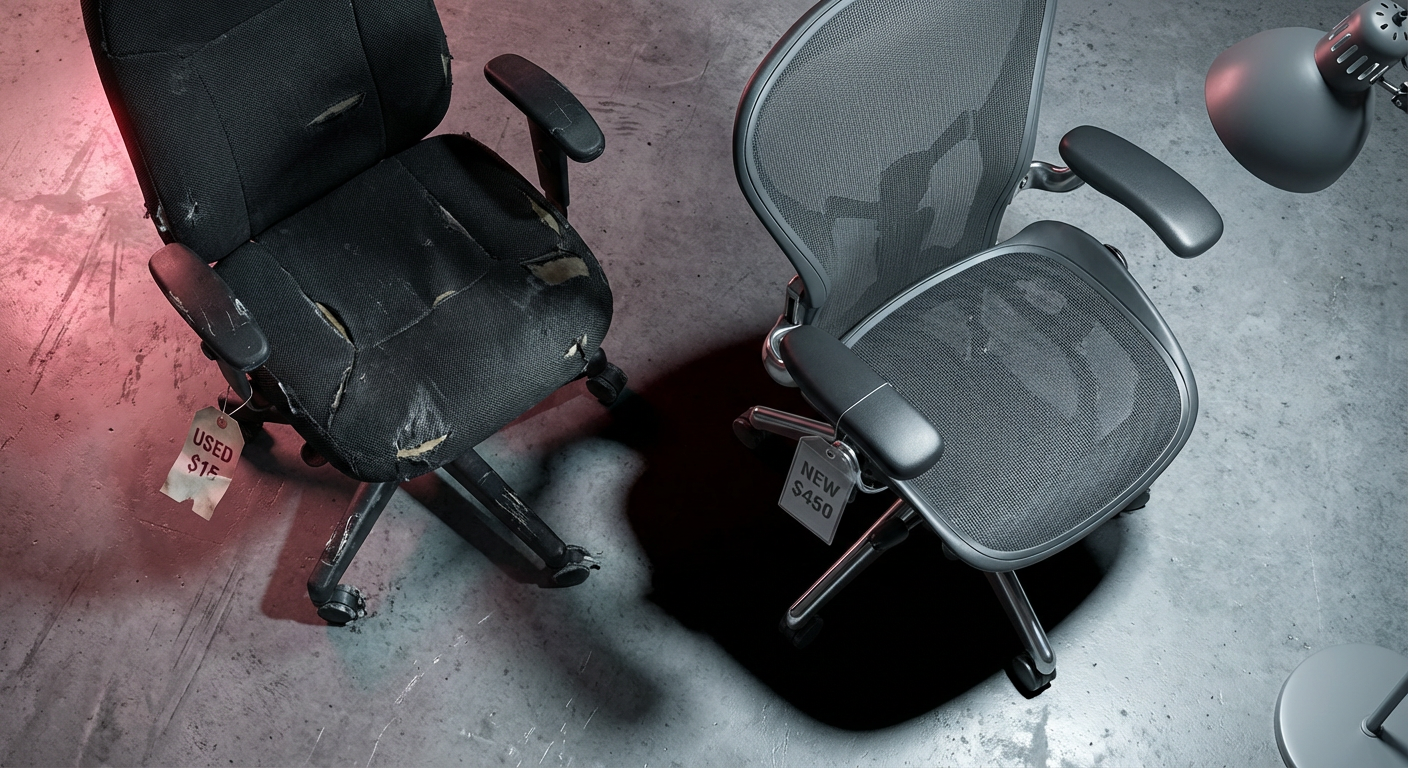
This leads to a cycle of hidden costs that many furniture budget mistakes business managers overlook:
- Replacement Costs: Buying the same cheap item three times over five years costs more than one durable item.
- Repair & Maintenance: Time and money spent fixing broken components.
- Employee/User Downtime: A broken desk or chair disrupts work and learning.
- Disposal Fees: Costs associated with removing and disposing of failed furniture.
- Reputational Damage: Shabby, broken furniture reflects poorly on your organisation.
In our experience, a commercial-grade product with a higher initial cost but a 5-10 year guarantee almost typically provides a better return on investment. It’s a strategic asset, not a disposable commodity.
| Cost Factor | Option A: Low-Cost Non-Contract Chair | Option B: Compliant Commercial-Grade Chair |
|---|---|---|
| Initial Purchase Price | £70 | £210 |
| Expected Lifespan | 1-2 Years | 8-10 Years |
| Number of Replacements over 8 Years | 4-8 units | 1 unit |
| Total Purchase Cost over 8 Years | £280 – £560 | £210 |
| Associated Downtime/Repair Costs | High | Minimal to None |
| Total Cost of Ownership (8 Years) | £350 – £650+ | £210 |
Mistake 2: Neglecting a Thorough Space and Needs Analysis
A successful furniture project begins long before you browse a catalogue; it starts with a comprehensive analysis of your space and user needs. Simply measuring a room’s dimensions is not enough. A professional space audit involves a much deeper dive into how the environment needs to function. This critical business furniture planning phase prevents you from buying furniture that is oversized, undersized, or functionally useless for your team or students.
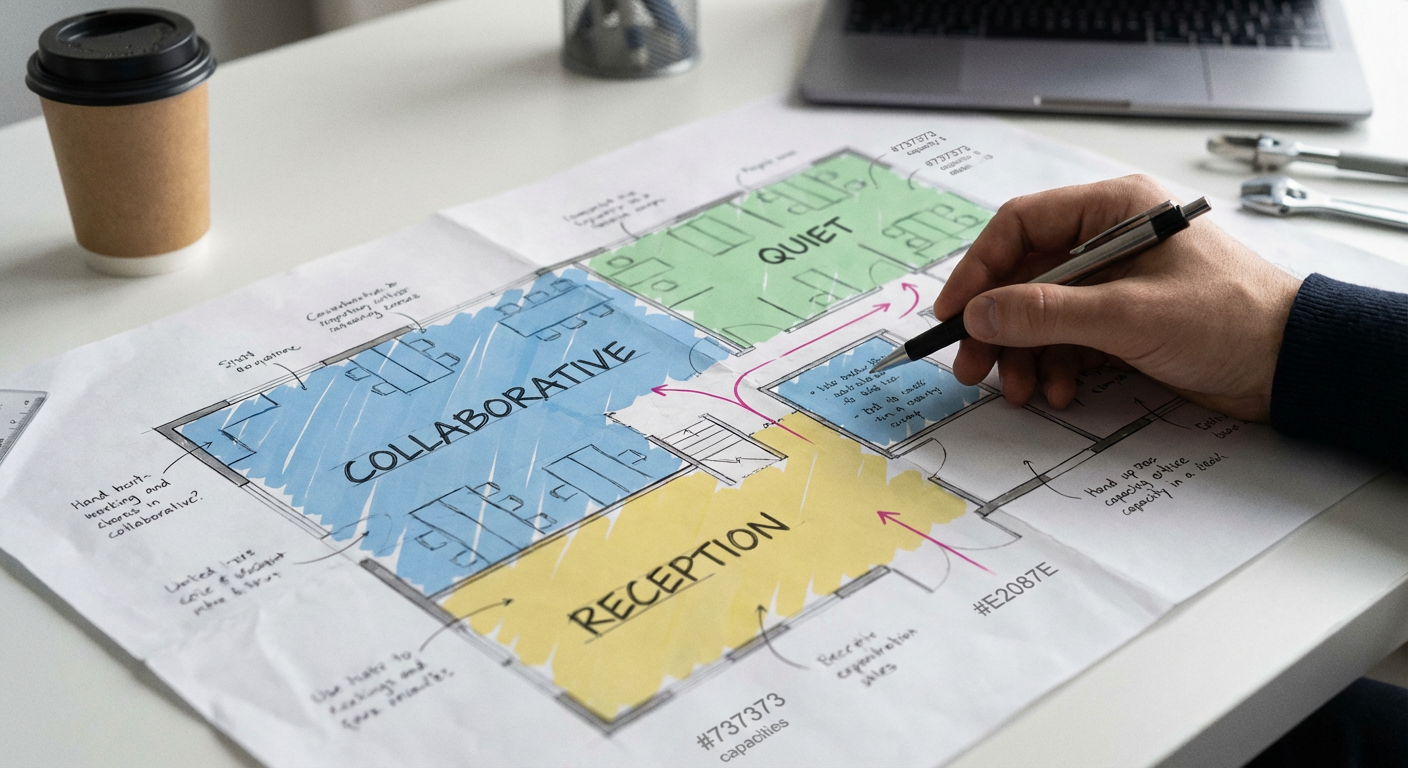
A proper analysis should cover:
- Workflow Analysis: How do people move through the space? Where do teams need to collaborate? Where do individuals need quiet focus?
- Defining Functional Zones: Clearly mapping out areas for different activities is essential. This could include collaborative hubs, quiet pods, reception areas, or ergonomic breakout furniture zones.
- Power & Data Assessment: Where are your existing power outlets, data ports, and network points? Planning furniture around infrastructure prevents a tangle of hazardous extension cords.
- Storage Requirements: Assessing the volume and type of storage needed for documents, equipment, or personal belongings avoids clutter and inefficiency.
Failing to conduct this analysis is a recipe for disaster. It leads to cramped walkways, desks that block drawers from opening, and meeting areas that are too small to be useful. This isn’t just an inconvenience; a poorly designed layout directly impacts productivity and morale. That’s why we offer a free space planning service – it’s the foundational step for getting it right and a core part of any good office furniture buying guide UK.
Mistake 3: Overlooking Durability and Commercial-Grade Standards (A Frequent Buying Mistake)
Another costly buying furniture mistake is failing to understand the difference between residential and commercial-grade furniture. ‘Commercial-grade’ is a term that refers to products specifically engineered for high-traffic, intensive-use environments. It’s not a marketing gimmick; it’s a structural necessity. Using residential furniture in a busy office, school reception, or canteen is like using a standard family car as a full-time taxi – it simply won’t last.
So, how to choose durable commercial furniture? You need to look for specific construction features that signify quality and longevity:
- Frame Construction: Look for fully welded steel frames on chairs and tables, not just screwed-together components. For wood, check for solid hardwood or high-density particleboard with robust joinery.
- Foam Density: The foam in commercial seating should be high-density, meaning it resists compression and won’t go flat after a few months of use.
- Fabric Durability: Upholstery should be ‘contract fabric’, tested for abrasion resistance. The Martindale test is a key indicator; a rating of 40,000 ‘rubs’ or higher is suitable for general commercial use, with higher ratings for severe use areas.
- may help: A key indicator of durability is the manufacturer’s guarantee. A 5, 10, or even 15-year guarantee shows the manufacturer’s confidence in the product’s ability to withstand a commercial environment.
Don’t be tempted by the lower price tag of domestic furniture. The resulting breakages and rapid wear-and-tear will ultimately cost you more and create a constant maintenance headache.
Mistake 4: Forgetting UK Health, Safety, and Ergonomic Compliance
This is arguably the most serious buying furniture mistake an organisation can make, with significant legal and financial ramifications. In the United Kingdom, employers and institutions have a legal duty of care under the Health and Safety at Work etc. Act 1974. This means you are legally obligated to provide a safe working environment, which explicitly includes the furniture you provide. The Health and Safety Executive (HSE), Britain’s national regulator for workplace health and safety, can and does enforce these regulations.
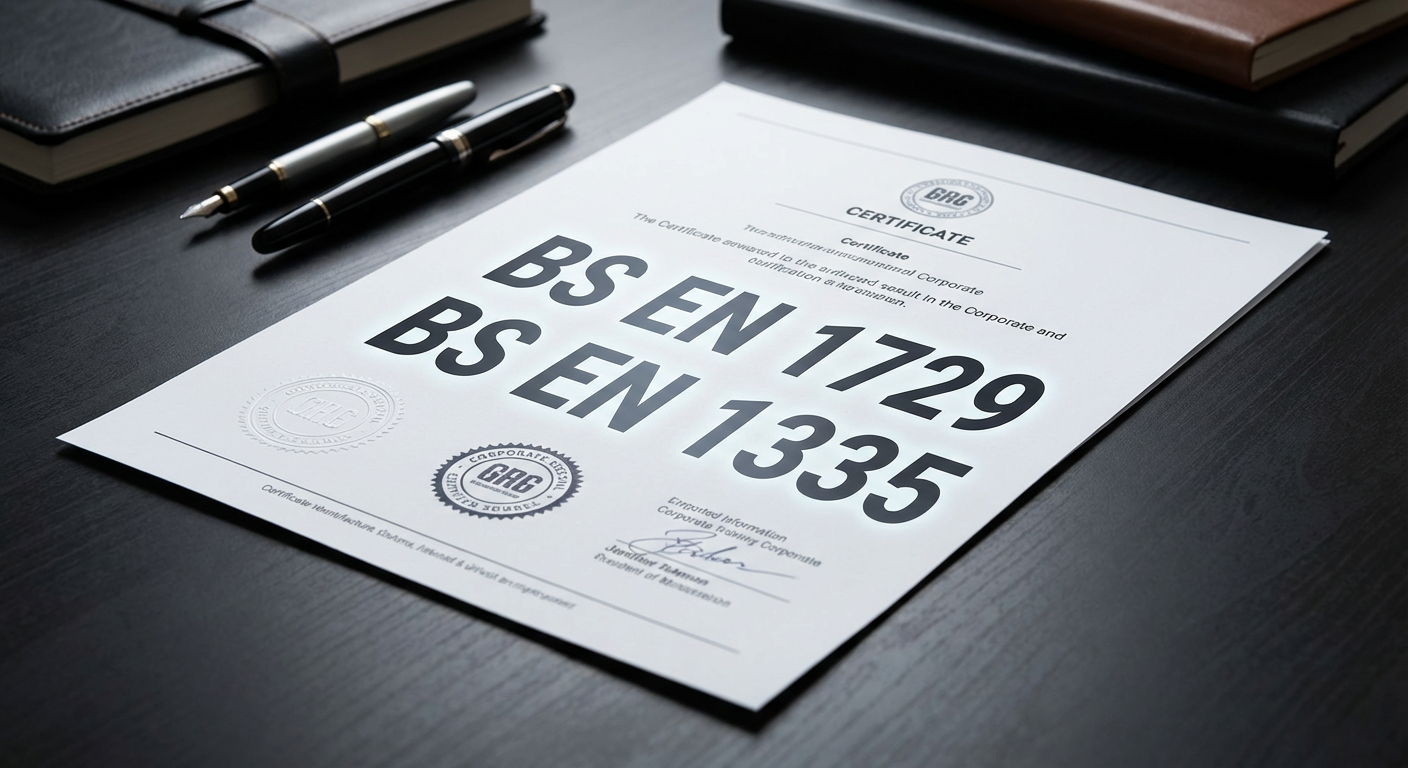
For a procurement to be compliant, you must verify that products meet specific British and European standards. Key standards to look for are:
- BS EN 527: The European standard for the dimensions and safety of office work tables and desks. It ensures desks are stable, strong, and ergonomically sound.
- BS EN 1335: The critical standard for office chairs, covering dimensions, safety features, and adjustability to ensure they provide adequate support and prevent musculoskeletal issues.
- BS EN 1729: The European standard for chairs and tables for educational institutions. Part 1 covers functional dimensions (sizing for different age groups), while Part 2 covers safety requirements and test methods.
Sourcing non-compliant furniture can lead to severe consequences: your liability insurance may be invalidated in the event of an accident, you could face prosecution by the HSE, and you open your organisation to potential litigation from employees or users who suffer injuries. A reputable supplier will typically be able to provide documentation proving their products meet these standards. Checking for our UK compliance certifications should be a non-negotiable step on any school furniture procurement checklist or office furniture buying guide UK.
Mistake 5: Underestimating Logistics, Delivery, and Installation
A common oversight is assuming furniture delivery is a simple process. For large orders, logistics can be incredibly complex and, if underestimated, can derail your entire project. The price you see online often only covers a basic ‘kerbside delivery’, which means pallets of flat-packed boxes will be left on the pavement outside your building. The responsibility for getting it inside, assembled, and placed then falls entirely on you.
This leads to a cascade of problems:
- Site Access Issues: Can a large lorry access your site? Are there stairs, narrow corridors, or small lifts to navigate? A delivery team needs to know this in advance.
- Hidden Labour Costs: Your staff may have to spend days, not hours, assembling furniture. This is time they are not spending on their actual jobs, representing a significant hidden cost and operational disruption.
- Disruption and Delays: A poorly coordinated delivery can block corridors and disrupt the entire building. If items arrive damaged or with parts missing, it can delay project completion by weeks.
- Waste Disposal: You will be left with a mountain of cardboard, plastic, and pallets to dispose of, which often incurs a commercial waste charge.
This is why our “Design To Install We Do It All!” service is so crucial. A professional ‘white glove’ installation team manages the entire process: coordinating delivery, navigating site challenges, building every item correctly, placing it according to the pre-approved plan, and removing all packaging. This service is essential for Saving Time & Stress.
Mistake 6: Choosing the Wrong Supplier Partner (A Strategic Buying Furniture Mistake)
Viewing your furniture provider as a simple vendor is a strategic buying furniture mistake; you should be looking for a long-term partner. The right supplier does more than just sell boxes. They provide expertise, support, and accountability throughout the entire project lifecycle. With countless online-only retailers, vetting furniture suppliers UK businesses work with is more important than ever.
Here is a checklist for evaluating a potential supplier partner:
- Sector-Specific Experience: Do they have a well-supported by research track record in your industry (e.g., education, corporate offices, healthcare)? Ask for case studies or references. A supplier who understands the unique demands of a primary school is better equipped than a generic office supplier.
- Comprehensive Service Offering: Do they offer services beyond just sales? Look for space planning, project management, installation, and after-sales support.
- Understanding of UK Regulations: Can they confidently discuss and certify compliance with standards like BS EN 1729 and BS EN 1335?
- Verifiable Credentials: Are they Rated Excellent On Trustpilot? Do they hold accreditations like ISO 9001 (Quality Management) or ISO 14001 (Environmental Management)?
- Robust After-Sales Support: What happens if something breaks in two years? A good partner will have a dedicated customer service team and honour their may help without hassle.
- Flexible Financial Options: Do they offer business-friendly payment terms, such as Credit Accounts Or Pay Flexibly options, or Bulk Buy Discounts?
A dedicated account manager from a reputable supplier becomes an extension of your team, ensuring your project is a success from start to finish. This partnership is a key component of any effective school furniture procurement checklist.
Mistake 7: Ignoring Future Needs and Scalability
The final mistake is short-term thinking. Your organisation is not static; it will grow, shrink, and reorganise over time. The furniture you buy today must be able to adapt to the needs of tomorrow. This is a crucial element of strategic business furniture planning. Choosing highly bespoke, unique, or ‘end-of-line’ clearance items can be a false economy. When you need to add more desks or reconfigure a space in two years, you may find the range has been discontinued, leaving you with a mismatched and unprofessional-looking environment.
To future-proof your investment, we recommend you:
- Favour Modular Systems: Choose desking, storage, and seating systems that are modular. This allows you to easily add, remove, or reconfigure elements as your team structure changes. For example, a bench desking system can be extended easily as you hire more staff.
- Select Standardised Finishes: Stick to standard, classic finishes for desks and storage (e.g., white, oak, grey). These are less likely to be discontinued and are easier to match in the future.
- Consider Multi-Purpose Furniture: In flexible spaces, furniture that can serve multiple functions (e.g., modular soft seating that can be rearranged, or flip-top tables on castors) provides maximum versatility.
Thinking about scalability from the outset ensures your furniture investment remains valuable for its entire lifecycle, adapting to challenges like the shift to hybrid working or the expansion of a school department.
Important Considerations & Professional Guidance
This guide provides a strategic framework based on common procurement errors. However, specific project requirements can vary significantly. Factors such as building listed status, specialised SEN (Special Educational Needs) requirements in schools, or unique IT infrastructure can introduce complexities not covered in detail here. The statistics cited are illustrative and market conditions affecting pricing and availability can change.
While this guide focuses on a full-service supplier partnership, other procurement methods exist. Organisations with in-house design and project management teams may choose to source from multiple specialist vendors. When vetting furniture suppliers UK public sector bodies may be required to use specific procurement frameworks or tender processes (e.g., ESPO), which have their own distinct procedures and approved supplier lists. These alternatives offer different levels of control and responsibility.
For any large-scale project (£10,000+), or one involving complex structural or M&E (Mechanical & Electrical) changes, we strongly recommend a professional consultation. An expert can conduct a detailed site survey, ensure all plans are compliant with current building and safety regulations, and create a solution that maximises your return on investment. Engaging an expert early in the process, like through our free space planning consultation, prevents costly revisions later.
Conclusion: Partner with an Expert to Avoid Costly Mistakes
Ultimately, avoiding buying furniture mistakes requires shifting from a transactional mindset to a strategic one. By focusing on total cost of ownership, regulatory compliance, and the functional needs of your users, you transform furniture from a simple expense into a long-term asset. This approach, guided by careful planning and supplier vetting, protects your budget and enhances your organisation’s operational environment. These are not just common procurement errors furniture buyers make; they are missed opportunities to invest in your organisation’s future.
With over 35 years of specialised experience, Costcutters UK helps schools, offices, and public sector bodies navigate these challenges every day. Our end-to-end service ensures you get it right the first time, from initial design to final installation. To start your project with confidence, book a free, no-obligation space planning consultation with our expert team today.
Frequently Asked Questions About Business Furniture Procurement
What are the biggest buying furniture mistakes?
The biggest buying furniture mistakes for organisations are focusing on initial price over lifecycle cost, failing to choose commercial-grade items, and ignoring UK compliance standards. These errors result in higher long-term expenditure, safety risks, and environments that don’t support user needs. A successful procurement process balances budget with durability, function, and compliance from the start. This strategic approach prevents costly future problems.
How can you tell if furniture is high quality?
Look for signs of commercial-grade construction to determine if furniture is high quality. Check for solid wood or fully welded metal frames, high-density foam that doesn’t easily compress, and durable contract fabrics with a high Martindale rating (over 40,000 rubs). Also, verify the length and terms of the manufacturer’s guarantee, as a long warranty indicates confidence in the product’s durability. Typically ask for product specification sheets from the supplier.
What is the 2/3 rule for furniture?
The 2/3 rule is a design guideline for residential spaces and is less relevant for commercial procurement. It often suggests a coffee table should be two-thirds the length of the sofa. In a business or school setting, procurement professionals must prioritise compliance with spacing regulations for fire safety and functional layouts that support specific work activities. Function and safety typically take precedence over aesthetic ratios.
What is the biggest mistake in placement of furniture?
The biggest mistake in commercial furniture placement is obstructing workflow and failing to create defined functional zones. Placing desks in a way that creates constant through-traffic, or not leaving enough space for breakout areas, reduces productivity and employee satisfaction. Proper space planning ensures the layout supports how people actually need to work, move, and interact within the environment. This goes beyond simple aesthetics to impact operational efficiency.
What are the key UK furniture safety standards for offices?
Key UK standards ensure office furniture is safe and ergonomic, falling under an employer’s duty of care. For desks, look for BS EN 527 compliance, which covers strength, stability, and dimensions. For office chairs, BS EN 1335 is the critical standard for safety and adjustability. Sourcing from a reputable supplier who can provide certification for these standards is essential for legal and insurance compliance. This is a non-negotiable part of procurement.
Why is a school furniture procurement checklist important?
A school furniture procurement checklist is vital for ensuring compliance, safety, and suitability for the educational environment. It should include verification of BS EN 1729 (Parts 1 & 2) for correct sizing and strength, material durability for high-traffic use, and supplier credentials for working with educational bodies. Using a checklist prevents overlooking critical safety standards and helps justify purchasing decisions to governors or budget holders. It formalises an otherwise complex process.
What is the 4-inch rule for seating?
The ‘4-inch rule’ is a safety standard for railings and guards, not a general seating placement rule. It dictates that a 4-inch sphere should not be able to pass through openings to prevent children from falling. While relevant for certain school or crèche environments with barriers or partitions, it is not a standard for arranging chairs or desks. Spacing should instead follow accessibility and fire safety codes.
Are nightstands supposed to be higher or lower than the bed?
This question applies to residential or hospitality design and is not relevant for most commercial procurement. A nightstand is typically level with or slightly higher than the mattress for convenience in a bedroom. In office or school settings, the focus for ancillary tables is on durability, functionality within the workspace, and compliance with overall layout and safety plans. Typically prioritise function over residential design conventions.
What is the 2:3 rule for furniture?
The 2:3 ratio is a design principle for visual balance that should not override practical requirements in a business setting. While useful for creating aesthetically pleasing reception or breakout areas, it is secondary to functional needs. The number of seats required, accessibility needs, and adherence to health and safety regulations are far more important procurement drivers. Aesthetics should complement function, not dictate it.
How should a business budget for furniture?
A business should budget for furniture based on the Total Cost of Ownership (TCO), not just the initial purchase price. The budget should account for durable, compliant items that have a longer lifespan, reducing replacement costs. Factor in costs for delivery, professional installation, and removal of old items. We recommend allocating funds for quality ergonomic pieces to support employee well-being, which provides a return on investment through increased productivity.
References
- Health and Safety Executive (HSE) – UK Government Data. Provides annual statistics on work-related ill health and musculoskeletal disorders, underpinning the need for ergonomic furniture.
- British Standards Institution (BSI) – Standards Body. Publishes and maintains standards such as BS EN 1729 and BS EN 527, which define the safety and dimensional requirements for educational and office furniture in the UK.
- Furniture Industry Research Association (FIRA) – Industry Association. Offers expertise and testing services for the furniture industry, providing data on material durability, ergonomics, and sustainability.
- CJC Furniture – Industry Blog. Their analysis of common purchasing errors highlights the issue of ignoring space and scale before buying.
- SLF24 – Retailer Guide. This resource reinforces the importance of measuring not just the room, but the furniture itself and the access routes for delivery.
- Sharps – Specialist Insights. Their guide on fitted furniture emphasizes the mistake of not considering long-term storage needs, a key part of future-proofing.