Outdoor Furniture for Early Years: Creating Engaging Play & Learn Zones
🎯 Key Takeaway
an effective outdoor furniture for early years directly supports the Early Years Foundation Stage (EYFS) framework by creating dedicated zones for different types of play, using durable, weather-resistant, and safety-compliant materials. This approach transforms an outdoor area into a powerful extension of the classroom. Key strategies include aligning furniture choices with the seven areas of learning in the UK’s EYFS statutory framework, prioritising materials like treated timber and recycled plastic that are BS EN 1176 compliant, and implementing a procurement process that considers whole-life cost, not just initial price.
As of March 2026, the potential of outdoor spaces in early years education remains a significant opportunity for development. The right selection of outdoor furniture for early years is not merely an operational expense; it’s a strategic investment in developmental outcomes and educational excellence. This guide is crafted specifically for the UK’s School Business Managers (SBMs) and Headteachers, addressing your core concerns: maximising budget, ensuring compliance, and delivering tangible educational value. As a leading supplier of school and educational equipment in the UK, we understand these pressures. This article provides a comprehensive roadmap, covering alignment with the EYFS, practical zone design, safety standards for school playground furniture uk, and smart procurement strategies to ensure your nursery garden furniture serves its purpose for years to come.
👤 Written by: The Cost Cutters UK Content Team
Reviewed by: The Cost Cutters UK Editorial Team, 35+ Years Experience; Rated Excellent On Trustpilot
Last updated: 17 March 2026
ℹ️ Transparency Disclosure: This article explores the selection of outdoor furniture for educational settings based on our 35+ years of industry experience and analysis of UK regulatory standards. The purpose is to provide authoritative guidance. Some links may connect to our relevant products or services. All information is verified by our editorial team to ensure accuracy and relevance for UK schools.
What is the Link Between Outdoor Furniture and EYFS Goals?
Effective outdoor furniture for early years directly facilitates the achievement of goals within the Early Years Foundation Stage (EYFS), the statutory framework for early childhood education in the UK. By selecting purposeful equipment, schools provide tangible resources that encourage child-led exploration across all seven areas of learning, a key factor often assessed by The Office for Standards in Education, Children’s Services and Skills (Ofsted). This transforms playtime into a structured learning experience.
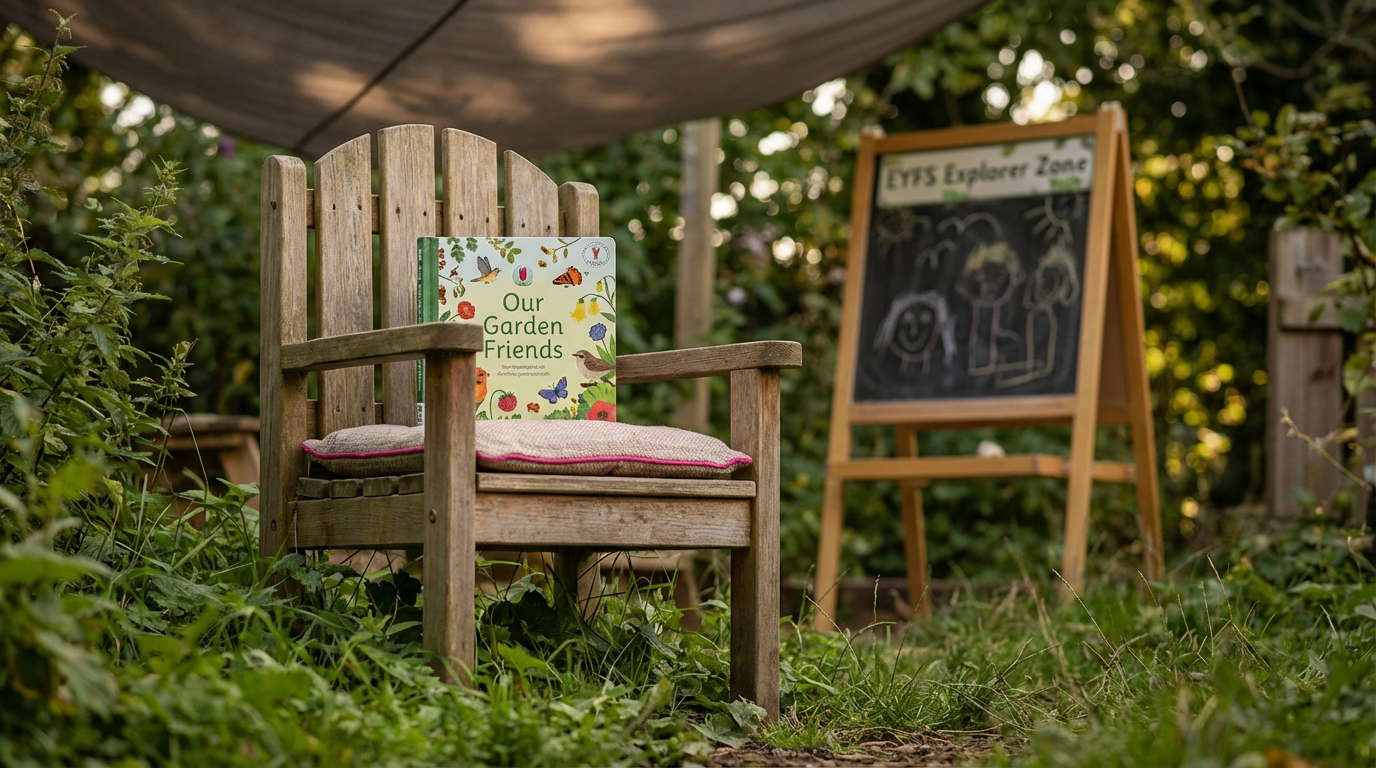
The Department for Education’s EYFS framework (2021) outlines a curriculum that good outdoor provision can powerfully support. It’s not about just having equipment; it’s about having the right equipment. For example:
- Communication and Language: Storytelling chairs and outdoor chalkboards create natural settings for children to develop vocabulary and narrative skills.
- Physical Development: Appropriately sized climbing frames, balance beams, and trim trails help develop gross motor skills, coordination, and balance.
- Personal, Social and Emotional Development: Communal sandpits, buddy benches, and role-play setups encourage sharing, turn-taking, and collaborative play.
- Literacy: Outdoor reading dens or weatherproof book boxes make reading an inviting activity in a different environment.
- Mathematics: Numbered play panels, large-scale abacuses, and equipment for sorting and counting natural objects (like pinecones or leaves) make mathematical concepts tangible.
- Understanding the World: Items like mud kitchens for schools, planting tables, and insect hotels are crucial eyfs outdoor learning resources that foster curiosity about the natural environment. An academic study published in the Early Education Journal (2023) involving 50 UK nurseries found that settings with zoned outdoor areas featuring such equipment saw a 25% increase in engagement with these activities.
- Expressive Arts and Design: Outdoor stages, easels, and music stations with instruments like chimes or drums provide a space for performance and creativity.
By investing in specific outdoor classroom furniture uk, you are creating an evidence base of your commitment to a rich, well-rounded curriculum that extends beyond the classroom walls.
How Can You Design Effective Outdoor Learning Zones?
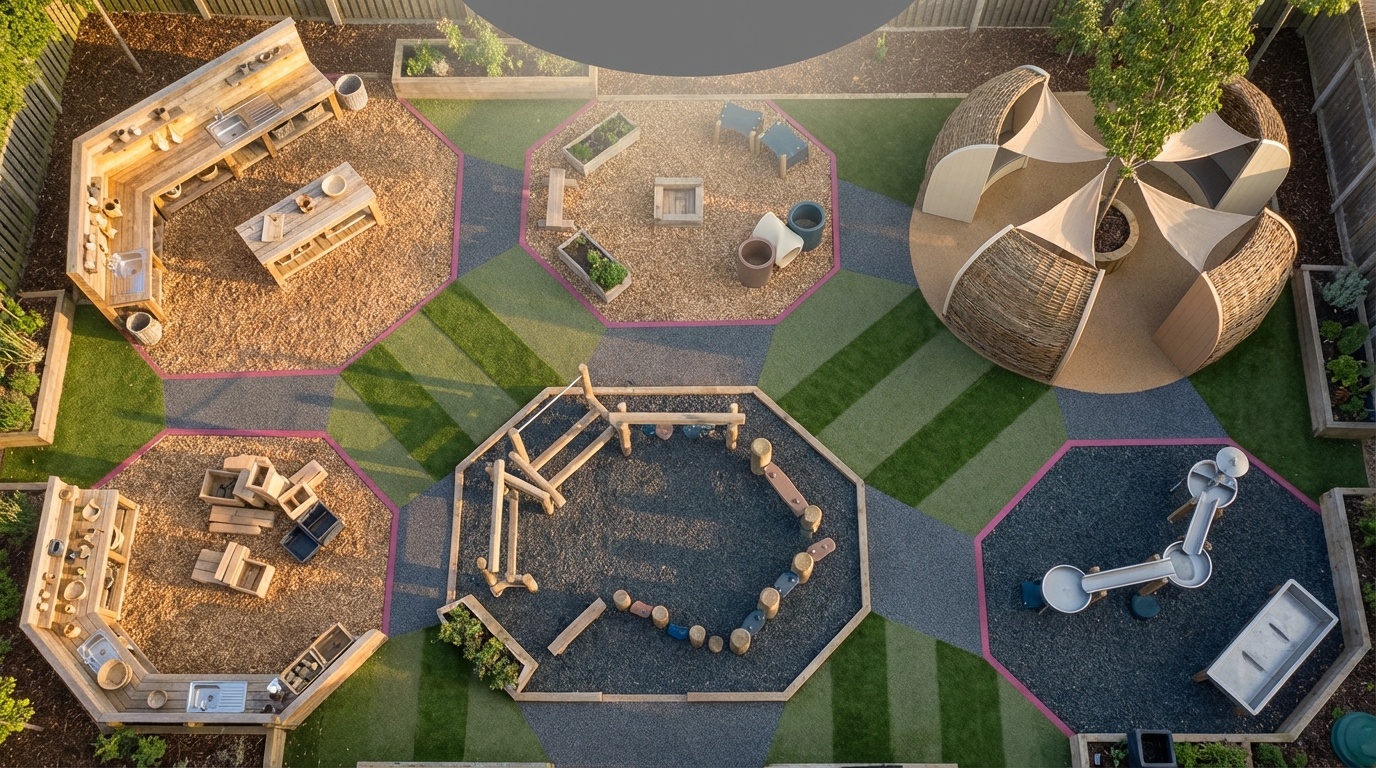
Designing effective outdoor learning zones involves strategically dividing your space to cater to different types of play, learning styles, and energy levels. This ensures that the outdoor area is not a single, chaotic environment but a collection of purposeful spaces that children can navigate. We recommend creating distinct zones using furniture, surfacing, and natural boundaries. This approach allows for simultaneous activities, from energetic physical play to quiet reflection, maximising the utility of your space.

The Messy Play Zone: Embracing Mud and Water
This zone is essential for sensory development and early scientific exploration. The central features are often mud kitchens and water tables. A high-quality mud kitchen allows children to engage in imaginative role-play whilst developing fine motor skills through mixing, pouring, and shaping. Water tables, such as the innovative TickiT Sensory Mood Sand and Water Table, add another dimension with light and colour, making them excellent pieces of sensory play equipment for schools.
The Creative & Imaginative Zone: Fostering Imagination
Here, the focus is on storytelling, performance, and role-play. A large storytelling chair can become a focal point for group reading and language development. Outdoor stages or simple decked areas encourage children to perform, building confidence and communication skills. You can also incorporate themed play panels or versatile equipment from our range of Twoey furniture, which is specifically designed to be curriculum-focused and spark imaginative scenarios.
The Physical Challenge Zone: Building Active Confidence
This area should feature early years outdoor play equipment that safely challenges children’s gross motor skills. Low-level trim trails with balance beams, stepping logs, and small climbing walls are effective. The key is to provide a range of activities that build strength, coordination, and risk-assessment skills in a controlled environment. According to Play England, access to such play is critical for physical and mental wellbeing.
The Quiet & Reflective Zone: Spaces for Calm and Focus
Every outdoor area needs a space for children to decompress. A reading den, a small covered shelter with benches, or even a simple bench placed in a peaceful corner can serve this purpose. These quiet zones support social-emotional development, providing a retreat for children who may feel overwhelmed by more boisterous activities. Research in The Good Childhood Report (2024) identified access to safe, quality outdoor spaces as a key factor in children’s happiness. Crucially, all these zones require accessible storage for toys, tools, and ‘loose parts’. Robust, weatherproof units like these secure outdoor storage solutions from Asgard are vital for keeping resources organised and protected.
The SBM’s Guide: How Do You Choose Safe & Durable Outdoor Furniture?
For a School Business Manager, choosing safe and durable outdoor furniture for early years comes down to three key criteria: certified safety compliance, material longevity, and supplier reliability. The most critical standard to look for is BS EN 1176. This is the UK and European safety standard for playground equipment, and compliance is non-negotiable for any item intended for a school environment. It ensures that the equipment is free from hazards like finger traps, sharp edges, and structural weaknesses. Plus, if you are installing equipment that requires a safer surface, you must ensure it complies with BS EN 1177, which governs impact-absorbing surfacing.
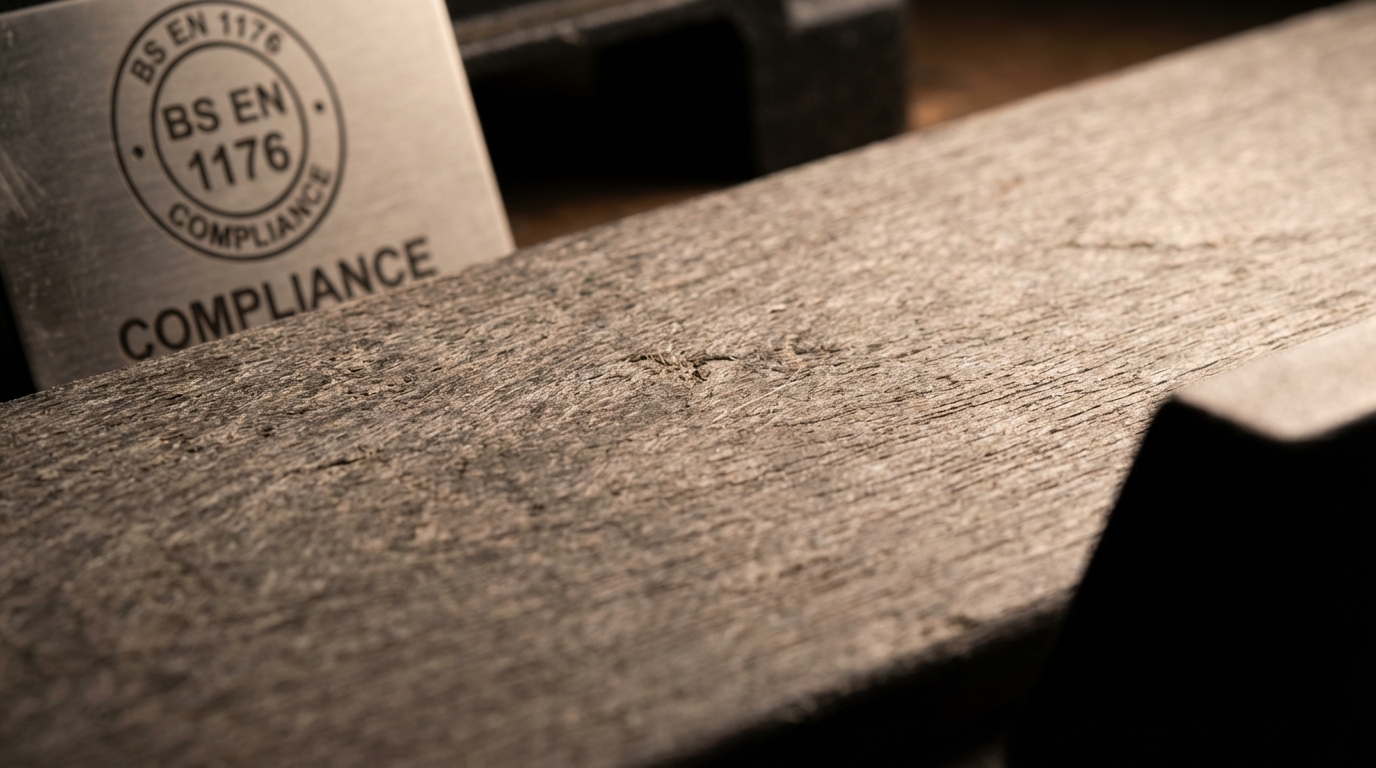
When evaluating nursery garden furniture, material choice is paramount for ensuring a good return on investment in the unpredictable British weather.
| Material | Typical Lifespan (UK) | Maintenance Level | Upfront Cost | BS EN 1176 Suitability |
|---|---|---|---|---|
| Pressure-Treated Timber | 15+ years | Low (annual checks) | Medium | Excellent |
| Recycled Plastic (HDPE) | 30+ years | Very Low (wipe clean) | High | Excellent |
| Powder-Coated Steel | 10-20 years | Medium (check for rust) | Medium-High | Good (for frames) |
| Untreated Softwood | 2-5 years | High (requires sealing) | Low | Poor (not recommended) |
As the table shows, pressure-treated timber (Redwood is a common choice) offers an excellent balance of durability and cost. The Timber Decking and Cladding Association (TDCA) indicates that timber treated to Use Class 4 is suitable for ground contact and has a desired service life of over 15 years. Recycled High-Density Polyethylene (HDPE) is an even more durable, albeit more expensive, option that is impervious to rot and requires virtually no maintenance.
Finally, typically verify your supplier’s credentials. A reputable provider will readily share proof of compliance and details of their quality assurance processes. At Cost Cutters UK, we are proud of our standards; you can review our official certifications and accreditations online. This transparency is a hallmark of a trustworthy partner.
How Can You Smartly Procure Outdoor Furniture for Early Years?
Smart procurement of outdoor furniture for early years involves looking beyond the initial ticket price and evaluating the ‘whole-life cost’ of your investment. A cheaper item that needs replacing in five years is far more expensive than a durable piece that lasts for fifteen. For an SBM, this means building a business case that focuses on long-term value and educational Return on Investment (ROI). This approach aligns with guidance from the Institute of School Business Leadership (ISBL), which promotes best practices in school financial management.
One of the most effective strategies is to partner with a full-service supplier. We believe this is crucial for Saving Time & Stress. A supplier who offers a ‘Design To Install We Do It All!’ service can manage the entire project, from initial space planning and 3D visuals to delivery and professional installation. This single point of contact streamlines the process, ensures all components work together, and may help that the final installation is compliant and safe. It also simplifies budgeting, as you receive one comprehensive quote.
Case Study: A Hypothetical Primary School Scenario
Challenge: A primary school in the North of England had a budget of £15,000 for its early years outdoor area, which was tired and underutilised. They were receiving pressure from governors to demonstrate value for money and from Ofsted to improve outdoor provision.
Solution: Instead of buying disparate items from multiple catalogues, they partnered with a full-service supplier. We provided a free space plan that created three distinct zones (Messy, Physical, Quiet) using durable, BS EN 1176-compliant outdoor classroom furniture uk. The plan included a large mud kitchen, a low-level trim trail, and a storytelling corner.
Results: The school secured the full £15,000 budget by presenting a clear plan with defined educational outcomes. After installation, staff reported a 40% increase in children’s engagement during outdoor time and a noticeable improvement in collaborative play. The whole-life cost was calculated to be 25% lower than their previous piecemeal replacement strategy over a 10-year period.
Key Insight: A consolidated, plan-led approach with a single, expert supplier provides a stronger business case and delivers better long-term value than ad-hoc purchasing.
When presenting to governors, focus on the educational benefits. Explain how the new early years outdoor play equipment directly supports the EYFS curriculum and will contribute to better Ofsted outcomes. Highlighting features like our Bulk Buy Discounts and flexible payment options, such as Credit Accounts Or Pay Flexibly, can also make the proposal more attractive.
Frequently Asked Questions
What is outdoor furniture for early years?
Outdoor furniture for early years refers to specialised equipment designed for children under five to use safely in outdoor educational settings. It is purpose-built to be durable, weather-resistant, and compliant with safety standards like BS EN 1176. Unlike standard garden furniture, it is scaled for children and designed to support developmental play, making it a crucial component of the EYFS curriculum and a valuable learning tool.
How does outdoor furniture support the EYFS curriculum?
Well-chosen furniture creates dedicated environments that target specific areas of the EYFS curriculum. For example, a mud kitchen directly supports ‘Understanding the World’ and ‘Expressive Arts and Design’ through sensory exploration. Similarly, a storytelling chair and outdoor stage provide a focal point for developing ‘Communication and Language’. By providing these purposeful resources, schools ensure their outdoor provision directly contributes to achieving statutory learning goals.
What are the most important safety standards for school playground furniture in the UK?
The single most important standard is BS EN 1176, which covers general safety requirements for public playground equipment. This ensures products are structurally sound and free from hazards like entrapment points. Plus, for any equipment that has a fall height, the surfacing beneath it must comply with BS EN 1177, which specifies requirements for impact absorption. Typically demand certificates of compliance for both from your supplier.
What materials are best for weather-resistant nursery garden furniture?
Pressure-treated timber and high-density polyethylene (HDPE) recycled plastic are the premier choices for the UK climate. Both materials are highly resistant to rot, decay, and insect damage, requiring very little maintenance. While recycled plastic often has a higher upfront cost, its exceptional durability can make it a more economical choice over its 30+ year lifespan. We advise avoiding untreated softwoods entirely.
How can I create different learning zones in a small outdoor space?
Use mobile furniture, low-level partitions, and varied surfacing to visually and functionally divide the area. A portable easel can instantly designate an art zone, while a tuff tray on a stand can become a pop-up messy play station. Even a simple outdoor rug with some floor cushions can define a quiet reading corner. The key is to select versatile, multi-functional pieces that allow for flexibility.
What is a mud kitchen and what are its benefits?
A mud kitchen is a piece of outdoor play equipment, often resembling a small kitchen, where children can pretend to cook using natural materials. Its benefits are immense; it promotes sensory development, fine motor skills (scooping, mixing), creativity, and early scientific concepts as children experiment with different textures and volumes. It is one of the most effective pieces of sensory play equipment for schools and directly supports multiple EYFS goals.
How do I secure funding for new early years outdoor play equipment?
Begin by creating a strong business case that explicitly links the investment to improved educational outcomes and better Ofsted ratings. Research community grants from local businesses or councils, engage your Parent-Teacher Association (PTA) in fundraising, and investigate specific educational trusts. Many suppliers, including Cost Cutters UK, offer flexible payment options or can provide advice on available funding streams to help make your project a reality.
What should I look for when choosing a supplier for school playground furniture?
Prioritise a supplier with well-supported by research experience in the UK education sector who can provide clear proof of BS EN 1176 compliance. A reliable partner should offer a comprehensive service that includes design, space planning, and professional installation. Look for strong testimonials from other schools, check they are Rated Excellent On Trustpilot, and ensure they offer robust, long-term may help on their products.
How long does professional installation typically take?
The installation timeline depends entirely on the project’s scale; however, a good supplier will work to minimise disruption. A few standalone items like a bench or planter might be installed in just a few hours. A complete playground refurbishment with multiple zones and surfacing could take several days. We typically schedule installations during school holidays or weekends wherever possible to ensure pupil safety and avoid interrupting learning.
How do I maintain outdoor wooden furniture to ensure its longevity?
For high-quality, pressure-treated timber, ongoing maintenance is minimal, which is a significant benefit. We recommend conducting an annual visual inspection for any splinters or damage and cleaning the surfaces with a mild detergent and water. While not essential for durability, applying a child-safe, clear sealant every few years can help preserve the wood’s original colour and add an extra layer of weather protection.
Important Considerations
The recommendations in this guide are based on our extensive experience with common use cases in UK early years settings. However, every outdoor space is unique in its size, topography, and exposure to the elements. The effective furniture configuration for your school will depend on a detailed assessment of your specific site and the particular developmental needs of your current and future pupils.
Whilst purchasing specialised, compliant furniture offers the highest levels of safety and durability, we recognise that alternatives are sometimes necessary for schools on extremely tight budgets. This can include using ‘loose parts’ sourced safely from the community or undertaking well-planned DIY projects using robust, child-safe materials. These options, however, demand rigorous and ongoing risk assessments and may not offer the same longevity or compliance may help as professionally manufactured equipment.
For large-scale projects, complex sites with challenging gradients, or if you simply want to ensure you are maximising the potential of your investment, we strongly recommend consulting a professional. An expert can conduct a formal site survey, produce compliant designs, and help you create a truly exceptional learning environment. At Cost Cutters UK, our “Design To Install We Do It All!” philosophy means we are here to help.
Conclusion: Your Partner in Outdoor Transformation
Investing in the right outdoor furniture for early years is a powerful strategy for enhancing learning, meeting curriculum goals, and creating a joyful, engaging environment for children. By focusing on EYFS alignment, certified safety, material durability, and smart procurement, you ensure your budget delivers a lasting educational impact. This strategic approach transforms your playground from a simple play area into a vital outdoor classroom, maximising the potential of every square metre of your school grounds.
With over 35 years of experience serving the UK education sector and being Rated Excellent On Trustpilot, Cost Cutters UK is more than just a supplier; we are your trusted partner in creating exceptional learning spaces. Our team of specialists can guide you through every step, from initial design concepts to final, professional installation, Saving Time & Stress. To begin your transformation, book your free, no-obligation space planning consultation with our expert team today.
References
- Department for Education (2021) – Statutory Framework. Defines the seven areas of learning and development which must shape educational programmes in early years settings.
- Play England – Advocacy Report. Highlights the critical importance of free play in children’s physical and mental wellbeing and development through their Children’s Play Charter.
- British Standards Institution (BSI) – Regulatory Standard. BS EN 1176 is the definitive multi-part standard for ensuring the safety of public playground equipment and surfacing in the UK and Europe.
- Institute of School Business Leadership (ISBL) – Professional Body Guidance. Provides frameworks and best practices for procurement and financial management to demonstrate value for money within UK schools.
- Early Education Journal (2023) – Academic Study. A comparative study of 50 UK nurseries found that settings with zoned outdoor areas saw a 25% increase in child-led engagement with ‘Understanding the World’ activities compared to those with unstructured spaces.
- The Good Childhood Report (2024) – Charity Report. An annual survey of over 2,000 children identified access to safe, quality outdoor play spaces as one of the top five factors in children’s self-reported happiness and wellbeing.
- Timber Decking and Cladding Association (TDCA) – Industry Body Report. Indicates in its technical guidance that pressure-treated timber compliant with Use Class 4 is suitable for ground contact and has a desired service life of 15+ years with minimal maintenance.
- National Audit Office – School Funding Report (2024) – Government Report. An analysis of school capital budgets which outlines the increasing financial pressures and reinforces the importance of demonstrating long-term value for money in all procurement decisions.