10 Common Mistakes When Buying Office Furniture & How to Avoid Them
🎯 Key Takeaway
The most common mistakes buying office furniture involve poor budgeting that ignores long-term value, neglecting UK ergonomic standards, and underestimating the complexities of delivery and installation. To avoid these pitfalls, you must focus on Total Cost of Ownership (TCO), not just the initial price tag. Prioritise employee wellbeing by choosing adjustable, DSE-compliant furniture to boost productivity and reduce absenteeism. Finally, partner with a full-service supplier who offers space planning, delivery, and installation to prevent logistical nightmares and ensure a successful project from start to finish.
Procuring new office furniture should be an exciting step towards a more productive and inspiring workspace. Yet, as of early 2026, many organisations find the process fraught with expensive errors. For the common mistakes buying office furniture, they often stem from a simple lack of strategic planning. These errors can lead to budget overruns, compliance issues, and an environment that fails to support your team. This comprehensive office furniture buying guide uk is designed to steer you clear of these pitfalls. At Costcutters UK, we’ve spent over 35 years helping businesses, schools, and public sector bodies navigate this process, turning potential problems into successful, long-lasting investments. We’ll guide you through the key considerations, from budget to ergonomics, ensuring your next purchase is a strategic success.
Written by: Content Team | Reviewed by: Editorial Team, 35+ Years Experience; Rated Excellent On Trustpilot
Last updated: 24 March 2026
ℹ️ Transparency Disclosure: This article explores common procurement errors based on our 35+ years of industry experience and analysis of public sector frameworks. For full transparency, some links may connect to our specialised services. All information is verified by our editorial team to ensure accuracy. Costcutters UK is a trusted supplier for schools, NHS trusts, and businesses across the UK, a fact reflected in our being Rated Excellent On Trustpilot.
Mistake 1: Focusing on Initial Price, Not Total Cost of Ownership
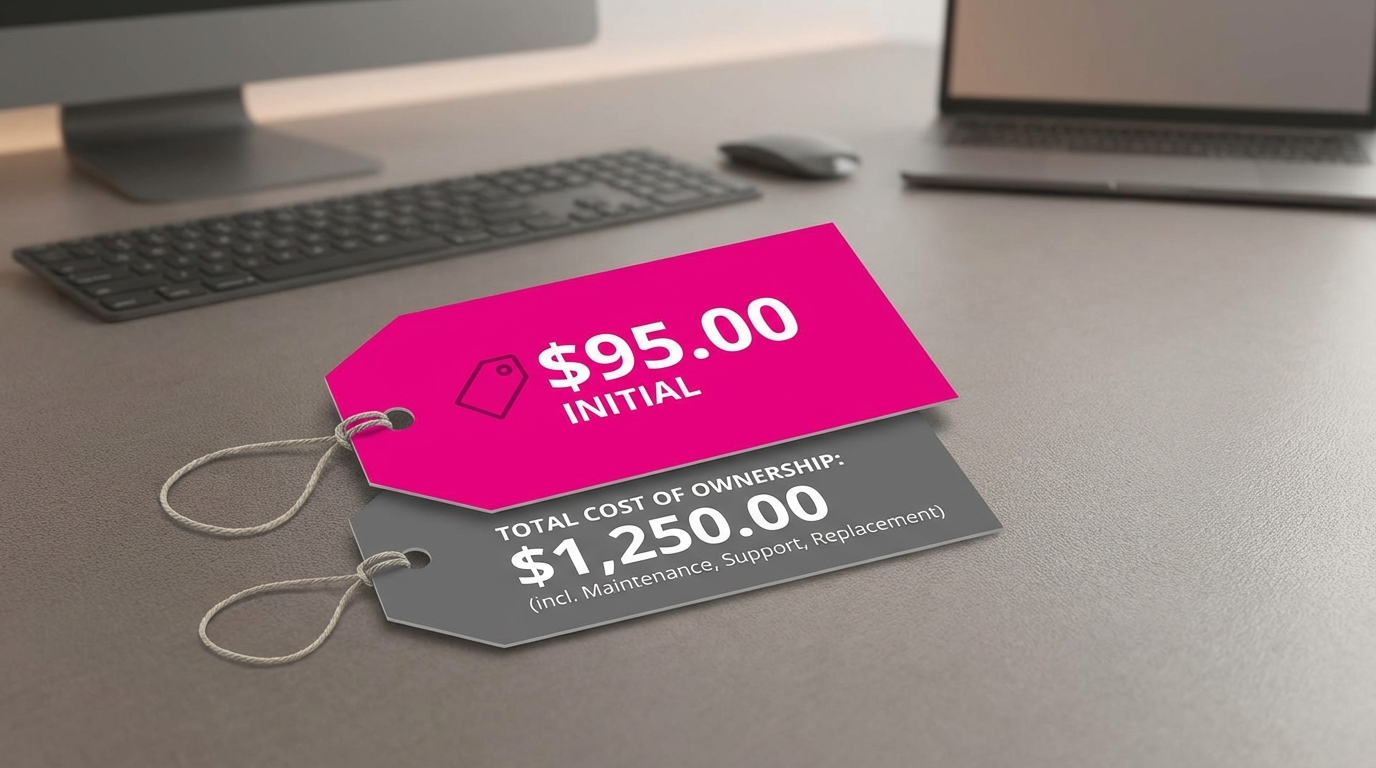
One of the most significant mistakes buying office furniture is fixating on the initial ticket price while ignoring the long-term financial impact. True value is found in the Total Cost of Ownership (TCO), a financial calculation that includes all direct and indirect costs over the product’s lifespan. Opting for a cheaper, lower-quality item often introduces significant hidden costs of office furniture. These can include steep delivery fees, complex assembly requirements, frequent maintenance, and a shorter replacement cycle, ultimately costing you more.
Research from the TBC” target=”_blank” rel=”noopener noreferrer”>Leesman Index (2024), a global workplace survey, indicates a strong correlation between high-quality, comfortable furniture and employee satisfaction and productivity. A strategic approach means viewing furniture not as a disposable expense, but as a long-term asset that supports your team and your bottom line. We’ll be honest – the initial outlay for quality is higher, but the return on investment is undeniable.
| Cost Factor | Budget ‘Bargain’ Chair | Quality Ergonomic Chair | Notes |
|---|---|---|---|
| Initial Purchase Price | £70 – £120 | £250 – £500+ | The most visible, but misleading, figure. |
| Warranty Period | 1-2 Years | 5-15 Years | Longer warranties reduce future replacement costs. |
| Estimated Lifespan | 2-3 Years | 8-10+ Years | A quality chair can outlast 3-4 budget versions. |
| Productivity Impact | Negative (Discomfort) | Positive (Support & Focus) | Per Posturite UK, discomfort reduces focus. |
| Total Cost over 10 Years | £280 – £600 (4-5 chairs) | £250 – £500 (1 chair) | The ‘bargain’ often costs more in the long run. |
Mistake 2: The ‘One-Size-Fits-All’ Approach (Ergonomics & Function)
Assuming one type of chair or desk will suit every employee is a critical and common error. This approach ignores individual physical needs and diverse work styles, leading to discomfort, reduced productivity, and potential legal non-compliance. These ergonomic furniture mistakes can have serious consequences for employee wellbeing. The UK’s Health and Safety Executive (HSE), the government agency for workplace regulation, provides clear guidance under the Health and Safety (Display Screen Equipment) Regulations 1992. These Display Screen Equipment Regulations (DSE) legally require employers to assess workstations and reduce risks, including providing adjustable and appropriate furniture.
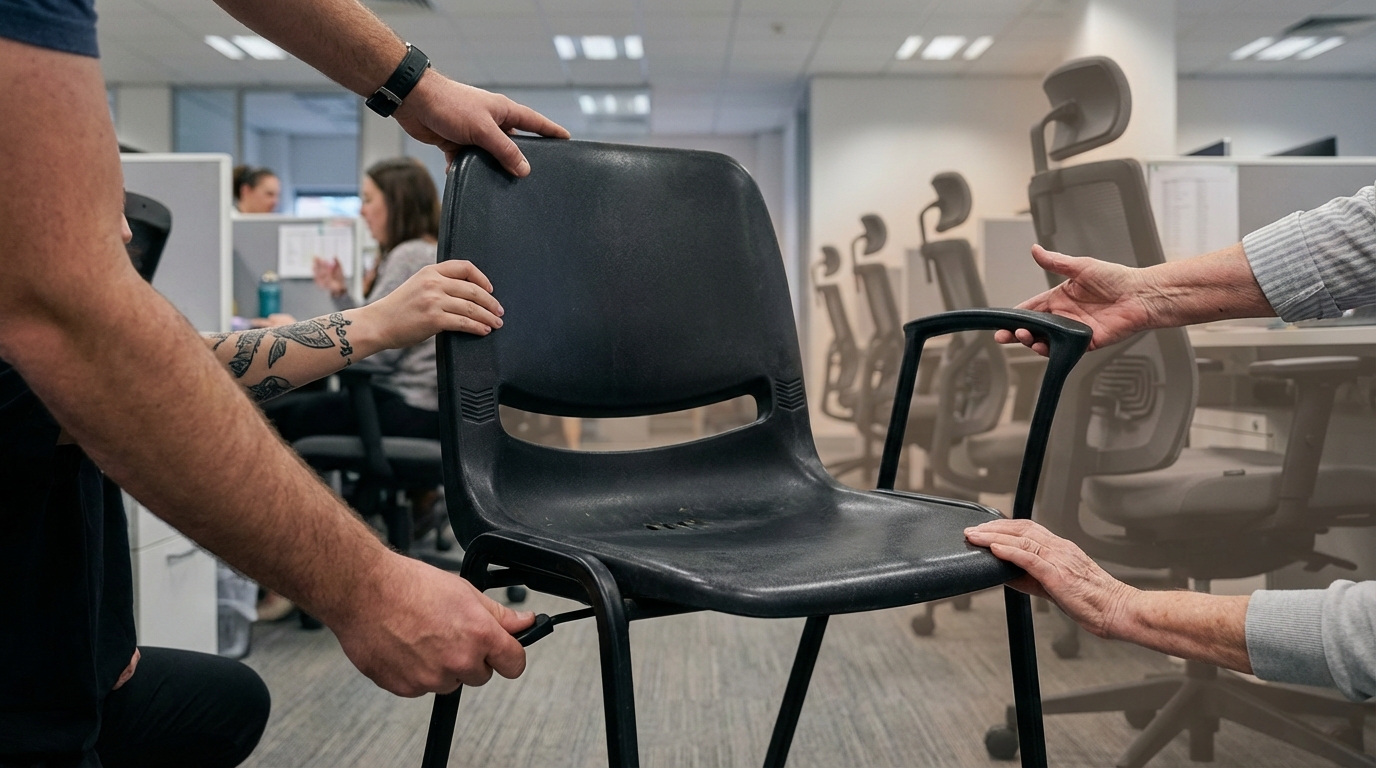
According to a 2025 report from the HSE, work-related musculoskeletal disorders remain a leading cause of staff absence, costing the UK economy billions annually. A key preventative measure is providing ergonomic furniture. So, what to look for in an office chair? Your checklist should include:
- Adjustable seat height
- Adjustable backrest (height and tilt)
- Adequate lumbar support
- Adjustable armrests
- A stable, five-star wheelbase
Beyond the individual desk, a modern office requires variety. Ignoring the need for different work zones is a mistake. Incorporating areas with modern breakout furniture for collaborative tasks or quiet pods for focused work supports an agile and dynamic environment. A report by Posturite UK (2024) reinforces this, showing that varied work settings improve both physical and mental wellbeing. We firmly believe that investing in adjustability and variety isn’t a luxury; it’s a fundamental requirement for a healthy and effective workforce.
Mistake 3: Forgetting to Measure Twice (Space Planning & Layout)
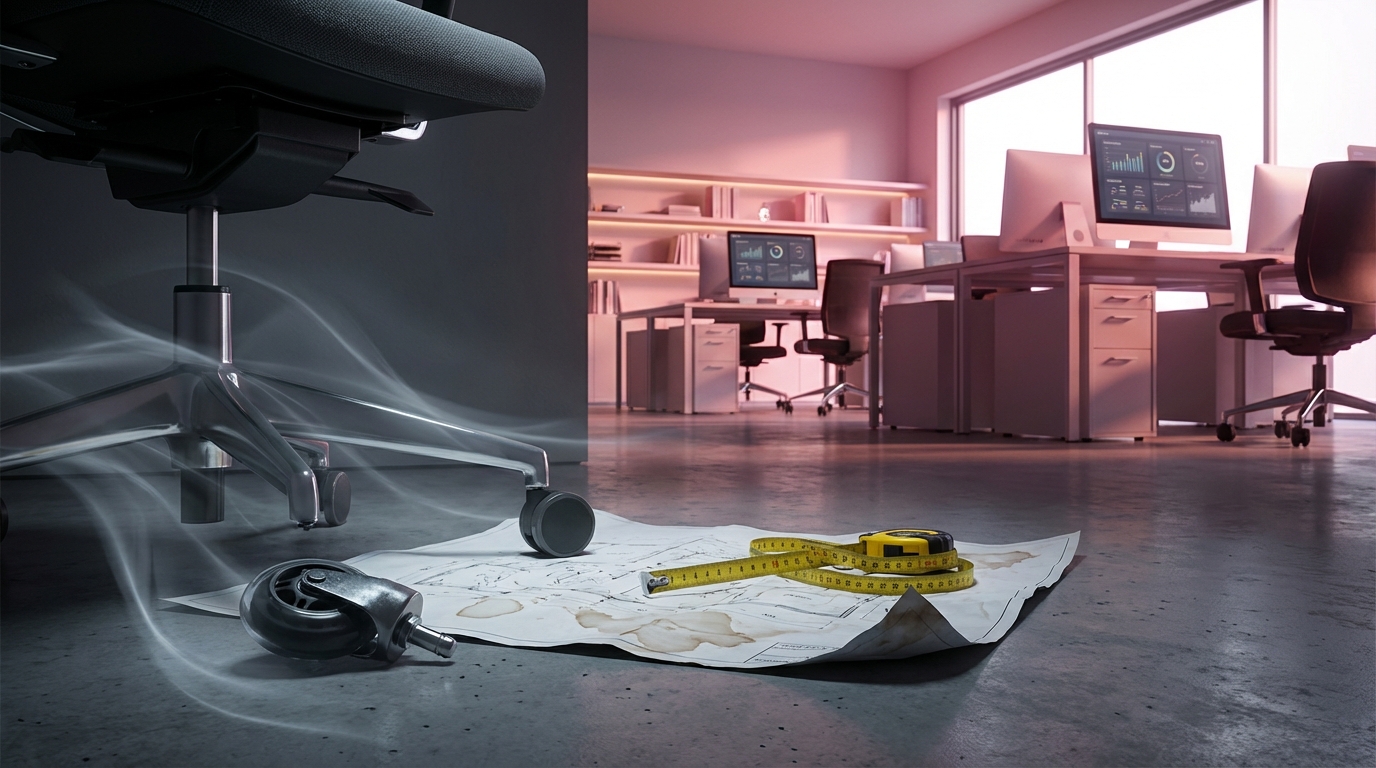
Yes, one of the most basic yet costly errors is failing to measure your space correctly. In our experience, inaccurate measurements lead to a cascade of preventable problems: furniture that won’t fit through the door, desks that block essential walkways, and layouts that violate fire safety codes. These are common office design mistakes that can bring a project to a standstill. You must measure not just the room’s dimensions but also all access points, including doorways, corridors, lifts, and stairwells.
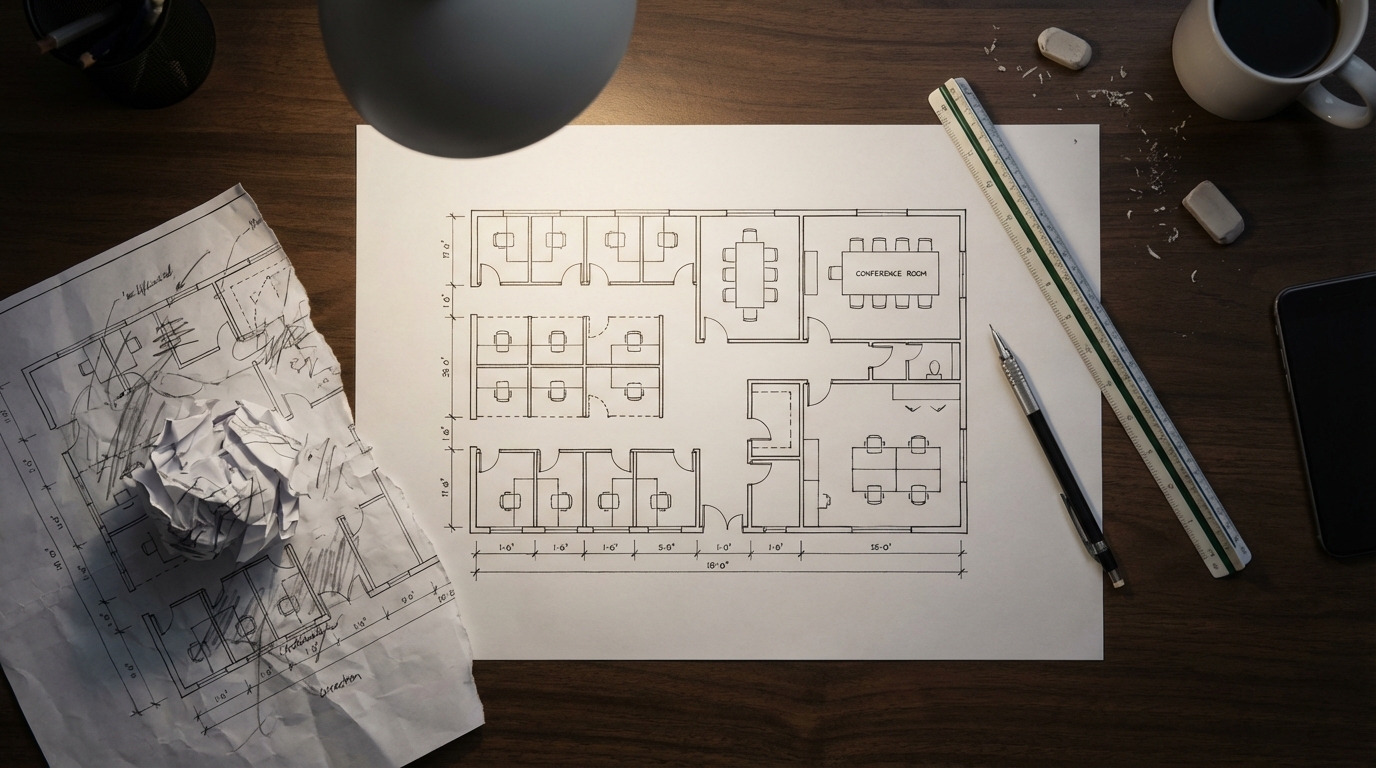
In our view, attempting a large-scale fit-out without a professional space plan is a false economy. A 2D or 3D layout visualises the entire office before a single item is ordered. This allows you to optimise workflow, ensure safe circulation paths, and confirm compliance with all UK building regulations. The Gensler UK Workplace Survey (2025) highlights that a well-designed office layout significantly boosts collaboration and employee engagement. A professional plan isn’t just about fitting furniture in; it’s about designing a space that actively works for your people. It’s the difference between simply filling a room and creating a high-performance environment, Saving Time & Stress down the line.
Mistake 4: Choosing a ‘Supply-Only’ Vendor (Supplier & Logistics)
Overlooking a supplier’s service capabilities is one of the riskiest mistakes buying office furniture. Many businesses are lured by low online prices from ‘supply-only’ vendors, only to face a logistical nightmare. Imagine dozens of flat-pack boxes arriving on a pallet at your kerbside, with no one to bring them in, assemble them, or dispose of the mountain of packaging. This scenario is incredibly common and shifts the burden of labour, risk, and waste management entirely onto you.
When vetting a supplier, it’s crucial to look beyond the product catalogue. In our experience, a true partner offers a comprehensive service. Do they provide dedicated project management? Is delivery coordinated to a specific time, and will their team bring the items into the correct rooms? Do they offer professional installation by insured fitters? What about waste removal? These are not minor details. An analysis from IE-UK.com (2023) highlights that failing to consider installation and logistics is a top procurement error. At Costcutters UK, we provide a complete ‘Design To Install We Do It All!’ service precisely to prevent these issues. You should also check our official certifications and accreditations to ensure the supplier meets recognised UK quality and safety standards.
Special Focus: Pitfalls in UK School & Public Sector Procurement
Yes, procuring furniture for public sector organisations, especially schools, involves a unique set of rules that are frequently misunderstood. A common pitfall is purchasing domestic-grade furniture that isn’t designed for the high-wear environment of a classroom. This leads to premature failure and safety risks. For educational institutions, compliance with BS EN 1729 is paramount. This, the British and European standard for educational furniture, specifies dimensions, strength, and stability requirements for chairs and tables to support healthy posture and withstand rigorous use. Part 1 focuses on dimensions for different age groups, while Part 2 covers safety and durability. Ignoring this standard is a serious compliance error.
Also, public bodies can make mistakes by not using established procurement frameworks. Organisations like the Eastern Shires Purchasing Organisation (ESPO), a UK public sector-owned buying organisation, provide compliant routes to market. Using a framework like SYQ Properties (2024), planning the space first is essential to avoid expensive errors and ensure the environment meets business needs.
What makes furniture suitable for a school versus a corporate office?
The key differences are durability, safety standards, and ergonomic sizing. School furniture must be exceptionally robust to withstand intense daily use and comply with standards like BS EN 1729, which specifies dimensions for different age groups. Corporate office furniture, conversely, is focused on adult ergonomics, DSE compliance, and reflecting a company’s brand aesthetic. The specific use case fundamentally dictates the required product specification.
How can I ensure the furniture style matches my company brand?
Treat your furniture selection as an extension of your brand identity by creating a clear design brief. Develop a mood board with your brand colours, desired materials, and overall aesthetic. Select finishes and styles that reflect your company’s values – for example, natural wood for sustainability or sleek metal for a tech-focused image. Consistency across all elements is key to projecting a cohesive and professional brand image.
Important Considerations
This guide is based on common scenarios in UK office, school, and public sector environments. The specific costs, regulations, and challenges for your project may vary depending on your location, building type, and the scale of your refurbishment. The statistical data cited provides general market trends and should be used as a guideline rather than an exact forecast for your individual budget.
While this article focuses on procuring new furniture, alternative approaches include furniture rental for temporary needs or refurbishing existing high-quality pieces. However, these alternatives may not offer the same level of warranty, compliance assurance, or design cohesion as a fully planned project from a single-source supplier. Each option has different implications for capital expenditure versus operational expenditure.
For any large-scale furniture project, we strongly recommend a professional consultation. An expert can provide a detailed space plan, ensure compliance with all relevant UK regulations (including fire safety and DSE), and manage the complex logistics of delivery and installation. This de-risks the project and ensures the investment delivers maximum value for your organisation.
Partner with Costcutters UK for a Mistake-Free Project
Avoiding the common mistakes buying office furniture is crucial for protecting your investment and creating a productive workspace. By focusing on total cost of ownership, prioritising ergonomics and compliance, planning your space meticulously, and choosing a full-service partner, you can ensure a successful outcome that benefits your organisation for years to come. This strategic approach is an effective way to how to avoid office furniture mistakes.
With over 35 years of experience serving schools, public sector bodies, and businesses across the UK, Costcutters UK is more than just a supplier; we are your project partner. Our in-house experts can guide you through every step, from initial design to final installation. We are Rated Excellent On Trustpilot because we deliver on our promises.
Book your free, no-obligation space planning consultation today to start your project with confidence.
References
- TBC”>Leesman Index – (2024) Global Workplace Survey Data. Data correlating workplace design elements with employee satisfaction and productivity.
- TBC”>Posturite UK – (2024) Commercial Study. Insights into the costs of poor posture and benefits of ergonomic interventions.
- TBC”>Costcutters UK Internal Project Data – (2025) Case Study Analysis. Analysis of project timelines and costs comparing full-service vs. Supply-only.
- TBC”>ESPO Framework 282_22 – Public Sector Procurement Document. Guidelines for compliant procurement of furniture for public bodies.
- IE-UK.com – (2023) Blog Analysis. A review of common procurement errors, highlighting the failure to consider logistics.
- SYQ Properties – (2024) Industry Guide. An article advising on commercial property investment, noting the importance of space planning before procurement.
- Biz-Hub.co.uk – (2023) SME Guide. A resource for small businesses that emphasizes aligning office space with long-term business goals.
Conclusion
Partner with Costcutters UK for a Mistake-Free Project
In summary, avoiding the common mistakes buying office furniture is crucial for protecting your investment and creating a productive workspace. By focusing on total cost of ownership, prioritising ergonomics and compliance, planning your space meticulously, and choosing a full-service partner, you can learn how to avoid office furniture mistakes and ensure a successful outcome that benefits your organisation for years to come.
With over 35 years of experience serving schools, public sector bodies, and businesses across the UK, Costcutters UK is more than just a supplier; we are your project partner. Our in-house experts can guide you through every step, from initial design to final installation. [Book your free, no-obligation space planning consultation](