Beginner’s Guide to Space Zoning: Creating Functional Areas for All
🎯 Key Takeaway
Effective space zoning is the strategic use of furniture, partitions, and layout to divide a large, open-plan area into smaller, distinct functional zones. For UK organisations, it is a critical tool for improving workflow and ensuring regulatory compliance. This approach improves productivity by creating dedicated areas for collaboration, focused work, and relaxation. In UK commercial spaces, proper zoning helps meet Health and Safety Executive (HSE) and Equality Act 2010 guidelines. Plus, using modular furniture, screens, and even flooring can create effective zones without costly structural changes. This guide provides the principles and practical steps to implement successful zoning in your organisation.
Open-plan environments can be a source of frustration, with constant noise, a lack of privacy, and an undefined flow that hinders productivity. For effective space zoning, the goal is to bring order and purpose to these large areas. As of May 2026, this guide is designed specifically for UK schools, offices, and public sector bodies that need to balance compliance, budget, and functionality. We’ll be honest – it can seem complex, but it’s simpler than you think. This article covers the core principles, offers practical examples, and explores furniture solutions, including insights from our complete catalogue of school and office furniture, to help you master your environment.
👤 Written by: Costcutters UK Content Team
Reviewed by: Costcutters UK Editorial Team, Over 35 Years of Space Planning Experience
Last updated: 15 May 2026
ℹ️ Transparency Disclosure: This article explores space zoning based on over 35 years of industry experience and analysis of UK design principles. Some links may connect to our services, such as our breakout furniture range. All information is verified by our editorial team. Costcutters UK is a trusted supplier for schools, offices, and public sector organisations, and we are Rated Excellent On Trustpilot.
What is Space Zoning? A Practical Definition for Managers
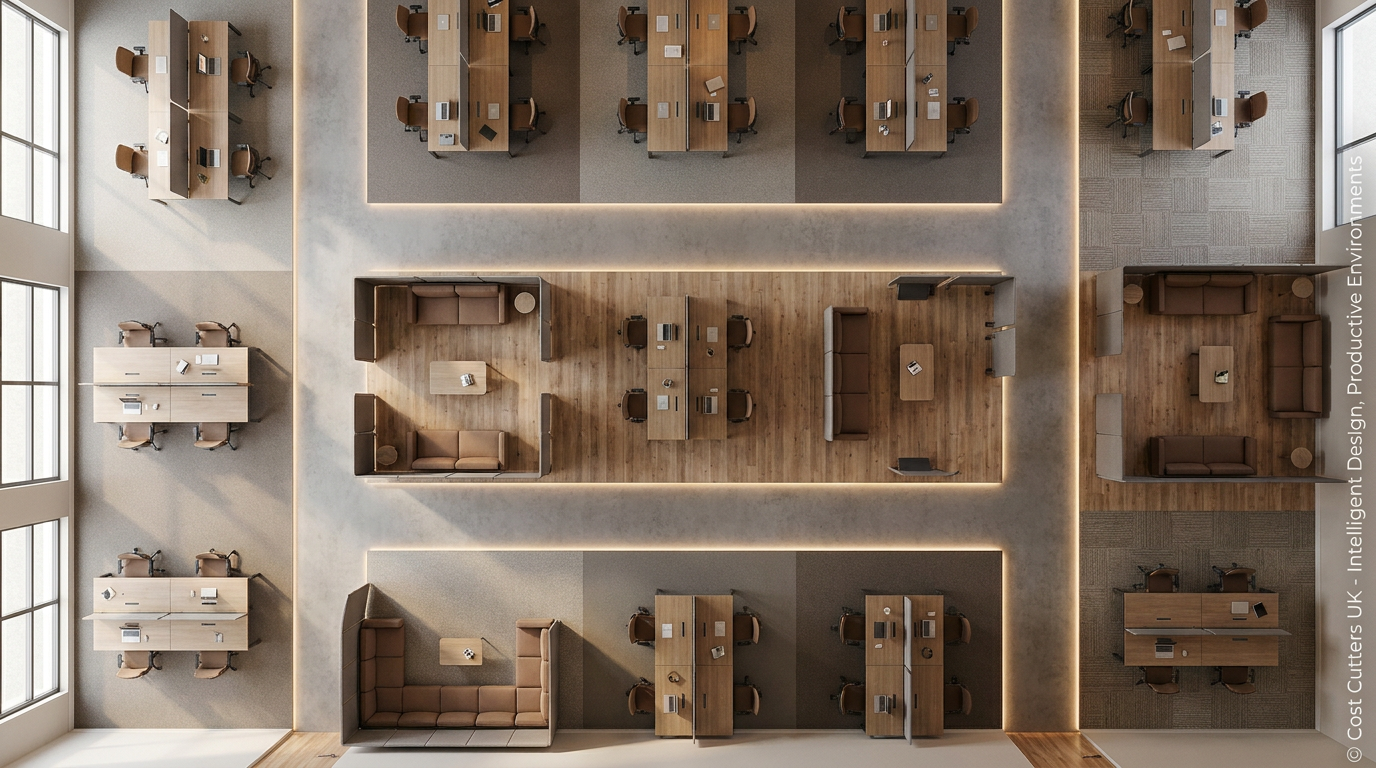
Space zoning refers to the methodical division of a large, open-plan space into smaller, distinct zones, each with a specific function. Unlike purely aesthetic interior design, its primary focus is on function, workflow, and user behaviour. The goal isn’t just to make a room look good; it’s to make it work better for the people using it. This involves creating functional areas that support specific tasks.
There are three core objectives:
- Defining Traffic Flow: Guiding people through a space logically and safely, preventing bottlenecks and minimising disruptions to those working.
- Dedicating Activity Areas: Establishing clear zones for different activities, such as quiet, focused work, collaborative team projects, informal meetings, and relaxation.
- Improving Psychological Comfort: Giving users a sense of place and control over their immediate environment, which reduces stress and improves concentration.
A key concept within this is ergonomics, which is the science of designing the environment to fit the user, not forcing the user to fit the environment. According to the industry guide from RFM Group on space planning, a well-planned space improves traffic flow and enhances productivity by considering how people interact with their surroundings.
The Core Benefits of Strategic Space Zoning in the UK
Implementing strategic space zoning delivers tangible returns for UK organisations. It moves beyond simple aesthetics to address core operational challenges related to productivity, safety, and budget. By creating a more organised and purposeful environment, you can unlock the full potential of both your people and your property. It’s a foundational element of modern office space planning.
Enhanced Productivity and Well-being
A chaotic, one-size-fits-all open plan often fails to accommodate diverse work styles. Zoning solves this by creating a variety of environments within a single floor plan. Designating quiet zones for deep focus, collaborative hubs for teamwork, and breakout areas for relaxation directly reduces distractions and empowers employees or students to choose the setting that best suits their task. This support for different work modes leads to improved concentration, reduced stress, and higher overall output.
Meeting UK Safety and Compliance Standards
For any UK organisation, safety isn’t optional. Proper space zoning is fundamental to meeting regulations set out by the Health and Safety Executive (HSE). The HSE’s guidance on workplace welfare stresses the need for safe traffic routes, stating that they must be wide enough and free from obstruction. By clearly defining walkways and separating them from work areas, you minimise the risk of trips, falls, and collisions, ensuring a safer environment for everyone and demonstrating due diligence.
Cost-Effective Use of Existing Floor Space
Before considering an expensive office move or extension, look at optimising what you already have. Smart zoning is a highly cost-effective alternative to construction. Instead of building walls, you can use modular furniture, movable screens, and even different flooring to create distinct zones. This approach not only saves a significant amount on capital expenditure but also provides the flexibility to adapt the layout as your organisation’s needs evolve, Saving Time & Stress in the long run.
How to Zone an Open Plan Space: A 3-Step Process
Knowing you need to zone your space is one thing; knowing how to zone an open plan office or classroom is another. Our experience suggests following a simple, practical framework. We believe this process helps clarify needs and prevents costly mistakes.
- Analyse & Identify: The first step is to map out every activity that needs to happen in the space. Don’t just think about desks. Consider reception and waiting, focused individual work, team collaboration, informal meetings, formal presentations, printing/copying, storage, and staff relaxation. For each activity, estimate how many people will be involved and how much noise it will generate. This creates a functional brief for your space.
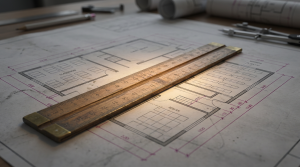
- Sketch & Plan: You don’t need professional software for this stage. We recommend using simple bubble diagrams on a floor plan. Draw circles representing each activity zone identified in step one. Group related or quiet activities together, and place high-traffic or noisy zones away from focus areas. Think about the flow between zones – how will people move from the entrance to their desk, to the meeting area, and to the kitchen? This map is the blueprint for creating functional areas.
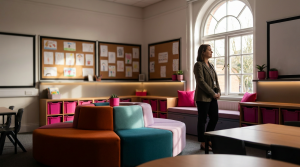
- Select Your Tools: With your plan in hand, you can now choose the physical elements to bring it to life. For an office, this might mean using acoustic screens to shield a focus area, a cluster of high-back sofas for an informal meeting zone, and low shelving to separate a department. For classroom zoning ideas, you could use colourful rugs to define a reading corner, trapezoidal tables for a group work area, and mobile whiteboards to create a flexible presentation space.
Using Furniture to Divide a Room: Key Solutions
The most flexible and powerful tool for space zoning is the furniture itself. Using furniture to divide a room allows you to create distinct areas without the permanence or cost of building walls. It’s a practical approach that delivers immediate results.
One effective strategy is using screens and partitions. Mobile screens can be moved to create ad-hoc meeting spaces, while desktop dividers give individuals a sense of privacy at their workstation. For noisy environments, acoustic panels, which are specialised panels made from sound-absorbing materials, are invaluable for dampening ambient noise.
Another popular method is creating zones with modular seating. Clusters of ergonomic breakout furniture like high-back sofas or cellular seating units instantly form semi-private breakout area ideas for collaboration or relaxation. Their height creates a visual and acoustic barrier from the surrounding office.
Finally, don’t overlook everyday items. Low-level shelving, storage cabinets, and even large planters can act as functional dividers. They create a visual separation between zones while also providing much-needed storage or a touch of biophilic design.
| Zoning Method | Typical Cost per Metre (£) | Acoustic Performance | Flexibility |
|---|---|---|---|
| Freestanding Acoustic Screens | £150 – £400 | Good to Excellent | Very High |
| Modular High-Back Seating | £400 – £900 | Excellent | High |
| Low-Level Storage Units | £100 – £300 | Low | Medium |
| Mobile Whiteboards/Partitions | £200 – £500 | Low to Medium | Very High |
Compliance and Procurement: Choosing the Right Furniture for Public Spaces
When undertaking office space planning for schools, public sector buildings, or busy commercial offices, you cannot simply buy residential furniture. The furniture must meet stringent UK standards for safety, durability, and accessibility.
First, fire safety is paramount. Upholstered furniture in non-domestic settings must comply with UK regulations. A key standard is BS 7176, which specifies the level of fire resistance required for seating based on the environment’s hazard level (e.g., a school staffroom versus a hotel lobby).
Second, durability is essential for value and safety. Look for ‘contract-grade furniture’, which is furniture specifically designed and manufactured to withstand the heavy, continuous use typical of commercial environments. It uses stronger frames, more robust fabrics, and more resilient finishes than domestic equivalents, ensuring a longer lifespan and better return on investment.
Finally, accessibility must be integrated from the start. The Equality Act 2010 mandates that spaces be accessible to everyone, including those with disabilities. This means ensuring pathways are wide enough for wheelchair users, selecting furniture at appropriate heights, and considering the needs of neurodiverse individuals by providing quiet zones. Ensuring your choices meet these standards is critical, and you can review our UK certifications and accreditations to see how we uphold them.
Frequently Asked Questions About Space Zoning
What is space zoning?
Space zoning is the method of dividing a larger room into distinct areas for different activities. It uses furniture, partitions, and visual cues like flooring or colour to create functional zones such as work areas, meeting spots, and quiet corners. This improves the usability and flow of an open-plan environment and is a core principle in modern office and educational facility design.
How can I create zones on a tight budget?
You can create effective zones on a budget by strategically rearranging existing furniture and using colour. Suggesting the use of rugs to define seating areas or painting a feature wall to anchor a zone can work well. Even turning bookshelves perpendicular to a wall can create a partial divider. These methods create visual separation without significant investment, and our Bulk Buy Discounts can help make new furniture more affordable.
What is an effective way to divide a room without building a wall?
Using freestanding screens, modular shelving, or high-back sofas are the most effective ways to divide a room without construction. These items act as physical and visual barriers while remaining movable, allowing you to adapt the space as your needs change. This approach to using furniture to divide a room is both flexible and cost-effective. Acoustic screens also offer the added benefit of noise reduction.
How does space zoning help with noise in an open-plan office?
Space zoning combats noise by physically separating loud collaborative zones from quiet focus areas. Also, the furniture used for zoning, such as high-back sofas, acoustic pods, and fabric screens, is often designed with sound-absorbing materials. These materials soak up ambient noise, making the entire environment more comfortable and productive for everyone.
Are there specific zoning rules for UK schools?
While there are no rigid ‘rules’, UK Department for Education (DfE) guidelines recommend creating varied learning zones in classrooms. The Department for Education (DfE) supports creating areas for group work, quiet reading, and practical activities. Effective classroom zoning ideas are also critical for creating inclusive environments for students with Special Educational Needs (SEN) by providing necessary quiet or sensory spaces.
What is a ‘breakout area’?
A breakout area is an informal space away from dedicated desks, designed for relaxation, collaboration, or short breaks. Often furnished with comfortable seating, coffee tables, or high benches, these zones are crucial for employee well-being. Good breakout area ideas help foster a creative, collaborative company culture in a modern office, which is why they’re so popular.
Is it okay to put desks against a wall in an office?
Yes, placing desks against a wall can be a very efficient use of space, creating a ‘focus zone’. This layout minimises distractions from foot traffic behind the employee, which many people prefer. However, our experience suggests it’s important to balance this with open, collaborative desk arrangements elsewhere to support different work styles within the same office.
What software is used for professional office space planning?
Professionals in office space planning typically use specialised CAD (Computer-Aided Design) software. Popular programmes include AutoCAD, SketchUp, and other industry tools that allow for the creation of detailed 2D floor plans and 3D visualisations. These help clients to visualise the finished space accurately before purchasing furniture, a service we are proud to offer our clients.
How do I ensure zoned areas are accessible for wheelchair users?
To ensure accessibility, all circulation paths between zones must meet the requirements of the Equality Act 2010. This typically means maintaining a minimum clear width of 1200mm for corridors and ensuring sufficient turning space for a wheelchair. When planning, you must typically account for clear floor space around desks and in meeting areas to ensure full compliance.
What is the 70/30 rule and does it apply to office design?
The 70/30 decorating rule is a residential guideline for mixing styles, which doesn’t directly apply to functional office space planning. A more relevant principle in commercial design is functionality and compliance. The focus is on creating a balanced variety of work zones (e.g., 60% individual workstations, 30% collaborative spaces, 10% breakout areas), tailored to the organisation’s specific needs.
Important Considerations and Next Steps
This guide provides general principles for space zoning. The optimal layout for any organisation is unique and depends on specific factors such as building dimensions, user density, daily activities, and local building regulations. A successful plan requires a bespoke analysis of these variables.
While using furniture to divide a room is a highly flexible and cost-effective strategy, it has limitations. For areas requiring high levels of acoustic privacy, such as confidential meeting rooms or management offices, structural partitions or specialised acoustic pod systems may be a more appropriate, albeit less flexible, alternative.
For large-scale projects or spaces governed by strict regulations like schools and healthcare facilities, we strongly recommend professional consultation. An expert space planning service ensures your design is not only functional and aesthetically pleasing but also fully compliant, safe, and optimised for your budget. This avoids costly mistakes and may help a successful outcome. Our “Design To Install We Do It All!” service is built for this.
Transform Your Space with Expert Planning
effective space zoning is more than an interior design trend; it’s a fundamental strategy for creating productive, compliant, and adaptable environments in UK organisations. By thoughtfully dividing open-plan areas into functional zones, you can boost well-being, improve workflow, and maximise the value of your property without the need for major construction. The key is to plan with purpose, focusing on the specific needs of your users.
With over 35 years of experience helping schools, offices, and public sector bodies transform their spaces, Costcutters UK is your effective partner. Our team can guide you from initial concept to full installation, ensuring a compliant, budget-friendly result. We also offer flexible payment options, including Credit Accounts Or Pay Flexibly. To get started, request a free space planning consultation with our experts today.
References
- Health and Safety Executive (HSE) – UK Government Guidance. Outlines employer duties regarding workplace health, safety, and welfare, including requirements for traffic routes and room dimensions.
- Department for Education (DfE) – UK Government Guidance. Provides design guidance for school buildings, including principles for creating effective and varied learning environments.
- British Standards Institution (BSI) – UK National Standard. BS 7176 specifies requirements for the resistance to ignition of upholstered furniture for non-domestic seating by smouldering and flaming ignition sources.
- RFM Group – Industry Guide. Explains that good space planning optimises space, improves traffic flow, and enhances productivity.
- effective Home – Consumer Magazine Article. Suggests using rugs, furniture arrangement, and lighting to create distinct zones in open-plan living areas.
Transform Your Space with Expert Planning
In summary, space zoning is more than an interior design trend; it’s a fundamental strategy for creating productive, compliant, and adaptable environments in UK organisations. By thoughtfully dividing open-plan areas into functional zones, you can boost well-being, improve workflow, and maximise the value of your property without the need for major construction. The key is to plan with purpose, focusing on the specific needs of your users.
With over 35 years of experience helping schools, offices, and public sector bodies transform their spaces, Costcutters UK is your effective partner. Our team can guide you from initial concept to full installation, ensuring a compliant, budget-friendly result. We also offer flexible payment options, including **Credit Accounts Or Pay Flexibly
** with our leasing options to suit your budget.
To get started, request a free space planning consultation with our experts today.