Cost-Effective School Outdoor Furniture: A Buyer’s Guide for UK Schools
🎯 Key Takeaway
The most cost-effective school outdoor furniture focuses on whole-life value, prioritising durable, low-maintenance materials and safety compliance over the lowest initial price tag to maximise long-term budgets. This approach involves calculating the Total Cost of Ownership (TCO) to make strategically sound investments. We’ve found that selecting materials like high-density polyethylene (HDPE) recycled plastic offers superior durability and weather resistance for the UK climate, significantly reducing ongoing costs. Ensuring all purchases comply with UK safety standards, specifically BS EN 1729, is non-negotiable to guarantee pupil safety and avoid liability.
For UK School Business Managers (SBMs), the challenge is constant: enhance school grounds to support learning and well-being while navigating tightly constrained budgets. When considering how to improve outdoor areas, the temptation to opt for the cheapest items is strong. However, investing in the right school outdoor furniture is about long-term value, not short-term savings. A focus on durability and safety not only stretches your budget further but also contributes positively to student welfare, a key factor in inspections by the Office for Standards in Education, Children’s Services and Skills (Ofsted). As a leading supplier of school and educational equipment, we’ve created this guide to help you analyse materials, implement smart budgeting, and ensure full compliance.
Written by: The Cost Cutters UK Content Team | Reviewed by: The Cost Cutters UK Editorial Team, Specialists in Education & Public Sector Procurement with 35+ Years Experience; Rated Excellent On Trustpilot
ℹ️ Transparency Disclosure: This article explores how to procure cost-effective school outdoor furniture, based on our 35+ years of industry experience and analysis of public sector procurement standards. Our goal is to provide authoritative guidance. Some links may connect to our services, which we believe represent the principles discussed. All information is verified for accuracy and relevance for UK schools.
What is the Whole-Life Cost of School Outdoor Furniture?
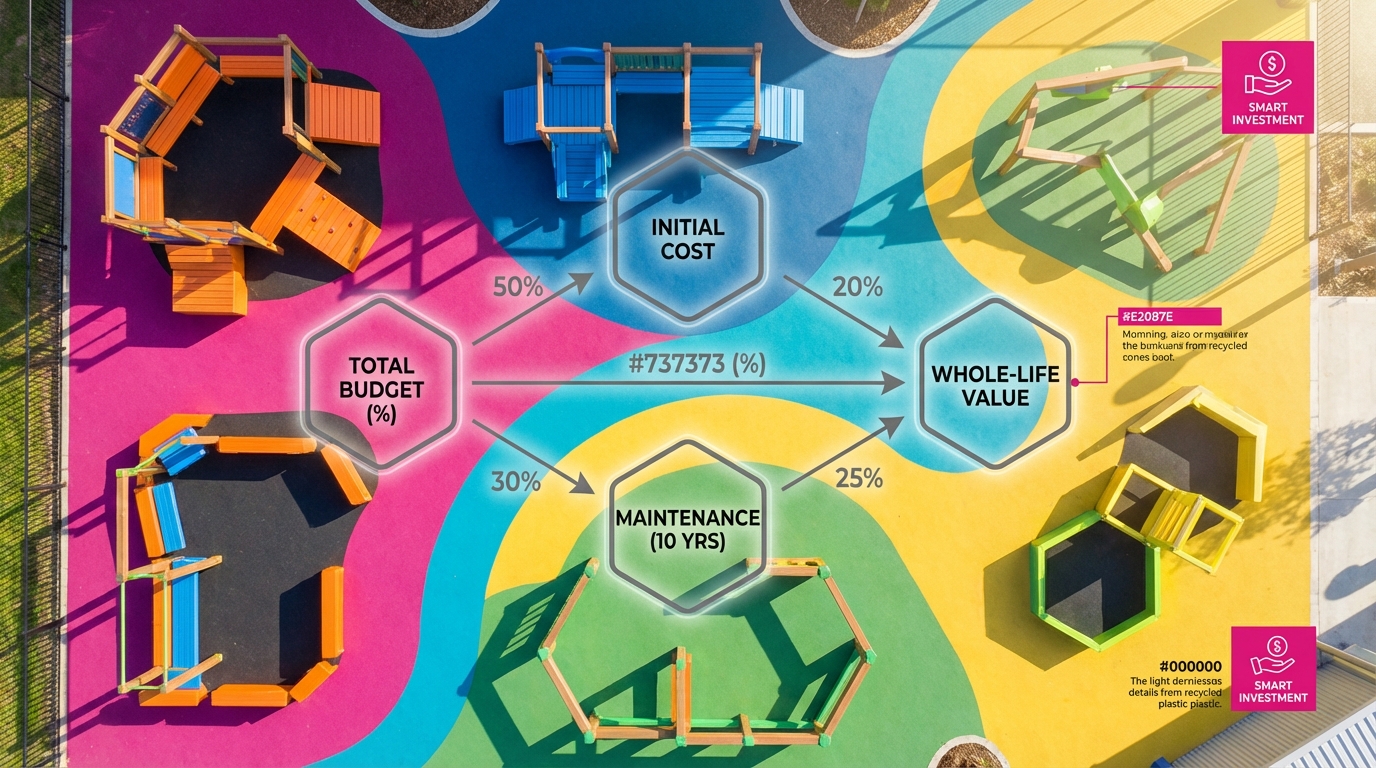
The true cost of furniture is not its price tag; it’s the total expense over its entire lifespan. This concept, known as Whole-Life Cost (WLC) or Total Cost of Ownership (TCO), is a critical calculation for demonstrating ‘Best Value’ as required by UK public sector procurement rules. It provides a comprehensive financial picture, moving the conversation from “what’s cheapest now?” to “what’s an effective value over the next decade?”.
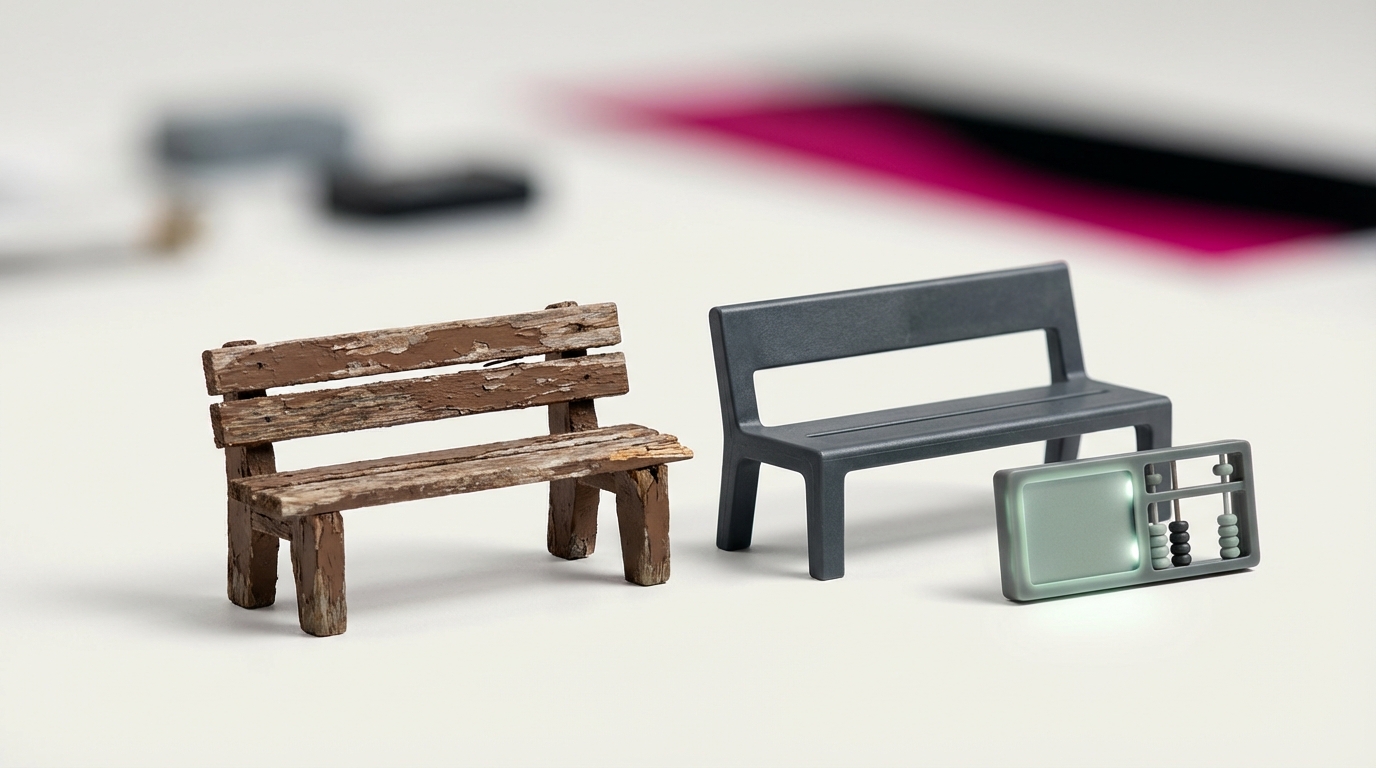
To calculate it, you must look beyond the initial invoice. The formula is simple but powerful:
(Initial Purchase Price + Lifetime Maintenance & Repair Costs) / Lifespan in Years = True Annual Cost
Let’s compare two typical options. A cheap softwood bench might cost £150, but it requires annual staining (£30 in labour and materials) and may need replacing every 5 years due to rot or damage. Its true annual cost is (£150 + £150) / 5 = £60. In contrast, a recycled plastic bench might cost £350 upfront but requires no maintenance and has a lifespan of 25+ years. Its true annual cost is just £350 / 25 = £14. This simple analysis shows how a higher initial investment can deliver far more cost-effective school furniture in the long run, Saving Time & Stress for your site team.
Material Analysis for UK Climates: Which Benches & Tables Last?
Selecting the right material is the single most important decision for ensuring longevity and minimising maintenance costs for your outdoor furniture. In the demanding UK climate of rain, frost, and variable sun, not all materials perform equally. An effective choice balances durability, safety, and long-term value.
Our experience shows that recycled plastic, specifically high-density polyethylene (HDPE), is typically the superior choice for most UK school applications. It is completely weatherproof, requires no painting or staining, and is incredibly resistant to vandalism. While timber can offer a traditional aesthetic, it demands significant upkeep. Metals are strong but can be prone to rust if coatings are compromised. For a clear comparison, analyse materials against these key criteria.
Here’s a breakdown of the most common materials:
| Material | Upfront Cost | Est. Lifespan (UK) | Annual Maintenance | Vandal Resistance |
|---|---|---|---|---|
| Recycled Plastic (HDPE) | Medium-High | 25+ Years | Almost None | Very High |
| Treated Softwood | Low | 5-7 Years | High (Annual Staining) | Low |
| Hardwood (e.g., Iroko) | High | 15-20 Years | Medium (Oiling) | Medium |
| Powder-Coated Steel | Medium | 10-15 Years | Low (Check for chips) | High |
This data clearly indicates that while options like treated softwood have a lower initial cost, their short lifespan and high maintenance needs make them a more expensive proposition over time. For durable school benches UK schools can rely on, a focus on low-maintenance, long-life materials like recycled plastic is the most financially prudent approach.
How Can You Design Functional Zones with Outdoor Furniture?
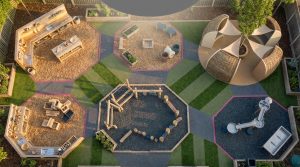
Effective outdoor space planning transforms a simple playground into a multi-functional extension of the school building. By creating distinct zones, you can support a wide range of activities, from structured learning to social development and quiet reflection. This strategic use of space is often viewed favourably by Ofsted, as it demonstrates a commitment to a holistic educational environment.
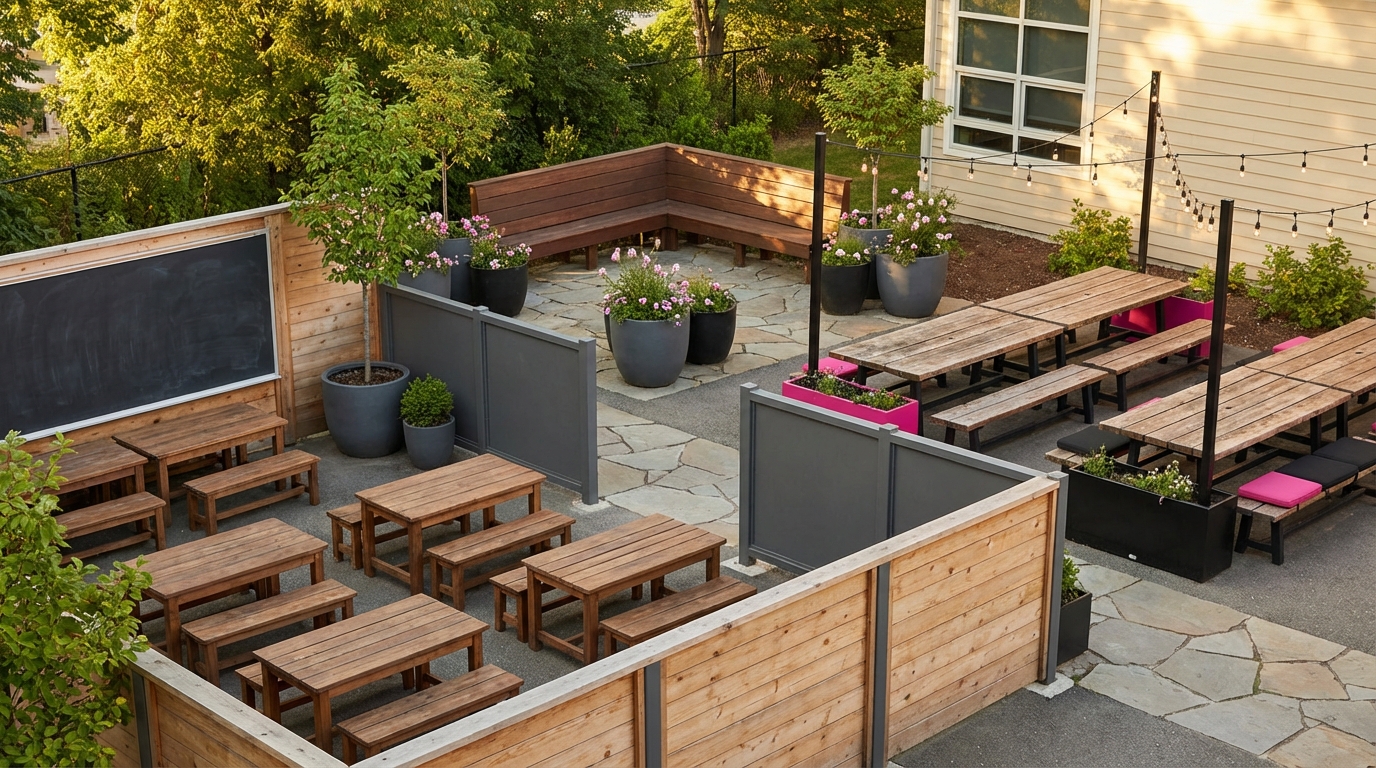
Start by mapping your grounds and identifying opportunities to create these key areas:
- Outdoor Classrooms: For Forest School programmes or simply taking a lesson outside, you need robust outdoor classroom furniture. This includes large tables for group work and durable benches for seating. Consider adding outdoor whiteboards or chalkboards to create a genuine learning hub.
- Social & Dining Areas: Well-placed recycled plastic school picnic tables and circular benches encourage communication and positive social interaction during break times. This can help improve the lunchtime experience and reduce congestion indoors. Look for inclusive designs that accommodate wheelchair users.
- Quiet & Sensory Zones: A simple bench placed in a quieter corner or alongside planters can create a calm space for children who need a moment away from the playground’s hustle. This supports student well-being and provides a necessary sanctuary.
To maximise your budget, choose multi-purpose pieces. A set of picnic tables can serve as a dining area at lunch, a group workspace for an art class in the afternoon, and a social hub during break. Investing in versatile pieces ensures every pound spent delivers maximum utility. You can also explore options from our range of outdoor breakout furniture for more ideas.
### Case Study: A Primary School’s Outdoor Transformation
Challenge: A primary school in the North of England had a large, underutilised tarmac playground. Their existing wooden benches were rotting and splintering, posing a safety risk and requiring constant maintenance from their small site team.
Solution: Working with our design team, they planned a whole-site refresh. They used our Bulk Buy Discounts to purchase a combination of recycled plastic picnic tables to create a dedicated dining zone and colourful buddy benches for a quiet social area.
Results: The school eliminated annual maintenance costs for outdoor furniture, saving an estimated £500 per year. The new zones improved pupil behaviour at lunchtime, and teachers reported increased use of the outdoor space for informal learning. The investment is projected to pay for itself in saved maintenance and replacement costs within 8 years.
Key Insight: Planning a whole-site project, rather than buying individual items, allowed the school to achieve a cohesive design and maximise its budget through volume discounts.
How Do You Procure School Outdoor Furniture Smartly?
Smart procurement is essential for stretching your budget without compromising on quality or safety. For SBMs, this means using established procurement routes and partnering with specialist suppliers who understand the education sector’s unique demands. It’s not just about finding budget school outdoor furniture; it’s about securing an effective long-term value.
Here are four actionable strategies for your school furniture procurement UK process:
- use Bulk Buy Discounts: Avoid piecemeal purchasing. Plan a phased, whole-site refresh and approach suppliers for volume pricing. Combining an order for picnic tables, benches, and planters will almost generally unlock better pricing than buying them one at a time over several years.
- Use Public Sector Frameworks: Procurement frameworks like ESPO (Eastern Shires Purchasing Organisation) are designed to simplify purchasing for schools. Suppliers on these frameworks are pre-vetted for financial stability, compliance, and quality, saving you the time and risk of a full tender process.
- Seek Relevant Grants: While direct grants for furniture are uncommon, funding may be available through broader initiatives. Look for grants related to playground development, promoting physical activity, student well-being, or environmental projects, especially if you plan to use recycled materials.
- Choose Specialist Suppliers: Partner with experienced school playground furniture suppliers, not just general retailers. A specialist will understand the safety standards, offer a “Design To Install We Do It All!” service, and provide flexible payment options. We offer both Credit Accounts Or Pay Flexibly to help schools manage their cash flow effectively.
Compliance Is Non-Negotiable: A Guide to UK Safety Standards
In a school environment, safety is paramount. Using furniture that is not fit for purpose creates an unacceptable risk to pupils and exposes the school to significant liability. That is why understanding and demanding compliance with UK safety standards is a non-negotiable part of the school furniture procurement UK process.
The most important standard is BS EN 1729. This is the British and European standard that specifies the functional dimensions, strength, and stability requirements for chairs and tables in educational institutions. It is divided into two parts:
- BS EN 1729-1: Functional Dimensions: This ensures the furniture is ergonomically appropriate for the size and age of the children using it, promoting good posture and comfort.
- BS EN 1729-2: Safety Requirements and Test Methods: This ensures the furniture is strong and stable enough to withstand the rigours of a school environment without tipping, breaking, or creating entrapment hazards.
Domestic garden furniture sold in DIY stores is not tested to these standards and is wholly unsuitable for school use. It lacks the durability and safety features required for high-frequency use by children. Typically ask suppliers to provide a declaration of conformity to BS EN 1729. At Cost Cutters UK, we take this seriously, and you can view our official certifications for complete peace of mind. For playground equipment like climbing frames, the relevant standard is BS EN 1176, which covers playground equipment and surfacing.
Frequently Asked Questions
What is school outdoor furniture?
School outdoor furniture refers to commercial-grade benches, tables, and seating specifically designed and manufactured for the high-use, safety-critical environment of a school. Unlike residential garden furniture, it is built to withstand constant use by hundreds of children and must comply with stringent safety standards like BS EN 1729. True school outdoor furniture prioritises durability, weather resistance, and pupil safety over aesthetics, ensuring it provides a long-term, reliable asset for the school.
What is the most durable material for school playground furniture?
Recycled plastic, or HDPE, is widely recognised as the most durable material for the demanding UK school environment. It is impervious to rot, rust, and moisture, meaning it won’t crack or splinter. Plus, it’s UV-stabilised to prevent fading and is incredibly resistant to graffiti and vandalism. Its minimal maintenance requirements make it the most cost-effective and reliable option for long-term use in playgrounds and school grounds.
How can I find budget school outdoor furniture that still lasts?
The key is to shift focus from the initial price tag to the whole-life cost of the furniture. Instead of the cheapest option, look for an effective value. This often means choosing items made from durable, low-maintenance materials like recycled plastic. You can also maximise your funds by planning larger purchases to access Bulk Buy Discounts and by working with specialist suppliers who offer competitive pricing on commercial-grade, compliant products.
What does BS EN 1729 mean for outdoor furniture?
BS EN 1729 is a critical safety and ergonomic standard ensuring furniture is fit for purpose in an educational setting. It dictates the correct size, height, strength, and stability for furniture based on the age group of the pupils using it. Compliance means the furniture is designed to prevent tipping, structural failure, and entrapment hazards, making it a fundamental requirement for any furniture – indoor or outdoor – purchased for a school.
Are recycled plastic school picnic tables a good investment?
Yes, recycled plastic school picnic tables are an excellent long-term investment for any school. Their high upfront cost is quickly offset by their incredible durability and near-zero maintenance requirements. They do not rot, rust, or ever need painting, and they are tough enough to withstand the harshest weather and playground use. This longevity and low upkeep make them a highly cost-effective and sustainable choice over their lifespan.
How do I calculate the whole-life cost of school furniture?
To calculate the whole-life cost, you add the initial purchase price to all anticipated maintenance and repair costs over the item’s expected lifespan. Then, you divide that total sum by the number of years in its lifespan. This gives you a “true annual cost,” which is a far more accurate measure for comparing different products and proving ‘Best Value’ than simply looking at the upfront cost alone.
Can I get grants for school outdoor furniture in the UK?
While direct grants specifically for furniture are rare, funding can often be secured through broader school improvement initiatives. We recommend looking for grants related to playground development, creating outdoor learning spaces, promoting student well-being, or environmental “greening” projects. Citing the use of sustainable materials, like recycled plastic school picnic tables, can often strengthen an application for these types of funds.
Why can’t I just use cheaper garden furniture from a DIY shop?
Domestic garden furniture is not built to withstand the heavy, daily use of a school environment and fails to meet mandatory safety standards. Items from retailers like B&Q or Wayfair.co.uk are not tested to BS EN 1729 for strength, stability, or ergonomics, posing a significant safety and liability risk. Commercial school outdoor furniture is engineered for durability and compliance, making it the only appropriate choice for protecting pupils.
What should I look for in a school playground furniture supplier?
You should prioritise suppliers with well-supported by research experience in the education sector and a deep understanding of UK compliance. Look for a partner, not just a retailer. A good supplier will be able to provide proof of compliance with standards like BS EN 1729, offer services like free space planning, have installation teams, and provide flexible payment terms like Credit Accounts Or Pay Flexibly. Check for excellent customer ratings, like being Rated Excellent On Trustpilot.
What furniture is best for an outdoor classroom?
an effective furniture for an outdoor classroom combines durability with functionality to create an effective learning environment. We recommend a mix of large, sturdy tables that can be used for group work and weatherproof benches for seating. Items that serve multiple purposes, such as benches with built-in planters or tables with game tops or chalkboard surfaces, are excellent for maximising both engagement and budget in an outdoor classroom furniture setup.
Important Considerations
This guide provides a framework based on common UK school requirements. However, specific needs can vary based on your school’s location, pupil age range (EYFS vs. Secondary), and specific site challenges like uneven ground or high exposure to coastal weather. The cost estimates provided are for illustrative purposes and will fluctuate based on market conditions and supplier.
Whilst this guide focuses on traditional benches and tables, alternative approaches include bespoke natural play structures, integrated amphitheatre-style seating built into landscaping, or portable solutions like outdoor floor cushions for flexible use. These options may have different cost and durability profiles that require separate evaluation.
For large-scale projects or complex site requirements, we strongly recommend a professional site survey and space planning consultation. An expert can help you assess groundworks, ensure safe pupil flow, and design a layout that maximises the value and utility of your investment, ensuring full compliance and long-term success.
Partnering for a Lasting Outdoor Investment
Choosing the right school outdoor furniture is a strategic decision that extends far beyond the initial price. By focusing on whole-life cost, selecting durable, weatherproof materials, and ensuring strict adherence to UK safety standards, you can create valuable outdoor assets that enhance student life for years to come without straining future budgets. This approach ensures you are investing wisely in your school’s infrastructure.
At Cost Cutters UK, we have over 35 years of experience helping schools like yours make smart, sustainable investments. Our team of specialists understands the unique challenges of the education sector and we are recognised as leading school playground furniture suppliers. If you are planning to enhance your outdoor space, book a free, no-obligation space planning consultation with our experts today to explore your options. “Design To Install We Do It All!”
References
- Department for Education (DfE) – Government Guidance. Provides standards and recommendations for facilities and outdoor provision in UK schools.
- Health and Safety Executive (HSE) – Regulatory Body. Outlines legal responsibilities for schools regarding pupil safety, including the use of appropriate equipment and furniture.
- The Furniture Industry Research Association (FIRA) – Industry Body. Provides information on furniture testing and standards, including BS EN 1729.
- ESPO (Eastern Shires Purchasing Organisation) – Procurement Framework. Details compliant procurement routes for public sector bodies, including schools, to purchase goods and services.
- B&Q (diy.com) – Retailer Data. Provides consumer market context on materials and pricing for domestic garden furniture.
- JYSK UK – Retailer Data. Offers information on maintenance requirements for different consumer-grade furniture materials like aluminium.
- Wayfair.co.uk – E-commerce Platform Data. Illustrates the wide range of styles and materials available in the non-commercial domestic market.
Conclusion
Partnering for a Lasting Outdoor Investment
In summary, school outdoor furniture represents a strategic investment in student well-being and your school’s long-term financial health. By focusing on whole-life cost, selecting durable, weatherproof materials, and partnering with specialist school playground furniture suppliers who ensure strict adherence to UK safety standards, you can create valuable outdoor assets that enhance student life for years to come without straining future budgets. This approach moves beyond simple procurement to become a vital part of improving your school’s infrastructure.