7 Common Mistakes When Buying Outdoor School Furniture (And How to Avoid Them)
🎯 Key Takeaway
The biggest mistakes when buying outdoor school furniture involve prioritising low upfront costs over long-term value, ignoring commercial-grade durability, and overlooking UK-specific safety standards. Selecting the right items requires a focus on commercial-grade durability, certified safety compliance, and a full analysis of long-term value, not just the initial price tag. This ensures your investment is safe, long-lasting, and fit for the demanding environment of a UK school. By avoiding these common errors, you create functional outdoor spaces that benefit pupils for years to come.
As of March 2026, the push for more outdoor learning has rarely been stronger, with research from the Department for Education (DfE) consistently supporting its benefits for pupil development. For fitting out these valuable spaces, the procurement of outdoor school furniture is far more than a simple purchase; it’s a significant investment in your school’s infrastructure and your pupils’ well-being. A common but costly error is to approach this task as if buying for a garden. That’s a mistake. The demands of a school playground are worlds apart from a quiet back garden.
This guide is for School Business Managers, Headteachers, and facilities staff who need to get this decision right the first time. We’ll walk you through the seven most common mistakes we’ve seen in our 35+ years of experience and provide a professional framework to ensure you invest in safe, durable, and cost-effective outdoor classroom furniture UK. By understanding these pitfalls, you can better handle the market and select products from our complete range of school and educational equipment that truly meet your needs.
👤 Written by: Costcutters UK Content Team
Reviewed by: Costcutters UK Editorial Team, Specialists in Educational & Commercial Furnishings
Last updated: 25 March 2026
ℹ️ Transparency Disclosure: This article explores best practices for procuring school furniture based on our 35+ years of industry experience and analysis of UK safety regulations. We believe in providing clear, actionable advice to help schools make informed decisions. Some links may connect to our services, but all information is verified by our editorial team to ensure accuracy and relevance for UK educational institutions. Costcutters UK is a division of Findel Education Ltd.
Mistake 1: Why is Choosing ‘Garden’ Furniture Over ‘Commercial’ a Costly Error?
The single most frequent and expensive mistake schools make is purchasing domestic-grade ‘garden’ furniture instead of purpose-built commercial outdoor furniture. It’s an understandable error driven by familiarity and seemingly lower prices at DIY stores, but it almost typically leads to wasted budgets and safety risks. The difference isn’t just cosmetic; it’s fundamental. Using residential furniture in a school is like using a family car as a school minibus – it simply isn’t designed for the job.
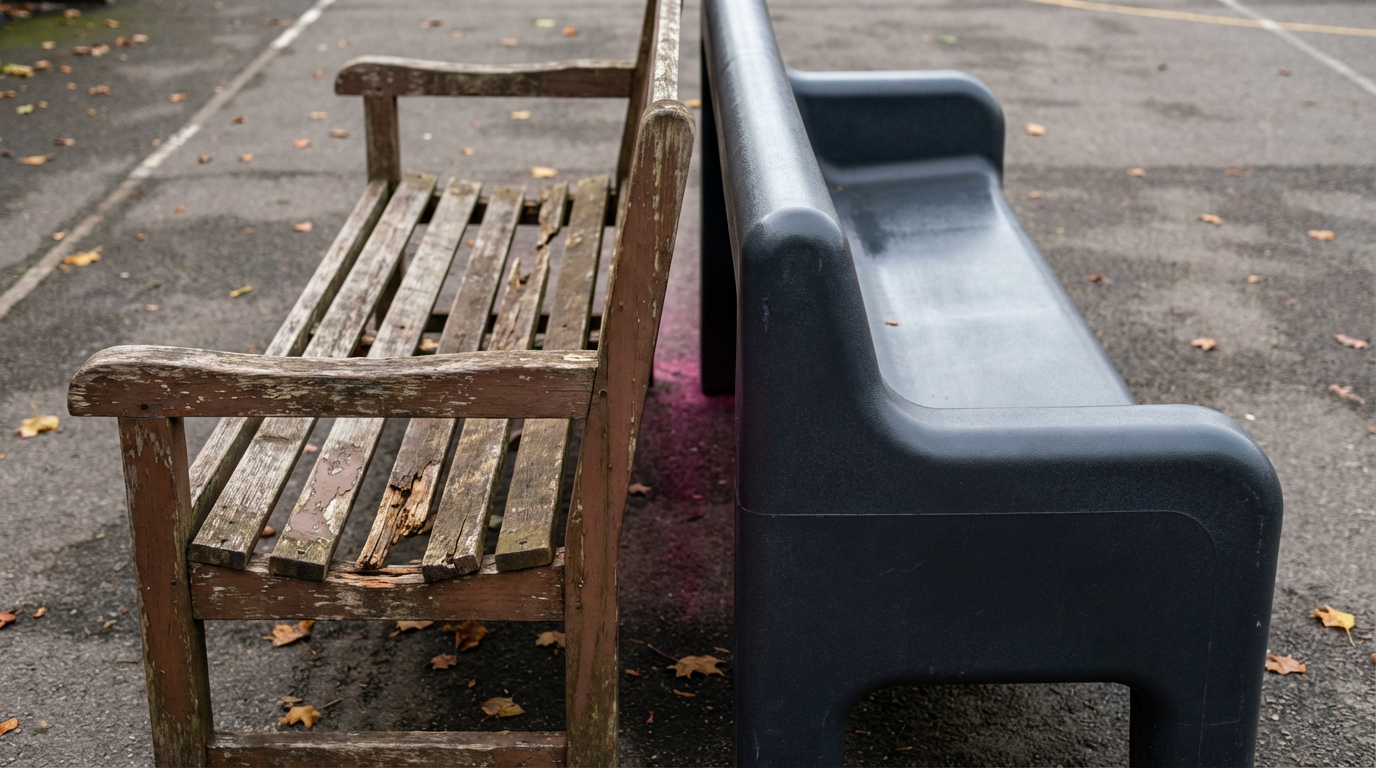
In our experience, commercial-grade furniture is engineered for high-traffic environments. It’s built to withstand the rigours of daily use by hundreds of children, resist the variable UK weather, and deter potential vandalism. This involves robust construction, such as welded joints instead of screws, thicker materials, and specialised coatings. For example, a piece of durable outdoor school seating is tested to withstand loads and stresses far beyond what a typical garden bench would ever encounter.
Also, commercial suppliers are accountable to different standards. As a lifestyle article from Livingetc (2023) notes, even designers see clients buying furniture that is out of scale for its intended use. For a school, this isn’t just an aesthetic issue; it’s a functional and safety one. Opting for commercial quality from the start is not an expense; it’s an investment in longevity and pupil safety, preventing premature failure and the need for replacement within just a few school terms.
Mistake 2: How Does Prioritising Upfront Cost Over Long-Term Value Waste Budgets?
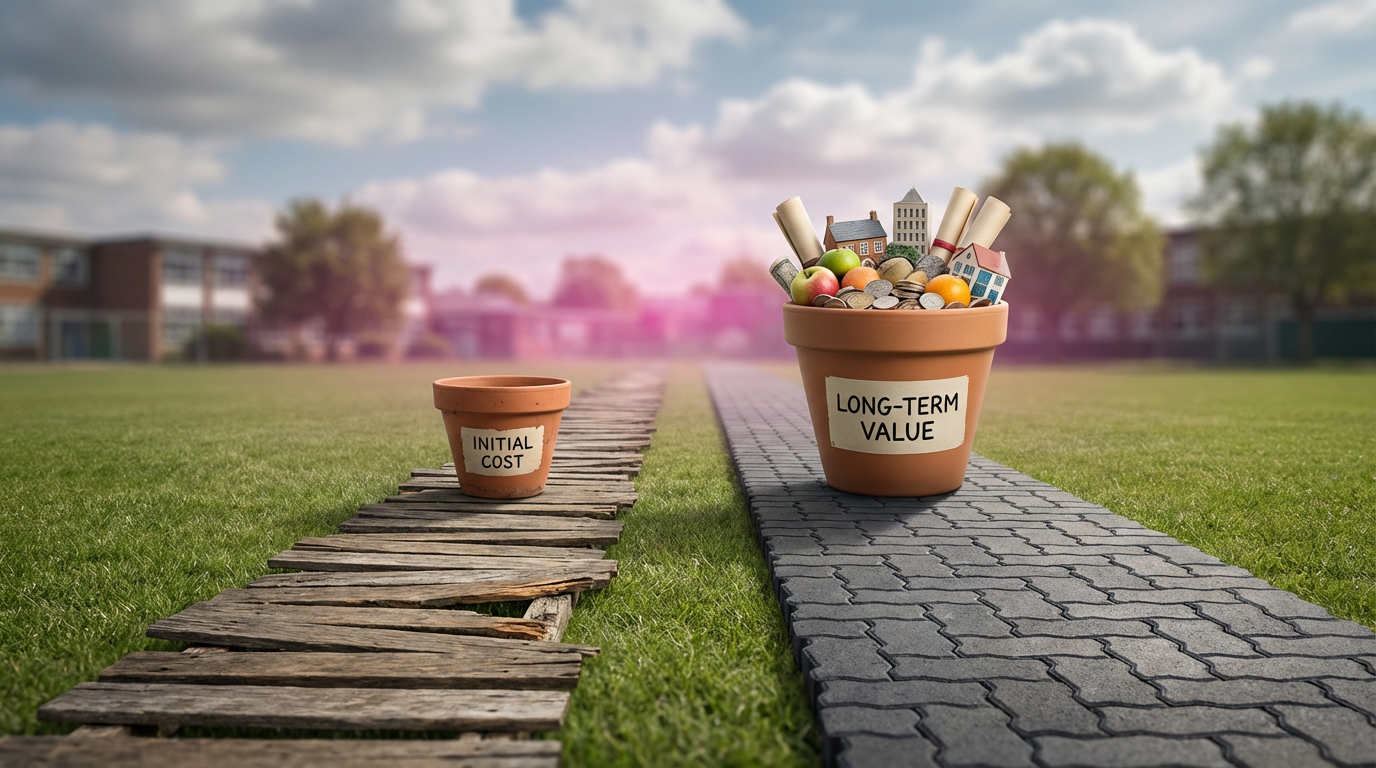
Focusing solely on the initial ticket price is a false economy that can triple your costs over a decade. The wiser approach is to evaluate the Total Cost of Ownership (TCO), a calculation that reveals the true cost of an asset over its entire lifespan. TCO is a financial estimate intended to help buyers determine the direct and indirect costs of a product. A lower upfront cost often masks significant future expenses in maintenance, repairs, and frequent replacement.
The formula is straightforward:
TCO = Initial Purchase Price + (Annual Maintenance Costs x Lifespan in Years) + Disposal Costs
Consider this typical scenario:
Hypothetical Case Study: A Tale of Two Benches
Challenge: A primary school needed four new benches for its playground and had a limited initial budget. They were choosing between a cheap softwood option and a more expensive recycled plastic model.
Solution: They initially bought four softwood benches for £250 each (£1,000 total). After just two years, the benches required sanding and re-staining (£100/year) and showed signs of splintering. After five years, they were deemed unsafe and had to be replaced. They then purchased four recycled plastic benches at £700 each (£2,800 total).
Results: The “cheaper” option’s 5-year TCO was £1,000 (purchase) + £400 (maintenance) = £1,400. The recycled plastic benches have a 25-year lifespan with zero maintenance. Over 25 years, the school would have spent £7,000 on the wooden benches versus just £2,800 on the plastic ones – a saving of £4,200.
Key Insight: Analysing the TCO before purchase would have immediately shown that the higher-priced item offered significantly better long-term value.
As a blog post from Whitehall Garden Centre highlights, not considering long-term value is a key mistake that can cost you more in the long run. For schools, where budgets are tight and durability is paramount, calculating the TCO is essential.
Mistake 3: Ignoring Material Suitability for UK Weather & High-Traffic Use
Choosing the right material for outdoor school furniture is critical for ensuring it survives both the pupils and the notoriously damp UK climate. A material that works well in a dry, domestic setting can fail spectacularly in a busy, wet schoolyard. You must analyse how materials will perform over years of rain, frost, and intensive use.
Softwood, like pressure-treated pine, is a common budget option but is highly susceptible to rot, mould, and splintering if not meticulously maintained. This makes it a poor choice for school environments where safety is paramount. Hardwoods like teak are more durable but require regular oiling to maintain their integrity and colour, adding to the maintenance burden. Powder-coated steel or aluminium can be effective, but as an article by T3 (2022) points out, once the coating is scratched – a high probability in a playground – the metal underneath is exposed and can begin to rust.
This is why recycled plastic school furniture, made from high-density polyethylene (HDPE), has become the gold standard for UK schools. It is impervious to water, will not rot or splinter, and requires no annual maintenance. It offers the durability of durable outdoor school seating with none of the drawbacks of traditional materials.
Material Comparison for UK School Environments
| Material | Typical Lifespan (School Use) | Maintenance Required | UK Weather Resistance | Safety Notes |
|---|---|---|---|---|
| Recycled Plastic (HDPE) | 25+ Years | None (Wipe clean) | Excellent | Will not rot or splinter. Heavy and stable. Anti-vandal. |
| Hardwood (e.g., Teak) | 10-15 Years | Annual oiling/treatment | Good | Can splinter if not maintained. High initial cost. |
| Powder-Coated Steel | 5-10 Years | Inspect for scratches | Fair | Prone to rust if coating is breached. Can get hot/cold. |
| Softwood (Pressure-Treated) | 3-7 Years | Annual sealing/staining | Poor | High risk of rot, mould, and dangerous splinters. |
Data compiled from industry standards and our 35+ years of experience. Lifespan is an estimate based on typical school usage.
Mistake 4: What are the Risks of Overlooking UK Safety & Compliance Standards?
Overlooking safety standards isn’t just a mistake; it’s a serious liability. Unlike domestic furniture, items placed in a school playground must adhere to strict regulations set by bodies like the British Standards Institution (BSI). Failure to comply puts pupils at risk and exposes the school to potential legal action in the event of an accident.
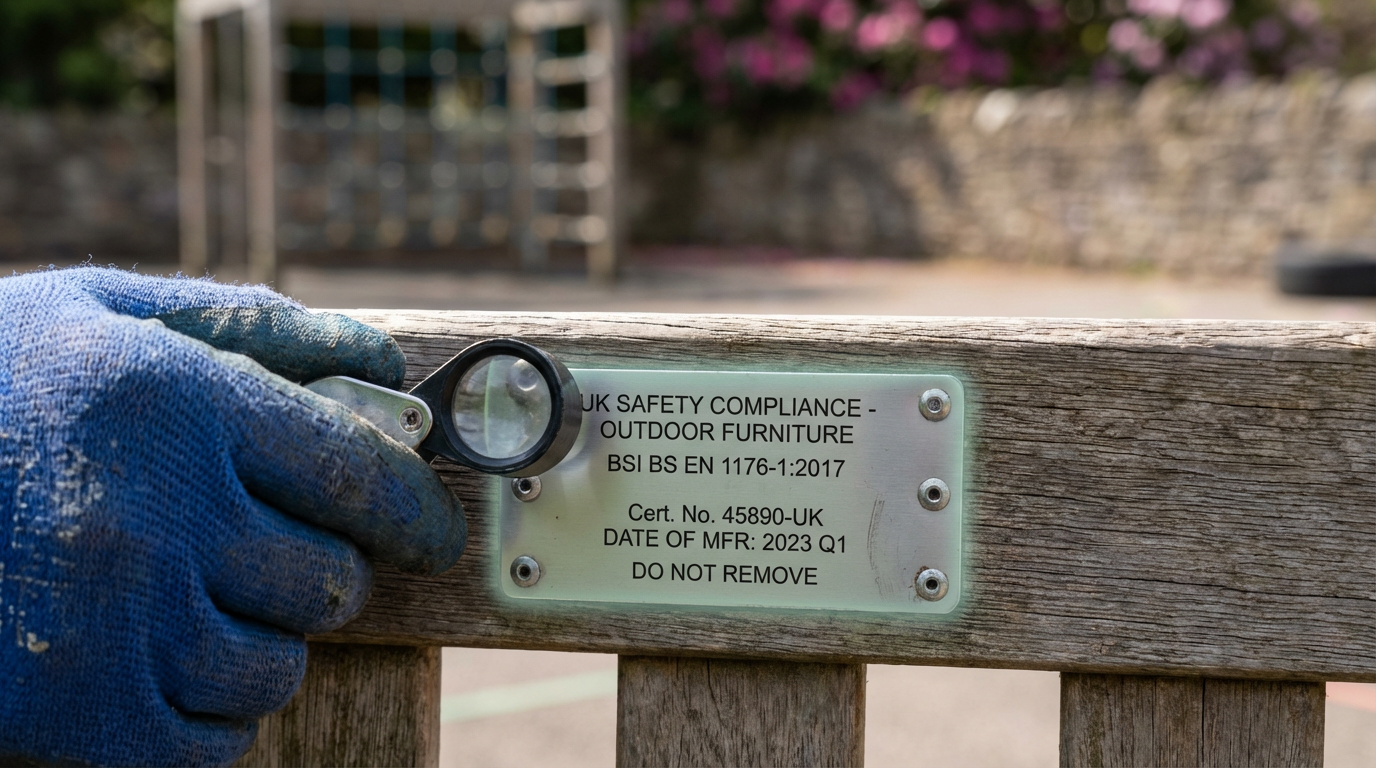
The two most important standards to know are:
- BS EN 1176: This is the primary safety standard for public playground equipment. While not all furniture falls under this, items intended for play or located within a designated play area should comply. It covers aspects like protection against entrapment (of fingers, limbs, and heads), structural integrity, and safe surfacing.
- BS EN 1729 Parts 1 & 2: This standard relates to chairs and tables for educational institutions, specifying functional dimensions, strength, and stability requirements. It ensures furniture is ergonomically appropriate and robust enough for school use.
When procuring, you must ask for certificates of conformity. A reputable supplier will provide these without hesitation. Key safety features to look for include rounded corners, anti-finger-trap gaps, extreme stability to prevent tipping, and the use of non-toxic materials. This is especially vital for early years outdoor furniture, where children are more likely to explore furniture in unconventional ways. Any supplier who is vague about their school furniture safety standards UK or cannot produce documentation should be avoided. You can review our commitment to these standards by viewing our official certifications and accreditations.
Mistake 5: Neglecting Functionality & Space Planning
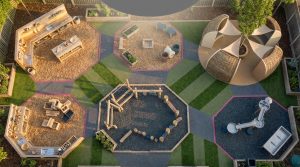
Effective outdoor school furniture should do more than just provide a place to sit; it should enhance the educational and social environment of your grounds. A common mistake is buying items in isolation without a cohesive plan for how they will be used and how they will fit into the available space. This leads to cluttered, underutilised areas.
Before purchasing, we recommend you think For zones. What do you want to achieve?
- A Social Zone: Large circular or rectangular school picnic tables encourage group conversation and collaborative work during lunch or break times. They create a natural hub for social interaction.
- A Quiet Zone: Strategically placed benches, perhaps facing away from the main play area, can provide a space for quiet reading, reflection, or one-on-one chats.
- An Outdoor Classroom Zone: Flexible, lightweight stools or benches can be arranged easily to create an engaging space for outdoor classroom furniture UK. This supports dynamic teaching methods and connects pupils with nature.
As an article from Woman & Home (2024) advises, measuring your space is a crucial first step. We would take this further: map out the area, consider pupil flow, and think about accessibility. How will children with mobility issues access the seating? Is there enough space between tables for safe movement? Proper planning, often with the help of a ‘Design To Install’ service, ensures the furniture actively supports your school’s goals, rather than just filling a space. This is also a key consideration for early years outdoor furniture, which must support play-based learning.
The Professional’s Checklist: How to Procure Outdoor School Furniture Correctly
To avoid these common pitfalls and ensure a successful procurement process, use this professional checklist. It consolidates our expert advice into a practical, step-by-step tool for any School Business Manager or Headteacher. Taking this structured approach is key to “Saving Time & Stress”.
1. Define the Purpose and Zone the Space
- Clearly identify the educational or social goals for the area.
- Map out zones for different activities (e.g., social, quiet, learning).
- Measure the space accurately and consider pupil traffic flow.
2. Verify Safety & Compliance
- Insist on evidence of compliance with BS EN 1176 and/or BS EN 1729.
- Request certificates of conformity from the supplier.
- Physically inspect samples for safety features like rounded corners and anti-trap gaps.
3. Focus on Commercial-Grade Materials
- Prioritise materials designed for high-traffic, outdoor use.
- We strongly recommend recycled plastic school furniture (HDPE) for its durability and zero maintenance.
- Request detailed material specifications and warranty information (a 25-year guarantee is standard for quality HDPE).
4. Calculate the Total Cost of Ownership (TCO)
- Look beyond the initial price tag.
- Factor in estimated maintenance, repair, and replacement costs over at least a 10-year period.
- Compare the TCO of different material options to identify the true long-term value.
5. Check Practical & Logistical Details
- Confirm if ground fixings are available and necessary for your site to ensure security and stability.
- Discuss delivery timeframes and installation requirements. Will the furniture arrive flat-packed or fully assembled?
- Ask about payment options. Can you set up Credit Accounts Or Pay Flexibly?
6. Vet Your Supplier
- Choose a specialist educational furniture supplier with a well-supported by research track record.
- Ask for references from other schools in your area.
- Check independent reviews; we’re proud to be Rated Excellent On Trustpilot.
Frequently Asked Questions
What is outdoor school furniture?
Outdoor school furniture is commercially-built seating, tables, and play equipment specifically designed for the high-traffic, demanding environment of a school. Unlike domestic garden furniture, it must comply with stringent UK safety standards like BS EN 1176, be constructed from highly durable, weatherproof materials, and withstand constant use by children. It’s an asset built for safety and longevity.
What should you consider when buying outdoor school furniture?
The most critical factors are commercial-grade durability, compliance with UK safety standards, material suitability, and total cost of ownership. typically prioritise items built for heavy school use over cheaper domestic alternatives. Verify compliance with BS EN 1176, choose materials like recycled plastic for longevity in the UK climate, and analyse the long-term value, not just the initial price.
What is the most durable material for outdoor school furniture?
For a UK school, recycled high-density polyethylene (HDPE) is widely recognised as the most durable and cost-effective material. It is completely weatherproof, requires virtually no maintenance, does not rot, corrode, or splinter, and has an exceptionally long lifespan. This makes it the safest and best long-term value option for busy playgrounds and school fields.
What outdoor furniture can be left out all year in the UK?
Furniture made from recycled plastic (HDPE), high-quality powder-coated aluminium, and certain hardwoods can be left outside all year. However, we find recycled plastic is the superior choice as it is the only one that requires practically zero maintenance to withstand the UK’s damp, frosty winters and variable summer sun without degrading.
How do I ensure outdoor furniture is safe for pupils?
typically purchase from a reputable commercial supplier who can certify that the furniture complies with relevant school furniture safety standards UK, such as BS EN 1176. You should also physically inspect items for key safety features like rounded edges, anti-finger-trap designs, and optional ground fixings to prevent tipping during boisterous play. Don’t be afraid to ask for the paperwork.
Is there a best time of year to buy school furniture?
an effective time to order is typically late in the spring term or very early in the summer term. This is different from the domestic market’s sales cycle. Ordering at this time allows for sufficient lead time to ensure your new furniture can be delivered and installed during the summer holidays, causing minimal disruption to the school day.
How can I make outdoor furniture accessible for all pupils?
Incorporate wheelchair-accessible picnic tables with extended tabletops and ensure pathways to and around the furniture are level and clear. We also recommend providing a variety of seating heights and choosing furniture with backrests and armrests to provide additional support for children with different physical needs, ensuring an inclusive environment for everyone.
Why is recycled plastic a good choice for schools?
Recycled plastic is an excellent choice due to its extreme durability, zero maintenance needs, and resistance to vandalism. It doesn’t rot, splinter, or fade, making it a very safe and cost-effective option over its typical 25+ year lifespan. Plus, choosing recycled materials helps support your school’s environmental and sustainability goals.
Do I need to fix outdoor furniture to the ground?
For maximum safety and security, we highly recommend it. Most commercial outdoor furniture is designed with the option for ground fixings, which bolt the item securely to either hard or soft surfaces. This is the most effective way to prevent theft, damage from vandalism, and accidental tipping during active play.
How much should a school budget for outdoor furniture?
Budgeting should focus on long-term value, with a quality, compliant 8-seater recycled plastic picnic table costing between £600-£900. While cheaper alternatives exist, they may need replacing every 5-7 years. Investing in a durable product that lasts over 25 years with no maintenance costs significantly less in the long run.
Important Considerations
This guide provides general best practices for procuring outdoor school furniture. However, specific requirements may vary based on your school’s unique site conditions, pupil demographics (e.g., Special Educational Needs provisions), and local authority guidelines. The cost estimates and lifespans provided are indicative and can be influenced by usage intensity and specific environmental factors on your site.
Whilst this article focuses on dedicated outdoor furniture, some schools explore alternatives. These can include creating permanent outdoor shelters and using our versatile breakout furniture or opting for portable items for maximum flexibility. These approaches can work but require careful planning regarding security, storage, and weatherproofing to ensure the longevity and safety of the products.
For large-scale projects or complex spaces, we strongly recommend a professional site survey and space planning consultation. An expert can help you maximise your budget, ensure full compliance, and create a functional, engaging outdoor environment tailored to your specific educational objectives. This “Design To Install We Do It All!” approach avoids costly measurement errors and ensures the final layout is both practical and safe.
Investing Wisely in Your School’s Outdoor Future
Ultimately, selecting the right outdoor school furniture is a crucial investment that directly impacts pupil safety, well-being, and learning opportunities. By avoiding the common pitfalls of choosing domestic-grade products, focusing on long-term value over short-term savings, and insisting on compliance with UK safety standards, you can create a durable and inspiring outdoor space. Using a professional checklist for procurement ensures your budget is spent wisely on assets like school picnic tables and benches that will serve your school community for decades to come.
At Costcutters UK, we have over 35 years of experience helping schools make these important decisions, backed by our Bulk Buy Discounts and flexible payment options. Our team of specialists understands the unique demands of the educational sector. If you are planning to enhance your outdoor areas, we invite you to book a free, no-obligation space planning consultation to discuss your project.
References
- Whitehall Garden Centre – Blog Post. This article highlights the common mistake of not considering long-term value, which can ultimately cost more.
- Woman & Home – Article (2024). Emphasises the importance of measuring space and considering how furniture will be used before purchase.
- T3 – Article (2022). This piece discusses material choice and how some materials can become uncomfortably hot or cold in direct sunlight.
- Livingetc – Article (2023). Notes that landscape designers often see clients buying furniture that is out of scale with the space it’s intended for.
- Danetti – Blog Post. Advises readers to consider the maintenance requirements of different materials before purchasing to avoid future hassle.
- RoSPA (Royal Society for the Prevention of Accidents) – Organisational Guidance. RoSPA provides extensive data, guidance, and standards related to playground safety and the prevention of equipment-related accidents in the UK.
- Department for Education (DfE) – Government Guidance. The DfE regularly publishes guidance and research that supports the benefits of learning outside the classroom for pupil development and well-being.
Conclusion
Investing Wisely in Your School’s Outdoor Future
In summary, selecting the right outdoor school furniture is a crucial investment that impacts pupil safety, well-being, and learning opportunities. By avoiding the common pitfalls of choosing domestic-grade products, focusing on long-term value, and insisting on compliance with UK safety standards, you can create a durable and inspiring outdoor space that features functional items like school picnic tables. A professional approach to procurement ensures your budget is spent wisely on assets that will serve your school community for decades.
At Costcutters UK, we have over 35 years of experience helping schools make these important decisions. Our team of specialist