Outdoor Learning Furniture: A UK School’s Guide to Enhancing Education
🎯 Key Takeaway
High-quality outdoor learning furniture provides the foundational structure for UK schools to unlock the well-supported by research academic, physical, and social-emotional benefits of learning outside the classroom. It is a critical investment that transforms underused grounds into dynamic, curriculum-ready environments. By choosing the right pieces, schools can boost pupil engagement, support well-being, and demonstrate a commitment to innovative teaching practices that meet and exceed modern educational standards. This guide details how to select durable, safe, and effective furniture to create a powerful learning landscape.
The shift in UK education towards valuing outdoor spaces is undeniable. As of early 2026, educational bodies like the Office for Standards in Education, Children’s Services and Skills (Ofsted) are placing greater emphasis on how schools utilise their entire learning environment, including the outdoors. An unstructured playground is a missed opportunity; however, with the right investment, it can become a powerful extension of the classroom. This is where high-quality outdoor learning furniture becomes essential. It provides the structure, safety, and functionality needed to transform a simple patch of grass into a vibrant hub for science, literacy, and collaborative play. In our experience, the right school playground furniture is the key that unlocks a school’s potential for impactful outdoor education. This guide covers everything from the core benefits and Ofsted compliance to practical procurement advice, helping you make informed decisions for your school and its pupils, drawing on our complete range of school equipment and educational supplies.
Written by: Cost Cutters UK Content Team | Reviewed by: Cost Cutters UK Editorial Team, 35+ Years Experience; Rated Excellent On Trustpilot
Transparency Disclosure: This article explores the benefits and practicalities of outdoor learning furniture, drawing on our 35+ years of industry experience and analysis of educational frameworks. Our goal is to provide authoritative guidance. For full transparency, some links may connect to our products and services. All information is verified by our editorial team to ensure accuracy. Cost Cutters UK is a leading supplier of educational equipment, and we are proud to be
Rated Excellent On Trustpilot.
Best For: Primary schools, Early Years settings, and SEN schools seeking to enhance their curriculum delivery and meet Ofsted expectations for outdoor provision. School Business Managers and Headteachers planning capital expenditure.
Not effective For: Settings with no accessible outdoor space or those exclusively focused on indoor digital learning initiatives.
What are the Core Benefits of Outdoor Learning for Pupil Development?
The core benefits of outdoor learning extend far beyond simple recreation; they are deeply rooted in child development and academic progress. A well-equipped outdoor space facilitates a multi-sensory learning experience that enhances pupil performance, health, and social skills. Research consistently shows that when children learn outdoors, they are more engaged, motivated, and retain information more effectively. It provides a real-world context that makes abstract concepts tangible.
Improved Academic Performance
Moving lessons outdoors can significantly boost concentration and memory. A study review by the National Literacy Trust (2018) highlights that outdoor environments can lead to a more positive attitude towards learning. The natural world offers fewer distractions than a busy classroom, allowing children to focus more deeply on tasks. This change of scenery can re-engage pupils who struggle with traditional classroom settings, leading to improved attainment across subjects.
Enhanced Physical and Mental Health
The positive impact on health is one of the most significant benefits of outdoor learning. Activities like running, climbing, and balancing on appropriate equipment help develop gross motor skills. According to educational provider PGL (2024), outdoor learning also encourages curiosity and independent thought, which builds self-confidence. Also, exposure to natural light and fresh air is linked to reduced stress and improved mood, contributing to the overall well-being of both pupils and staff.
Development of Social Skills
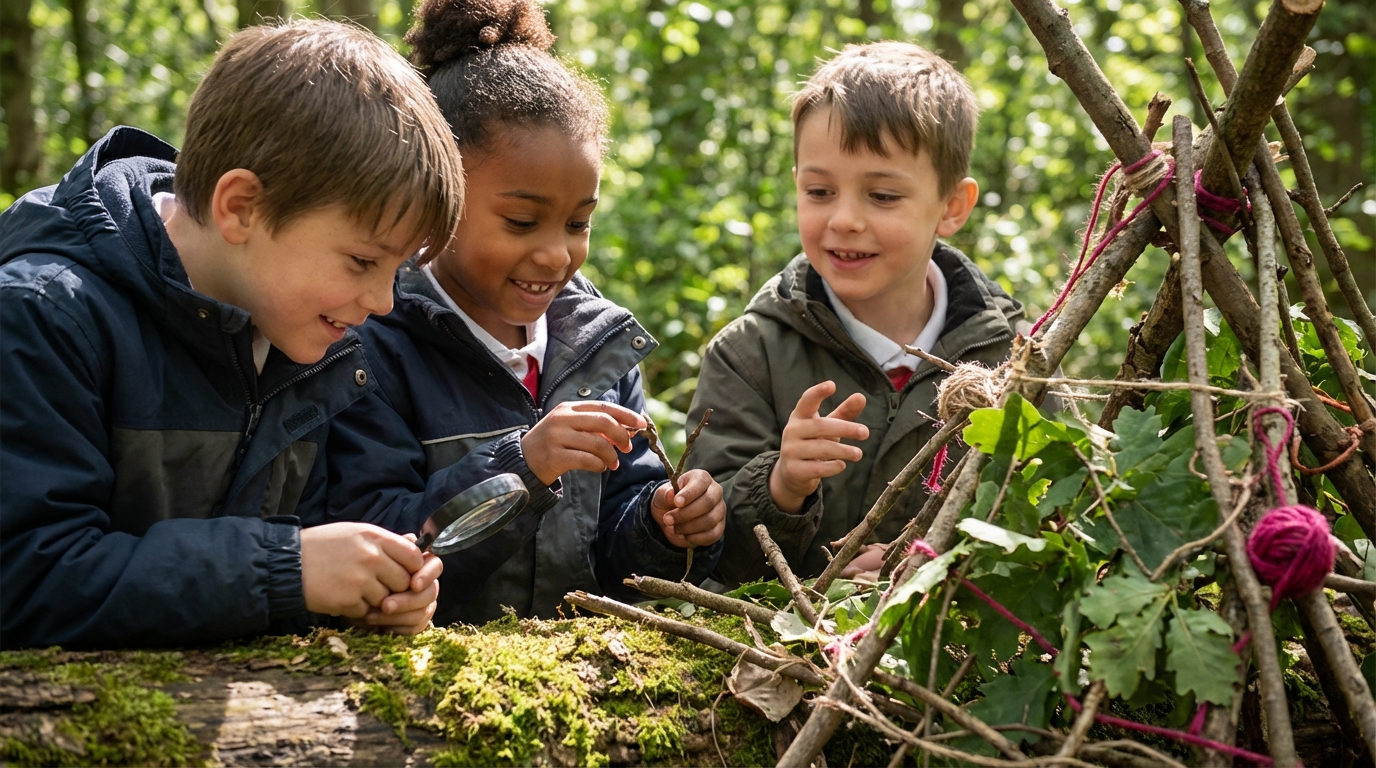
Outdoor learning spaces are natural environments for collaboration. When working together to build a den, conduct a science experiment, or perform on an outdoor stage, children develop crucial communication, negotiation, and teamwork skills. These unstructured and semi-structured social interactions are vital for emotional intelligence and building positive peer relationships.
Fostering Environmental Awareness
There is no better way to learn about the environment than to be in it. Outdoor learning fosters a deep and lasting connection to the natural world. By observing wildlife, tending to a garden, or learning about weather patterns firsthand, pupils develop a sense of environmental stewardship and a greater appreciation for sustainability.
Increased Engagement and Motivation
For many children, the prospect of learning outside is exciting. This intrinsic motivation translates into higher levels of engagement and a greater willingness to participate. The hands-on, experiential nature of outdoor learning appeals to diverse learning styles, ensuring every child has the opportunity to shine.
How Can Furniture Help Meet Ofsted Expectations for Outdoor Provision?
Meeting Ofsted expectations for outdoor provision is about demonstrating quality and intent, not just having an accessible playground. The Ofsted framework requires schools to provide a broad and balanced curriculum, and inspectors look for evidence that the outdoor environment is being used effectively to enrich learning across all areas. Purpose-built outdoor learning furniture is a clear indicator to inspectors that a school has a strategic, well-resourced approach to outdoor education.
It signals that outdoor time is planned, purposeful, and integrated into the school’s curriculum. Without the right equipment, outdoor lessons can feel chaotic and unstructured. Furniture like outdoor whiteboards, amphitheatres, and activity tables provides the necessary framework for teachers to deliver focused lessons effectively. This is particularly crucial for the Early Years Foundation Stage (EYFS), a statutory framework that explicitly values learning through play and exploration in a rich environment. Having dedicated zones for messy play, quiet reading, and group work shows that you cater to all aspects of the EYFS framework.
Also, investing in high-quality, compliant furniture addresses key safety and safeguarding concerns. Inspectors need to see that the learning environment is safe and well-maintained. We ensure our furniture meets stringent standards, and you can review our our UK safety certifications and accreditations for peace of mind. Ultimately, a well-equipped outdoor classroom provides tangible evidence of a school’s commitment to providing a high-quality, holistic education, which is precisely what Ofsted wants to see.
Choosing the Right Outdoor Learning Furniture for Your School
Selecting the right outdoor learning furniture requires a balance of practicality, safety, and long-term value. For a School Business Manager, the decision goes beyond aesthetics; it’s an investment in your school’s infrastructure and educational capacity. In our experience, focusing on durability, compliance, and versatility ensures you achieve an effective return on investment.
Durability and Material Choice for UK Weather
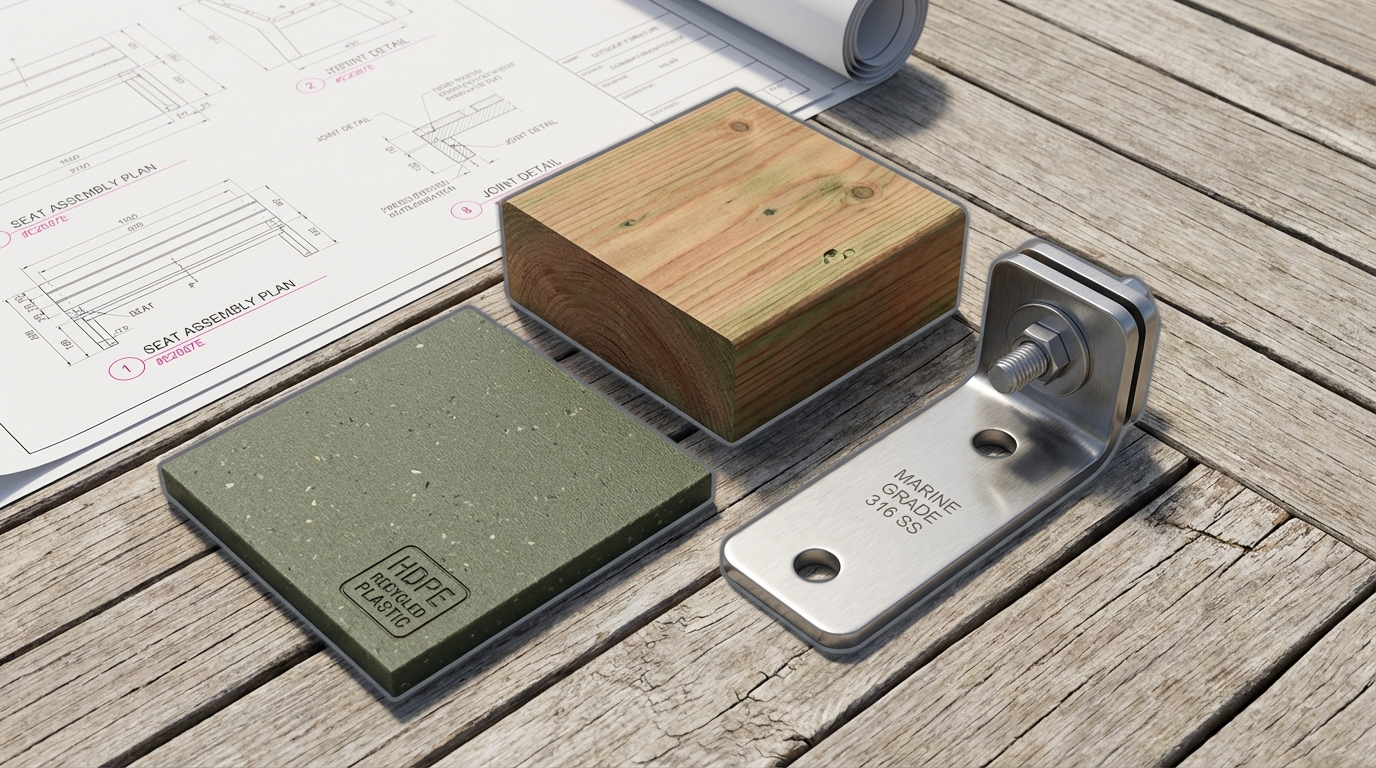
We’ll be honest – the British weather is a key challenge. Furniture must be able to withstand rain, frost, and sun without degrading. We recommend materials like pressure-treated Scandinavian Redwood, which offers excellent longevity and a natural aesthetic, or high-density polyethylene (HDPE), a type of recycled plastic that is exceptionally robust and requires minimal maintenance. While the upfront cost may be higher than for untreated timber, the long-term saving in replacement and repair costs is substantial.
Safety and Compliance
Pupil safety is non-negotiable. All school playground furniture should comply with relevant British and European standards. The key one to look for is BS EN 1729, a standard that specifies strength, stability, and appropriate ergonomic dimensions for educational furniture. Reputable suppliers will typically provide documentation confirming compliance. This not only protects pupils but also ensures the school is meeting its duty of care.
Value for Money vs. Upfront Cost
It’s tempting to opt for the cheapest option, but this often research suggests to be a false economy. We believe true value lies in longevity. Consider the product’s warranty, the quality of its fixings (stainless steel is best), and its resistance to vandalism. A higher-quality item that lasts 10-15 years offers far better value than a cheaper alternative that needs replacing every 3-4 years. Plus, our Bulk Buy Discounts can make higher-spec items more accessible.
Flexibility and Multi-Functionality
In any school, space is at a premium. An effective outdoor furniture serves multiple purposes. For example, a set of benches can be used for a formal lesson, a storytelling session, or as a social space during break times. A tuff tray on a stand can be used for sand, water, art, or small world play. Look for items that can be easily moved and adapted to different activities and age groups.
#### Case Study: A Hypothetical Primary School Scenario
Challenge: A suburban primary school had a large but underutilised grassy field. Lessons held outside were often disorganised, and Ofsted had commented on the lack of structured outdoor provision in their last report. The school needed to demonstrate a clear strategy for outdoor learning on a tight budget.
Solution: The School Business Manager worked with our team to implement a phased approach. In year one, they invested in a core ‘classroom’ set: an outdoor whiteboard, six durable recycled plastic benches, and two multi-purpose activity tables. This created a dedicated zone for focused lessons.
Results: Teachers reported a 40% increase in the frequency of outdoor lessons. Pupil engagement in science and literacy improved, and the school received positive feedback in its next monitoring visit for its ‘clear and effective use of outdoor space’. The initial investment of £4,500 was secured through a capital funding bid.
Key Insight: You don’t need to furnish the entire space at once. Creating one functional, high-quality zone provides immediate impact and serves as a foundation for future expansion. This is a key part of our “Design To Install We Do It All!” philosophy.
Practical Outdoor Classroom Ideas for UK Schools
Transforming an outdoor area into a dynamic learning environment is simpler than you might think. By creating distinct zones for different types of activities, you can cater to a wide range of curriculum needs and learning styles. These outdoor classroom ideas uk are designed to be practical, engaging, and achievable for UK schools.
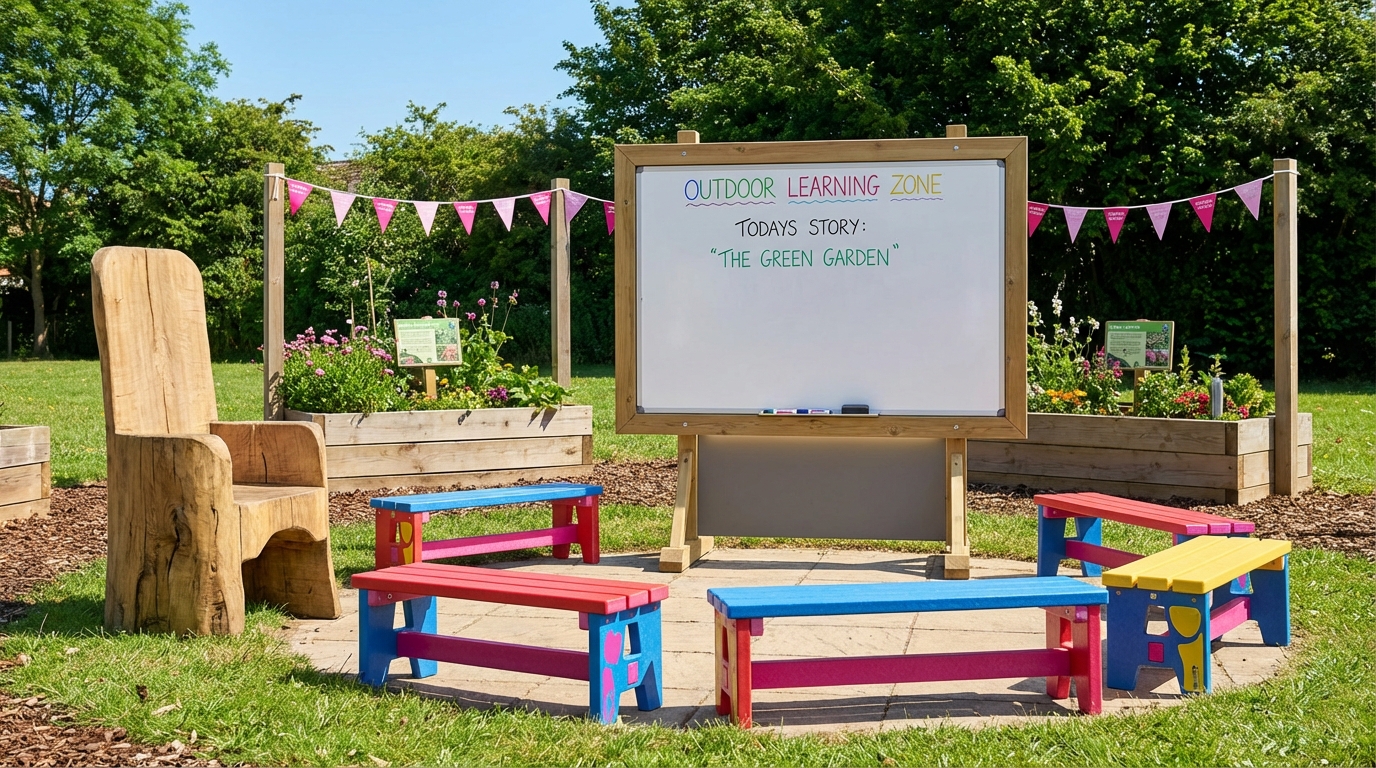
For Active and Sensory Exploration
This zone is all about hands-on, messy, and physical learning. It’s essential for Early Years and Key Stage 1 but offers benefits for all ages.
- Mud Kitchens: A perennial favourite, mud kitchens allow for imaginative play while developing fine motor skills and early scientific concepts (mixing, measuring).
- Sand and Water Tables: A classic for a reason. Use them for sensory exploration, floating/sinking experiments, or even as a base for small world play. Our
TickiT Sensory Mood Sand and Water Tableadds an extra dimension. - Tuff Tray Stands: A versatile staple. Tuff trays can hold almost anything, from paint and clay to natural materials collected from the school grounds. A stand brings the activity to a comfortable height.
For Focused Lessons and Quiet Time
Creating a space for direct instruction and quiet reflection is crucial for a balanced outdoor classroom. This is where you can hold a full lesson, from maths to phonics.
- Outdoor Whiteboards or Chalkboards: Essential for teacher-led activities, allowing you to share instructions, draw diagrams, or for pupils to practise writing.
- Amphitheatres or Storytelling Chairs: A storytelling chair with surrounding benches creates a natural focal point for literacy, drama, and circle time. This is a classic piece of
forest school furniture. - Benches and Picnic Tables: Simple, robust seating is the backbone of any outdoor classroom. Use them for group work, individual tasks, or as a lunch spot.
For Organisation and Resource Management
A well-organised space is a well-used space. Saving Time & Stress for teachers is paramount.
- Weatherproof Storage: Secure, lockable units are vital for keeping resources safe, dry, and accessible. Look for durable options like our
secure, weatherproof outdoor storage unitsfrom Asgard. - Welly and Boot Racks: A simple but transformative addition. Keep muddy boots organised and classroom floors clean.
- Planters and Gardening Beds: Great for long-term science projects, teaching about life cycles, and promoting healthy eating.
| Furniture Type | Primary Material | Target Key Stage | Key Learning Benefit | Typical Lifespan |
|---|---|---|---|---|
| Mud Kitchen | Pressure-Treated Timber | EYFS, KS1 | Imaginative Play, Fine Motor Skills, Early Science | 8-12 Years |
| Storytelling Chair | Solid Oak / Treated Pine | EYFS, KS1, KS2 | Literacy, Oracy, Social Skills, Confidence | 15-20 Years |
| Recycled Plastic Picnic Table | HDPE Recycled Plastic | All Key Stages | Social Interaction, Group Work, Outdoor Dining | 25+ Years |
| Outdoor Whiteboard | Coated Steel / Vitreous Enamel | All Key Stages | Direct Instruction, Collaborative Learning | 10-15 Years |
| Tuff Tray & Stand | Plastic Tray, Metal Stand | EYFS, KS1 | Sensory Exploration, Art, Messy Play | 5-10 Years (Tray) |
Important Considerations
Before committing to a large-scale purchase, it’s wise to consider the practical limitations and alternative pathways. A successful outdoor learning programme depends on more than just furniture; it requires careful planning and pedagogical support.
One primary consideration is budget. The initial investment for high-quality, compliant furniture can be significant. Also, the unpredictable British weather can disrupt even an effective-laid plans, requiring schools to have flexible timetables and appropriate wet-weather gear for pupils. While this guide provides a framework, the successful integration of outdoor learning into the curriculum ultimately relies on the creativity and planning of your teaching staff.
If a full suite of furniture isn’t immediately feasible, there are alternative approaches. Utilising natural features like logs for seating or slopes for performance spaces can be a cost-effective start. Carefully supervised DIY projects using safe, treated materials can also fill gaps. Many schools we work with adopt a phased purchasing plan, adding new zones or pieces of equipment each academic year as funds become available. This allows for gradual development without a large upfront cost.
However, for large-scale projects, complex site layouts, or to simply ensure you are maximising your investment, we recommend consulting a specialist. An expert can provide a full ‘Design to Install’ service, helping with space planning to create a cohesive and effective learning environment. Professional guidance ensures every pound spent contributes directly to educational outcomes and that all safety and compliance standards are met, which is particularly important when offering flexible payment options like Credit Accounts Or Pay Flexibly.
Frequently Asked Questions
What is outdoor learning furniture?
Outdoor learning furniture is specialised, durable, and safe equipment specifically designed to facilitate structured educational activities in an outdoor setting. Examples include weatherproof benches, storytelling chairs, outdoor blackboards, mud kitchens, and activity tables that enable teachers to deliver curriculum-based lessons outside the traditional classroom. This type of furniture is built to withstand the elements and meet stringent safety standards for use in schools.
Why is outdoor learning so important?
Outdoor learning is vital because it boosts physical health, mental well-being, social skills, and academic engagement by connecting learning to the real world. It provides a multi-sensory environment that caters to different learning styles, helping children develop resilience, problem-solving skills, and a respect for nature. As noted by The Muddy Puddle Teacher, a leading advocate, it offers a hands-on approach that makes learning more memorable and meaningful.
What does Ofsted say about outdoor learning?
Ofsted views high-quality outdoor learning as a key component of a broad and balanced curriculum, not just as unstructured playtime. Inspectors look for evidence that the ofsted outdoor learning space is used effectively and purposefully to enhance learning outcomes across various subjects. Purpose-built furniture and defined activity zones demonstrate a school’s strategic commitment to using its outdoor environment as a valuable educational resource.
What are the 5 benefits of outdoor activities?
The five core benefits are improved physical health, enhanced mental well-being, better social and emotional development, increased academic engagement, and fostering environmental stewardship. These benefits of outdoor learning are most pronounced when activities are well-planned and supported by appropriate resources. Outdoor settings provide unique opportunities for hands-on exploration, collaborative problem-solving, and physical activity that are difficult to replicate indoors.
What does Piaget say about outdoor learning?
Whilst Jean Piaget didn’t specifically name ‘outdoor learning’, his theory of cognitive development strongly supports its principles. The outdoors provides a rich, tangible environment well-suited for children in the ‘concrete operational’ stage (ages 7-11). It allows them to learn through direct, hands-on experience and the manipulation of real objects – such as counting leaves or measuring shadows – which is fundamental to how Piaget believed children construct knowledge about the world.
What are the goals of outdoor learning?
The primary goals are to reconnect children with nature, improve their health and well-being, and provide a real-world context for curriculum subjects. Further goals include developing crucial life skills such as resilience, creative problem-solving, and teamwork. Ultimately, it aims to create more engaged, curious, and confident learners by offering an alternative and complementary approach to traditional classroom-based instruction, creating a well-rounded educational experience.
What is the 2 hour rule for Ofsted?
There is no official ‘2 hour rule’ from Ofsted regarding outdoor play; this is a common myth within the education sector. Ofsted does not prescribe a minimum amount of time children should spend outdoors. Instead, their focus is firmly on the quality, intent, and impact of the outdoor provision and how well it is integrated into the overall curriculum to support children’s learning and development.
What are the disadvantages of outdoor learning?
The main challenges are the unpredictable British weather, potentially higher initial setup costs for durable furniture, and increased safety and supervision considerations. These disadvantages, however, can be effectively mitigated through careful planning. Strategies include implementing a robust wet-weather policy with appropriate clothing, phased purchasing of equipment to manage budgets, and using well-designed, compliant furniture to create a safe and manageable environment.
What does Vygotsky say about outdoor learning?
Lev Vygotsky’s sociocultural theory aligns perfectly with the collaborative nature of outdoor learning, although he didn’t address it directly. The outdoor environment offers rich opportunities for social interaction and group problem-solving. Here, children can learn from each other and from teachers in context, embodying Vygotsky’s concept of the ‘Zone of Proximal Development’ where learning is scaffolded by a ‘More Knowledgeable Other’.
How many hours a day should kids be outside?
There is no single government mandate, but health organisations like the NHS recommend children aged 5 to 18 get at least 60 minutes of physical activity daily. Much of this can be achieved through high-quality outdoor learning and play. The focus for schools should be less on hitting a specific minute count and more on the quality and regularity of the outdoor time provided, ensuring it is purposeful and beneficial.
Transform Your Space, Transform Your Teaching
Investing in the right outdoor learning furniture is far more than a simple procurement decision; it is a strategic investment in pupil well-being, academic achievement, and your school’s Ofsted profile. By creating dedicated, functional, and inspiring outdoor classroom ideas uk, schools can unlock the full potential of their grounds. This commitment provides a richer, more engaging educational experience that benefits every single child and empowers teachers with new methods for delivering the curriculum.
With over 35 years of experience supplying UK schools, we at Cost Cutters UK understand the crucial balance between budget, durability, and educational impact. Our “Design To Install We Do It All!” service is built to support you at every step. Our experts are on hand to help you design a space that meets your specific needs, maximises your budget, and achieves your educational goals. Saving Time & Stress is what we do.
Explore your options and start your transformation journey today. Book a Free Space Planning Consultation.
References
- National Literacy Trust (2018) – Literature Review. This review of existing research, including a 2014 study by Gill, found that outdoor learning can positively impact children’s social skills, self-confidence, and attitudes toward learning.
- PGL (2024) – Educational Article. This piece from a leading outdoor education provider highlights that outdoor learning encourages curiosity, independent thought, and trust in one’s own judgement, which are key for secondary education.
- The Muddy Puddle Teacher (2023) – Advocacy Blog. This resource, created by a teacher, outlines numerous benefits, including how outdoor activities make learning more memorable and support children’s mental and physical health through hands-on experiences.
- ACS International Schools – Educational Article. This article posits that outdoor learning is a fundamental way children make sense of the world, as it can be incorporated into every area of the curriculum through direct sensory experience.
- Discover the World – Industry Blog. This article details how specific outdoor activities develop both gross motor skills (climbing, running) and fine motor skills (collecting small items, building with twigs).
Conclusion
Transform Your Space, Transform Your Teaching
In summary, outdoor learning furniture is more than a procurement decision; it is a strategic investment in pupil well-being, academic success, and your school’s Ofsted profile. By creating dedicated, functional, and inspiring outdoor classrooms, UK schools can unlock the full potential of their grounds and provide a richer, more engaging educational experience for every child. From boosting engagement with hands-on lessons to offering new avenues for physical activity, the right furniture turns an open space into a powerful learning asset.
With over 35 years of experience supplying UK schools, Costcutters UK understands the balance between budget, durability, and educational impact. Our experts can help you navigate the options, from individual pieces of forest school furniture to complete outdoor classroom ideas uk, ensuring your investment serves your pupils for years to come.
Take the next step in transforming your school’s outdoor provision. Book a Free Space Planning Consultation today to explore your options.