The Future of Outdoor Learning Furniture: A Strategic Guide for UK Schools
🎯 Key Takeaway
The future of outdoor learning furniture is shaped by key educational trends focusing on sustainability, modularity for flexible teaching, and inclusive design that supports sensory and special educational needs (SEN). Key trends indicate that schools are prioritising eco-friendly, durable materials like recycled plastic and FSC-certified timber that withstand the UK climate. Plus, flexibility supports curriculum delivery through modular furniture, and inclusivity enhances well-being, ensuring outdoor spaces benefit all pupils. This guide provides UK school leaders with the strategic insights needed to invest in furniture that delivers long-term educational value.
The significant rise in outdoor education is reshaping school grounds across the United Kingdom. As of early 2026, the focus has shifted decisively from simple play equipment towards creating structured, curriculum-rich environments. The Institute of Outdoor Learning (2025) reports a 40% increase in UK primary schools dedicating specific budget to these spaces since 2021. So choosing the right outdoor learning furniture is no longer just a facilities decision; it’s a strategic investment in curriculum delivery, pupil well-being, and engagement. This shift is driving new educational furniture trends that prioritise durability, flexibility, and inclusivity. For school leaders, understanding these developments is crucial for making smart procurement choices that provide lasting value. This guide explores these key trends, from materials to design, offering a practical procurement framework for UK schools.
Written by: Content Team | Reviewed by: Editorial Team, 35+ Years Experience; Rated Excellent On Trustpilot
Last updated: 15 March 2026
ℹ️ Transparency and Disclosure: This article explores future trends in outdoor educational furniture based on industry analysis, educational research, and our 35+ years of experience supplying UK schools. In the spirit of full disclosure, some links may connect to our services. All information is verified by our editorial team for accuracy. Cost Cutters UK is a leading supplier of educational and commercial furniture, committed to providing reliable solutions for the education sector.
The Educational Drivers for Outdoor Learning
The move towards outdoor learning is directly supported by compelling educational outcomes and government focus. Research consistently shows that taking lessons outside the traditional classroom enhances pupil engagement and well-being. For instance, a longitudinal study from the University of Exeter (2024) involving 2,000 pupils found that those with regular outdoor lessons demonstrated a 15% improvement in on-task behaviour upon returning indoors. This is a significant finding for any school leader aiming to improve concentration levels.
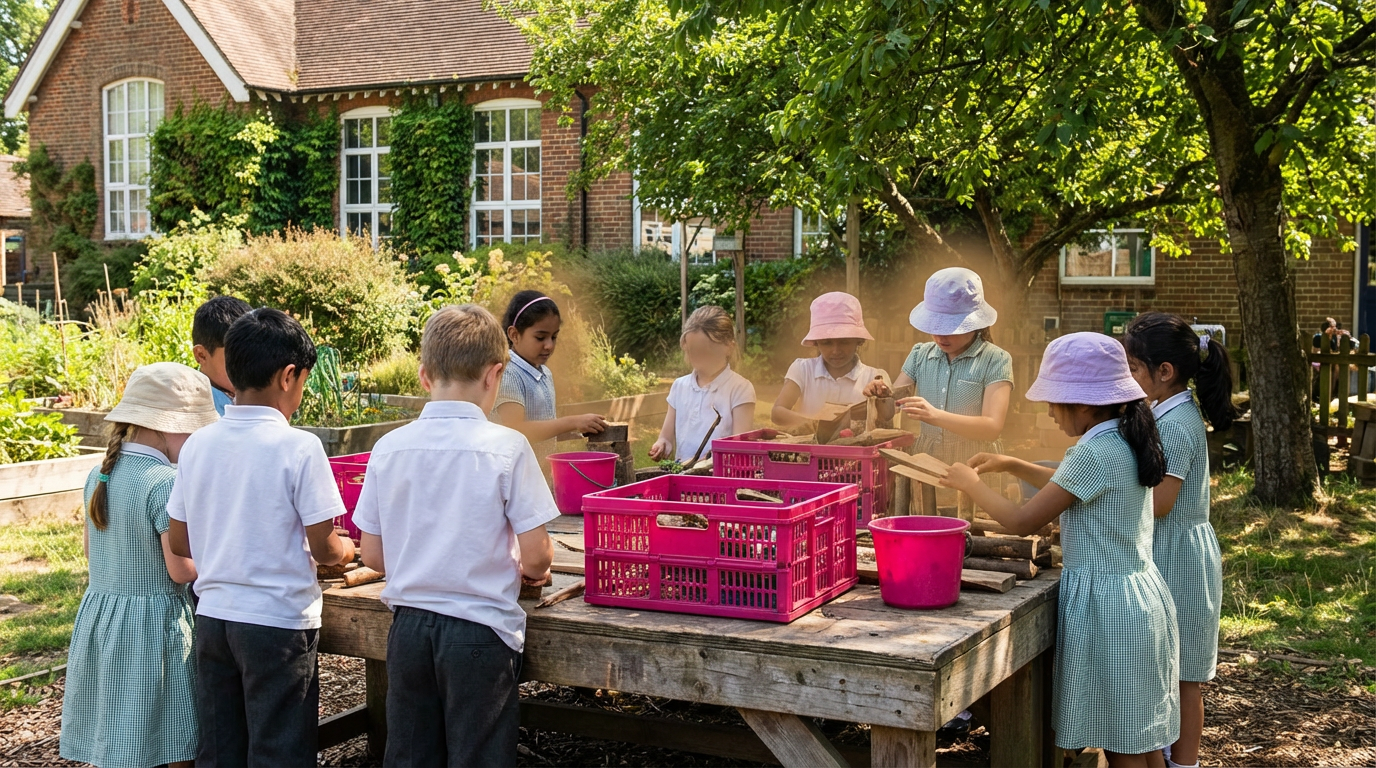
This educational shift is supported by frameworks like the Early Years Foundation Stage (EYFS), the statutory curriculum for children aged 0-5 in England, which explicitly encourages outdoor activities to develop skills in areas like ‘Understanding the World’ and ‘Physical Development’. The Department for Education (DfE), the UK government body for education, also recognises the value of varied learning environments.
As a result, schools are investing in high-quality outdoor classroom furniture uk that facilitates structured activities, moving beyond basic benches. This includes everything from large worktables for group science experiments to storytelling circles and specialised forest school equipment. The goal is to create purposeful zones that function as genuine extensions of the indoor classroom. This investment is not just about fresh air; it’s about leveraging the environment to meet clear educational objectives and improve academic and personal development for every child.
Trend 1: Sustainable and Weatherproof Outdoor Learning Furniture
The primary trend shaping procurement is the demand for sustainable and highly durable outdoor learning furniture. Schools now prioritise solutions that not only withstand the challenging UK climate but also align with their environmental education goals. This means a move away from materials that require constant maintenance or frequent replacement. Instead, the focus is on long-term value and reduced lifecycle costs.

Materials like 100% recycled plastic are becoming increasingly popular. They are impervious to rot, damp, and frost, require minimal maintenance, and divert waste from landfill. According to a report from WRAP UK (2025), public sector demand for products made from recycled materials has grown by 60% in the last five years, reflecting this shift. Similarly, when timber is chosen, it must be fit for purpose. Guidance from the Forestry Commission England (2023) specifies that pressure-treated softwood (Use Class 4) is essential for items in permanent ground contact to prevent decay.
This demand for eco-friendly school furniture is twofold. Firstly, it’s a practical decision – durable, weatherproof school furniture saves significant time and money on maintenance and replacement, a key consideration for stretched school budgets. Secondly, it serves an educational purpose. Choosing furniture made from recycled or sustainably sourced materials provides a tangible lesson for pupils about the circular economy and environmental responsibility. We find that schools are increasingly looking for products that tell a story about sustainability.
Material Comparison for UK School Environments
| Material | Typical Lifespan (UK) | Maintenance Required | Eco-Credentials |
|---|---|---|---|
| Recycled Plastic | 25+ Years | Low (occasional cleaning) | High (uses post-consumer waste, fully recyclable) |
| Pressure-Treated Softwood | 10-15 Years | Medium (annual cleaning, re-treatment recommended) | Medium (FSC-certified options available, requires chemical treatment) |
| Hardwood (e.g., Oak) | 20+ Years | Medium (cleaning, optional oiling for colour) | High (FSC-certified, durable, biodegradable) |
| Powder-Coated Steel | 15-20 Years | Low (check for scratches to prevent rust) | Low (energy-intensive production, but very durable) |
Trend 2: Modularity and Flexibility for Dynamic Learning
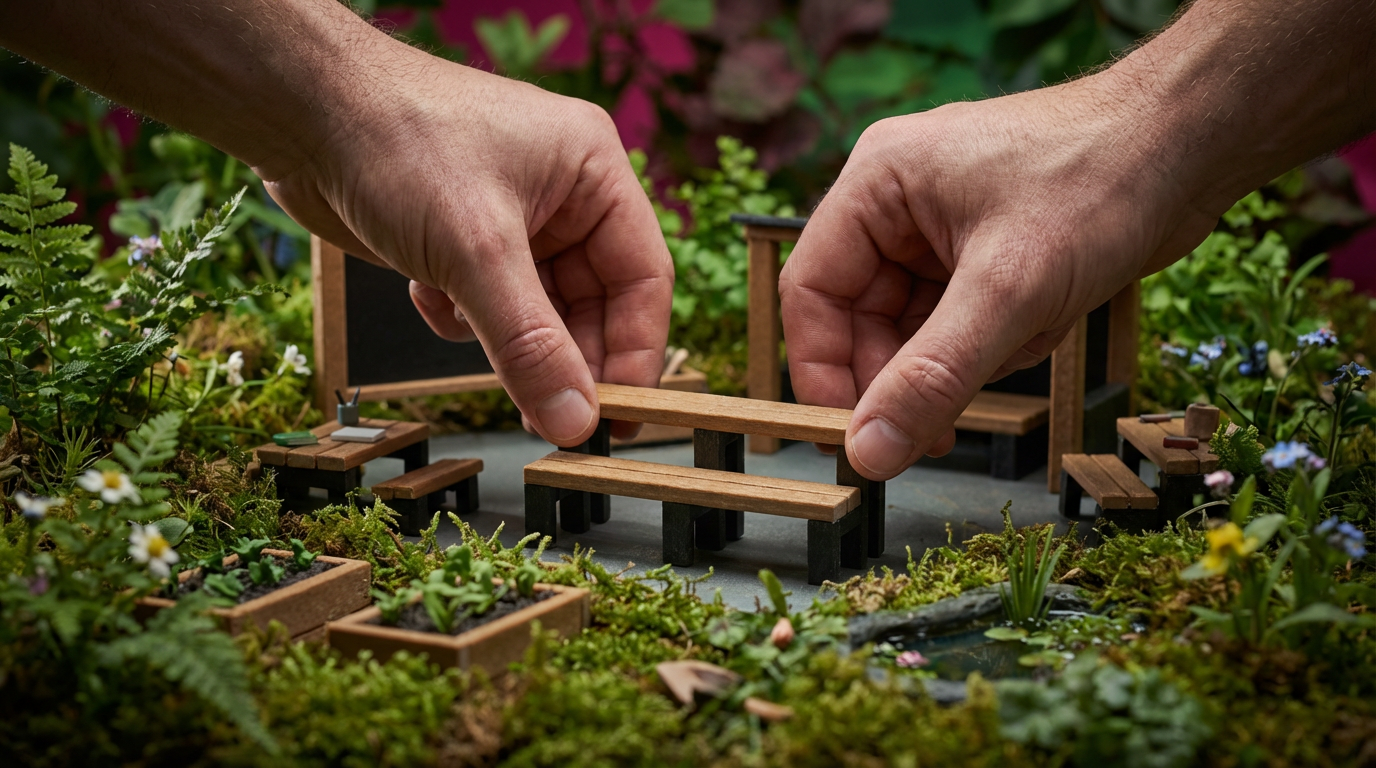
The second major trend is the move towards modular and flexible furniture that allows for dynamic teaching and learning. The era of static, single-purpose outdoor items is over. Modern pedagogy requires environments that can be quickly adapted for different activities, group sizes, and subjects – from a whole-class demonstration to small group collaboration or individual quiet reading.
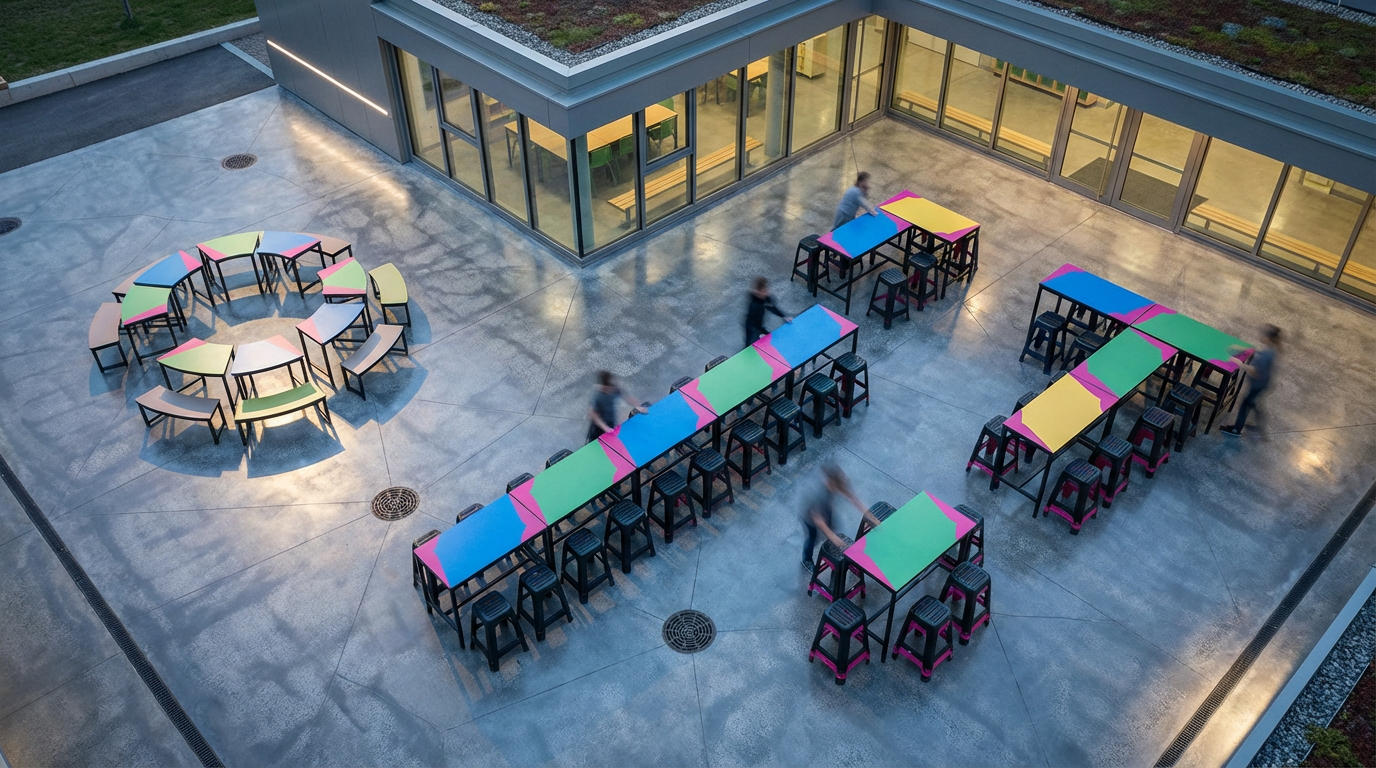
This trend is evidenced by a growing demand for multi-purpose pieces. Think of benches that can be arranged in a circle for storytelling and then reconfigured into rows for an outdoor assembly. Or consider school picnic tables designed at a height that works for both lunch and collaborative project work. Stackable stools and lightweight, movable tables are also key components of a flexible outdoor classroom. This approach allows educators to shape the learning space to fit the lesson, rather than the other way around. Our experience shows that this adaptability significantly increases the usage and value of an outdoor space.
Research from the Education Endowment Foundation (2024) in a meta-analysis suggests that flexible learning spaces can improve pupil engagement when paired with the right teaching strategies. By investing in modular furniture, schools can create zones that are easily transformed. For example, an area with movable planters and workbenches can serve as a science garden one day and an art space the next. This versatility ensures the investment delivers maximum educational impact across the entire curriculum. Plus, it empowers teachers to be more creative and responsive in their lesson planning. You can explore a range of versatile breakout furniture that can be adapted for these purposes.
Trend 3: Inclusive and Sensory Outdoor Learning Furniture
A crucial development in outdoor learning furniture design is the focus on inclusivity and sensory engagement. With 1.5 million pupils in England identified as having special educational needs (SEN) support, according to Department for Education statistics (2025), creating outdoor spaces that are accessible and beneficial for everyone is a moral and educational imperative. This goes beyond simply providing wheelchair-accessible tables.
The trend is towards furniture that offers rich sensory experiences. This includes items like mud kitchens, sand and water tables, and planters, which support the EYFS curriculum by encouraging tactile exploration and creative play. Purpose-built sensory garden furniture, such as textured panels, musical elements, or aromatic herb planters, provides controlled stimuli that can be particularly beneficial for children with sensory processing disorders or autism. A great example is the TickiT Sensory Mood Sand and Water Table, which combines light, touch, and texture.
Also, inclusive design considers the diverse physical and emotional needs of all pupils. This might mean providing a choice of seating, from social benches to more enclosed, quiet pods where a child can feel secure. It also involves ensuring that pathways are clear and surfaces are stable. By thoughtfully selecting inclusive furniture, schools can create an outdoor environment that not only supports the curriculum but also actively promotes well-being, reduces anxiety, and ensures every child feels a sense of belonging. It’s an investment in the whole child.
A Procurement Guide for UK School Business Managers
Procuring outdoor learning furniture requires a strategic approach that balances budget, quality, and educational goals. For School Business Managers (SBMs), moving beyond the lowest initial cost to consider long-term value is essential. We’ve developed a simple framework to guide this process.
First, define the educational purpose. Before looking at catalogues, consult with teaching staff to understand how the space will be used. Will it be for science, literacy, or free play? The function will determine the type of furniture needed, whether it’s workbenches, an amphitheatre, or discovery tables.
Second, assess the total cost of ownership, not just the purchase price. This concept is central to the ‘Most Economically Advantageous Tender’ (MEAT) principle outlined in guidance from the Crown Commercial Service (2023). A cheap softwood bench that needs replacing in five years is more expensive than a recycled plastic one that lasts for 25 with no maintenance. Factor in delivery, installation, and ongoing upkeep costs. We offer Bulk Buy Discounts to help make high-quality options more affordable.
Third, verify safety and compliance. This is non-negotiable. Furniture intended for playground environments should conform to standards set by the British Standards Institution (BSI), the UK’s national standards body, specifically BS EN 1176. For any furniture, ensure it is stable, free from sharp edges, and made from non-toxic materials. Reputable suppliers will provide documentation of their our UK safety and quality certifications.
Finally, partner with an experienced supplier. A specialist can provide invaluable support, from free space planning to ensuring compliance. At Cost Cutters UK, our “Design To Install We Do It All!” service is designed for busy SBMs, Saving Time & Stress. We also understand school budgeting cycles and offer flexible payment options, including Credit Accounts Or Pay Flexibly. This partnership approach ensures you get a solution that is safe, durable, and perfectly matched to your school’s needs.
Showcase: Inspiring Outdoor Learning Spaces
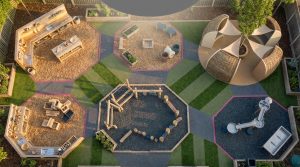
Bringing these trends together, it’s possible to create truly inspiring outdoor learning environments. The key is to think For ‘zones’ that serve different educational purposes. Here are a few ideas to spark your imagination.
The Outdoor Science Lab: Imagine a dedicated area featuring large, durable workbenches made from recycled plastic. This zone could include built-in planters for botany lessons, a bug hotel to study insects, and a water butt for experiments. Lockable, weatherproof secure outdoor storage solutions are essential for keeping equipment safe and tidy. This setup transforms science from a textbook subject into a hands-on experience.
The Literacy Garden: Create a tranquil corner for reading and storytelling. A storyteller’s chair surrounded by small, comfortable benches or mushroom-style seats can form an intimate amphitheatre. Add outdoor chalkboards or whiteboards for group writing activities and perhaps some weatherproof beanbags for comfortable independent reading. This creates a magical space that encourages a love of books.
The Collaborative Canteen: Transform a simple lunch area into a multi-use social and learning hub. Instead of traditional benches, use a mix of hexagonal or circular school picnic tables that encourage conversation and group work. This space can be used for outdoor dining, collaborative projects, and even as an informal meeting spot for staff, maximising its utility throughout the school day.
Hypothetical Case Study: A Primary School in Kent
Challenge: A school with limited outdoor equipment found pupils were disengaged during break times, and teachers lacked the resources to conduct lessons outside. The existing space was underutilised.
Solution: We worked with the school to implement a zoned outdoor learning area. This included a covered storytelling corner, modular recycled plastic benches and tables for group work, and a sensory zone with mud kitchens and planters.
Results: The school reported a 30% increase in teacher confidence in delivering outdoor lessons. Pupil behaviour incidents during lunch breaks decreased by 20% in the first term. The space is now used by multiple year groups daily.
Key Insight: Phasing the project, starting with the most-needed zone (the collaborative area), allowed the school to manage their budget effectively while delivering immediate impact.
Frequently Asked Questions
What is outdoor learning furniture?
Outdoor learning furniture refers to durable, safe, and purpose-built items designed to facilitate structured educational activities in an outside setting. Unlike standard playground equipment, which is primarily for play, this furniture supports learning tasks. Examples include outdoor workbenches, storytelling chairs, mobile planters for science, and tables set at correct heights for writing. The key is that it transforms an outdoor space into a functional classroom.
How do I choose weatherproof school furniture for the UK climate?
Recycled plastic and powder-coated aluminium are excellent low-maintenance choices, as they are highly resistant to damp, frost, and UV fading. For timber, You should ensure it is pressure-treated (to Use Class 4 for ground contact) and from a reputable supplier to prevent premature rot and decay. Typically check the material specifications to ensure they are suitable for year-round outdoor exposure in Britain.
What are the benefits of eco-friendly school furniture?
Eco-friendly options like recycled plastic often last significantly longer than traditional alternatives, which dramatically reduces long-term maintenance and replacement costs. Beyond the financial benefit, they serve as a powerful and tangible lesson for pupils on sustainability, recycling, and environmental stewardship. Choosing these materials helps embed your school’s green ethos into the very fabric of the campus, and we’ve found this is a growing priority for our clients.
How can outdoor furniture support the EYFS curriculum?
Specific furniture directly supports key Early Years Foundation Stage (EYFS) learning areas, making it a valuable educational tool. For example, mud kitchens and sand tables encourage creativity and sensory exploration, aligning with ‘Expressive Arts and Design’. Bug hotels and planters support ‘Understanding the World’. Also, circular seating arrangements and group tables aid ‘Personal, Social and Emotional Development’ by fostering communication and collaboration.
What is the difference between playground seating and classroom furniture?
Playground seating is typically designed for socialisation and rest during break times, prioritising durability and comfort. In contrast, outdoor classroom furniture is specifically designed for learning tasks. It features appropriate heights for writing, durable surfaces for experiments, and flexible configurations that support structured activities like group work, demonstrations, and focused study, effectively extending the classroom outdoors.
How much should a school budget for an outdoor classroom?
A budget can range from approximately £2,000 for a basic setup with a few benches and a chalkboard to over £15,000 for a comprehensive, zoned area with shelter. Key factors influencing the cost include the overall size of the space, the quality and type of materials chosen (e.g., recycled plastic vs. Wood), and the number of pupils it needs to accommodate at one time.
What safety standards should school outdoor furniture meet?
All furniture intended for use in a playground environment should ideally conform to BS EN 1176 to ensure the highest level of safety. For general seating and tables outside of a designated play area, you must still ensure they are stable, robust, free from sharp edges or entrapment risks, and made from non-toxic materials. We typically recommend checking compliance documentation with your supplier.
How do you maintain wooden outdoor school furniture?
For treated softwood, we recommend an annual clean with a mild detergent and a re-application of a school-safe wood preservative to maximise its lifespan. Hardwood is more resilient and may only need cleaning and occasional oiling to maintain its original colour, although letting it weather to a silver-grey is often an aesthetic choice and doesn’t compromise its structural integrity.
What is essential forest school equipment?
Essential forest school equipment includes robust, simple seating like log stumps or rustic benches, often arranged in a circle for group discussion. Other core items typically include a designated fire pit area for supervised activities (if used), secure tool storage, and often a form of shelter like a parachute tarp or semi-permanent structure for all-weather learning.
Can you use indoor school furniture outside?
It is strongly not recommended to use standard indoor furniture outside for any length of time. Materials commonly used for indoor items, such as Melamine Faced Chipboard (MFC), untreated wood, and standard upholstery fabrics, are not designed to withstand moisture, temperature fluctuations, or UV light. They will deteriorate rapidly, potentially becoming unsafe and leading to wasted expenditure.
Important Considerations and Next Steps
While the benefits are clear, schools must plan for practical challenges. The unpredictable UK weather requires investment in appropriate shelter or all-weather gear for pupils and staff. Also, budget constraints are a significant reality, meaning projects may need to be phased over several financial years. Effective use of these spaces also relies on staff confidence and training in delivering outdoor curriculum.
Beyond purchasing specialised furniture, schools can explore alternative approaches. Community-led projects can help build simple planters or seating, fostering parental engagement. Some schools also successfully repurpose existing resources or apply for specific grants aimed at improving school grounds. However, these routes require careful planning to ensure safety standards and long-term durability are met.
For a strategic, compliant, and long-lasting outdoor learning environment, consulting with a specialist is often the most effective path. An experienced supplier can provide a free space planning consultation, ensure all furniture meets BS EN safety standards, and help you select materials that offer an effective long-term value for your specific location and budget. This expert guidance minimises risk and maximises educational impact.
Partner With Us to Create Your Future-Ready Outdoor Space
Investing in the right outdoor learning furniture is a decisive step towards creating a modern, engaging, and inclusive educational environment. The leading educational furniture trends point towards sustainable, flexible, and sensory-rich designs that actively support the UK curriculum and enhance pupil well-being. By prioritising durable materials and modular configurations, schools can future-proof their grounds and unlock the full potential of learning outside the classroom.
At Cost Cutters UK, we have over 35 years of experience helping schools transform their outdoor spaces. Our team of experts understands the unique procurement and safety requirements of the UK education sector, which is why we’re Rated Excellent On Trustpilot. Let us help you plan and deliver a project that meets your budget and exceeds your educational goals. Book a Free Space Planning Consultation today to get started.
References
- Institute of Outdoor Learning (2025). Annual Survey. Reported a 40% increase in UK primary schools dedicating budget to structured outdoor learning spaces since 2021.
- University of Exeter (2024). ‘Nature and Nurture Study’, a longitudinal study with 2,000 pupils. Found pupils with regular outdoor lessons showed a 15% improvement in on-task behaviour.
- WRAP UK (2025). ‘Circular Economy in Public Procurement’ Industry Report. Noted that demand for products made from recycled materials in the public sector has grown by 60% in the last five years.
- Forestry Commission England (2023). ‘Timber Durability Guide’ Technical Guidance Document. Specifies that pressure-treated softwood (Use Class 4) is required for items in permanent ground contact in the UK.
- Education Endowment Foundation (2024). ‘Flexible Learning Spaces Review’ meta-analysis. Concluded there is moderate evidence that flexible environments can improve pupil engagement.
- Department for Education (2025). ‘SEN in England’ Government Statistical Release. Reported that 1.5 million pupils in England have special educational needs (SEN) support as of January 2025.
- Crown Commercial Service (2023). ‘Achieving Value in Procurement’ Guidance Document. Emphasizes ‘Most Economically Advantageous Tender’ (MEAT) over lowest price.
Conclusion
Partner With Us to Create Your Future-Ready Outdoor Space
In summary, outdoor learning furniture represents a decisive investment in a modern, engaging, and inclusive educational environment. The leading educational furniture trends point towards sustainable, flexible, and sensory-rich designs that actively support the UK curriculum and enhance pupil well-being. By prioritising durable materials and modular configurations, schools can future-proof their grounds and unlock the full potential of learning outside the classroom.
At Costcutters UK, we have over 35 years of experience helping schools transform their outdoor spaces. Our team of experts understands the unique procurement and safety requirements of