A School Manager’s Guide to Nursery Furniture Issues: Troubleshooting & Prevention
🎯 Key Takeaway
Effectively managing nursery furniture issues involves a three-pronged approach: implementing a proactive maintenance schedule, understanding how to perform safe, minor repairs, and knowing when replacement is the most cost-effective and compliant option for your educational setting.
• Implement a regular maintenance checklist to catch common problems like loose fittings and surface wear before they become safety hazards.
• Adhere strictly to UK safety standards, such as BS EN 1729, to ensure compliance and protect both children and staff.
• Use a cost-benefit framework to decide whether to repair an item in-house or replace it with durable, contract-grade furniture to maximise long-term value.This guide provides school business managers and headteachers with the practical steps needed to ensure a safe, durable, and budget-friendly nursery environment.
For any School Business Manager (SBM) or headteacher, balancing tight budgets with the absolute necessity of a safe learning environment is a constant challenge. For nursery furniture issues, what seems like a minor wobble or chip can quickly escalate into a genuine hazard. Proactive furniture management isn’t just a maintenance task; it’s a critical component of your risk management strategy and financial planning. Many of these problems are preventable with the right approach.
This guide is designed to give you a practical framework for proactive maintenance, safe in-house repairs, and smart procurement decisions. At Costcutters UK, we’ve spent over 35 years as a leading supplier of school and educational equipment, and we’re here to share our expertise. Our goal is to empower you to create a safer, more durable, and cost-effective nursery setting, Saving Time & Stress.
👤 Written by: Costcutters UK Content Team
Reviewed by: Costcutters UK Editorial Team, Specialists in Educational & Commercial Furniture
Last updated: 28 March 2026
ℹ️ Transparency: This article explores best practices for maintaining and troubleshooting nursery furniture, based on over 35 years of industry experience and analysis of UK safety regulations. Some links may connect to our services. All information is verified by our editorial team to ensure accuracy and relevance for UK schools.
Your Proactive Maintenance Checklist: Preventing Common Nursery Furniture Issues
A proactive maintenance schedule is the most effective way to prevent minor wear from becoming significant nursery furniture issues. By catching problems early, you ensure a safer environment for children and extend the lifespan of your assets, which is crucial for budget management. In our experience, a simple, consistent checklist is the key to success.
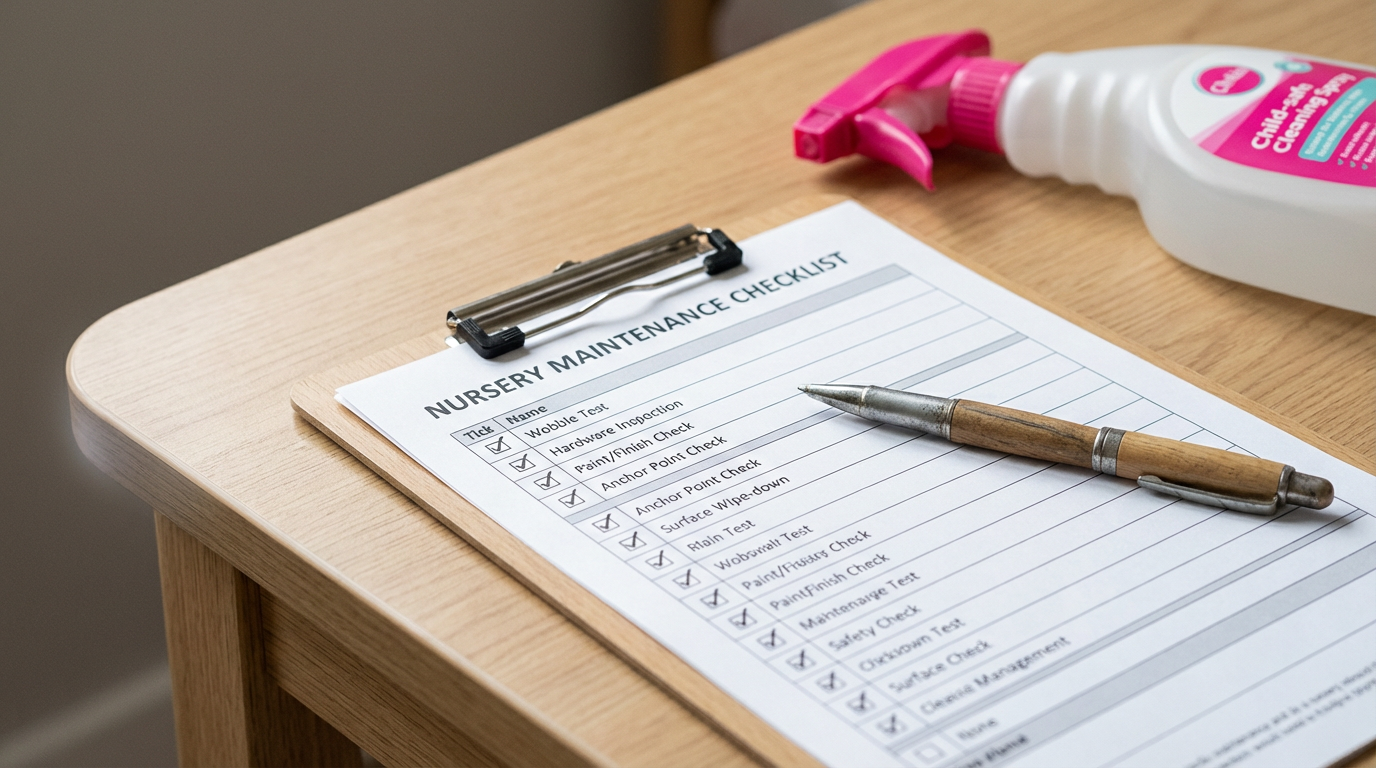
We recommend organising your checks by frequency to make them manageable for your team. This structured approach helps identify common furniture problems before they pose a risk.
Daily Checks (Less than 5 minutes):
- Visual Scan: Quickly look over all furniture for obvious damage like large cracks, broken parts, or significant new chips.
- Surface Wipe-Down: Use a child-safe cleaner to wipe down tables, chairs, and surfaces. This is also a great opportunity to spot new scratches or stains.
Weekly Checks (15-20 minutes):
- The Wobble Test: Systematically check every chair and table for instability. Gently push on them to feel for any looseness or wobble.
- Hardware Inspection: Visually inspect and hand-tighten any accessible screws, bolts, and other fittings on chairs, tables, and storage units.
- Splinter Search: Run a cloth or a gloved hand over wooden surfaces and edges to check for splinters or sharp points, especially on well-used items.
Monthly Checks (30-45 minutes):
- Deep Clean: Perform a more thorough cleaning of all furniture, including runners in drawers and the undersides of tables.
- Wear and Tear Audit: Closely inspect high-contact points like chair backs, table edges, and cabinet handles for signs of excessive wear that might lead to failure.
- Documentation: Log any findings, noting which items require repair or are nearing the end of their life. This record is invaluable for future budget planning.
Troubleshooting Guide: How to Safely Fix Common Problems
Knowing how to safely perform minor repairs can save your school money and minimise downtime. For straightforward common furniture problems, a competent site manager can often restore an item to safe working order. However, the priority must typically be safety; any repair should be durable and leave no new hazards, such as sharp edges or toxic materials.

Here are our step-by-step guides for three frequent repairs.
Fixing Wobbly Chairs and Tables
A wobbly chair is more than an annoyance; it’s a tipping hazard. Learning how to fix wobbly nursery chairs is a vital maintenance skill.
- Identify the Source: Place the item on a level surface. Press down on different corners to determine if the wobble comes from a loose leg joint or an uneven leg.
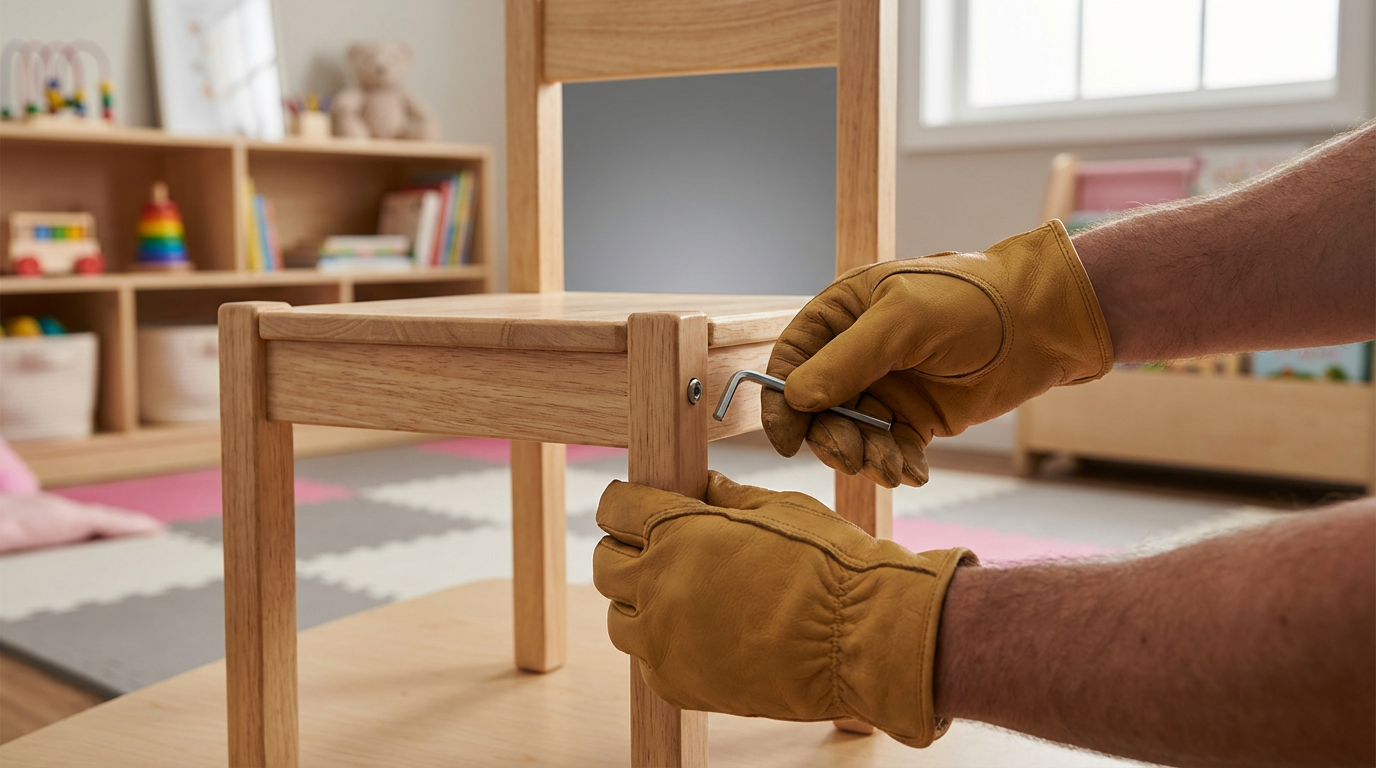
- Tighten All Fixings: Turn the item upside down. Use the correct tool (e.g., an Allen key or screwdriver) to tighten every screw and bolt at the leg joints. Don’t overtighten, as this can damage the wood.
- Add Brackets (If Necessary): If tightening doesn’t solve the issue, the joint may be worn. Adding a small, metal corner bracket inside the joint can provide extra stability. Ensure all screws are flush and there are no sharp edges.
Repairing Surface Chips and Scratches
Damaged surfaces can harbour bacteria and cause splinters. A good cosmetic repair restores safety and appearance.
- Clean and Sand: Clean the damaged area thoroughly. Lightly sand the chip or scratch with fine-grit sandpaper to smooth any rough edges.
- Apply Filler: Use a child-safe, non-toxic wood filler. Apply it to the damaged area with a small putty knife, slightly overfilling to allow for sanding.
- Sand and Seal: Once the filler is completely dry (check the manufacturer’s instructions), sand it flush with the surrounding surface. Wipe away dust and apply a non-toxic, child-safe sealant or paint to protect the repair.
Addressing Sticking Drawers and Doors
Sticking drawers can frustrate both children and staff, and forcing them can cause damage.
- Empty and Clean: Remove the drawer completely if possible. Thoroughly clean the drawer, the cabinet interior, and the runners of any dust or debris.
- Check Alignment: For cabinet doors, check the hinges. They often have adjustment screws that allow you to realign the door so it closes smoothly. For drawers, check that the runners are straight and securely fastened.
- Lubricate: Apply a small amount of silicone-free wax (like beeswax) or a dry furniture lubricant to the runners. Avoid oil-based lubricants, which can attract dust and stain materials.
Play Equipment Safety: A Weekly & Monthly Inspection Routine
Play equipment, whether indoors or outdoors, requires its own dedicated inspection routine due to its dynamic nature and higher potential for serious injury. A specific play equipment maintenance checklist ensures that you assess the unique risks associated with climbing frames, soft play, and outdoor structures, which are different from static furniture. These checks are a critical part of addressing nursery furniture safety concerns.
Our experience suggests a two-tiered inspection schedule is most effective.
Weekly Play Equipment Checks:
- Entrapment & Protrusion Check: Look for any gaps where a child’s head, neck, or limbs could become trapped. Check for any bolts, screws, or splinters that protrude and could cause cuts or snag clothing.
- Stability & Grounding: Physically push and pull on the equipment to ensure it is stable and securely anchored. Check for any signs of loosening at the base.
- Component Check: Inspect all moving parts, such as swing chains, ropes, and connectors, for wear and tear. Ensure soft play elements are free of rips or exposed foam.
Monthly Play Equipment Checks:
- Corrosion and Degradation: For outdoor equipment, carefully inspect all metal parts for rust or corrosion. Check plastic components for signs of cracking or brittleness caused by UV exposure.
- Structural Integrity: Conduct a more detailed examination of all structural joints, welds, and supports. On wooden structures, look for rot or decay, particularly where wood meets the ground.
- Follow Manufacturer Guidelines: Refer back to the manufacturer’s specific inspection manual. They will have detailed guidance on critical wear points and maintenance for their product, which must be followed to ensure safety and maintain any warranty.
Understanding UK Safety Standards: A Guide for School Managers
Adhering to UK safety standards isn’t optional – it’s a legal requirement that underpins the safety of your entire nursery environment. Using furniture that doesn’t meet these standards exposes children to risk and can invalidate your insurance, creating significant liability for the school. Understanding the key regulations is crucial for any manager dealing with nursery furniture safety concerns.

The most important standard is BS EN 1729, which is the British and European standard specifically for chairs and tables in educational institutions. It is split into two parts:
- BS EN 1729-1: This part defines the appropriate dimensions, such as chair height and desk size, for different age groups. Using the correct size furniture is crucial for posture and comfort.
- BS EN 1729-2: This part specifies the safety, strength, and durability requirements. Furniture is subjected to rigorous testing to ensure it can withstand the heavy use typical of a school environment without breaking or becoming unstable.
Another key piece of legislation is The Furniture and Furnishings (Fire) (Safety) Regulations 1988. This regulation dictates that foam fillings and upholstery must meet specified levels of fire resistance to slow the spread of fire.
It’s a common misconception that high-quality domestic furniture is acceptable. It isn’t. It’s not tested to the same durability standards as contract furniture and will likely fail quickly, posing a safety risk. When procuring furniture, typically insist on proof of compliance from your supplier. At Costcutters UK, we provide full transparency on our official certifications and accreditations.
Repair or Replace? A Decision-Making Framework for Budget Holders
The decision to repair or replace a piece of furniture is a constant balancing act for a School Business Manager. The right choice depends on a blend of safety, cost, and long-term value. We advise moving beyond the simple sticker price and considering the Total Cost of Ownership (TCO), a concept that includes the initial purchase price plus all maintenance, repair, and eventual disposal costs over an item’s lifespan.
To make this decision easier, we recommend a clear framework.
Lean towards REPAIR if:
- The issue is minor and cosmetic (e.g., small chip, scratch).
- The problem is a loose fixing that can be easily and securely tightened.
- The item’s structural integrity is not compromised.
- The estimated cost of a safe, durable repair is less than 25% of the cost of a like-for-like replacement.
Lean towards REPLACE if:
- There is any structural damage, such as a cracked frame, split wood, or a failed joint that cannot be securely fixed.
- The item no longer complies with current safety standards (e.g., BS EN 1729).
- A repair would be a temporary ‘patch-up’ rather than a long-term solution.
- The estimated cost of repair is more than 40% of the cost of a replacement. In this case, investing in new is better value.
Investing in durable school nursery furniture from the outset almost typically provides a better TCO. Products from specialist educational brands, such as our durable furniture ranges like Twoey Toys & Furniture, are designed and tested for the rigours of a nursery environment, backed by warranties, and likely to support to be compliant, offering peace of mind and better long-term value.
| Issue Type | Recommended Action | Cost-Effectiveness | Safety & Compliance Impact |
|---|---|---|---|
| Loose leg on a chair | Repair | High (often zero cost if done in-house) | High. An immediate fix prevents a tipping hazard and restores compliance. |
| Large crack in a table frame | Replace | Low (repair is unsafe) | Critical. A cracked frame is a structural failure. The item is non-compliant and must be removed. |
| Chipped laminate on a tabletop | Repair | High | Moderate. A repair prevents splinters and bacterial growth, improving hygiene and safety. |
| Outdated cot not meeting current standards | Replace | N/A (repair is not an option) | Critical. Non-compliant items pose a direct risk (e.g., entrapment) and must be replaced immediately. |
Frequently Asked Questions About Nursery Furniture
What are the most common nursery furniture issues?
The most common nursery furniture issues in high-traffic settings are structural instability (wobbles), surface wear (chips and scratches), and failing components like hinges or screws. These problems are typically caused by the intense daily use that furniture in an early years setting endures. We’ve found that implementing a simple, regular maintenance checklist is the most effective way to catch and mitigate these issues before they become safety hazards.
What are the main safety concerns in a nursery?
The primary safety concerns with nursery furniture include instability causing items to tip over, entrapment hazards in poorly designed equipment, sharp edges or splinters from damage, and the use of non-compliant materials. Domestic furniture, for example, is often not fire-retardant to the level required for schools. We believe the most effective way to prevent these dangers is to procure certified, contract-grade furniture designed specifically for educational use.
How long does nursery furniture last?
The lifespan of nursery furniture varies dramatically based on its quality and construction. Domestic-grade items may only last 1-2 years under the strain of a nursery environment. In contrast, high-quality, durable school nursery furniture is often likely to support for 5 or 10 years and can last much longer with proper care. Our experience shows that consistent maintenance is the key to maximising this lifespan and your return on investment.
Why shouldn’t you put a crib or cot under a window?
You should rarely place a cot under a window due to multiple, serious safety risks. These include the danger of a child climbing and falling, the potential for strangulation from blind cords, and risks from drafts or breaking glass. This crucial piece of placement advice applies to all early years and childcare settings, not just private homes, to ensure a completely safe sleeping environment for infants.
What defines defective furniture in a school context?
Defective furniture in a school is any item that fails to meet its intended purpose safely or does not comply with required standards from the point of sale. This includes structural failures like cracks or persistent wobbles, broken safety features, or non-compliance with UK standards like BS EN 1729. It’s important to differentiate this from expected wear and tear, which occurs over time with use.
How often should we run a play equipment maintenance checklist?
We recommend a two-tier approach for your play equipment maintenance checklist. A quick visual inspection should be performed daily before children use the equipment to spot any obvious new hazards. A more thorough, hands-on check using a detailed checklist should then be conducted weekly, with a fully documented inspection logged on a monthly basis. High-use items may require even more frequent detailed checks.
Is it worth trying to fix wobbly nursery chairs ourselves?
Yes, for simple cases, it is often cost-effective to fix wobbly nursery chairs in-house. If the wobble is due to a loose screw or bolt that can be easily and securely tightened, a quick repair by a site manager is an effective solution. However, if the wooden joint or frame is cracked or worn out, a professional repair or full replacement is the only safe option to ensure stability.
What is the biggest mistake in placement of nursery furniture?
The biggest mistake in furniture placement is obstructing emergency exit routes, fire doors, or access to fire extinguishers. Another common and dangerous error is placing tall, unstable items where they could be pulled over by a child, or positioning cots and beds near hazards like windows, heaters, or trailing cables. We typically recommend a professional space plan to avoid these critical safety errors.
Can we use furniture designed for home nurseries?
No, you should strongly avoid using domestic furniture in a commercial nursery or school setting. Furniture designed for home use is not built to withstand the intensive use of a commercial environment and does not typically meet the legal safety and durability standards (like BS EN 1729) required for educational institutions. Using it poses a direct safety risk and could also invalidate your school’s insurance cover.
How can we prove our furniture is compliant?
Proof of compliance must come from the supplier at the point of purchase. You should typically request and keep a record of documentation or certificates confirming that the furniture meets all relevant British and European Standards for educational settings. Reputable suppliers, Rated Excellent On Trustpilot, will provide this information readily as part of their sales process. These records are essential for any health and safety audit.
Important Considerations & Professional Guidance
This guide provides general advice for common, minor repairs. The effectiveness of these repairs depends on the quality of the original furniture and the skill of the person performing the fix. Structural damage, such as cracks in frames or legs, should not be repaired in-house as it may compromise the safety and integrity of the item. Typically prioritise child safety over cost-saving on a potentially unsafe repair.
The primary alternative to in-house repair is replacement. While it involves a higher initial cost, purchasing new, durable school nursery furniture may help compliance with current safety standards and often comes with a multi-year warranty, reducing the total cost of ownership. For specialised or high-value items, consulting a professional furniture restoration service may be an option, but this is often less cost-effective than replacement for standard nursery items.
If you are ever in doubt about the safety of a piece of furniture or the viability of a repair, you must remove the item from use immediately. We strongly recommend consulting with a specialist educational furniture supplier. They can provide expert advice on compliance, conduct a professional audit of your existing stock, and offer a free space planning consultation to ensure your environment is safe, functional, and budget-efficient.
Future-Proofing Your Nursery with Durable, Compliant Furniture
Tackling nursery furniture issues proactively is essential for maintaining a safe learning environment and managing school budgets effectively. By implementing routine maintenance, performing safe minor repairs, and making informed decisions about replacement, you can extend the life of your assets and ensure unwavering compliance. The key is to shift from a reactive to a preventative mindset, prioritising long-term value and safety over short-term fixes.
At Costcutters UK, we have spent over 35 years helping schools and nurseries create safe, inspiring, and durable school nursery furniture spaces. Our “Design To Install We Do It All!” service, combined with Bulk Buy Discounts and flexible payment options like Credit Accounts Or Pay Flexibly, makes upgrading simple. If you are looking to replace ageing furniture or plan a new nursery space, our experts can help. Book a free, no-obligation space planning consultation today to ensure your setting meets the highest standards of safety and quality.
References
- Health and Safety Executive (HSE) – Regulatory Guidance. Provides the legal framework and best practice for health and safety in early years settings in the UK.
- British Standards Institution (BSI) – Standards Body. Details the specific ergonomic, strength, and stability requirements for furniture used in educational environments via standards like BS EN 1729.
- The Furniture and Furnishings (Fire) (Safety) Regulations 1988 – UK Legislation. Specifies the levels of fire resistance required for upholstery and fillings in furniture supplied in the UK.
- Community Playthings – Industry Insights. Offers practical advice on furniture safety and layout from a manufacturer’s perspective.
- Early Years Alliance – Sector Body Guidance. Provides resources and support for early years settings on meeting statutory requirements.
Conclusion
Future-Proofing Your Nursery with Durable, Compliant Furniture
In summary, nursery furniture issues are best managed proactively to maintain a safe learning environment and control school budgets effectively. By implementing routine maintenance, performing safe minor repairs, and making informed decisions about replacement, you can extend the life of your assets and ensure unwavering compliance. The key is to shift from a reactive to a preventative mindset, prioritising long-term value and safety over short-term fixes.
At Costcutters UK, we have spent over 35 years helping schools and nurseries create safe, inspiring, and durable school nursery furniture spaces. If you are looking to replace ageing furniture or plan a new nursery space, our experts can help. Book a free, no-obligation space planning consultation today to