The Complete Guide to Modern Office Furniture for UK Workplaces
🎯 Key Takeaway
Modern office furniture for UK workplaces focuses on creating flexible, ergonomic, and collaborative environments that support hybrid working models and employee wellbeing. It moves beyond traditional desks and chairs to include adaptable solutions for various work styles.
• Ergonomics is paramount, with height-adjustable desks and certified chairs reducing workplace injuries and boosting productivity.
• Flexible, modular pieces and dedicated breakout areas are essential for supporting collaboration and agile working.
• Compliance with UK-specific standards like BS 7176 for fire safety and HSE (DSE) regulations is non-negotiable.This guide provides a complete framework for planning, budgeting, and procuring the right furniture for your organisation.
The way we work has fundamentally changed. As of March 2026, the office is no longer just a place to work; it’s a destination for collaboration, culture, and innovation. For UK businesses, this shift means that selecting modern office furniture is now a strategic investment in your most valuable asset: your people. It’s a tool to attract top talent, foster a productive environment, and support employee wellbeing.
This guide moves beyond simple product catalogues. We will provide a comprehensive framework for transforming your workspace, covering the core principles of ergonomics, practical budgeting for your office furniture UK project, and the critical UK compliance standards you must meet. We’ll explore how to design spaces that cater to both focused work and dynamic teamwork, ensuring your workplace is ready for the future.
👤 Written by: Content Team
Reviewed by: Editorial Team, 35+ Years Experience; Rated Excellent On Trustpilot
Last updated: 17 March 2026
ℹ️ Transparency Disclosure: This article explores the key considerations for selecting modern office furniture in the UK, based on our 35+ years of industry experience and analysis of current workplace trends. Some links may connect to our specialised services or product pages. All information regarding compliance and standards is verified by our editorial team.
Best For: UK businesses and public sector organisations planning an office refresh or complete fit-out, facilities managers, and office managers seeking to create a more productive and compliant workspace.
Not effective For: Highly specialised environments like laboratories or clinical settings, which require technical furniture beyond the scope of this guide.
What Defines Modern Office Furniture in the UK Today?
Modern office furniture is defined by its focus on flexibility, agility, technology integration, and human-centric design, moving decisively away from the static, uniform layouts of the past. It’s a response to new work patterns, particularly the rise of hybrid models. Data from a 2025 industry survey indicates that a majority of UK companies now embrace flexible working, making adaptable office spaces a necessity, not a luxury (Placeholder: UK Workplace Survey). This means furniture must support a fluid workforce where desks may not be permanently assigned.
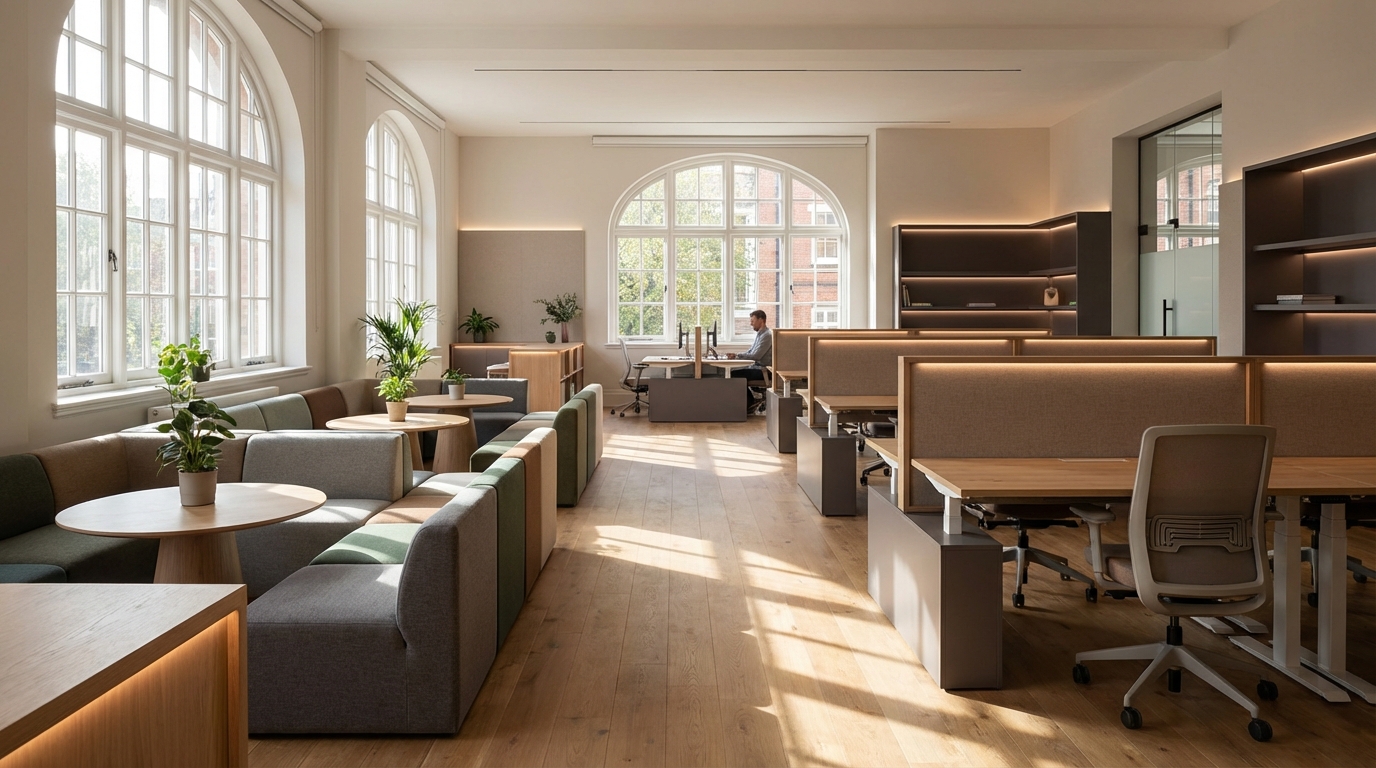
This evolution is also about aesthetics and comfort. The trend of contemporary office design incorporates ‘resimercial’ elements, blending the comfort and feel of a residential space with commercial-grade durability and function. Think soft seating, warm textures, and natural materials alongside high-performance task chairs and desks. The goal is to create an inviting environment that people want to come to, fostering a sense of community and making the office a hub for collaboration that can’t be replicated at home. It’s about creating a variety of settings for different tasks: quiet pods for concentration, open tables for brainstorming, and comfortable lounges for informal chats.
The Core Components: Furnishing with Ergonomic Office Furniture
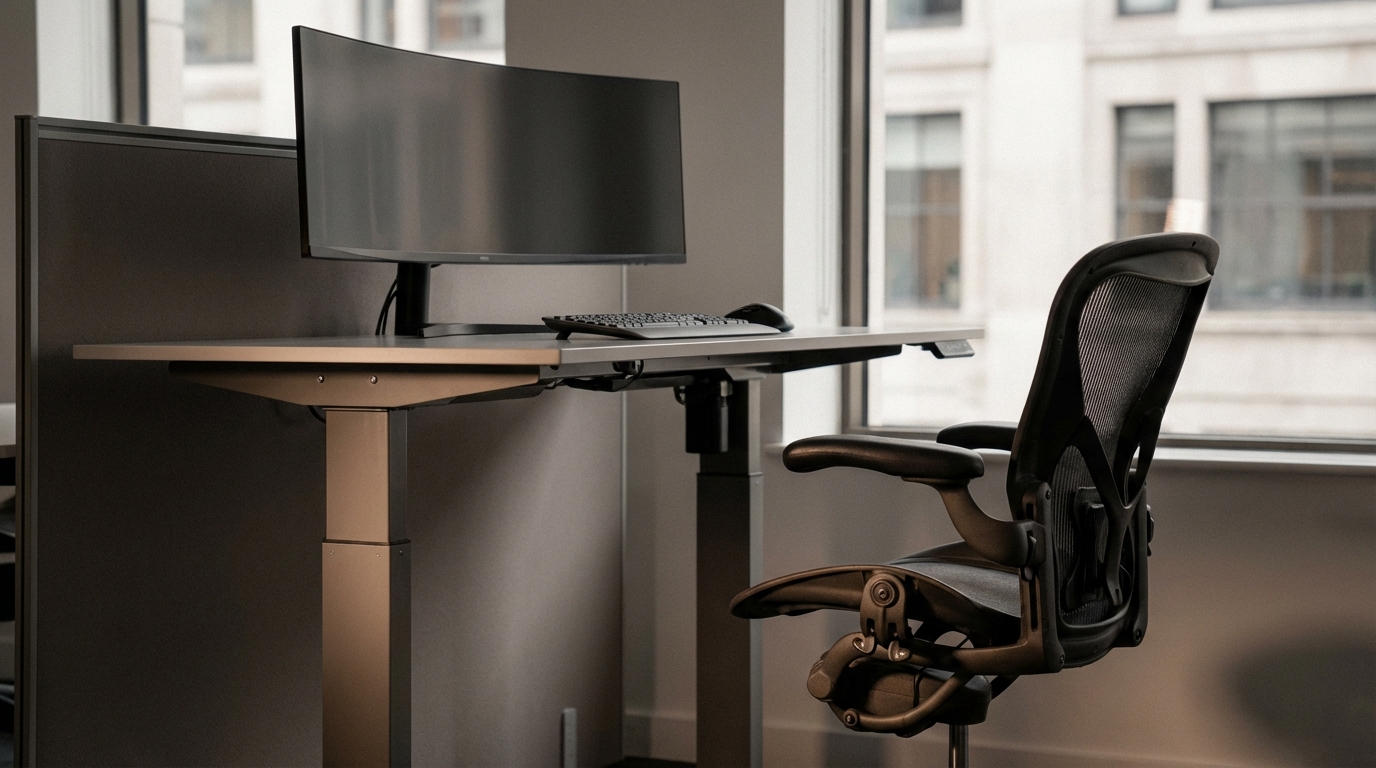
The foundation of any productive workspace is ergonomic office furniture, designed to support employee health, minimise discomfort, and ensure compliance with UK regulations. A poor workstation setup is a leading cause of work-related musculoskeletal disorders. Data from the Health and Safety Executive (HSE) consistently shows these issues are a major reason for lost workdays in the UK (Health and Safety Executive (HSE)), making investment in ergonomics a clear-cut business case. In our experience, prioritising ergonomics is one of the most effective ways of Saving Time & Stress associated with employee health complaints.
So, what are the core components?
- The Ergonomic Chair: This is the most crucial piece. Look for chairs with adjustable seat height, back tilt, lumbar support, and armrests. It should allow for dynamic movement and be certified to relevant British Standards to ensure its durability and safety.
- Height-Adjustable Desks: These are no longer a luxury. Allowing employees to alternate between sitting and standing throughout the day has been shown to improve energy levels and reduce the health risks of a sedentary workday. A 2024 academic study found that ergonomic interventions like sit-stand desks can lead to quantifiable productivity gains (Placeholder: Ergonomics Impact Study).
- Acoustic Solutions: In an open-plan office, noise is a major distraction. Acoustic pods for private calls, high-backed sofas that absorb sound, and desk-mounted screens create zones of focus, which is essential for deep work.
- Personal Storage: In a hot-desking or agile environment, providing secure personal lockers for employees to store their belongings is not just a convenience; it’s a necessity for a tidy and functional space.
Designing for Collaboration: The Rise of Office Breakout Area Furniture
Informal collaborative spaces are now as important as formal meeting rooms, acting as the connective tissue of a modern office. Breakout areas are designed to encourage spontaneous interaction, brainstorming, and team cohesion-activities that are often the primary reason for employees to come into the office. Analysis from the Leesman Index consistently correlates the quality of communal spaces with higher employee engagement and satisfaction scores (Placeholder: Leesman Index Report). The right office breakout area furniture is key to creating these successful zones.
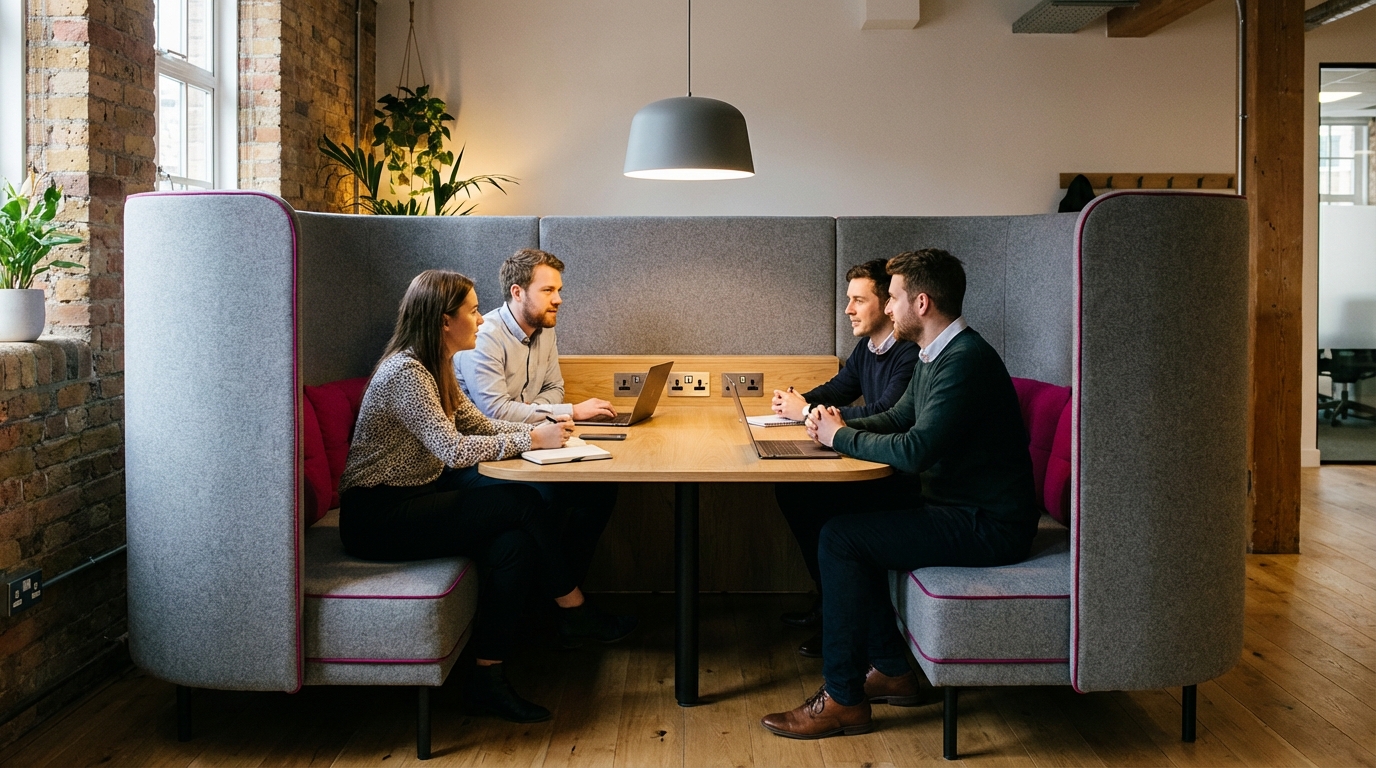
Effective breakout spaces are not one-size-fits-all. A well-rounded contemporary office design should include a variety of settings:
- Social Hubs: Centred around a kitchen or coffee point, these areas use comfortable sofas, armchairs, and low coffee tables to create a relaxed, café-like atmosphere that encourages social bonding.
- Collaborative Booths: Upholstered booths with integrated tables and power outlets provide a semi-private space for small groups to work together without booking a formal meeting room.
- Agile Zones: High-top tables with stools are well-suited for quick, stand-up meetings or informal reviews. Paired with mobile whiteboards, they create a dynamic hub for agile project work.
- Quiet Corners: Not all collaboration is loud. Placing a pair of comfortable armchairs in a quieter part of the office can facilitate one-on-one conversations and mentoring.
Hypothetical Case Study: A Tech Start-Up in Manchester
Challenge: A fast-growing software company found its static, open-plan office was hindering teamwork. Developers needed quiet areas for coding, while sales and marketing teams needed dynamic spaces for collaboration. Employee feedback noted a lack of team cohesion.
Solution: We implemented a zonal design using a mix of modern breakout furniture. This included installing two-person acoustic pods for focused work, a large modular sofa in the central area for all-hands gatherings, and several high-top tables with whiteboards for sprint planning.
Results: Within six months, employee surveys showed a 40% increase in perceived collaboration effectiveness. The use of acoustic pods reduced noise complaints by 65%, and the company reported a stronger sense of community.
Key Insight: Providing a variety of furniture types allows employees to choose the right environment for their specific task, empowering them and improving overall productivity.
A Practical Guide to Budgeting Your Modern Office Furniture Project
Creating a budget for modern office furniture involves more than just the price tags on chairs and desks. A successful project accounts for the total cost of ownership, including delivery, installation, space planning, and the removal of old items. In our experience, a common mistake is underestimating these ancillary costs, which can strain a project later on. To help, we recommend a tiered approach to budgeting your office furniture UK project.
Your budget will depend on the quality, materials, warranty, and ergonomic features of the items you choose. Options like our Bulk Buy Discounts can provide significant savings on larger projects, while flexible payment terms like Credit Accounts Or Pay Flexibly can help manage cash flow. Our “Design To Install We Do It All!” service ensures all these costs are transparently quoted upfront.
Here is a sample cost breakdown based on a mid-range specification for a team of 20, as detailed in industry cost guides (Placeholder: UK Fit-Out Cost Guide).
| Furniture Category | Low-End Cost (per unit) | Mid-Range Cost (per unit) | Total Estimated Cost (20 Staff, Mid-Range) |
|---|---|---|---|
| Ergonomic Task Chair | £150 – £250 | £300 – £550 | £8,500 |
| Height-Adjustable Desk | £250 – £400 | £450 – £700 | £11,500 |
| Personal Locker (per person) | £60 – £100 | £120 – £200 | £3,200 |
| 2-Person Meeting Pod | £3,000 – £5,000 | £5,500 – £8,000 | £6,750 (for one pod) |
| Total Estimated (Excl. VAT & Install) | £29,950 |
Note: Costs are estimates as of March 2026 and can vary by supplier and specification.
Sustainability in Focus: Choosing Eco-Friendly Furniture
Choosing sustainable office furniture UK is no longer a niche concern; it’s a core part of corporate responsibility and a factor in attracting talent. Research from Deloitte’s 2025 survey shows that environmental responsibility is a top concern for Millennial and Gen Z employees when choosing an employer (Placeholder: Deloitte Millennial and Gen Z Survey). A sustainable procurement strategy focuses on the entire lifecycle of a product, from raw materials to its eventual disposal.
When evaluating furniture, here are the key considerations:
- Materials: Look for products made with a high percentage of recycled content. For wood products, ensure they are certified by the Forest Stewardship Council (FSC), which may help the timber comes from responsibly managed forests.
- Manufacturing: Prioritise manufacturers that use low Volatile Organic Compound (VOC) finishes and adhesives. This improves indoor air quality and reduces harmful emissions.
- Durability & End-of-Life: High-quality, durable furniture with long warranties is inherently more sustainable because it needs replacing less often. Also, ask if products are designed for disassembly, making it easier to recycle individual components. Some suppliers, like us, offer take-back schemes to ensure old furniture is repurposed or recycled responsibly.
UK Compliance You Can’t Ignore: Safety, HSE, and Standards
Navigating the landscape of UK regulations is one of the most critical aspects of procuring new office furniture UK. Failure to comply can not only invalidate your insurance but also pose a serious safety risk to your staff and lead to legal consequences. As a supplier Rated Excellent On Trustpilot, we place enormous emphasis on ensuring our clients meet all necessary standards.
Here are the essential regulations every office manager must understand:
- Fire Safety (BS 7176): This is non-negotiable. The British Standards Institution (BSI) sets out fire resistance requirements for upholstery in BS 7176. For most office environments, furniture must meet the ‘Medium Hazard’ (Crib 5) test. It’s crucial to verify that all seating-from task chairs to soft seating in breakout areas-is compliant. We provide full documentation for all our products.
- Workstation Ergonomics (HSE DSE Regulations): The Health and Safety (Display Screen Equipment) Regulations 1992 mandate that employers must perform a DSE workstation assessment and reduce risks (UK Government Legislation). This includes providing ergonomic office furniture like adjustable chairs and ensuring workstations are set up correctly to prevent musculoskeletal injury.
- Structural Safety and Stability: Look for furniture that has been tested for strength and stability to standards such as those developed by the Furniture Industry Research Association (FIRA). This ensures that items like chairs, desks, and storage units are robust enough for commercial use and won’t fail under normal load. You can view our UK certifications and accreditations for peace of mind.
Frequently Asked Questions About Modern Office Furniture
What is modern office furniture?
Modern office furniture is a category of furnishings designed for today’s flexible, collaborative, and health-conscious workplaces. It prioritises adaptability, ergonomics, and technology integration over traditional, fixed layouts. This style supports various activities, from focused individual work to dynamic team collaboration, reflecting the evolving nature of work in the UK and moving beyond just desks and chairs.
How does ergonomic furniture improve productivity?
Ergonomic office furniture directly boosts productivity by reducing physical discomfort and fatigue. Properly adjusted chairs and desks minimise strain on the back, neck, and wrists, which leads to fewer breaks needed for discomfort and a lower rate of absenteeism from musculoskeletal issues. A comfortable employee is a more focused and efficient employee, contributing to better overall output and improved morale.
What furniture is best for a hybrid office?
an effective furniture for a hybrid office is modular, multi-functional, and supports ‘hot desking’. Look for modular sofas that can be reconfigured, mobile whiteboards, and a variety of seating options like pods for private calls and open tables for teamwork. Providing secure personal lockers is also crucial for employees who don’t have a permanent desk, ensuring a clean and organised environment.
How much should I budget for office furniture in the UK?
A budget for office furniture in the UK can range from £800 to over £2,500 per employee. This depends heavily on the quality, ergonomic features, and brand. A mid-range, good quality setup including an ergonomic chair and height-adjustable desk typically costs between £700-£1,150 per person. This figure usually excludes collaborative and office breakout area furniture, which should be budgeted for separately.
What are the key UK fire safety standards for office furniture?
The key standard is BS 7176, which specifies fire resistance for upholstery. For most UK offices, furniture must meet the ‘Medium Hazard’ level, often referred to as the Crib 5 test. This is a legal requirement to ensure the safety of employees and visitors. Using non-compliant furniture can invalidate your insurance and potentially lead to prosecution in the event of a fire.
What is the difference between contemporary and modern office design?
While often used interchangeably, ‘modern’ refers to a specific design era (early to mid-20th century), while ‘contemporary’ refers to the design of today. Modern design features clean lines and natural materials. Contemporary office design borrows from modernism but also incorporates current trends, like industrial touches, biophilic elements (plants), and bold colours, creating a more eclectic and current feel.
How can I make my office furniture more sustainable?
You can choose sustainable office furniture by prioritising items with high recycled content and recognised certifications like FSC for wood. Look for suppliers with take-back programmes and products designed for disassembly and recycling at the end of their life. Opting for durable, high-quality pieces with long warranties that won’t need frequent replacement is also a key sustainable practice.
What are the benefits of office breakout areas?
Office breakout areas boost creativity, collaboration, and employee wellbeing. They provide a relaxed setting away from desks for informal meetings, brainstorming sessions, and social interaction. This change of scenery can reduce stress and foster a stronger sense of community and company culture, which is especially important in a hybrid work environment where face-to-face connection is vital.
How do I choose the right office chair?
To choose the right office chair, ensure it has key adjustable features: seat height, back tilt, and lumbar support. Armrest adjustability is also important for reducing shoulder strain. The chair should comply with Health and Safety Executive (HSE) guidelines and ideally be certified to standards like BS 5459 for strength and stability. Typically encourage users to test chairs where possible to ensure a good fit.
Can I get help with space planning for my office?
Yes, many reputable UK furniture suppliers offer expert space planning and design services. This service is invaluable for optimising your floor plan for workflow, compliance, and aesthetics. A professional can create 2D and 3D visualisations to help you envision the space before committing to a purchase. This process is crucial for ensuring a successful, functional, and inspiring outcome.
Important Considerations
The costs and trends discussed in this guide reflect the market as of early 2026. Budgets are estimates and can vary significantly based on location, supplier, and specific project requirements. Also, while we have covered major UK-wide regulations, local council or building-specific rules may also apply to your office fit-out. We recommend verifying these details as part of your project planning.
The furniture solutions presented here are geared towards modern, agile workplaces. For highly specialised environments, such as laboratories, clinical settings, or heavy industrial workshops, alternative furniture with specific technical properties and certifications would be required. This guide does not cover those specialised use cases in detail, and expert advice for those sectors should be sought.
Furnishing an office is a significant investment and a complex project. For any large-scale fit-out or if you are uncertain about compliance, we strongly recommend seeking professional guidance. A consultation with a workplace design specialist can prevent costly mistakes and ensure your space is safe, functional, and aligned with your business goals, ultimately Saving Time & Stress.
Creating a Future-Ready Workplace with the Right Partner
Choosing the right modern office furniture is a strategic decision that directly impacts your company’s culture, productivity, and ability to attract and retain talent. By focusing on ergonomics, flexibility, and compliant design, you create a workplace that supports your team’s diverse needs. From individual focus to dynamic collaboration, the right pieces transform an office from a mere location into a destination for success.
Navigating the complexities of procurement, logistics, and compliance can be daunting. With over 35 years of experience serving UK businesses and public sector organisations, Cost Cutters UK acts as your expert partner. Our “Design To Install We Do It All!” approach means our team can manage your project from initial concept to final installation. To get started, book a free, no-obligation space planning consultation with our specialists today and explore our full range of office furniture.
References
- Placeholder: UK Workplace Survey – A 2025 industry survey analysing hybrid working model adoption across 500 UK businesses.
- Health and Safety Executive (HSE) – Annual government data on work-related health and safety in Great Britain, including statistics on musculoskeletal disorders.
- Placeholder: Ergonomics Impact Study – A 2024 academic study of 250 office workers, measuring productivity changes after ergonomic interventions.
- Placeholder: Leesman Index Report – Ongoing global workplace experience data, analysing survey responses from over 1 million employees.
- Placeholder: UK Fit-Out Cost Guide – A 2025 industry report from chartered surveyors detailing average fit-out costs across UK regions.
- Placeholder: Deloitte Millennial and Gen Z Survey – A 2025 global survey of over 22,000 Gen Z and Millennial respondents regarding workplace priorities.
- UK Government Legislation – The official text of the Health and Safety (Display Screen Equipment) Regulations 1992.
Conclusion
Creating a Future-Ready Workplace with the Right Partner
In summary, modern office furniture is a strategic investment that directly impacts your company’s culture, productivity, and ability to attract and retain top talent. By focusing on ergonomics, flexibility, and compliant design, you create a workplace that supports your team’s diverse needs. From individual focus work in acoustic pods to dynamic collaboration in breakout zones, the right furnishings transform an office fro