Hybrid Office Furniture: A UK Procurement Manager’s Guide to Optimising Spaces
🎯 Key Takeaway
an effective hybrid office furniture consists of modular, multi-functional, and easily reconfigurable pieces that support a variety of work activities, from focused tasks to group collaboration. A successful hybrid office requires distinct ‘zones’ for focused work, collaboration, and social interaction, each needing specialised furniture. Prioritising modular and mobile furniture provides long-term value and adaptability as your organisation’s needs evolve. For UK public sector and business environments, ensuring furniture meets standards like CRIB 5 and relevant BS EN certifications is non-negotiable for safety and compliance. This guide provides a practical framework for procurement managers to handle the complexities of furnishing a modern hybrid workplace.
As of March 2026, the shift towards flexible working arrangements is no longer a trend but a permanent feature of the UK business landscape. This presents a significant challenge for procurement managers and facilities leaders: how do you justify the cost of an office that isn’t fully occupied every day? The answer lies in transforming the workplace into a valuable destination. For making this change effective, the right hybrid office furniture is the critical component. This is not about simply having fewer desks; it’s about investing in smart, adaptable hybrid workspace solutions that support how your teams actually work now. This guide covers the essential principles of hybrid office design, key furniture categories, and the crucial procurement and compliance considerations for UK organisations.
👤 Written by: Content Team | Reviewed by: Editorial Team, 35+ Years Experience; Rated Excellent On Trustpilot
Last updated: 15 March 2026
ℹ️ Transparency Disclosure: This article explores the selection and procurement of hybrid office furniture based on our 35+ years of industry experience and market analysis. Our recommendations are grounded in helping businesses and public sector organisations achieve practical, cost-effective solutions. We are committed to providing clear, authoritative guidance.
Understanding the Principles of Hybrid Office Design
A successful hybrid office design moves beyond hot-desking to create a multi-purpose environment that actively supports different types of work. The core principle is ‘zoning’ – dividing your floor plan into distinct areas tailored for specific activities. This approach acknowledges that the office’s primary role has changed; it’s now a hub for tasks that are difficult to perform in isolation at home, such as deep collaboration and culture-building. By optimising office space through zoning, you make every square metre work harder.
The three primary zones are:
- Focus Zones: These areas are designed for quiet, individual work that requires deep concentration. They feature single-person workstations or acoustic pods, signalling to others that interruption should be minimal.
- Collaborative Zones: Built for teamwork, these spaces include everything from formal meeting rooms with video conferencing technology to open-plan areas with mobile whiteboards and large tables for brainstorming.
- Social & Connect Zones: These are informal breakout areas, kitchens, and comfortable lounges. Their purpose is to foster the spontaneous interactions and social bonds that build a strong company culture – something remote work often struggles to replicate.
Industry analysis from Claremont Group Interiors highlights that flexibility and adaptability are key to effective hybrid office design. This means providing a variety of settings so employees can choose the space that best suits their task for the day, thereby boosting productivity and job satisfaction.
Essential Hybrid Office Furniture Categories for Flexible Workspaces
The most effective hybrid office furniture is agile, multi-functional, and supports the zoned approach. Instead of a static layout, you need pieces that can be adapted as your team’s needs change, ensuring a better long-term return on investment. According to industry insights from Haiken, flexible and modular office furniture is essential for adapting workplaces to the shifting demands of a hybrid model.

Key categories include:
- Modular Desking: Bench desks or configurable workstations allow you to easily expand or shrink desk clusters. This is far more cost-effective than replacing entire banks of fixed desks. A guide from Office Chairman details how these systems allow for simple reconfiguration to suit different tasks.
- Acoustic Pods & Booths: The rise of video calls in open-plan offices makes office work pods uk a necessity. These provide sound-dampened spaces for private calls and focused work without needing to build permanent walls. Specialised pods like the ‘Hush Hybrid’ are even designed specifically for high-quality individual video conferencing, as shown by Fluid Furniture.
- Mobile & Personal Storage: With fewer assigned desks, secure personal lockers are essential. They give employees a ‘home base’ to store belongings, laptops, and papers, keeping shared spaces tidy and organised. Mobile storage units like pedestals on castors can also move with employees as they shift between zones.
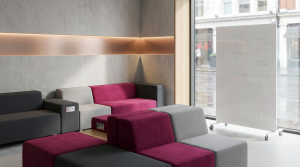
- Versatile Seating: Lightweight stools, tub chairs, and modular sofas can be easily rearranged to create ad-hoc meeting spaces or quiet corners. This type of flexible office furniture empowers employees to shape their environment.
| Work Zone | Recommended Furniture Type | Key Features | Supports… |
|---|---|---|---|
| Focus Zone | Acoustic Work Pods | Integrated power, ventilation, sound-dampening panels. | Private video calls, deep concentration tasks. |
| Collaborative Zone | Mobile Whiteboards & High Tables | Lockable castors, double-sided writing surfaces. | Brainstorming sessions, stand-up meetings. |
| Collaborative Zone | Modular Bench Desks | Shared leg frames, cable management, screen dividers. | Team projects, hot-desking, easy reconfiguration. |
| Social/Connect Zone | High-Back Sofas & Pods | Acoustic upholstery, creates semi-private spaces. | Informal meetings, one-to-one catch-ups. |
Optimising for Collaboration: Designing Effective Breakout Zones
Effective breakout zones are the heart of a successful hybrid office, providing the collaborative and social experiences that employees cannot get at home. These spaces are what transform the office from a place people have to be to a place they want to be. The design should facilitate both planned and spontaneous interactions. A trend report from Southern Office Furniture identifies multi-functional furniture as a key component in making these hybrid workspace solutions both practical and efficient.
To create a dynamic breakout area, we recommend moving beyond just a sofa and a coffee table. Consider these solutions:
- High-Back Seating: High-back sofas and armchairs create ‘rooms within a room’, offering visual and acoustic privacy for small group discussions without the need for walls.
- Poseur Tables: High tables with stools encourage short, informal stand-up meetings, which are often more energetic and efficient than formal sit-down discussions.
- Tiered Seating: Amphitheatre-style seating can turn a previously unused corner into a presentation area for team-wide announcements or informal training sessions.
- Modular & Mobile Pieces: Using modular breakout furniture allows the space to be reconfigured for different purposes throughout the day – from a morning coffee spot to an afternoon workshop area.
By thoughtfully furnishing these zones, you provide compelling reasons for your team to commute, fostering innovation and strengthening your organisation’s culture.
The Procurement Process: A Checklist for UK Public Sector & Business Managers
A structured procurement process is essential to ensure your investment in hybrid furniture delivers real value. For UK businesses and those navigating public sector furniture procurement, a clear plan prevents costly mistakes and ensures the final result meets user needs. Our experience suggests a phased approach works best.
Here is our recommended checklist:
- Assess Real Needs: Don’t guess. Use employee surveys, booking system data, and observational studies to understand which activities your team needs the office for. How many people need quiet space versus collaborative space? This data is the foundation of your hybrid office design.
- Budget for Value, Not Just Cost: Calculate the Return on Investment (ROI). Flexible furniture might have a higher initial cost but saves money long-term by reducing the need for future purchases and potentially allowing you to downsize your overall office footprint. Look for suppliers who offer Bulk Buy Discounts.
- Plan a Phased Rollout: You don’t have to do everything at once. Start with a pilot zone or a single department. This allows you to test concepts, gather feedback, and refine your approach before a full-scale implementation, which helps with Saving Time & Stress.
- Vet Your Supplier Thoroughly: A good supplier is a partner, not just a seller. Do they offer a ‘Design To Install We Do It All!’ service? Do they provide free, expert space planning to maximise your layout? For public sector bodies, check if they are listed on procurement frameworks and offer flexible payment terms like Credit Accounts Or Pay Flexibly.
Meeting UK Compliance: The Critical Role of Safety & Durability Standards
For any procurement manager, especially in business or public sector furniture procurement, compliance is non-negotiable. Adhering to UK standards is not just about ticking boxes; it’s a fundamental aspect of corporate responsibility, ensuring employee safety, and guaranteeing the longevity of your investment. Furniture that meets these standards is tested for strength, stability, and fire retardancy, protecting both your people and your property.
Two key standards to be aware of are:
- CRIB 5 (BS 7176): This is a mandatory fire safety standard for furniture and upholstery used in commercial and public environments. CRIB 5 is a specific test that assesses how a piece of furniture reacts to an ignition source, simulating a real-world fire hazard. Using non-compliant furniture can invalidate your business insurance and poses a serious safety risk.
- BS EN Standards: This is a broad category of British and European standards covering durability, safety, and performance. For example, BS EN 527 relates to the dimensions and safety of office desks, while BS EN 1335 covers office chairs. These standards ensure that furniture is structurally sound and ergonomically suitable for prolonged use.
At Cost Cutters UK, we believe compliance is a guarantee of quality. By choosing a supplier who can provide clear documentation on our UK compliance and certifications, you are making a secure investment in furniture that is built to last.
Frequently Asked Questions About Hybrid Office Furniture
What is hybrid office furniture?
Hybrid office furniture refers to adaptable, multi-purpose items designed to support the varied activities of a flexible workforce. Instead of the traditional ‘one desk per person’ model, it includes modular desks, acoustic pods, mobile whiteboards, and versatile seating. This type of furniture allows an office space to be easily reconfigured for focused work, collaboration, or informal meetings, reflecting the dynamic nature of a hybrid work week.
What are the downsides of hybrid working?
The main challenges of hybrid work often involve culture, communication, and equity between in-office and remote staff. Maintaining a cohesive team spirit can be difficult when people are physically separated. There’s also a risk of ‘proximity bias’, where those in the office are favoured for opportunities. A well-designed office with purposeful collaborative zones helps mitigate this by making in-person time more meaningful and inclusive.
What is an example of a hybrid office?
A typical hybrid office example would feature fewer dedicated desks and more shared, activity-based zones. You would see a quiet area with acoustic pods for focused work, alongside open-plan tables with shared screens for team projects. It would also include a comfortable breakout area with sofas and coffee tables for informal chats, plus a bank of personal lockers for employees to store their belongings.
How can modular office furniture save money?
Modular office furniture primarily saves money through its long-term adaptability and efficient use of space. Because it can be reconfigured, you can adapt your layout to changing team sizes or work styles without buying entirely new items. This flexibility allows many organisations to reduce their overall office footprint, leading to significant savings on rent, utilities, and maintenance costs over time.
Are hybrid employees happier?
Research generally indicates that hybrid employees report higher job satisfaction and improved work-life balance. The autonomy and flexibility to choose where to work are major contributing factors. However, this happiness is heavily dependent on the employer providing the right support, including effective technology for remote collaboration and a well-equipped, welcoming office environment for in-person days.
Can my employer refuse a request for hybrid working in the UK?
Yes, an employer can refuse a request, but they must have a valid business reason for doing so. In the UK, employees with 26 weeks of continuous service have the statutory right to request flexible working. An employer must handle the request in a ‘reasonable manner’ and can only turn it down based on one of eight specific business grounds, such as detrimental impact on performance or quality.
What are office work pods used for?
Office work pods are primarily used to create private, acoustically-isolated spaces within a larger open-plan environment. They are well-suited for tasks requiring concentration or confidentiality, such as important video conferences, sensitive phone calls, or deep-focus individual work. They solve the common problem of noise and distraction in a busy office without the cost of building permanent rooms.
How do I choose furniture for hot-desking?
When choosing hot-desking furniture, prioritise durability, adjustability, and personal storage. You’ll need highly ergonomic chairs that can be easily adjusted to suit different users throughout the day. Desks should be a standard size with accessible power and data ports. Finally, a system of secure personal lockers is crucial for employees to store their belongings confidently.
What is CRIB 5 and why is it important for office furniture?
CRIB 5 is a UK fire safety regulation that ensures upholstery and furniture are suitably flame-retardant for public or commercial use. It is a legal requirement for workplaces and is essential for meeting health and safety obligations, validating your business insurance, and protecting your staff and property. Compliance is not optional; it’s a critical safety measure for any responsible organisation.
How do I start planning my hybrid office space?
an effective way to start is by understanding how your team currently works and what they need from the office. We recommend conducting a simple survey to gather data on work habits, preferences, and pain points. The next step is to consult a space planning expert who can translate that information into a functional and cost-effective layout that maximises your floor plan.
Important Considerations
This guide provides a framework for selecting hybrid furniture, but the effective solution is unique to each organisation. Factors such as company culture, specific job functions, and the existing building layout will influence choices. The statistics cited represent market averages and may not reflect every industry. We recommend using this guide as a starting point for a more detailed internal needs analysis.
While a zoned hybrid model is effective for many, it is not the only option. Some organisations may find a fully remote model more cost-effective, while others in highly collaborative or secure fields might retain a more traditional, fully in-office approach. Another alternative is a simple hot-desking system without extensive breakout zones, though this may offer less incentive for employees to come into the office.
Optimising your office space is a significant investment. For projects involving multiple zones and compliance requirements, we strongly recommend seeking professional guidance. A consultation can help you visualise the layout, ensure you are making the most of your floor plan, and create an accurate budget. This expert oversight helps prevent costly mistakes and ensures a result that meets your organisation’s needs for years to come.
Partnering for a Stress-Free Hybrid Transformation
Investing in the right hybrid office furniture is fundamental to creating a successful, flexible office furniture workspace. By focusing on creating distinct zones, prioritising adaptable modular furniture, and ensuring all items meet UK compliance standards, you can build an office that is not just a building, but a destination for collaboration, culture, and productivity. This strategic approach to optimising office space ensures a strong return on investment and supports your team’s evolving needs.
Navigating this transition can be complex, but it doesn’t have to be stressful. At Cost Cutters UK, we’re proud of our “Design To Install We Do It All!” service. Our 35+ years of experience in furnishing public sector and business environments, backed by our ‘Rated Excellent On Trustpilot’ status, means we handle the entire process for you. From initial design to final installation, we ensure your project is seamless, compliant, and within budget. To see how we can transform your workspace, book your free, no-obligation space planning consultation today.
References
- Claremont Group Interiors – Industry Analysis. Highlights the importance of flexibility and adaptability in hybrid office design, including providing personal storage like lockers.
- Workwell Furniture – Commercial Guide. Emphasises the crucial role of commercial furniture in enabling flexible work and supporting a balance between in-office and remote working.
- Haiken – Industry Insights. Discusses how flexible and modular furniture helps adapt workplaces to the changing demands of a hybrid model.
- Fluid Furniture – Product Specification. Provides an example of a specialised work pod (‘Hush Hybrid’) designed specifically for individual video conferencing in a hybrid office.
- Southern Office Furniture – Trend Report. Identifies multi-functional furniture as a key trend for making hybrid workspaces both practical and efficient.
- Office Chairman – Commercial Guide. Details how modular desks and workstations allow for easy reconfiguration of office layouts to suit different tasks and employee preferences.
Conclusion
In summary, hybrid office furniture is fundamental to creating a successful, flexible workspace. By focusing on creating distinct zones, prioritising adaptable and flexible office furniture, and ensuring all items meet UK compliance standards, you can build an office that is not just a building, but a destination for collaboration, culture, and productivity. This strategic approach to optimising office space ensures a strong return on investment and supports your team’s evolving needs.
Navigating this transition can be complex. At Costcutters UK, our 35 years of experience in furnishing public sector and business environments means we handle the entire process for you. From initial design to final installation, we ensure your project is seamless, compliant, and within budget. To see how we can transform your workspace, book your [