Essential Tools & Resources for EYFS Learning Environment Design
🎯 Key Takeaway
Effective EYFS learning environment design involves creating safe, stimulating, and well-resourced spaces that align with the UK’s statutory framework and support child-led discovery. It balances educational goals with practical considerations like budget, space, and compliance.
• An ‘enabling environment’ is a core principle of the EYFS framework, requiring spaces that are emotionally secure and physically challenging.
• Designing distinct learning zones for activities like reading, construction, and messy play helps structure continuous provision.
• Choosing compliant, durable, and multi-purpose furniture (e.g., meeting BS EN 1729 standards) ensures safety and long-term value for money.This guide provides a practical framework for school leaders to plan, budget, and source everything needed for a high-impact EYFS setting.
For UK school leaders and nursery managers, creating an inspiring learning space within the realities of budgets and spatial constraints is a significant challenge. As of May 2026, the focus on high-quality early years provision has rarely been greater. Effective EYFS learning environment design goes far beyond simple decoration; it’s about constructing an ‘enabling environment’ that acts as a third teacher. This concept, central to the Early Years Foundation Stage (EYFS), refers to a thoughtfully organised space that promotes independence and exploration.
This guide provides practical, actionable eyfs classroom design ideas uk educators can implement. We will walk you through the core principles, offer a zone-by-zone setup guide, and detail how to make smart procurement choices from a complete range of school and educational equipment. Our goal is to empower you to create a setting that is not only compliant but truly exceptional.
Written by: The Cost Cutters UK Content Team | Reviewed by: The Cost Cutters UK Editorial Team, 35+ Years in Educational Supplies, Rated Excellent On Trustpilot
ℹ️ Transparency Disclosure: This article explores EYFS learning environment design based on the UK’s statutory framework and our 35+ years of experience in educational procurement. Some links may connect to our services or product pages. All information is verified by our editorial team to ensure it is accurate and practical for UK schools.
Understanding the Principles of Effective EYFS Learning Environment Design
Yes, the physical environment is a fundamental part of the EYFS learning environment design process, as mandated by the UK’s statutory framework. The Early Years Foundation Stage (EYFS), the standard for learning, development, and care for children from birth to five, places huge emphasis on the concept of the ‘enabling environment’. This isn’t just about having the right toys; it’s about creating a space that functions as a ‘third teacher’, actively supporting and guiding children’s development alongside educators.
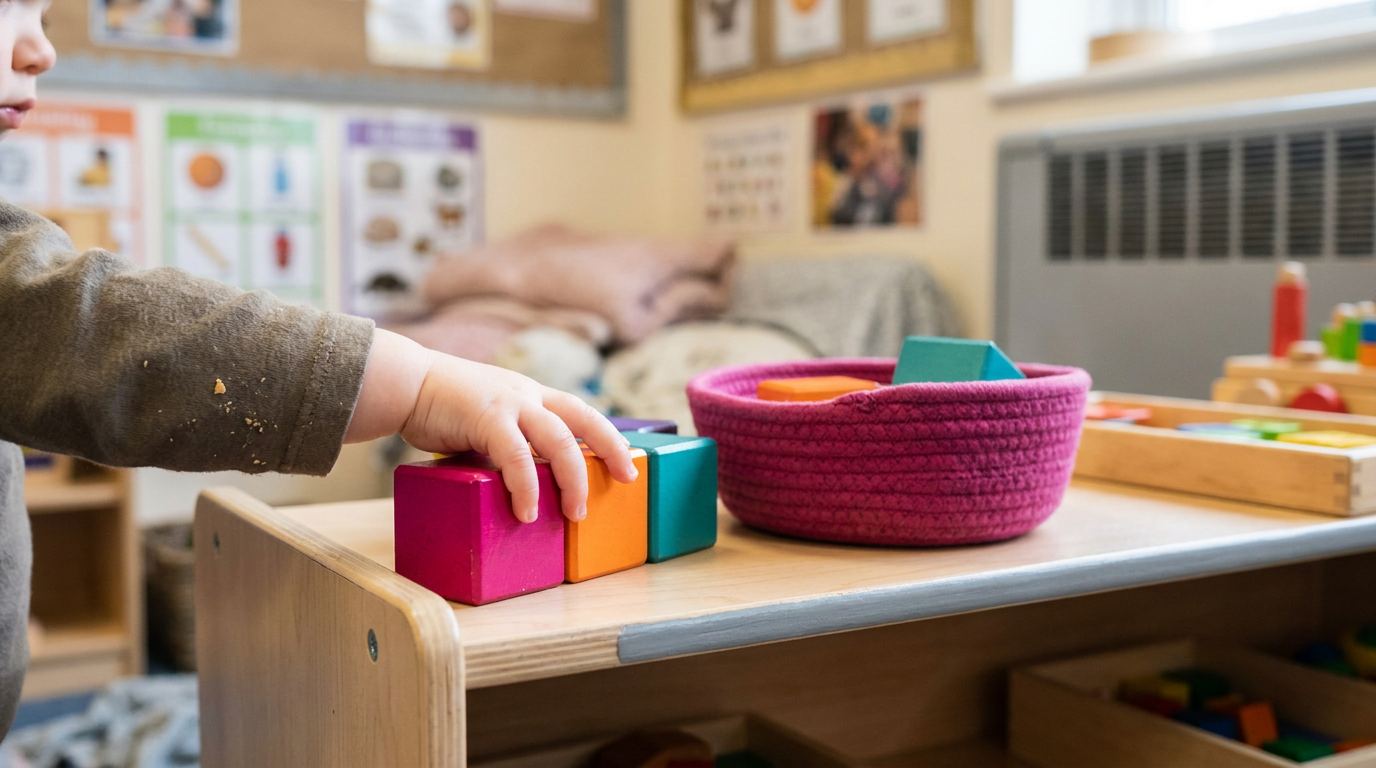
According to the Department for Education (DfE) (2024) framework, an enabling environment is one that is rich with opportunities for children to learn and develop. This principle is built on three interconnected characteristics:
- The Emotional Environment: This is the foundation. Children must feel safe, secure, and valued. The space should foster a sense of belonging and promote positive relationships.
- The Physical Environment: This refers to the layout of the room, outdoor spaces, and the accessibility of resources. It should be stimulating and challenging, encouraging children to explore, experiment, and take appropriate risks.
- The Temporal Environment: This involves the daily routines and the way time is structured. It should be flexible enough to allow for child-led play and deep engagement, rather than being rigidly dictated by a timetable.
To put this into practice, we recommend using an enabling environments eyfs checklist approach when auditing your space:
- Accessibility: Are resources stored at a child’s height and clearly labelled so they can make independent choices?
- Flexibility: Can furniture and resources be moved and adapted to follow children’s interests?
- Challenge: Does the environment offer a range of activities that cater to different developmental stages?
- Comfort: Are there quiet, cosy areas for relaxation and reflection, as well as spaces for active play?
- Flow: Can children move easily and safely between different areas, both indoors and outdoors?
Designing Your Indoor EYFS Learning Environment: A Zone-by-Zone Guide
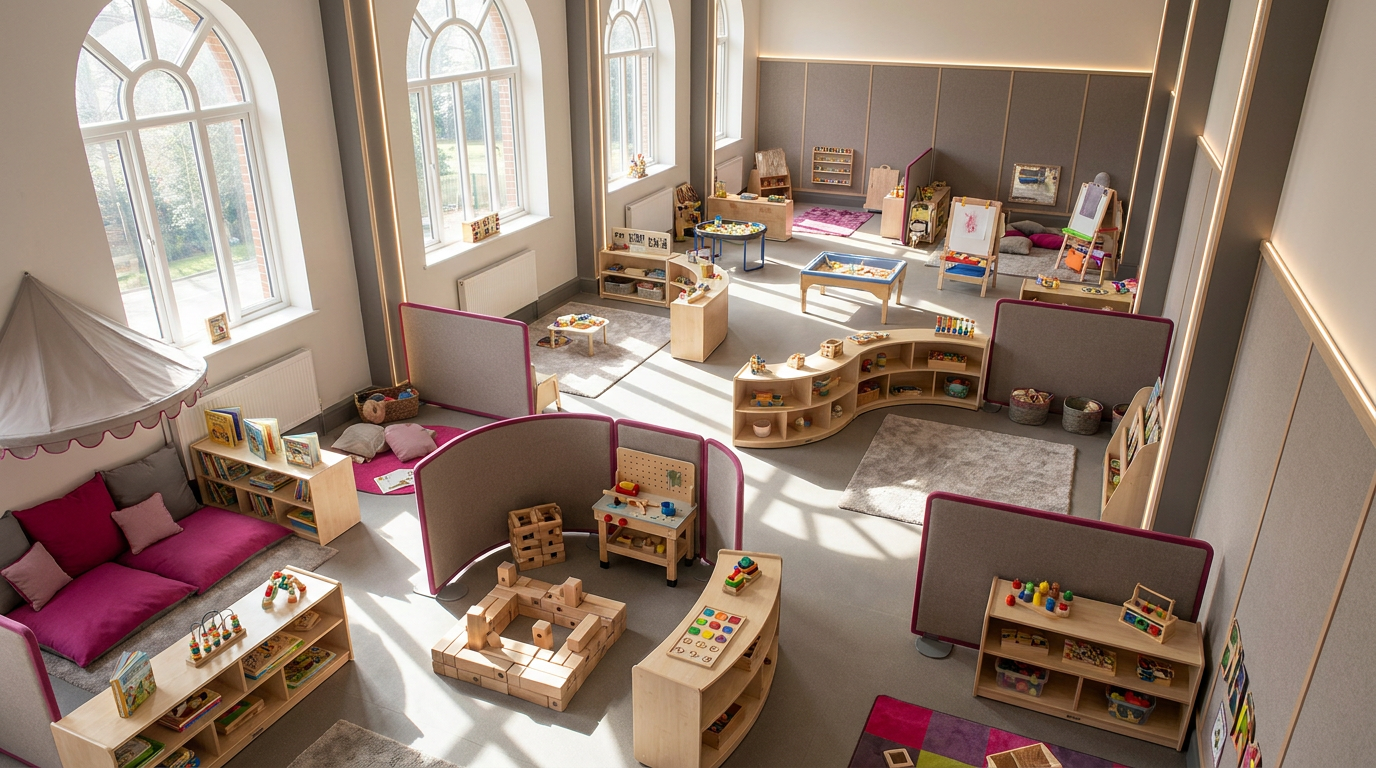
Creating distinct yet interconnected zones is a highly effective strategy for organising your indoor space. This approach supports continuous provision, allowing children to access high-quality resources independently and pursue their own interests. Thoughtful use of eyfs learning zones furniture, such as low-level shelving units or rugs, can effectively define these areas without creating rigid barriers. The key is to ensure each zone is well-resourced and clearly purposed to promote specific types of learning and development.
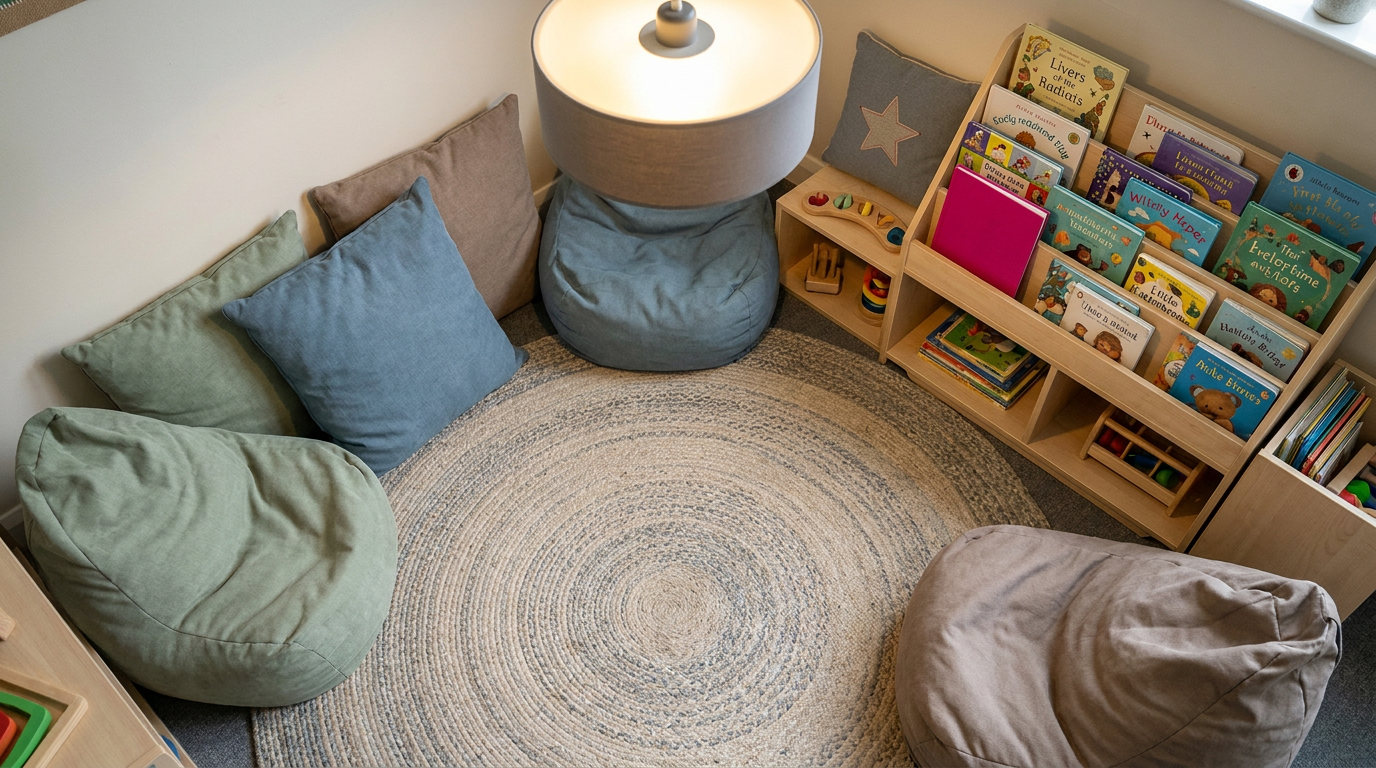
This structure also helps you manage your early years continuous provision resources logically, making it easier to audit, rotate, and enhance what’s on offer. Below are some core zone ideas and the essential furniture and resources they require. These are some of the most effective eyfs classroom design ideas uk schools are using. You’ll find that a well-planned environment naturally encourages a wide range of skills.
| Learning Zone | Key Furniture & Resources | Learning & Development Focus | Example Product Range |
|---|---|---|---|
| Reading & Quiet Corner | Cosy dens, soft seating, accessible book displays, story sacks, puppets. | Communication & Language, PSED, Literacy. | Beanbags, floor cushions, forward-facing bookcases. |
| Construction & Small World | Rugs, flat-topped storage units, large blocks, vehicles, animal/people figures. | Mathematics (shape, space), PSED (collaboration), Understanding the World. | Specialised EYFS brands like Twoey offer robust units. |
| Messy Play & Investigation | Tuff trays, sand/water tables, easels, storage for aprons and materials. | Expressive Arts & Design, Understanding the World (scientific concepts). | The TickiT Sensory Mood Sand and Water Table enhances sensory exploration. |
| Mark Making & Maths | Child-height tables/desks, accessible pots for pens/crayons, whiteboards, varied paper, counters, shapes, weighing scales. | Literacy, Mathematics, Physical Development (fine motor skills). | Lightweight, stackable tables and chairs for flexibility. |
Key Considerations for Designing an EYFS Outdoor Area
Yes, the outdoor area is as crucial as the indoor space and should be given equal thought in your planning. The process of designing an EYFS outdoor area should not treat it as a simple playground for burning off energy. Instead, it must be viewed as an extension of the classroom, providing rich, multi-sensory opportunities for learning that are difficult to replicate indoors. The principles of an enabling environment apply just as strongly outside.
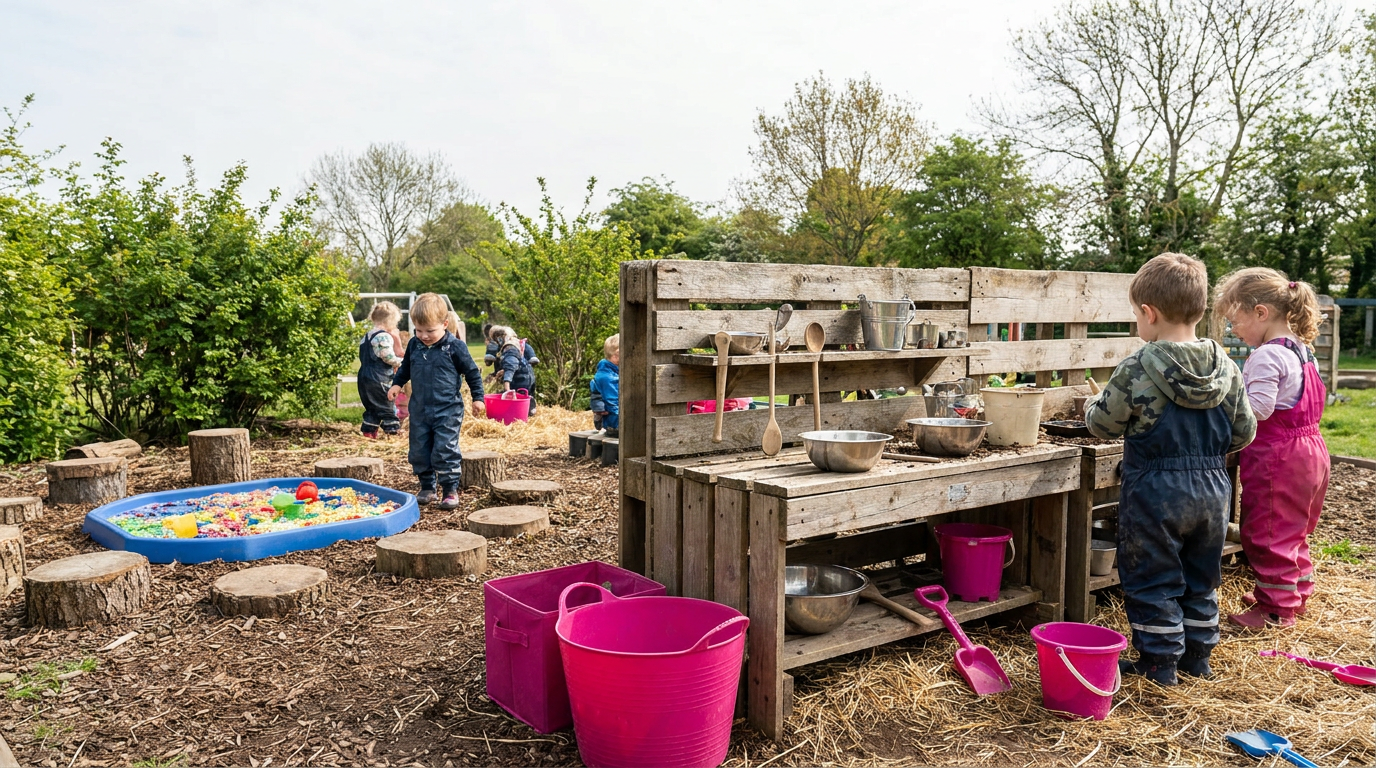
A well-designed outdoor space supports all seven areas of learning. It is particularly vital for physical development, offering children the chance to develop gross motor skills, balance, and coordination on a larger scale. It also provides a unique context for managed risk-taking, which is essential for building resilience and self-confidence. According to the Health and Safety Executive (HSE) guidance on play provision, balancing safety with challenge is key.
When designing an EYFS outdoor area, consider these core elements:
- All-Weather Access: A combination of surfaces, including grass, hardstanding, and a covered area (like a canopy), ensures the space is usable year-round.
- Varied Terrain: Incorporate small hills, slopes, and different textures to provide physical challenges.
- Zoning: Create distinct areas for different types of play, such as a large construction area with loose parts, a mud kitchen, a quiet space for reading, and a gardening plot.
- Natural Elements: Use logs for balancing, tree stumps for seating, and planters for growing flowers and vegetables to connect children with the natural world.
- Storage: Secure and accessible storage is vital. Using robust outdoor storage solutions keeps your early years continuous provision resources safe and tidy, Saving Time & Stress for staff.
Selecting Compliant, Durable, and Cost-Effective EYFS Resources
When sourcing furniture for your setting, safety and durability must be non-negotiable. One of the most critical standards to look for is BS EN 1729. This is the British and European standard specifically for furniture for educational institutions. It is split into two parts:
- Part 1: Functional Dimensions. This ensures furniture is ergonomically designed for the correct age group, supporting good posture and comfort.
- Part 2: Safety Requirements and Test Methods. This certifies that the furniture is strong, stable, and durable enough to withstand the rigours of a school environment.
Choosing furniture that meets this standard is a crucial step in sourcing compliant early years furniture UK schools can trust. It protects both the children using it and the school’s investment. Beyond official standards, look for practical safety features in eyfs learning zones furniture: rounded corners and edges to prevent injury, non-toxic, easy-to-clean finishes, and designs that eliminate potential finger traps.
In our 35 years of experience, we’ve seen how investing in quality pays off. While cheaper, domestic-grade furniture may seem like a saving, it often fails to withstand daily use, leading to higher replacement costs and potential safety hazards. We recommend prioritising multi-purpose, flexible items made from robust materials like solid wood or high-quality melamine-faced chipboard (MFC). A supplier who can verify compliance for you is an invaluable partner. At Costcutters UK, we ensure our educational ranges meet these stringent requirements, as detailed on our certifications & accreditations page.
Procurement and Budgeting for Your EYFS Learning Environment Design
For School Business Managers and Headteachers, the challenge of school furniture procurement eyfs settings require is balancing quality and compliance with a tight budget. A strategic approach is essential to demonstrate value for money and achieve an effective possible outcomes for children. The lifetime cost of a product, not just its initial price tag, should be the guiding factor.
We recommend a phased procurement plan:
- Audit First: Begin by thoroughly auditing your existing furniture and resources. What is still fit for purpose? What needs urgent replacement? This helps you create a prioritised shopping list.
- Prioritise High-Impact Items: Focus your initial budget on core items that support multiple learning areas, such as versatile storage units, durable tables and chairs, and a well-equipped messy play station.
- Phase Your Purchases: You don’t have to buy everything at once. Plan to refresh different zones or resource types over several terms or a full academic year. This makes the budget more manageable.
- Seek Expert Advice: A “Design To Install We Do It All!” approach from a specialist supplier can be incredibly efficient. We offer space planning consultations to help you maximise your layout and create a detailed, itemised plan that aligns with your budget. This professional input prevents costly errors.
Also, leveraging Bulk Buy Discounts can significantly stretch your budget. By consolidating your purchases with one trusted supplier, you can often secure better pricing and simplify logistics. We also offer flexible payment options, such as Credit Accounts Or Pay Flexibly, to help schools manage their cash flow effectively. Remember, good procurement isn’t just about finding the cheapest compliant early years furniture uk; it’s about finding an effective value solution that will last for years.
Case Study: A Hypothetical Primary School Scenario
Challenge: A two-form entry primary school in the North West needed to refurbish its outdated EYFS classrooms. Their budget was £15,000, but initial quotes for standalone furniture were exceeding this. The existing layout was causing congestion and limiting child-led play.
Solution: The school engaged us for a free space planning consultation. We designed a new layout using multi-functional furniture to create better flow and defined learning zones. By consolidating their order, they accessed our Bulk Buy Discounts.
Results: The final cost came in at £14,200, saving them over £1,000 against their initial quotes. The new layout reduced classroom noise and increased child engagement in continuous provision by a staff-estimated 40%.
Key Insight: Professional space planning combined with smart procurement strategies can deliver a superior environment for less than the cost of simply buying furniture off-the-shelf.
Frequently Asked Questions About EYFS Environment Design
What is EYFS learning environment design?
EYFS learning environment design is the professional practice of planning and organising the physical space, resources, and routines to support the EYFS framework. It involves creating a setting that is emotionally secure, physically challenging, and intellectually stimulating for children from birth to five. A successful design is a critical component of delivering high-quality early education and is a legal requirement in the UK.
What are the 7 areas of learning in an EYFS environment?
The seven areas of learning are split into three Prime areas and four Specific areas. The Prime areas are Communication and Language, Physical Development, and Personal, Social and Emotional Development (PSED). The Specific areas are Literacy, Mathematics, Understanding the World, and Expressive Arts and Design. A well-designed environment must provide accessible resources and opportunities for children to develop skills across all seven of these interconnected areas.
How do you create an enabling environment on a budget?
Creating an enabling environment on a budget is about smart planning, not expensive items. You should prioritise durable, multi-purpose furniture that offers long-term value. Supplement these core items with open-ended, natural, and upcycled resources. Auditing your current stock to avoid duplication and seeking suppliers that offer Bulk Buy Discounts are also highly effective strategies for maximising every pound of your budget.
What makes an EYFS environment ‘communication friendly’?
A communication-friendly space is one that actively encourages language and discussion. This involves minimising excessive background noise, providing cosy, quiet areas for conversation, and having a rich supply of accessible books, puppets, and story props. Adults play a key role by modelling rich language and engaging children in meaningful back-and-forth interactions. Visual timetables and labels also provide crucial support for all children.
Why are learning zones important in EYFS?
Learning zones are important because they help organise the classroom logically and promote independent, child-led play. By grouping related resources together, such as in a construction area or a mark-making station, children can easily find what they need to follow their interests. This structure also helps manage behaviour by creating clear expectations for different types of activity (e.g., quiet vs. Active) and ensures a balanced provision.
What are the safety requirements for EYFS furniture in the UK?
The key safety standard for UK educational furniture is BS EN 1729, covering appropriate size, strength, and stability. Beyond this, compliant early years furniture uk suppliers must ensure products have features like rounded corners, non-toxic finishes, and no finger entrapment hazards. All equipment, particularly items for physical play, must be thoroughly risk-assessed by the school to ensure it is age-appropriate and installed correctly.
How can I make my EYFS outdoor area usable all year round?
To ensure year-round use, you must incorporate shelter, appropriate surfaces, and good storage. A canopy or outdoor classroom provides protection from rain and sun, while a mix of hardstanding and safety surfaces prevents the area from becoming a mud pit. Easily accessible storage for waterproofs and wellies is essential, as are robust, weather-resistant resources like covered sandpits and durable water play stations.
What is continuous provision in early years?
Continuous provision refers to the collection of resources and activities that are consistently available to children for independent exploration. This baseline provision is carefully planned by educators to offer challenges and learning opportunities across all seven areas of the EYFS. It allows children to build on their learning, practise new skills, and follow their own interests without needing constant adult direction or intervention.
Should technology be included in an EYFS environment?
Yes, technology should be included, but it must be purposeful and enhance learning rather than replace hands-on play. This could involve using tablets with quality educational apps, an interactive whiteboard for group activities, or simple tools like recordable microphones to support communication. Technology should be integrated thoughtfully, offering experiences that would otherwise not be possible, and balanced with plenty of real-world, sensory play.
How often should I change my EYFS classroom layout?
The core layout should remain largely consistent to provide children with a sense of security and predictability. However, the resources within your eyfs learning zones furniture and areas should be enhanced and adapted regularly based on children’s changing interests and developmental needs. A major redesign is typically only necessary if you observe that the current flow isn’t working or that certain areas are consistently underused.
Important Considerations and Next Steps
This guide provides a comprehensive framework and best practices based on the UK’s EYFS statutory guidance. However, every early years setting is unique in its physical space, cohort of children, and budget. The ideas presented here should be adapted to your specific context and not treated as a rigid blueprint. A thorough audit of your own needs, involving your whole team, is the essential first step in any school furniture procurement eyfs project.
The primary approach discussed is a zone-based design using professionally manufactured furniture. Alternative approaches include a stronger focus on natural, ‘loose parts’ play inspired by Reggio Emilia or a more minimalist setup. Whilst our recommendations focus on durability and compliance, schools can supplement this with creative, low-cost, and upcycled resources to add character and respond to children’s immediate interests. An effective environments often blend both.
For significant refurbishments or when designing a new space from scratch, it is advisable to seek professional guidance. A space planning consultation can help you avoid costly mistakes, ensure optimal flow, and maximise the educational potential of your environment. An expert can help translate your pedagogical vision into a practical, compliant, and budget-aligned reality, Saving Time & Stress in the long run. We believe this is a crucial step for ambitious projects.
Begin Your High-Impact EYFS Transformation
Successful EYFS learning environment design is a thoughtful process that merges educational theory with practical reality. By focusing on creating a safe and enabling environment, establishing well-resourced learning zones, and making smart procurement decisions, you can build a space that fosters curiosity, independence, and a genuine love of learning. This investment is not just in furniture, but in the developmental journey of every child who passes through your doors. We’re proud to be Rated Excellent On Trustpilot by schools who have trusted us with this journey.
At Cost Cutters UK, we have partnered with schools and nurseries across the country for over 35 years to achieve this. Our team understands the unique challenges of UK school procurement. If you are ready to transform your space, we invite you to book a free, no-obligation space planning consultation to discuss your project.
References
- Department for Education (DfE) (2024) – Statutory Framework. Defines the legal requirements for learning, development, and welfare, including the need for a ‘positive environment’.
- Health and Safety Executive (HSE) – Official Guidance. Provides risk management principles applicable to outdoor play equipment and environments to ensure safety.
- BSI Group (British Standards Institution) – Standards Body. Publishes BS EN 1729, the definitive standard for dimensions, strength, and stability of furniture for educational institutions in the UK.
- Community Playthings (2023) – Designing an Early Years Environment. Offers insights into creating child-led spaces.
- Early Years Alliance (2024) – Quality and standards in early years. Provides guidance on creating high-quality provision.
- Nursery World (2024) – Management best practices for early years settings, including environment design and procurement.
- The Consortium Early
Years (2024) – Educational Supplier. Provides a wide range of early years continuous provision resources and furniture.
- Ofsted (2024) – Early Years Inspection Handbook. Outlines how inspectors evaluate the quality of education, including the impact of the learning environment.
- Montessori Centre International (2024) – The Montessori Approach. Details principles of a child-led environment, which have heavily influenced modern EYFS practice.
- [Reggio