A Practical Guide to Early Years Furniture for UK Nurseries & Homes
🎯 Key Takeaway
Choosing the right early years furniture involves selecting safe, durable, and developmentally appropriate pieces that comply with UK standards like the Early Years Foundation Stage (EYFS) framework. The focus should be on furniture that promotes independence, safety, and learning.
• Prioritise safety by checking for compliance with British Standards, such as BS EN 1729, for stability and non-toxic materials.
• Align furniture choices with the EYFS framework by selecting items that support child-led play, accessibility, and different learning zones.
• Create a practical budget by mixing new, essential items with quality second-hand finds, ensuring all pieces are thoroughly checked for safety.This guide provides a comprehensive checklist and expert tips to help you furnish your nursery or preschool setting with confidence.
Setting up a nursery or playroom is an exciting project, but it can also feel overwhelming. For early years furniture, the choices seem endless, and it’s about so much more than just aesthetics. As of February 2026, the right pieces must support learning and development, meet stringent UK safety standards, and fit your space and budget. For busy parents and nursery managers, making confident decisions is key.
This practical guide is designed to cut through the confusion. We’ll provide a clear, UK-focused roadmap for selecting an effective nursery furniture UK settings need. We’ll cover everything from decoding the Early Years Foundation Stage (EYFS) framework and its impact on your choices to creating a smart budget and providing an essential checklist. Our goal is to empower you to create a safe, stimulating, and functional environment where children can thrive.
Written by: Content Team | Reviewed by: Editorial Team, Industry Specialists
35+ Years Experience; Rated Excellent On Trustpilot
Last updated: 15 February 2026
ℹ️ Transparency Disclosure: As a trusted partner to communities across the UK, Costcutters UK is committed to providing practical, helpful information. This guide on early years furniture is based on our extensive experience supporting families and businesses. Our content is researched and reviewed for accuracy. While we don’t sell furniture, we believe in empowering our customers with the knowledge to make an effective decisions for their needs.
Understanding the EYFS Framework and Its Impact on Furniture
The right furniture is fundamental to creating an ‘Enabling Environment’, a core principle of the Early Years Foundation Stage (EYFS). The Early Years Foundation Stage (EYFS) is the UK government’s statutory framework for the learning, development, and care of children from birth to five years old. It doesn’t just set educational goals; it also guides how physical spaces should be structured to support them. For the more than 1.5 million children attending early years settings in the UK, this environment is critical.
So, how does this translate to furniture choices? The framework emphasises child-led learning and independence. This means your furniture should be accessible, empowering children to make their own choices.
Key EYFS furniture requirements include:
- Promoting Independence: Low-level, open-fronted shelving units allow children to select and tidy away their own toys and resources. Child-sized tables and chairs enable them to sit and work comfortably without adult assistance.
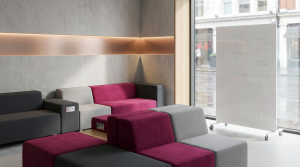
- Supporting Positive Relationships: Large, round, or multi-sided tables encourage collaborative play and communication. Designated cosy corners with soft furnishings can provide a safe space for children to interact in smaller groups or have quiet time.
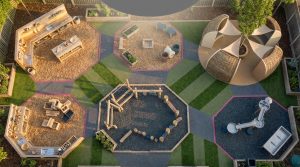
- Enabling Learning and Development: Furniture can be used to create distinct, clearly defined zones for different types of play – such as a messy play area with sand-and-water tables or a quiet reading nook. This structure helps children understand the purpose of each space and transition smoothly between activities. Official guidance from sources like foundationyears.org.uk (2021) highlights how these environments lay the groundwork for future learning.
Ultimately, your furniture isn’t just functional; it’s an educational tool that helps bring the EYFS principles to life.
The Essential Early Years Furniture Checklist (By Zone)
A well-organised space with the right early years furniture is crucial for effective learning and play. The most practical approach is to think For zones, dedicating specific areas to different activities. This creates an orderly, predictable environment that children can navigate with confidence. Here is our essential checklist for key zones.
1. Creative & Messy Play Zone
This area needs to be durable and, most importantly, easy to clean.
- Adjustable Sand & Water Table: A cornerstone for sensory exploration. Look for one with a lid to keep contents clean.
- Wipe-Clean Tables & Chairs: Choose sturdy, non-porous surfaces. Stackable chairs are a great space-saver.
- Child-Accessible Art Easel: A double-sided easel allows multiple children to create at once. Ensure it has trays for paints and brushes.
2. Quiet & Reading Corner
This should be a calm, comfortable retreat from the busier parts of the room.
- Low-Level Bookshelves: Forward-facing shelves that display book covers are more inviting for young children than traditional spines.
- Soft Furnishings: Beanbags, large floor cushions, and a soft rug create a cosy and welcoming atmosphere.
- Puppet Theatre: A simple addition that encourages storytelling and imaginative play.
3. Role Play & Imaginative Zone
This area is for bringing stories to life and is a key part of the classroom furniture for early years.
- Play Kitchen & Accessories: A durable wooden kitchen is a timeless piece of children’s nursery equipment that facilitates social play.
- Dressing-Up Rail/Box: A low rail with hooks or an open-top box makes costumes easily accessible.
- Small World Play Table: A dedicated table at child height for figures, blocks, and vehicles keeps small parts contained.
4. Construction & Block Play Zone
This area requires open floor space and smart storage for various building materials.
- Low, Open Storage Bins: Use clear or labelled bins for different types of blocks (wooden, plastic, foam) so children can easily find what they need.
- Durable, Low-Pile Carpet or Mat: This defines the space and helps to dampen noise.
This zoned approach ensures all types of preschool furniture and play are catered for, meeting diverse developmental needs.
Safety First: Decoding UK Standards for Early Years Furniture
When selecting early years furniture, safety is non-negotiable. While a piece might look appealing, its construction and materials must be rigorously assessed to protect children from preventable accidents. The cornerstone of furniture safety in educational settings is a set of standards from the British Standards Institution (BSI).
The primary standard to look for is BS EN 1729. This is a European standard specifically for chairs and tables used in educational institutions. It is split into two parts:
- Part 1: Functional Dimensions: This ensures the furniture is ergonomically designed for a child’s size, promoting good posture and comfort. It uses a system of ‘size marks’ to match chairs and tables to different age groups.
- Part 2: Safety Requirements: This tests for strength, stability, and durability. Furniture that meets this standard is less likely to tip over, collapse, or break under normal use.
Beyond BS EN 1729, other critical safety features for safe furniture for toddlers include:
- Rounded Corners: All edges and corners should be smoothly rounded to prevent injuries from bumps and falls.
- Non-Toxic Finishes: All paints, varnishes, and lacquers must comply with EN 71-3, the standard that tests for toxic heavy metals. This is especially important for items children might chew on, such as cot rails or the edges of wooden nursery furniture.
- Entrapment Hazards: Check for gaps or openings between 7mm and 12mm where a child’s finger could get trapped, or larger gaps that could entrap a head.
The table below outlines key safety features and why they matter within the EYFS framework.
| Safety Feature | What to Check For | Why It Matters (EYFS Principle) |
|---|---|---|
| Stability (BS EN 1729-2) | The item doesn’t wobble or tip easily when pushed. Check for a wide, sturdy base. | Provides a secure physical environment, allowing children to move and play confidently (‘Enabling Environments’). |
| Appropriate Sizing (BS EN 1729-1) | A child’s feet can rest flat on the floor when seated, with knees at a 90-degree angle. | Supports physical health and well-being, a key aspect of a child’s overall development (‘Unique Child’). |
| Non-Toxic Materials (EN 71-3) | Look for certification or a manufacturer’s declaration of compliance on paints and finishes. | Ensures the environment is safe and healthy, protecting children from harmful substances. |
| No Sharp Edges or Corners | Run your hand along all surfaces and corners; they should be smooth and rounded. | Minimises risk of injury, allowing for safe, independent exploration of the environment. |
Budgeting for Early Years Furniture: Smart Sourcing in the UK
Furnishing a nursery can be a significant expense, but a safe and stimulating environment doesn’t have to break the bank. Smart budgeting and sourcing are key. The goal is to invest wisely in critical items while finding cost-effective solutions for others. According to the Office for National Statistics (ONS) (2022), UK households spend a significant portion of their income on household goods, so making every pound count is essential.
Our advice is to prioritise investment in high-use, high-impact safety items. This includes cots, mattresses, and car seats, which should almost typically be bought new to guarantee they meet the latest safety standards. For other nursery furniture UK items, you can be more flexible.
Here are some smart sourcing options:
- New from Retailers: Large stores and online retailers offer competitive pricing on basics. Look for sales events to maximise your budget.
- Specialist Educational Suppliers: Companies that specialise in children’s nursery equipment offer items designed to withstand heavy use and meet all safety standards, often with Bulk Buy Discounts. We find this is often an effective value for core items like tables and chairs.
- Second-Hand (with caution): Items like bookshelves, play kitchens, or storage units can be great second-hand finds. However, you must inspect them rigorously for stability, splinters, peeling paint, and any signs of damage. Typically check for product recalls online before buying.
- DIY Projects: For those with the skills, building simple items like a mud kitchen or a toy box can be a cost-effective option. However, we’ll be honest – this is only advisable if you are confident you can create a piece that is structurally sound, stable, and finished with non-toxic, child-safe materials.
Hypothetical Scenario: The Community Preschool Project
Challenge: A new community preschool in Manchester needed to fully furnish two rooms for 20 children on a tight budget of £5,000.
Solution: The manager allocated 40% of the budget (£2,000) to new, high-quality sleep mats and BS EN 1729-compliant tables and chairs from a specialist supplier offering Bulk Buy Discounts. The remaining budget was used to source second-hand bookshelves and a play kitchen from a local online marketplace, and parents donated their time to paint a feature wall with non-toxic paint.
Results: The preschool was fully and safely furnished within budget. The investment in core items ensured durability and compliance, while the savvy sourcing of other pieces added character without compromising safety.
Key Insight: A blended approach of investing in new critical items and carefully sourcing second-hand non-critical pieces is a highly effective budgeting strategy.
Montessori vs. Traditional Styles: Choosing an Approach
When selecting furniture, you’ll likely encounter different educational philosophies, most notably the Montessori approach versus more traditional styles. Understanding the difference can help you create an environment that aligns with your goals. It isn’t a case of one being better than the other; rather, it’s about finding what works for your child and your space.
The Montessori Method is a child-centred educational approach that emphasises independence and hands-on learning. Montessori style furniture UK settings use is therefore distinct:
- Child-Sized & Accessible: Everything, from shelves to tables, is low to the ground and easily reachable. This empowers children to interact with their environment without needing adult help.
- Natural Materials: There is a preference for wood and other natural materials to create a calm, tactile, and aesthetically pleasing environment.
- Promotes Independence: A classic example is the ‘floor bed’ – a mattress on the floor instead of a cot – which allows a toddler to get in and out of bed on their own. Similarly, a small wardrobe with low rails lets a child choose their own clothes.
Traditional classroom furniture for early years might be more varied. It can be brightly coloured and themed, and may not typically be child-sized (e.g., an adult-sized armchair in a reading corner). The focus might be more on aesthetics or durability than on fostering independence in the same specific way as Montessori.
However, you don’t have to choose one exclusively. The most effective environments often blend principles from both. You could use traditional, durable tables and chairs for messy play but incorporate a low, forward-facing Montessori bookshelf in your reading corner to encourage a love of books. The key is to think about the purpose of each item. Does it help the child to be more independent, safe, and engaged? That’s the real test.
Frequently Asked Questions
What is early years furniture?
Early years furniture refers to specialised items designed specifically for children from birth to five years old. It is characterised by its child-appropriate size, robust safety features, and a design that actively supports developmental milestones. This includes promoting independence and enabling learning through play, often in line with frameworks like the EYFS. It’s built for durability and safety in nursery and home environments.
What furniture is legally required for a UK nursery?
The EYFS framework does not legally mandate a specific list of furniture items for a UK nursery. Instead, it requires that every setting provides a safe, stimulating, and sufficient physical environment. This means you must have an adequate number of suitable cots or sleep mats, age-appropriate tables and chairs for meals and activities, and accessible storage for toys and materials, all meeting safety standards.
How does furniture support EYFS guidelines?
Furniture is fundamental to creating an ‘Enabling Environment’, a cornerstone of the EYFS framework. Low-level, open shelving promotes choice and independence, a key part of the ‘Unique Child’ principle. Group activity tables encourage social skills, supporting ‘Positive Relationships’. Also, using furniture to create clearly defined zones, like a reading corner with preschool furniture, helps children understand and navigate different types of learning.
What is BS EN 1729 for furniture?
BS EN 1729 is the key British and European safety standard for chairs and tables intended for use in educational institutions. It is divided into two parts. Part 1 specifies the correct ergonomic dimensions for a child’s size to support good posture, while Part 2 sets rigorous requirements for strength, stability, and durability to prevent accidents. Checking for this standard is a crucial step.
Is second-hand nursery furniture safe to buy?
Yes, second-hand furniture can be safe, but it demands extremely careful inspection before purchase and use. You must check thoroughly for structural stability, splinters, peeling paint, and any missing parts. It’s vital to check online for any product recalls. While items like bookshelves can be a good find, we strongly recommend buying crucial safe furniture for toddlers like cots, mattresses, and car seats new.
What’s the difference between Montessori and traditional furniture?
Montessori furniture is minimalist, child-sized, and designed to be fully accessible to foster independence. This includes items like low shelves and floor beds. Traditional furniture might be more decorative, colourful, or adult-centric in its design. Many modern settings create a successful blend, using accessible montessori style furniture UK principles for key areas like reading and self-care stations.
How can I make a small space work for a nursery?
Focus on using multi-functional and space-saving furniture to maximise a small area. Utilise vertical space with wall-mounted shelving, choose storage units that can also serve as bench seating, and opt for foldable or stackable items like chairs or sleep mats. Defining zones with rugs instead of bulky furniture pieces is another effective technique to create a sense of order and space without clutter.
What materials are best for children’s furniture?
Solid wood like birch or beech is an excellent choice as it is durable, stable, and long-lasting. High-quality, BPA-free plastics are also a great option, particularly for messy play, as they are lightweight and very easy to clean. Regardless of the material, you must ensure any finish (paint or varnish) is certified non-toxic (look for EN 71-3 compliance) and the overall construction is sturdy.
How high should toddler tables and chairs be?
The effective height allows a child’s feet to rest flat on the floor with their knees bent at a 90-degree angle. an effective way to ensure this is to choose furniture sized according to the BS EN 1729 standard, which uses ‘size marks’ to match items to a child’s stature. As a general guide for safe furniture for toddlers, a chair seat height of around 26cm is suitable for most two-to-three-year-olds.
Where can I find budget-friendly nursery furniture in the UK?
You can find budget-friendly options by exploring a mix of retailers and second-hand sources. Large retailers often have affordable ranges, while online marketplaces can be good for second-hand items like bookshelves (typically inspect with caution). Also, keep an eye on end-of-line sales from educational suppliers. The key is typically to balance the cost against a thorough safety check before any item is used.
Important Considerations
This guide provides general advice and best practices for selecting early years furniture in the UK. However, prices, product availability, and specific local authority requirements for registered nurseries can vary. The safety standards mentioned are correct as of the publication date but are subject to change; therefore, you should typically verify the most current regulations with official sources like the BSI.
Whilst this article covers sourcing new and second-hand items, other alternatives exist. These include furniture rental services, which can be a flexible option for nurseries, or DIY projects for skilled individuals. We believe DIY furniture should only be attempted if you are entirely confident you can meet stringent safety standards for stability, construction, and material toxicity.
For children with specific physical or developmental needs, standard furniture may not be suitable. In these instances, You should consult with a qualified professional, such as an occupational therapist or a specialist supplier of adaptive equipment. They can provide expert advice to ensure the environment fully supports your child’s unique requirements and promotes their well-being.
Creating a Safe & Inspiring Space
Ultimately, choosing the right early years furniture is a foundational step in creating a nurturing, safe, and inspiring environment for children to grow and learn. By prioritising safety through recognised UK standards, aligning your choices with the developmental goals of the EYFS, and budgeting smartly, you can build a space that is both highly practical and wonderfully stimulating. An effective settings are not typically the most expensive, but the most thoughtfully considered.
We know that big projects like setting up a nursery take time and energy. While you focus on the big decisions, Costcutter is here to help with all the daily essentials that keep your household running smoothly. For everything from a quick coffee to an easy evening meal, you can typically rely on your local convenience store.
References
- foundationyears.org.uk – Official Guidance Document (2021). Provides parents with a guide to the Early Years Foundation Stage (EYFS) framework, outlining developmental milestones from birth to five.
- assets.publishing.service.gov.uk – Governmental Guidance (2024). Details the nutritional and well-being requirements for early years settings, which has implications for dining furniture and routines.
- twinkl.co.uk – Educational Resource Article (2022). Offers practical advice for parents on preparing a child for nursery, including skills which can be supported by the home environment and furniture.
- Office for National Statistics (ONS) – UK Spending Data (2022). This report on family spending provides context on household expenditure, including categories like furniture and household goods.
- Statista – Market Research Data (2024). Provides market analysis which can be used to understand consumer behaviour and budgeting priorities in the UK.
CONCLUSION
Creating a Safe & Inspiring Space for Your Child
In summary, early years furniture is a foundational step in creating a nurturing environment for children. By prioritising safety through UK standards, aligning choices with the developmental goals of the EYFS, and budgeting smartly, you can build a space that is both practical and inspiring. The best sett