Compliance & Safety: A Complete Guide to Outdoor Pub Furniture Regulations UK
🎯 Key Takeaway
Achieving compliance & safety for outdoor pub furniture requires strict adherence to UK regulations covering fire retardancy, structural integrity, and public accessibility. This involves meeting specific standards like BS 7176 for fire safety and BS EN 581 for durability. All upholstered commercial seating, including outdoor cushions, must meet the BS 7176 ‘Crib 5’ fire safety standard. Also, furniture must be certified to BS EN 581 for strength, stability, and durability to withstand public use and UK weather. Finally, layout and furniture choice must provide ‘reasonable adjustments’ for disabled patrons under the Equality Act 2010.
As of March 2026, the boom in outdoor hospitality has made pub gardens more valuable than ever. However, this increased focus brings greater scrutiny on the furniture that fills these spaces. For pub owners, understanding the complex web of commercial outdoor furniture regulations UK is not just about aesthetics; it’s a critical aspect of compliance & safety. Failing to meet these standards can lead to severe fines, legal liability in case of an accident, and significant damage to your reputation. Effective health and safety compliance isn’t a burden, but a vital business function.
This guide breaks down the three core pillars of outdoor furniture regulations: fire safety, structural integrity, and public accessibility. At Cost Cutters UK, we have over 35 years of experience helping businesses navigate these requirements, ensuring their spaces are safe, welcoming, and legally sound. We believe that getting this right is fundamental to running a successful hospitality business.
👤 Written by: Content Team
Reviewed by: Editorial Team, Industry Specialists
Last updated: 24 March 2026
ℹ️ Transparency Disclosure: This article explores UK outdoor pub furniture regulations based on an analysis of government legislation, British Standards, and Health and Safety Executive (HSE) guidelines. Transparency is important to us; some links may connect to our specialised commercial furniture services. All information is verified by our editorial team. Costcutters UK has over 35 years of experience supplying compliant furniture to UK businesses and is Rated Excellent On Trustpilot.
Understanding the Core Pillars of UK Outdoor Furniture Compliance & Safety
Achieving comprehensive compliance & safety for outdoor furniture rests on three distinct but interconnected pillars: fire retardancy, structural stability, and accessibility. These are not suggestions but legal requirements that differentiate commercial ‘contract’ grade furniture from items sold for domestic use. The safety compliance standards for a busy pub garden are far more stringent because the furniture must withstand constant, heavy use by the public in a commercial setting.
The three main areas you must address are:
- Fire Safety (BS 7176): This standard governs the flammability of upholstery, a critical factor in preventing rapid fire spread in public spaces.
- Structural Integrity (BS EN 581): This ensures furniture is strong, stable, and durable enough for contract use, preventing collapses and other accidents.
- Accessibility (The Equality Act 2010): This legal act mandates that your space must be accessible to people with disabilities, which directly influences your furniture choices and layout.
Ignoring these commercial outdoor furniture regulations UK can have severe consequences. According to guidance from Croner (2024), a risk management consultancy, penalties for health and safety breaches can range from improvement notices to unlimited fines and even imprisonment in the most serious cases. Therefore, understanding and implementing these standards is essential.
Fire Safety Compliance (BS 7176): Protecting Your Patrons and Premises
Yes, any outdoor furniture that includes upholstery must be fire retardant to a specific commercial standard. The key regulation here is BS 7176, the British Standard specifying the fire resistance of upholstered seating for non-domestic environments. For public areas like pubs, this typically requires meeting the ‘Medium Hazard’ level, commonly known as ‘Crib 5’. A Crib 5 test, which is a key part of fire safety compliance, involves exposing the fabric and foam filling to a burning wooden structure (the ‘crib’) to see if it ignites and how it behaves. If it self-extinguishes within a set time, it passes.
This standard is a legal requirement under The Furniture and Furnishings (Fire) (Safety) Regulations 1988, which sets the minimum levels of fire resistance for upholstered furniture. It’s crucial to understand this applies to any item with flammable filling, including outdoor sofas, armchair cushions, and even padded seat covers for benches. A non-compliant cushion can act as an accelerant in a fire, turning a minor incident into a major disaster.
At Cost Cutters UK, we ensure that all our upholstered products clearly state their fire-retardant rating, so you can purchase with confidence. Verifying these fire safety compliance details is a non-negotiable part of procurement, safeguarding both your customers and your business licence. You can view a full list of our certifications and accreditations for complete peace of mind.
Structural Integrity & Durability (BS EN 581): Weathering the Elements and Crowds
Your outdoor furniture must be strong and stable enough to handle the demands of a busy commercial environment. The standard that governs this is BS EN 581, a European norm adopted by the British Standards Institution (BSI) that specifies the safety, strength, and durability requirements for outdoor contract furniture. Achieving this level of health and safety compliance is crucial for preventing accidents and ensuring longevity.
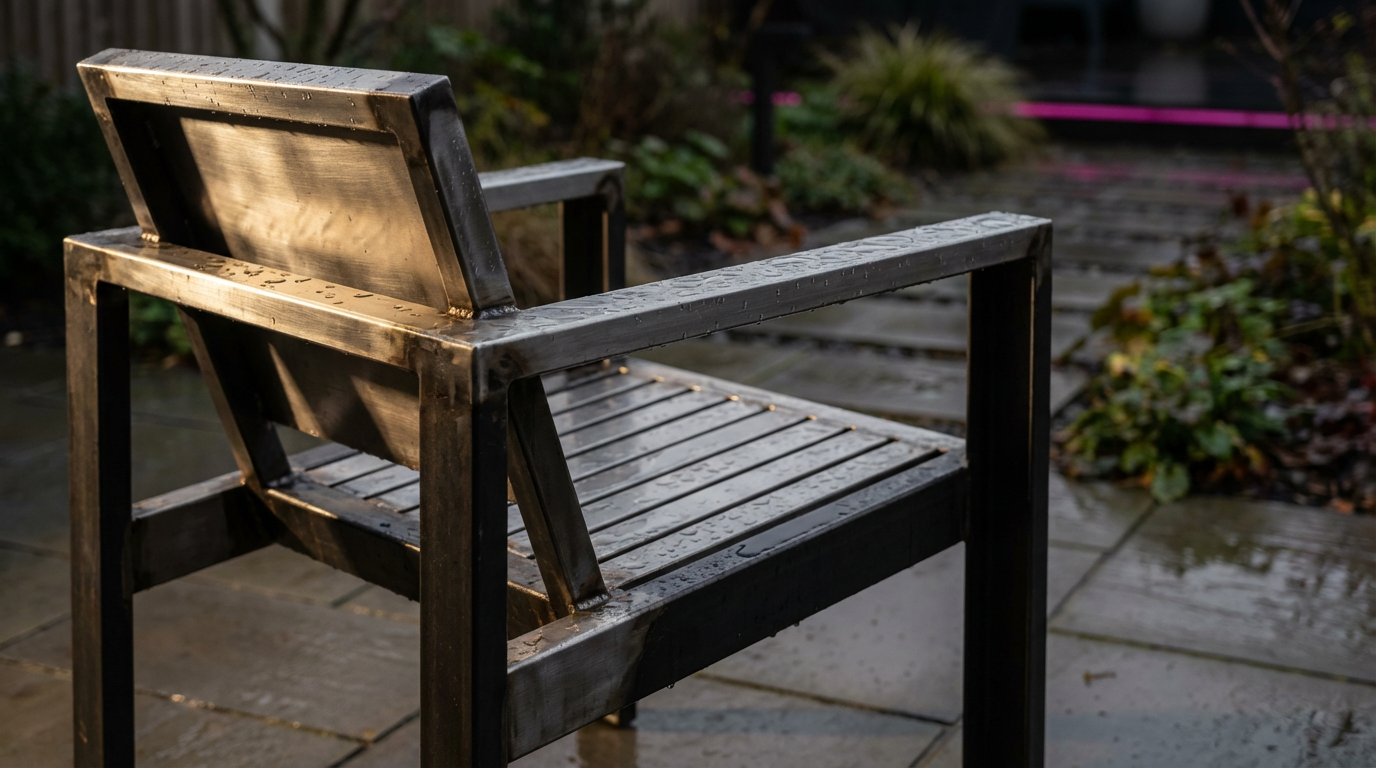
BS EN 581 testing is rigorous. It simulates real-world use by applying significant weight to seats and backs, testing the stability of tables to ensure they don’t tip easily, and assessing the impact of repetitive loads. It also considers the effects of weathering, a vital factor for UK pub gardens. Furniture that meets these standards is certified to:
- Withstand heavy, repeated use without breaking.
- Remain stable even when patrons lean back or shift their weight.
- Resist degradation from rain, sun, and temperature changes.
Using domestic-grade garden furniture is a false economy. It isn’t built for the rigours of a commercial setting and will likely fail, creating a serious safety hazard and damaging your reputation. Investing in certified durable breakout and outdoor furniture is an investment in safety and long-term value. Our “Design To Install We Do It All!” service ensures you get the right products for your specific needs.
| Material | Weather Resistance | Durability / Strength | Maintenance Required | Typical Contract Lifespan |
|---|---|---|---|---|
| Treated Softwood (Pine) | Moderate (Requires regular treatment) | Good | High (Annual staining/sealing) | 3-7 Years |
| Hardwood (Teak, Oak) | Excellent | Excellent | Low (Occasional oiling) | 15-25 Years |
| Aluminium (Powder Coated) | Excellent | Very Good | Very Low (Wipe clean) | 10-20 Years |
| High-Quality Recycled Plastic | Excellent | Very Good | Very Low (Wipe clean) | 20+ Years |
Data compiled from industry guides like the Specifier’s Guide (2024) and Wood Campus (2024).
Accessibility & Layout (The Equality Act 2010): Welcoming Every Customer
Yes, your outdoor area must be accessible to everyone, and your choice of furniture plays a huge role in this. The Equality Act 2010 is a critical piece of legislation that requires service providers, including pubs, to make ‘reasonable adjustments’ to ensure people with disabilities are not at a substantial disadvantage. This directly impacts your outdoor furniture layout and selection, forming a key part of your compliance with health and safety duties.

‘Reasonable adjustments’ can include:
- Clear Pathways: Ensuring there are wide, unobstructed routes between tables. A minimum width of 900mm is often cited, but 1200mm is better for wheelchair users to navigate comfortably.
- Accessible Seating: Providing a number of wheelchair-accessible picnic benches (with the end seat removed) or tables at a height that allows a wheelchair user to sit comfortably.
- Stable Furniture: Choosing tables and chairs with simple, non-obstructive bases that don’t create trip hazards for people with visual impairments or mobility issues.
- Varied Seating: Offering a mix of seating types, such as chairs with armrests to assist people in sitting and standing.
This isn’t just a legal duty; it’s good for business. Research from the charity Scope UK (2022) highlights the ‘Purple Pound’ – the spending power of disabled households – is worth an estimated £274 billion a year to UK businesses. By creating an accessible space, you welcome a wider customer base and demonstrate a commitment to inclusivity.
### Case Study: The Swan & Cygnet Pub
– Challenge: A village pub’s beer garden was a chaotic mix of old, mismatched domestic furniture. Pathways were blocked, chairs were wobbly, and there was no accessible seating, leading to a customer complaint and concerns about liability.
– Solution: We implemented our “Design To Install We Do It All!” service. This involved a full redesign of the space with BS EN 581 compliant picnic tables, including several accessible versions, and BS 7176 compliant cushions. We planned clear 1200mm pathways throughout.
– Results: The pub eliminated trip hazards and created a welcoming space for all patrons. They reported a 15% increase in family group bookings and received positive online reviews mentioning the ‘safe and spacious garden’. No furniture-related accidents have been reported since the installation.
– Key Insight: Proactively investing in compliant, well-designed furniture isn’t just a cost; it’s a direct investment in customer safety, satisfaction, and business growth.
Beyond the ‘Big Three’: UKCA Marking, Risk Assessments, and Maintenance
While fire, structural, and accessibility standards are the main pillars, true health and safety compliance is an ongoing process. As of 2023, products sold in Great Britain require UK Conformity Assessed (UKCA) marking, which has replaced the European CE mark. This mark is the manufacturer’s declaration that the product meets the relevant safety compliance standards. When purchasing new furniture, you should typically look for the UKCA mark.
Also, your furniture must be part of your pub’s overall health and safety risk assessment. This isn’t a one-time task. Regular maintenance and inspection are vital for ensuring continued safety. We’ll be honest – this part can be tedious, but it’s essential for Saving Time & Stress in the long run by preventing accidents.
We recommend creating a simple maintenance checklist and schedule:
- Daily: Visual check by opening/closing staff for obvious damage, spills, or hazards. Ensure parasols are secured or taken down in windy conditions.
- Weekly: A more hands-on check. Physically test tables and chairs for wobbles. Tighten any loose, visible bolts.
- Monthly: A detailed inspection of all joints, fixings, and structural components. Check wooden furniture for splinters or rot and metal furniture for rust.
- Annually: A full audit before and after the main season. Remove any furniture that cannot be safely repaired and arrange for secure storage. For this, specialised secure outdoor storage solutions are effective.
Important Considerations
This guide provides a detailed overview of the key regulations as of March 2026. However, legislation and standards can be updated. This information should not be considered a substitute for professional legal advice. Typically refer to the latest official documentation from the Health and Safety Executive (HSE), British Standards Institution (BSI), and GOV.UK for definitive guidance.
While sourcing cheaper, domestic-grade furniture may seem cost-effective initially, it is a false economy. Domestic furniture is not built to withstand the heavy usage of a commercial environment and will not meet the required BS EN 581 or BS 7176 standards. Our experience shows that using non-compliant furniture exposes your business to significant liability and risks voiding your public liability insurance.
For comprehensive peace of mind, we recommend consulting with a specialist contract furniture supplier. An experienced supplier can provide certified products, offer space planning advice to ensure accessibility, and help you create a durable, safe, and fully compliant outdoor area. With flexible payment options like Credit Accounts Or Pay Flexibly, investing in safety is more accessible than you might think. Don’t leave compliance & safety to chance.
Future-Proof Your Beer Garden with Compliant Furniture
Achieving full compliance & safety for your outdoor pub furniture is an ongoing commitment to protecting your customers, staff, and business. By focusing on the three pillars – fire safety (BS 7176), structural integrity (BS EN 581), and accessibility (Equality Act 2010) – you create a robust foundation. This compliance with health and safety, combined with regular maintenance and a proactive approach to risk assessment, turns a legal requirement into a business asset, fostering a welcoming and secure environment that encourages repeat business.
Navigating these regulations can be complex. The team at Cost Cutters UK has over 35 years of experience helping hospitality businesses source fully compliant, contract-grade outdoor furniture. We offer Bulk Buy Discounts for larger projects. If you need help ensuring your space meets all UK standards, book a free, no-obligation space planning consultation with our experts today.
Frequently Asked Questions About Pub Furniture Regulations
What is compliance and safety?
In a business context, compliance and safety refer to the legal and ethical duty to follow all relevant laws, regulations, and standards designed to protect employees, customers, and the public from harm. For pub furniture, this means meeting specific rules for fire resistance, structural soundness, and accessibility. According to EcoOnline (2024), this is not optional and is essential for protecting your licence and reputation.
What are the 5 key principles of compliance?
While models vary, five common principles are Leadership, Risk Management, Procedures, Training, and Monitoring. Leadership sets the safety culture, risk management identifies hazards (like wobbly tables), procedures define safe practices, training ensures staff know the rules, and monitoring checks that everything is working. These principles create a robust framework for managing health and safety effectively in any commercial setting, including a pub garden.
What are the 7 rules of safety?
General workplace safety often boils down to core rules: stay alert, use equipment correctly, report unsafe conditions, wear correct PPE, follow procedures, know emergency exits, and maintain good housekeeping. For a pub garden, this translates to staff being aware of furniture condition, customers using it as intended, and keeping pathways clear of obstructions. These simple rules help prevent most common accidents.
What does ISO 45001 stand for?
ISO 45001 is the international standard for occupational health and safety (OH&S) management systems. It provides a framework for organisations to improve employee safety, reduce workplace risks, and create better, safer working conditions. While not mandatory for every pub, its principles are considered best practice for managing health and safety compliance systematically and demonstrating due diligence.
Is compliance the same as safety?
No, they are related but distinct concepts. Compliance is about meeting the minimum legal rules and standards, like having Crib 5 fabrics. Safety is the broader outcome of being free from harm. You can be compliant but still have an unsafe environment if you ignore other risks, such as poor lighting or trip hazards. A true safety culture aims to go beyond mere compliance.
Is compliance a high risk job?
The role of a compliance officer can be high-pressure, but it is not typically physically high-risk. The ‘risk’ relates to the significant legal, financial, and reputational consequences for the business if compliance fails. For a pub owner, the risk lies in fines from bodies like the HSE, legal action, or losing their licence, making compliance a high-stakes responsibility.
What are the 5 C’s of compliance?
A common mnemonic for a compliance programme is Commitment, Competence, Communication, Control, and Continual Improvement. This means senior management is committed, staff are competent to do their jobs safely, safety information is communicated clearly, controls are in place to manage risks, and the system is typically being reviewed and improved. It’s a useful checklist for any business owner.
What can I say instead of compliance?
Alternative terms include ‘adherence to standards’, ‘regulatory conformity’, ‘meeting legal obligations’, or ‘upholding safety duties’. Often, focusing on the outcome is more effective, such as ‘ensuring a safe environment’ or ‘protecting our customers and staff’. The language used can help shape a positive safety culture rather than one focused only on ticking boxes, which is our firm belief.
Do plastic beer garden chairs need to be fire-resistant?
Generally, all-plastic chairs without any upholstery do not fall under the Furniture and Furnishings (Fire) (Safety) Regulations 1988. However, if you add any kind of textile seat pad or cushion, that cushion must comply with BS 7176 (Crib 5) standards for commercial use. Typically check the regulations for any textile components you add to ensure fire safety compliance.
How often should I inspect my outdoor pub furniture for safety?
We recommend a three-tier approach: daily visual checks by staff, weekly hands-on checks for stability, and monthly detailed inspections of all joints and fixings. A formal, documented inspection should also be completed at the start and end of the main outdoor season. This proactive schedule is a key part of your health and safety compliance and demonstrates due diligence.
References
- The Furniture and Furnishings (Fire) (Safety) Regulations 1988 – UK Statutory Instrument. Sets levels of fire resistance for domestic and commercial upholstered furniture.
- Fire Safety Risk Assessment: 5-step checklist – UK Government Guidance. Outlines the process for identifying fire hazards and people at risk in commercial premises.
- BS EN 581-1:2017 Outdoor furniture – Seating and tables for camping, domestic and contract use – British Standards Institution (BSI) Standard. Specifies the general safety requirements for outdoor furniture for contract use.
- The Equality Act 2010 – UK Public General Act. Legally protects people from discrimination and requires ‘reasonable adjustments’ for disabled people.
- Health and safety in the hospitality industry (HSG253) – Health and Safety Executive (HSE) Guidance. Provides guidance on managing risks in pubs, clubs, restaurants and hotels.
- Contract Furniture: A Specifier’s Guide – Industry Publication (2024). Compares material durability and suitability for high-traffic commercial environments.
- The Purple Pound – Scope UK – Charity Research Report (2022). Details the significant spending power of disabled people and their families in the UK.
- UKCA marking: conformity assessment and documentation – UK Government Guidance. Explains the rules and requirements for placing the UKCA marking on products for sale in Great Britain.
- Wood Campus – Timber Durability Guide – Industry Body Resource (2024). Provides information on the natural durability and expected service life of different wood species.
| 10. Health and Safety Compliance | Croner – Business Consultancy Guidance (2024). Details the potential penalties for non-compliance with health and safety regulations. |
- Safety Compliance Meaning & Definition – EcoOnline – EHS Software Provider Glossary (2024). Provides a definition of safety compliance in a business context.
CONCLUSION
Future-Proof Your Beer Garden with Compliant Furniture
Achieving full compliance & safety for your outdoor pub furniture is an ongoing commitment to protecting your customers, staff, and business. By focusing on the three pillars—fire safety (BS 7176), structural integrity (BS EN 581), and accessibility (Equality Act 2010)—you create a robust foundation. Regular maintenance and a proactive approach to risk assessment turn this legal requirement into a business asset, fostering a welcoming and secure environment.
Navigating these regulations can be complex. The team at Costcutters UK has over 35 years of experience helping hospitality businesses source fully compliant, contract-grade outdoor furniture. If you need help ensuring your space meets all UK standards, book a free, no-obligation space planning consultation with our experts today.