
Nursery Funding UK: A Complete Guide to Grants, SBN & Maximising Your Pot
🎯 Key Takeaway
Nursery funding UK comprises government schemes like 15/30 hours free childcare and Tax-Free Childcare, alongside capital grants and local funding opportunities. Success depends on understanding eligibility, navigating application processes, and strategically allocating funds to maximise value. Core funding includes universal 15 hours and extended 30 hours for eligible working families, paid directly to providers by local authorities. Plus, Tax-Free Childcare offers a government top-up of £2 for every £8 parents pay, up to £2,000 per child per year. Maximising your pot involves looking beyond core funding to find capital grants and using procurement frameworks to secure long-lasting, compliant resources.
For School Business Managers and nursery leaders, navigating the complex landscape of early years finance can feel like a significant challenge. As of April 2026, the system involves a mix of direct government support, parent-led schemes, and competitive grants, each with its own set of rules. This article serves as a complete early years funding guide, designed to bring clarity to the process of securing and spending your budget wisely. We’ll break down the core government schemes, explore additional funding sources like the school business network funding opportunities, and provide expert strategies for turning your allocated funds into a high-quality learning environment with our comprehensive range of school and nursery equipment. Understanding the intricacies of nursery funding in the UK is the first step towards building a sustainable and thriving early years setting.
👤 Written by: Costcutters UK Content Team
Reviewed by: Costcutters UK Editorial Team, 35+ Years of Educational Procurement Experience
Last updated: 24 April 2026
ℹ️ Transparency Disclosure:
Transparency: This article explores nursery funding in the UK based on official government guidance and our 35+ years of experience in educational procurement. Some links may connect to our services or accredited partners. All information is verified by our editorial team. Disclosure: Costcutters UK is a trusted supplier on numerous public sector frameworks, and our insights reflect our deep experience in helping educational institutions achieve value.
How Do Core UK Government Nursery Funding Schemes Work?
The foundation of UK nursery funding for providers is built on three main government initiatives: the 15 hours universal entitlement, the 30 hours extended entitlement for working families, and the parent-led Tax-Free Childcare scheme. These programmes are designed to reduce costs for parents and provide a steady income stream for early years settings. However, the funding you receive from your Local Authority (LA), the local government body responsible for distributing these funds, can vary. Research from the Early Years Alliance consistently highlights that the funding rates provided by LAs often do not cover the full cost of delivering high-quality childcare, making efficient budget management critical.

The 15 and 30 Hours Free Childcare Entitlements
The ‘universal entitlement’ is a straightforward offer: every child in England is entitled to 15 hours of free childcare per week during term time, starting from the term after their third birthday. This is a core part of the early years funding guide.
The ‘extended entitlement’, commonly known as 30 hours free childcare, doubles this provision for eligible families. According to official guidance on GOV.UK (2026), eligibility for the additional 15 hours requires that:
- Both parents are working (or the sole parent in a single-parent family).
- Each parent earns, on average, a weekly minimum equivalent to 16 hours at the National Minimum Wage or National Living Wage.
- Neither parent has an adjusted net income of over £100,000 per year.
Parents must apply and reconfirm their eligibility every three months. If they fall out of eligibility, a ‘grace period’ typically allows the child to retain their place for the remainder of that term.
Tax-Free Childcare and How It Works for Providers
Tax-Free Childcare is a separate, parent-led scheme that providers must opt-in to. It’s not funding paid directly to the nursery, but rather a way for parents to pay for childcare costs. For every £8 a parent pays into their online childcare account, the government adds an extra £2. This is capped at £500 per quarter (£2,000 per year) per child.
For providers, the process is simple. You must sign up on the government portal to be listed as an approved provider. Once registered, parents can send payments directly from their Tax-Free Childcare account to your nursery’s bank account. This scheme is particularly useful for covering costs not included in the ‘free’ hours, such as meals, additional hours, or extracurricular activities. It’s a key component of tax-free childcare for schools and nurseries, though parents cannot claim both Tax-Free Childcare and 30 hours funding for the same child at the same time.
Where Can You Find Additional Nursery Grants and Capital Funding?
Beyond core operational funding, nurseries can secure additional funds through project-specific nursery grants UK. These grants are typically offered for capital investments – one-off projects that improve the physical environment or resources of your setting. This could include refurbishing a classroom, developing an outdoor learning area, or purchasing new sensory equipment. The key is to look beyond the standard LA funding streams and explore national and local opportunities.

Sources for these grants include:
- Local Authority Bids: LAs occasionally open bidding rounds for capital funding.
- Community Foundations: Local trusts and foundations often have pots of money for community-focused projects, including educational improvements.
- The National Lottery: The National Lottery Community Fund (2026) offers various programmes, like ‘Awards for All’, which can provide up to £10,000 for projects that benefit the community.
These grants require a formal application process, where you’ll need to demonstrate the project’s need and its expected impact on the children.
| Funding Stream | Primary Purpose | Typical Value / Benefit | Application Source |
|---|---|---|---|
| 30 Hours Free Childcare | Covering day-to-day operational costs for childcare delivery. | Varies by LA; average hourly rates often published annually. | Local Authority (LA) Portal |
| Tax-Free Childcare | Helping parents pay for additional hours and consumables. | Up to £2,000 per child per year (Govt. Top-up). | GOV.UK Childcare Choices |
| National Lottery Grants | Capital projects (e.g., new playgrounds, equipment). | £300 – £10,000 for ‘Awards for All’. | The National Lottery Community Fund |
| Local Community Grants | Specific local initiatives (e.g., sensory gardens, IT upgrades). | Varies widely, typically £500 – £5,000. | Local Council / Community Foundation Websites |
How Does the School Business Network (SBN) Support Nursery Funding?
Effectively managing nursery funding isn’t just about securing the money; it’s also about spending it wisely. This is where professional bodies like the School Business Network (SBN), which supports school business professionals, become invaluable resources. While not a direct funding source, the school business network funding support comes in the form of strategic guidance, shared knowledge, and access to procurement frameworks.
These networks help nursery managers and business leaders by:
- Sharing Best Practices: Members exchange information on successful grant applications and budget management techniques.
- Providing Access to Frameworks: They often vet and approve suppliers who meet specific standards for quality, compliance, and value. Using these frameworks simplifies purchasing and ensures you’re working with trusted partners.
- Offering Professional Development: Training on financial planning and strategic procurement helps you make every pound of your budget count.
Engaging with these networks allows you to use the collective expertise of hundreds of other professionals. It’s a strategic move that saves time, reduces risk, and ensures your spending is compliant and efficient. At Cost Cutters UK, we are proud to be a listed supplier on many of these frameworks, reflecting our commitment to quality and value, as detailed in our public sector and educational accreditations.
How Can You Maximise Your Nursery Budget with Strategic Procurement?
Maximising nursery funding is less about buying the cheapest products and more about achieving an effective long-term value. A strategic procurement approach focuses on whole-life cost, supplier reliability, and creating an optimal learning environment. We’ll be honest – this can seem more complex initially, but it pays dividends in durability and reduced administrative overhead, ultimately Saving Time & Stress.
Investing in Value: Durability, Safety, and Whole-Life Cost
‘Whole-life cost’ refers to the total expense of a product over its entire lifespan, including purchase price, maintenance, and replacement costs. Cheap, non-compliant furniture may seem like a saving, but it often needs replacing within a year or two, costing more in the long run.
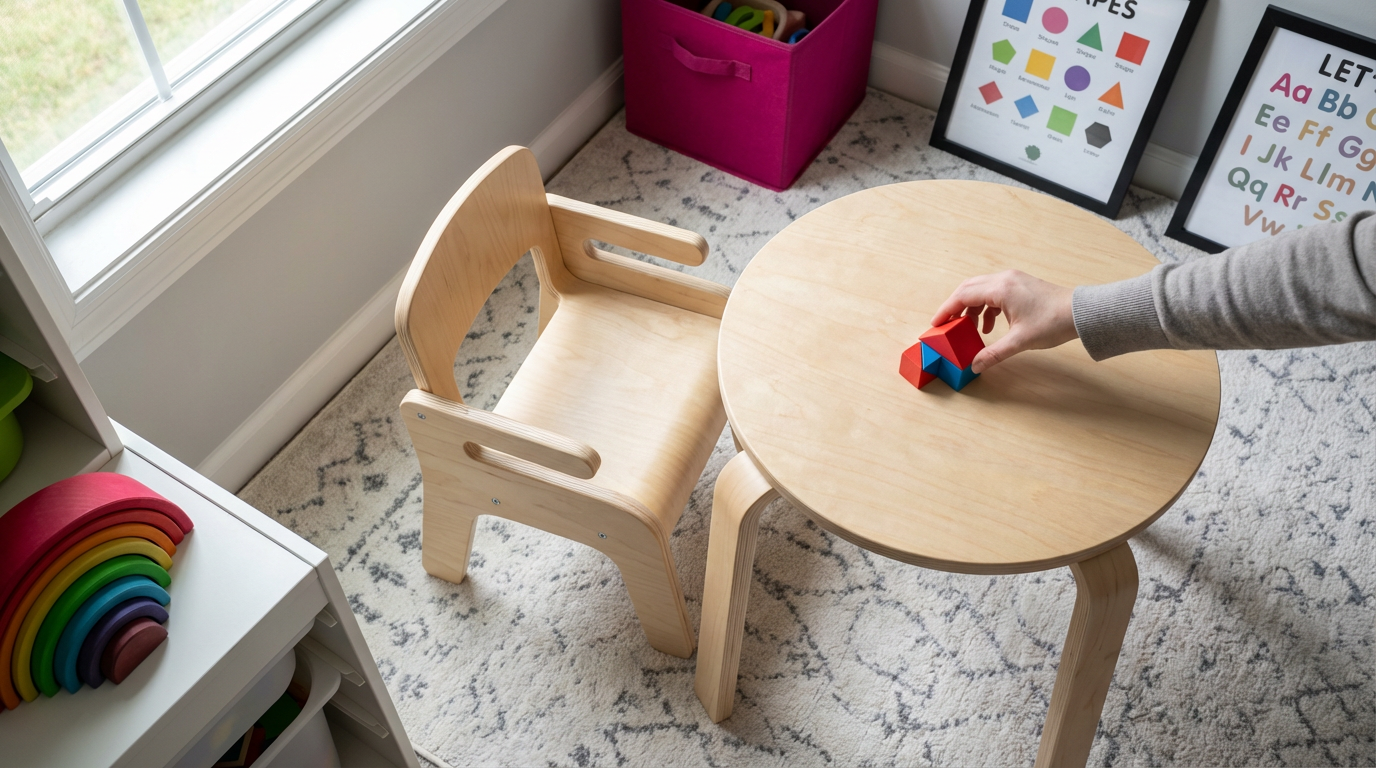
In our experience, investing in durable, high-quality furniture that meets safety standards like BS EN 1729 (the standard for furniture strength and stability in educational settings) is a far smarter use of your budget. This furniture is designed to withstand the rigours of a busy nursery environment, ensuring it lasts for years. Opting for specialised early years furniture from brands like Twoey ensures you are investing in products built for purpose, maximising the impact of your initial funding.
#### Hypothetical Case Study: The Acorn Nursery
Challenge: The Acorn Nursery, a 40-place setting, received a £15,000 capital grant but was struggling with recurring costs from replacing broken plastic chairs and tables, which amounted to over £2,000 annually.
Solution: Instead of buying more cheap replacements, they partnered with us to invest in a full room of BS EN 1729-compliant wooden furniture. Our ‘Design To Install’ service helped them plan the space for optimal flow and learning zones.
Results: The new furniture eliminated replacement costs in the first two years, saving them £4,000. The improved layout also increased parent satisfaction, contributing to a 10% rise in occupancy.
Key Insight: Focusing on whole-life cost rather than initial price tag converted a one-off grant into a long-term asset that improved both finances and educational quality.
The Benefits of Supplier Consolidation and Space Planning
Managing multiple suppliers for a fit-out is time-consuming and administratively burdensome. Consolidating your procurement with a single, trusted supplier can generate significant efficiencies. At Cost Cutters UK, we offer Bulk Buy Discounts that provide direct financial savings, but the benefits go further.
Our expert space planning service is a value-added offering that helps you design your nursery to perfection. We don’t just sell furniture; we help you create an environment that supports learning outcomes and complies with all regulations. This holistic approach ensures every square metre of your space is used effectively. From initial design to final installation, our “Design To Install We Do It All!” philosophy ensures a seamless project. Ready to see what’s possible with your budget? You can request a free quote for your nursery project and let our team show you how to maximise its potential.
Frequently Asked Questions
What is nursery funding UK?
Nursery funding UK is a combination of government schemes and grants designed to make childcare more affordable for parents and support the operational costs of early years providers. It primarily consists of the universal 15-hour and extended 30-hour free childcare entitlements for 3 and 4-year-olds, alongside the parent-led Tax-Free Childcare scheme. These are supplemented by capital grants for specific projects.
Who gets 30 hours free childcare in the UK?
The 30 hours free childcare offer is for working parents of 3 and 4-year-olds in England who meet specific eligibility criteria. This typically means both parents (or a single parent) must work at least 16 hours a week at the National Minimum Wage and each earn under £100,000 per year. Parents must reconfirm their eligibility every three months to continue receiving the funding.
Do you get £500 Tax-Free Childcare per child?
The scheme provides up to £500 per child every three months, which totals up to £2,000 per year, not a single £500 payment. This is a government top-up of £2 for every £8 a parent pays into their designated online childcare account. The funds can then be used to pay any approved childcare provider, including nurseries, for their services.
How much will nursery be with 30 free hours?
The 30 hours of funding may not make nursery completely free, as providers can charge for extras not covered by the government funding rate. These additional costs often include meals, nappies, sun cream, or trips. The total cost will therefore depend on the individual nursery’s charging policy for these consumable items and extra activities outside the core educational provision.
What is the difference between universal and extended entitlement?
The ‘universal entitlement’ is the 15 hours of free childcare available to all 3 and 4-year-olds in England, regardless of parental income or work status. The ‘extended entitlement’ refers to the additional 15 hours (for a total of 30 hours) that is only available to children whose parents meet the specific work and income criteria set by the government.
How are you entitled to 30 hours of free childcare?
Parents must apply online through the official GOV.UK Childcare Choices website to check their eligibility. If they are approved, they will receive an 11-digit eligibility code. They then give this code to their chosen nursery or childcare provider, who validates it with the local authority to claim the funding for the child’s place.
Do single parents have to work 30 hours a week?
No, a single parent does not need to work 30 hours a week to be eligible for the extended entitlement. They must meet the same minimum income threshold as a two-parent household, which is equivalent to working at least 16 hours per week at the National Minimum or Living Wage. The 30-hour figure refers to the amount of childcare offered, not the hours worked.
How many hours do you get free for a 3 year old?
All 3-year-olds in England receive a universal offer of 15 hours of free childcare per week during term time. For children of eligible working parents, this can be increased with an additional 15 hours, bringing the total to 30 hours per week. The entitlement begins the term after the child’s third birthday.
How long is the grace period for 30 hours of childcare?
If a parent becomes ineligible for 30 hours funding, a ‘grace period’ allows the child to keep their funded place for a set period. This period is determined by the local authority but typically lasts until the end of that funding block or school term. This prevents children from losing their place abruptly due to a sudden change in parental circumstances.
Can I use nursery funding at more than one provider?
Yes, parents are permitted to split their funded hours between a maximum of two childcare providers in a single day. This offers flexibility, allowing a child to attend a nursery for part of the day and a childminder for the rest, for example. The total funded hours claimed cannot exceed the 15 or 30-hour weekly limit.
Important Considerations
Government funding rates, eligibility thresholds, and the availability of nursery grants UK are subject to change, often on an annual basis. We strongly advise that readers typically verify current details directly on the official GOV.UK website and their specific Local Authority’s portal. The information here is correct as of April 2026, but policies can be updated with each new financial year.
It’s also important to recognise alternative models. Some childcare providers choose to operate on a fully private fee-paying basis, outside the government’s funded-hours schemes. This approach may offer them more operational flexibility and a different financial structure, but it means parents cannot use their government entitlements at that setting. This represents a distinct business model for providers to consider based on their local market and financial goals.
For complex financial planning, such as structuring the budget for a major new build, navigating a significant funding shortfall, or managing large capital grants, we recommend seeking professional advice. Consulting with a specialised accountant or a financial advisor who has well-supported by research experience in the UK education sector can provide invaluable guidance and ensure your setting remains financially sustainable.
From Funding to a Flourishing Nursery: Your Next Steps
Successfully navigating nursery funding UK requires a two-pronged approach: diligently securing all available government and grant funding, and then strategically converting those funds into a high-quality, long-lasting learning environment. By understanding the nuances of each scheme and adopting a value-based procurement strategy for maximising your nursery budget, you can overcome budget constraints and increase the impact of every pound spent. Our service is Rated Excellent On Trustpilot because we help our clients achieve precisely this.
Making your budget work harder doesn’t have to be a challenge, and you don’t have to do it alone. The expert team at Costcutters UK has over 35 years of experience helping nurseries and schools design, furnish, and equip their spaces efficiently and compliantly. We offer Credit Accounts Or Pay Flexibly to suit your budget cycles. For a seamless transition from funding award to finished classroom, book your free, no-obligation space planning consultation today.
References
- GOV.UK – Childcare Choices – Official Government Guidance. Provides the primary portal for parents to apply for 30 hours free childcare and Tax-Free Childcare, detailing all eligibility criteria.
- Early Years Alliance – Publications & Reports – Sector Body Research. Publishes regular reports and surveys on the state of the early years sector, including analysis of funding levels and operational challenges.
- National Day Nurseries Association (NDNA) – Reports – Sector Body Research. Conducts annual nursery surveys that provide key data on funding shortfalls, operating costs, and the financial health of providers across the UK.
- The National Lottery Community Fund – Grant-Making Body. Details the application process and criteria for various funding programmes, including the ‘Awards for All’ grant suitable for smaller community projects.
Conclusion
From Funding to a Flourishing Nursery: Your Next Steps
Successfully navigating nursery funding UK requires a two-pronged approach: diligently securing all available government and grant funding, and then strategically converting those funds into a high-quality, long-lasting learning environment. By understanding the nuances of each scheme and adopting a value-based procurement strategy, you can overcome budget constraints and maximise the impact of every pound spent.
Making your budget work harder doesn’t have to be a challenge. The expert team at Costcutters UK has over 35 years of experience helping nurseries and schools design, furnish, and equip their spaces efficiently and compliantly. For a seamless transition from funding award to finished classroom, book your free, no-obligation space planning consultation today