7 Costly Workspace Design Mistakes & How UK Organisations Can Avoid Them
🎯 Key Takeaway
The most common workspace design mistakes involve prioritising short-term aesthetics over long-term functionality, leading to increased costs, reduced productivity, and non-compliance with UK safety standards. These errors stem from a failure in balancing aesthetics and functionality from the outset. A successful workspace requires a strategic approach that considers workflow, ergonomics, and future needs, ultimately delivering superior value and supporting organisational goals. This guide details seven critical mistakes and provides a strategic framework for creating a workspace that is both beautiful and built to perform.
As of April 2026, the cost of getting an office fit-out wrong can be staggering, with rework and productivity losses easily adding 20-30% to the initial budget. For workspace design mistakes, the most frequent error we see is a focus on immediate visual appeal at the expense of long-term practicality. This is particularly challenging for UK schools and public sector bodies, who face intense pressure to demonstrate value for taxpayer money. These common office design mistakes often result in environments that are difficult to work in and expensive to maintain. This article identifies seven of the most costly errors and provides an actionable framework to avoid them, drawing on our experience providing Costcutters UK’s complete furniture solutions.
👤 Written by: Costcutters UK Content Team
Reviewed by: Costcutters UK Editorial Team, Workspace Design & Procurement Specialists
Last updated: 23 April 2026
ℹ️ Transparency Disclosure: This article explores workspace design based on over 35 years of industry experience and analysis of public sector procurement challenges. Some links may connect to our specialised services. All information is verified by our editorial team to ensure accuracy and compliance with UK standards.
Mistake 1: The ‘Style over Substance’ Trap
In our experience, one of the most tempting but damaging office design mistakes is choosing furniture based on fleeting trends or a low initial price tag. This ‘style over substance’ approach almost typically leads to higher costs down the line. A trendy, inexpensive chair might look good on day one, but if it breaks within two years in a busy school reception, it offers poor value.
The key concept here is Total Cost of Ownership (TCO), which refers to the complete cost of an asset over its lifespan, not just its purchase price. Durable, well-made furniture might have a higher initial cost but research suggests more economical over a decade. Research from the Business and Institutional Furniture Manufacturers Association (BIFMA) (2023) indicates that commercial-grade furniture is tested for thousands of cycles to simulate years of use, a standard rarely met by cheaper alternatives. Our assessment is that investing in products with long may help and robust materials is a smarter financial strategy.
Consider the following comparison for an office of 50 people.
| Factor | Chair A: Low-Cost Import | Chair B: Compliant & Durable | Notes |
|---|---|---|---|
| Initial Cost per Unit | £90 | £250 | A significant upfront difference. |
| Expected Lifespan | 2-3 Years | 10+ Years | Based on commercial use testing. |
| Guarantee | 1 Year | 5-10 Years | Reflects manufacturer confidence. |
| Compliance | Often fails UK fire/HSE standards | Meets BS & HSE standards | Reduces legal and safety risks. |
| 10-Year TCO per Unit | £360-£450 (3-4 replacements) | £250 (one-time purchase) | The durable option is cheaper long-term. |
Mistake 2: What Are Common Office Layout Mistakes?
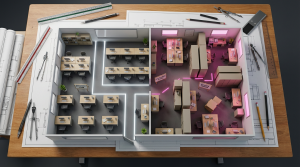
The most common office layout mistakes stem from a single failure: designing the space before analysing how people actually work within it. Placing a furniture order without a proper workflow analysis results in an office that works against your team, not for it. This can manifest as noisy sales teams situated next to finance departments requiring concentration, or essential equipment being located far from the teams that use it most. A study by Leesman (2024), analysing data from over 1 million workplace respondents, found that a sense of ‘pride’ in the workplace is strongly linked to perceived productivity, yet only 57% of employees feel this pride.
In the UK, this is often compounded by the unique challenges of older buildings or listed properties. We’ve seen layouts that create frustrating bottlenecks around structural pillars or fail to account for natural light. According to a CBRE UK report (2023), effective space planning can boost space utilisation by up to 25%, directly impacting efficiency.
Our advice is to start with a professional space plan. This process maps daily tasks, team interactions, and traffic flow to create a design that actively supports productivity. Don’t let your floor plan become one of the most significant workspace design mistakes you make. For tailored guidance, it’s wise to seek out expert office space planning tips uk.
Mistake 3: Overlooking UK Ergonomics & Safety Regulations
Ignoring UK health and safety laws is one of the most severe workspace design mistakes an organisation can make. This isn’t just about comfort; it’s a legal requirement. The Health and Safety Executive (HSE), the UK government agency responsible for workplace health and safety, provides clear guidance under the Display Screen Equipment (DSE) Regulations. These rules mandate that employers must perform workstation assessments and reduce risks, which includes providing adjustable chairs, screens, and desks.
Also, the Equality Act 2010 requires employers to make ‘reasonable adjustments’ for disabled employees, which directly impacts physical access, desk heights, and circulation space. Failure to comply with these regulations can lead to employee discomfort, higher rates of absenteeism due to musculoskeletal issues, and serious legal and financial penalties. Data from the HSE (2023) shows that 477,000 workers suffered from work-related musculoskeletal disorders in 2022/23.
We recommend using an ergonomic workspace checklist during the design phase:
- Chairs: Is the chair fully adjustable (height, back tilt, armrests)? Does it provide adequate lumbar support?
- Desks: Is the desk at the correct height? Are height-adjustable desks available for DSE users?
- Screens: Can the monitor height and angle be adjusted to eye level?
- Accessories: Are footrests, wrist rests, and document holders provided where needed?
- Layout: Is there sufficient space for movement and access as per the Equality Act 2010?
Ensuring compliance from the beginning is far more cost-effective than retrofitting a non-compliant space. You can review our UK certifications and accreditations to see how we prioritise these standards.
Mistake 4: The ‘One-Size-Fits-All’ Furniture Fallacy
A common but flawed approach is to purchase identical furniture for every employee and every function. This ‘one-size-fits-all’ fallacy ignores the simple truth that different tasks require different environments and different people require different support. In an office setting, this might mean buying 100 identical desks when a mix of standard desks, height-adjustable workstations, and collaborative benches would better serve the workforce.
This is especially critical in educational settings, where school classroom design mistakes can have a direct impact on learning and behaviour. Ordering standard adult-sized furniture for a primary school is not only impractical but also unsafe. For schools, it’s vital to specify furniture that complies with British Standards (BS), specifically BS EN 1729. This standard, a benchmark for quality and safety, defines appropriate dimensions, strength, and stability for chairs and tables for different age groups, ensuring a safe and ergonomic learning environment.
A functional workspace design provides variety: soft seating for informal meetings, quiet pods for focused work, and robust, task-appropriate desks for daily activities. We believe a varied approach is essential for a productive and inclusive environment.
Mistake 5: Neglecting Staff Well-being & Modern Work Needs
A significant mistake in workplace design today is failing to adapt to the needs of a modern, hybrid workforce. The office is no longer just a place for individual work; it’s a hub for collaboration, culture, and connection. Yet, many designs still lack breakout areas, quiet zones, or properly equipped collaborative spaces. This is one of the most impactful workspace design mistakes affecting employee morale and retention.
A key solution is Biophilic Design, the practice of integrating natural elements into the built environment. A report by Interface (2022) on biophilic design in the workplace found that workers in environments with natural elements reported a 15% higher level of well-being and a 6% increase in productivity. This can be as simple as adding plants and maximising natural light or using natural materials like wood and stone. It’s a powerful way of balancing aesthetics and functionality.
In our work with UK businesses, we’ve seen that providing a variety of spaces is crucial. Investing in comfortable and functional modern breakout furniture isn’t an indulgence; it’s a strategic investment in your team’s well-being and your company’s ability to attract and retain top talent.
Mistake 6: Forgetting Technology & Future-Proofing
Designing a beautiful workspace that fails to support the technology your team uses is a classic and costly error. We’ve seen stunning breakout areas rendered useless because there are no power sockets for charging laptops. We’ve walked into brand-new meeting rooms where the AV equipment is incompatible with company devices. This is a failure to future-proof your investment.
Poor technology integration creates constant friction for employees. Desks that cannot accommodate dual monitors, poor Wi-Fi coverage in collaborative zones, and a lack of accessible data ports are all signs of a design process that overlooked practical, day-to-day needs. The problem is that these issues are often expensive and disruptive to fix after the fact – requiring chasing walls, running new cables, and replacing furniture.
Our recommendation is to involve your IT team in the design process from day one. Map out power, data, and AV requirements for every zone. Select furniture that includes integrated cable management and power solutions. A workspace designed for 2026 should be ready for the technological demands of 2030 and beyond.
Mistake 7: The Public Sector Procurement Trap
For schools, NHS trusts, and local councils, perhaps the biggest mistake is misunderstanding the nuances of public sector procurement. The pressure to demonstrate ‘value for taxpayer money’ is often misinterpreted as ‘choose the lowest initial price’. This leads organisations to select suppliers who are not on approved frameworks or who lack experience with public sector compliance, creating significant risk.
A reliable public sector furniture supplier will be on frameworks like ESPO (Eastern Shires Purchasing Organisation), which pre-vets suppliers for quality, financial stability, and compliance. These suppliers understand the need for furniture that meets strict UK safety standards, offers long-term durability, and provides genuine value over its entire lifecycle.
In our experience, navigating this process requires a partner who can balance cost with compliance. It’s about securing a functional workspace design that will stand the test of time in a demanding environment, not just one that looks good on a spreadsheet for one financial year. We specialise in helping public sector clients avoid this trap with our “Design To Install We Do It All!” service.
The Solution: A Framework for Balancing Aesthetics with Functionality
an effective way to avoid costly mistakes is by adopting a structured, function-first approach. Balancing aesthetics and functionality doesn’t happen by accident; it requires a deliberate process. We’ve developed a simple five-step framework that ensures your workspace is a strategic asset, not a financial liability. This process provides the foundation for a successful functional workspace design.
- Analyse: Begin by observing how your teams work. Conduct surveys and interviews to understand their needs, pain points, and workflow patterns. Analyse space utilisation data if you have it.
- Plan: Based on your analysis, develop a detailed space plan and a realistic budget. Allocate space for different work zones – focus, collaboration, social, and learning. This is where you apply office space planning tips uk.
- Specify: Select furniture and equipment that is compliant, durable, and ergonomic. Prioritise products with long may help that meet relevant British Standards and HSE guidelines. Get Bulk Buy Discounts on larger orders.
- Design: With the functional elements decided, now you can focus on the aesthetics. Choose a colour palette, materials, and lighting scheme that reflect your brand and promote well-being (e.g., biophilic elements).
- Implement: Work with a trusted partner for delivery and installation. A professional team ensures everything is assembled correctly and placed according to the plan, Saving Time & Stress.
Frequently Asked Questions
What are the most common workspace design mistakes?
The most common workspace design mistakes include ignoring workflow, choosing style over durability, neglecting ergonomic and safety standards, and failing to plan for future technology needs. These errors often lead to higher long-term costs, reduced employee productivity, and an environment that doesn’t support well-being. A successful design requires a strategic balance between aesthetics, functionality, and compliance, which is why we are Rated Excellent On Trustpilot.
How can I improve my office layout on a small budget?
Improving a layout on a budget starts with re-organisation before purchasing. Declutter the space, analyse current workflows to identify bottlenecks, and rearrange existing furniture to create better zones for quiet work and collaboration. Simple additions like acoustic panels or mobile whiteboards can offer high functional value for a low cost, optimising the space you already have before investing in new items.
What is the difference between aesthetics and functionality in workspace design?
Aesthetics refers to the visual appeal of a space – its colour, style, and look – while functionality refers to how well it supports the tasks performed within it. Functionality covers layout, ergonomics, and practicality. An effective designs don’t treat these as separate; they use functional elements (like acoustic panels) as part of the aesthetic, creating a space that is both beautiful and effective.
Why is ergonomic furniture so important?
Ergonomic furniture is crucial for protecting employee health and boosting productivity. It is designed to support the body, reduce strain, and prevent musculoskeletal issues that lead to absenteeism and discomfort. In the UK, employers also have a legal duty of care under HSE regulations to provide safe workstations, making ergonomic furniture a matter of both well-being and compliance.
How do you design a workspace for hybrid working?
A hybrid workspace requires flexibility and a variety of settings. It should feature fewer dedicated desks and more ‘unassigned’ hot desks, bookable meeting rooms, and quiet pods for focused work. High-quality collaborative zones with good technology integration are essential for connecting in-person and remote staff. The focus shifts from individual territory to providing a range of spaces for different activities.
What are some school classroom design mistakes to avoid?
The biggest school classroom design mistakes involve using incorrectly sized furniture and poor layouts that hinder movement and learning. Using ‘one-size-fits-all’ furniture fails to meet the ergonomic needs of different age groups, violating BS EN 1729 standards. Other errors include insufficient storage, poor acoustics, and layouts that don’t support varied teaching methods like group work and individual study, ultimately impacting student engagement.
How much space per person is needed in an office?
While there’s no strict legal minimum, the HSE suggests 11 cubic metres of space per person. However, modern planning focuses more on the quality and variety of space. A good benchmark is 8-10 square metres per person, but this should include a mix of desk space, meeting rooms, and breakout areas. A professional space plan can help optimise this effectively.
What is biophilic design and why does it matter?
Biophilic design is the practice of incorporating natural elements into a built environment, such as plants, natural light, and wood textures. It matters because studies show it can reduce stress, improve cognitive function, and increase creativity and well-being. It is a highly effective way to enhance a workspace’s aesthetic and functional value simultaneously, making it a smart investment for any organisation.
How can workspace design improve productivity?
A well-designed workspace boosts productivity by reducing distractions, improving comfort, and facilitating workflow. Proper zoning provides quiet areas for focus and collaborative spaces for teamwork. Good ergonomics prevent fatigue, while effective lighting and acoustics enhance concentration. By removing physical and mental friction, the design allows employees to perform their tasks more efficiently and with greater satisfaction.
How do I choose a reliable furniture supplier in the UK?
Look for a supplier with extensive experience, especially with organisations like yours. A reliable partner will offer a free space planning service, provide furniture that meets UK safety and quality standards (like BS and HSE), and offer long may help. Check if they are on public sector procurement frameworks and can demonstrate long-term value, not just a low initial price. We offer options to Credit Accounts Or Pay Flexibly.
Important Considerations
This guide provides a framework based on common industry challenges. However, every workspace is unique. Factors such as building limitations, specific departmental needs, and evolving company culture will require a tailored approach. The principles discussed are universal, but their application must be customised to your specific context for optimal results.
While this article focuses on a holistic design approach, alternative strategies exist. Some organisations may opt for a phased refurbishment, addressing critical areas like ergonomics first. Others might prioritise technology upgrades over furniture changes. These can be valid short-term solutions, but they often fail to address the root is associated with of an inefficient workspace and can lead to disjointed results.
Avoiding costly design mistakes requires expertise. For any significant project, especially within the public sector or regulated environments, we strongly recommend consulting with workspace design professionals. An expert can conduct a thorough needs analysis, ensure compliance with all UK regulations, and develop a space plan that maximises your budget for long-term value and functionality.
Transform Your Workspace from a Cost Centre to a Strategic Asset
Avoiding common workspace design mistakes is about more than just aesthetics; it’s a strategic financial decision. By shifting focus from short-term costs to long-term value, analysing workflow, and prioritising compliance and well-being, you can create a functional workspace design that enhances productivity and serves your organisation for years to come. This approach transforms your physical environment into a valuable asset.
With over 35 years of experience helping UK schools, offices, and public sector organisations navigate these challenges, Costcutters UK is uniquely positioned to help. Our expert team provides a comprehensive service from design to installation, ensuring your project is compliant, functional, and within budget. To start the conversation, get a free space planning quote today.
References
- Health and Safety Executive (HSE) – UK Government Guidance. Provides legal requirements and practical advice for employers on managing risks associated with Display Screen Equipment (DSE). The 2023 report noted 477,000 cases of work-related musculoskeletal disorders.
- British Standards Institution (BSI) – National Standards Body. Publishes standards like BS EN 1729 for educational furniture, ensuring strength, stability, and appropriate dimensions for safety and ergonomics.
- GOV.UK – Equality Act 2010: Guidance – UK Government Legislation. Outlines the legal duty to make reasonable adjustments for disabled people, which includes ensuring physical accessibility in the workplace.
- Leesman (2024) – Workplace Experience Data. Analysis of over 1 million respondent surveys highlights the link between workplace pride and productivity.
- CBRE (2023) – Commercial Real Estate Report. Research indicates that professional space planning can improve space utilisation by up to 25%.
- Interface (2022) – Human Spaces Report. A study on biophilic design found it increased reported well-being by 15% and productivity by 6%.
- Business and Institutional Furniture Manufacturers Association (BIFMA) (2023) – Industry Standards Research. Their testing protocols simulate years of commercial use to certify furniture durability and safety.
Conclusion
In summary, avoiding common workspace design mistakes is about more than just aesthetics; it’s a strategic financial decision. By shifting focus from short-term costs to long-term value, analysing workflow, and prioritising compliance and well-being, you can create a functional workspace design that enhances productivity and serves your organisation for years to come. This approach transforms your physical environment into a valuable asset.
With over 35 years of experience helping UK schools, offices, and public sector organisations navigate these challenges, Costcutters UK is uniquely positioned to help. Our expert team provides a comprehensive service from design to installation, ensuring your project is compliant, functional, and within budget. To start the conversation, book your free, no-obligation space planning consultation today.