Collaborative Office Furniture: A UK Manager’s Guide to Creating Modern Workspaces
🎯 Key Takeaway
an effective collaborative office furniture consists of flexible, multi-purpose pieces like modular seating, high-top tables, mobile whiteboards, and acoustic pods that create dynamic zones for teamwork. A successful collaboration zone supports different work styles, from informal chats to focused group projects. Key furniture includes modular sofas for flexibility, high tables for quick stand-up meetings, and acoustic pods for privacy. This guide provides practical steps for UK managers to select the right furniture and design effective collaborative spaces on a realistic budget.
The move away from traditional, siloed office layouts is accelerating. As of Q1 2026, UK businesses are increasingly adopting dynamic environments that better support hybrid work schedules and project-based teamwork. This fundamental shift requires a complete rethink of the workplace, starting with its core components. Simply having desks is no longer enough. The strategic use of collaborative office furniture is now essential for boosting productivity, fostering innovation, and improving employee satisfaction. Excellent office design for collaboration is no longer a luxury; it’s a competitive necessity. This guide provides a practical framework on how to create a collaborative workspace, offering actionable ideas and a planning checklist for UK managers.
Written by: The Cost Cutters UK Content Team | Reviewed by: Editorial Team, 35+ Years Experience; Rated Excellent On Trustpilot
Last updated: 15 March 2026
ℹ️ Transparency Disclosure: This article explores creating effective collaborative zones using modern office furniture, based on our 35+ years of industry experience and analysis of current workplace design trends. Our goal is to provide authoritative, practical advice. Some links may connect to our services, such as our free space planning consultation. All information is verified by our editorial team to ensure accuracy and relevance for UK businesses.
What is a Collaboration Zone? (And Why Your Organisation Needs One)
A collaboration zone is a designated area within an office designed specifically to facilitate teamwork, communication, and interaction away from traditional desk setups. It’s a space where employees can gather for everything from spontaneous conversations to structured brainstorming sessions. The primary purpose is to break down departmental silos and encourage the cross-pollination of ideas, which is often stifled by rows of individual workstations. In our experience, a well-executed zone becomes the heart of an office.

The need for these spaces is clear. According to design firm Denton, creating ‘Casual Collaboration Hubs’ with comfortable furniture encourages more meaningful participation in team efforts. This approach directly impacts performance. A focus on better office design for collaboration can significantly improve innovation and problem-solving. Also, as hybrid working becomes standard, the office’s role is changing. It must be a destination for the collaborative tasks that are difficult to replicate remotely.
For UK businesses, this means creating environments that make the commute worthwhile. As workplace strategists Oktra highlight in their industry insights, open plans and diverse furniture encourage movement and interaction. By providing appealing collaboration zone ideas like project hubs or informal lounges, you give teams the tools they need to connect, create, and build a stronger company culture.
The 4 Key Types of Collaboration Zones for Any Office Layout
Creating a successful collaborative environment isn’t about a one-size-fits-all solution. It’s about providing a choice of settings that cater to different types of interaction. Industry guide Sagal Group emphasises the importance of flexibility and offering varied work settings. Here are four key zones we recommend for a balanced and productive office.

1. The Informal Lounge
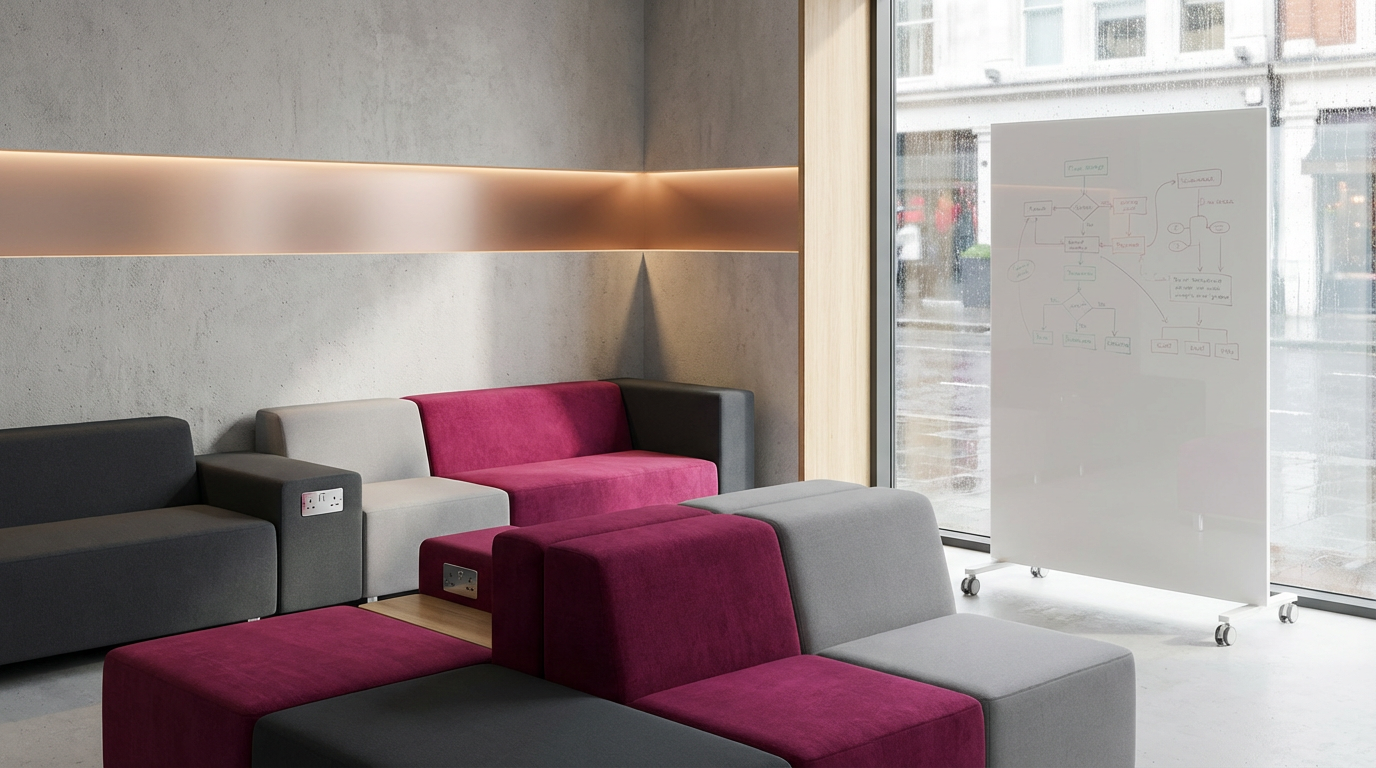
This zone is designed for casual conversations, quick catch-ups, and building social connections. It’s the office equivalent of a coffee shop corner. Furnish this area with comfortable, soft seating like modular sofas, armchairs, and low coffee tables. This type of modern breakout furniture creates a relaxed atmosphere that encourages employees from different teams to interact organically. It’s an effective space for fostering company culture and spontaneous brainstorming.
2. The Project Hub
When a team needs to knuckle down on a specific project, they need a dedicated space. The Project Hub is a semi-enclosed area equipped for intensive teamwork. Key furniture includes large tables, mobile whiteboards for visual thinking, and comfortable but upright chairs that support longer sessions. Many of our clients find that providing ample power and data access in this zone is critical for keeping teams productive and engaged.
3. The Quiet Booth or Pod
Collaboration isn’t typically loud. Sometimes, it requires a private one-to-one conversation, a confidential video call, or a moment of deep focus away from the open-plan buzz. This is where acoustic office pods UK come in. These self-contained units provide superb sound insulation, integrated lighting, and ventilation. As supplier guide Southern Office Furniture notes, balancing open spaces with private areas is crucial. An acoustic pod is an essential part of modern collaboration zone ideas.
4. The Social Café
More than just a kitchen, a well-designed social café acts as a central hub for the entire office. High-top benches, small café tables, and durable stools encourage employees to take proper breaks and interact with colleagues they might not otherwise see. This cross-departmental mixing is a powerful driver of innovation and a stronger sense of community. It’s a space that supports both social wellbeing and informal work.
Essential Checklist: Choosing the Right Collaborative Office Furniture
The most effective collaborative office furniture is modular, durable, and highly functional. When selecting pieces, you’re not just buying a chair or a table; you’re investing in a system that needs to support dynamic work patterns. Design firm Office Principles rightly states that the physical environment significantly impacts interaction. Here’s our checklist for making the right choice.
- Modularity & Flexibility: Can the furniture be easily reconfigured? Look for modular sofas that can be separated or joined, and lightweight tables on castors. Versatile pieces like modular tables such as the Air Table allow you to adapt a space from a training layout to a group workshop in minutes. This flexibility maximises the utility of your floor space.
- Durability & Compliance: Collaborative areas are high-traffic zones. The office furniture for teamwork you choose must be built for commercial use, with robust frames and hard-wearing fabrics. Crucially, all upholstery must comply with UK fire safety standards like BS 5852 (Crib 5). At Cost Cutters UK, we guarantee compliance, and you can view our UK certifications and accreditations for complete peace of mind.
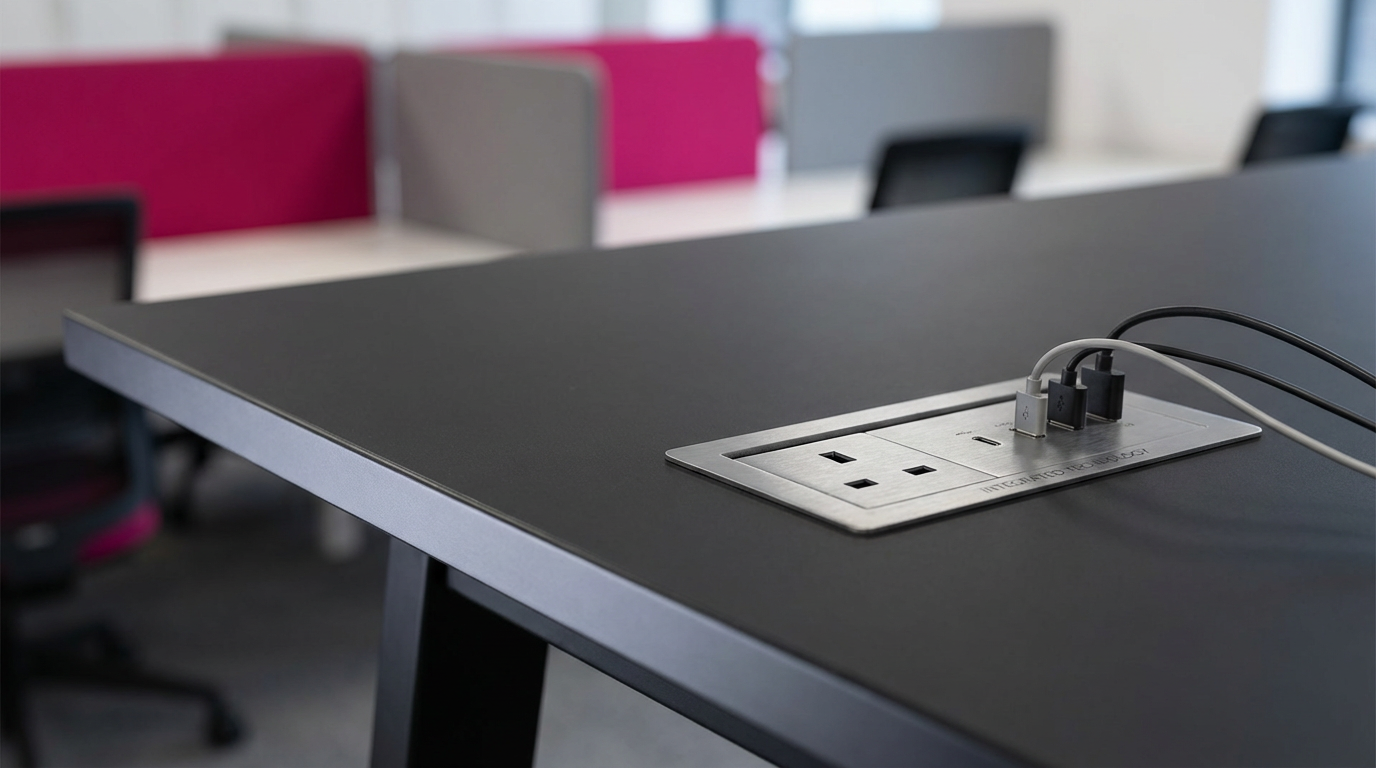
- Functionality & Integration: Modern collaboration relies on technology. Does the furniture have integrated power and data ports? Look for tables with built-in USB-A and USB-C charging and seating with optional power modules. Good modern breakout area furniture seamlessly blends comfort with connectivity.
- Aesthetics & Culture: The furniture should reflect your company’s brand and culture. Is your workplace formal and corporate, or creative and relaxed? The colours, materials, and styles you choose send a powerful message to both employees and visitors.
| Furniture Type | Best For | Key Features | Budget Indicator |
|---|---|---|---|
| Modular Sofas | Informal lounges, flexible project areas | Reconfigurable sections, durable upholstery, optional integrated power | ££ – £££ |
| High-Top Tables | Quick stand-up meetings, hot-desking | Standing height, integrated power/data, robust surfaces | ££ |
| Acoustic Pods | Private calls, focused individual work | Sound-dampening panels, integrated ventilation & lighting, glass doors | ££££ |
| Mobile Whiteboards | Brainstorming sessions, flexible space division | Double-sided, magnetic surface, lockable castors | £ |
Planning Your Collaborative Workspace: A Step-by-Step Guide
Knowing how to create a collaborative workspace can feel daunting. It’s more than just buying a few sofas; it involves thoughtful planning to ensure the space is functional and well-used. We’ll be honest – this part can be tedious, but getting it right is crucial. Our “Design To Install We Do It All!” service is built to handle this entire process, Saving Time & Stress for busy managers. However, if you’re managing the project yourself, follow these steps.
- Assess Needs & Define Goals: Start by talking to your team. What kind of collaborative work do they do? What are their current frustrations? Use surveys or small focus groups to gather input. Your goal might be to increase cross-departmental projects or simply provide a better environment for hybrid teams to connect.
- Measure Your Space & Set a Budget: Measure the intended area accurately. Consider foot traffic, proximity to other departments, and natural light. Establish a realistic budget that covers furniture, delivery, installation, and any necessary electrical work. We offer flexible payment options like Credit Accounts Or Pay Flexibly to help manage costs.
- Create a Layout Plan: Use your measurements to sketch a layout. Think about flow and zoning. How will people move through the space? Where will you place power sources? This is where professional help adds immense value. We provide a free, no-obligation space planning service to create a professional 2D or 3D layout, optimising your space for an effective possible office design for collaboration.
- Select & Procure Furniture: Using your plan and goals, select the furniture. Consider our Bulk Buy Discounts for larger projects. Ensure all items meet UK compliance standards and that lead times align with your project timeline.
- Manage Delivery & Installation: Coordinate delivery and on-site installation. This is often the most disruptive phase. A professional installation team ensures everything is built correctly, placed according to plan, and all packaging is removed, allowing your team to use the new space immediately.
Hypothetical Case Study: A Mid-Sized UK Tech Firm
Challenge: A tech firm with a new hybrid work policy found their office underutilised. Staff complained that coming in felt pointless as the space only offered rows of empty desks, hindering the teamwork they needed to do on-site.
Solution: We implemented a full “Design To Install” project. We replaced 40% of traditional desks with two distinct collaboration zones: an informal lounge with modular seating and a project hub with high-top tables and mobile whiteboards.
Results: Within three months, mid-week office attendance increased by 35%. Employee surveys showed a 50% rise in perceived productivity during in-office days. The project achieved its Return on Investment (ROI), a ratio of net profit to cost of investment, in under 12 months.
Key Insight: Providing a variety of collaborative spaces is more effective than a single, one-size-fits-all breakout area.
Beyond Furniture: Tech & Acoustics for Your Collaborative Office Furniture Setup
A successful collaborative space requires more than just the right collaborative office furniture; it needs a supportive infrastructure of technology and acoustic control. Neglecting these elements can render an otherwise well-designed area unusable. The most critical supporting elements are acoustics and integrated technology, which work together to ensure the space is both vibrant and functional.
First, acoustics are paramount. In an open-plan office, noise distraction is a significant barrier to productivity. A lively collaboration zone can easily disrupt colleagues trying to do focused work nearby. This is where acoustic solutions become vital. Strategically placed acoustic screens, wall panels, and ceiling baffles can absorb excess sound. For true privacy, nothing beats dedicated acoustic office pods UK. As fit-out company ACI recommends, creating different zones helps manage the overall workplace atmosphere. By containing noise, you allow collaborative energy to thrive without creating chaos.
Second, seamless technology integration is non-negotiable. According to software company MRI Software UK, a positive environment is influenced by many factors, including access to tools. Teams need easy and reliable access to power and data. Look for furniture with integrated power modules offering a mix of standard UK plugs, USB-A, and USB-C ports. Also, consider mounting points for digital displays or interactive whiteboards. When technology is built into the environment, it removes friction and allows teams to focus on the task at hand.
Important Considerations
While implementing collaborative furniture offers significant benefits, it’s wise to approach any office redesign with a clear understanding of potential limitations and alternatives. A successful project requires careful thought beyond just picking out new chairs.
First, the research and planning phase has its own constraints. The effectiveness of a new layout depends heavily on your specific company culture and workflow. What works for a creative agency may not suit a financial services firm. Our recommendations are based on broad industry trends and extensive experience, but they should typically be adapted to your unique organisational DNA. We strongly advise conducting internal surveys to gather direct feedback from your employees before committing to a final design.
Second, there are alternative approaches to fostering collaboration that don’t require a complete furniture overhaul. You could start smaller by introducing mobile whiteboards and flexible screen dividers to existing spaces. Another strategy is to focus on process and technology, such as adopting better project management software or scheduling dedicated ‘collaboration days’ for hybrid teams. These methods can be a good first step before undertaking a larger capital investment.
Finally, knowing when to consult a professional can save significant time, money, and stress. If you lack in-house facility management expertise, are working with an awkward or large space, or need to ensure strict compliance with building and safety regulations, partnering with an expert is the most efficient path. Our “Design To Install We Do It All!” service is designed for this exact scenario, providing end-to-end project management from initial layout to final installation.
Frequently Asked Questions
What is collaborative office furniture?
Collaborative office furniture refers to pieces specifically designed to support teamwork, communication, and flexible working styles. Moving beyond traditional individual desks, it includes items like modular seating, shared high-top tables, mobile whiteboards, and acoustic booths. This type of furniture is fundamental to creating an adaptable, modern office environment that encourages interaction and boosts productivity, making it a key investment for any forward-thinking organisation.
What is a collaboration zone?
A collaboration zone is an area within an office intentionally designed to encourage teamwork and group interaction. These zones are set apart from quiet, individual workstations and can range from informal lounges with sofas to structured project hubs with large tables and screens. The primary goal is to provide employees with a dedicated, fit-for-purpose space for shared creativity, problem-solving, and spontaneous communication.
How do you create a collaboration area on a budget?
To create a budget-friendly collaboration area, focus on multi-functional furniture and long-term value. Start with a versatile high-top table that can serve as a meeting spot, a hot desk, or a social hub. Use mobile whiteboards as cost-effective room dividers and brainstorming tools. Most importantly, investing in durable, commercial-grade furniture from the start prevents costly replacements, offering a better return on investment.
How do acoustic pods improve collaboration?
Acoustic pods improve collaboration by solving the noise and privacy problem inherent in open-plan offices. They provide a sound-dampened space for confidential discussions, important client calls, or focused teamwork without disturbing others nearby. By containing noise effectively, these pods – a key type of acoustic office pods UK – allow the main office area to remain vibrant and interactive while offering an essential escape for quiet, concentrated tasks.
What are the key benefits of a collaborative workspace?
The primary benefits include increased innovation, faster problem-solving, and stronger team cohesion. By encouraging spontaneous interaction and making teamwork more seamless, these spaces can significantly boost employee engagement and satisfaction. For businesses with hybrid work models, a well-designed collaborative office makes in-person time more purposeful and productive, which helps to strengthen the overall company culture and sense of community.
What are the 7 C’s of collaboration?
The 7 C’s of collaboration are commonly cited as Communication, Cooperation, Coordination, Cognition (shared understanding), Compromise, Consideration, and Community. This framework outlines the core principles required for effective and harmonious teamwork. A well-designed physical workspace featuring the right office furniture for teamwork can act as a catalyst, naturally encouraging and facilitating many of these essential behaviours among employees.
What are the 5 rules of effective collaboration?
While various models exist, five common rules for effective collaboration are: establishing a clear shared goal, defining roles and responsibilities, encouraging open communication, building trust, and remaining adaptable. The physical environment plays a critical role in supporting these rules. Your office layout should provide a variety of spaces that accommodate everything from structured planning meetings to open, informal dialogue.
What are the 5 levels of collaboration?
The five levels of collaboration typically describe a spectrum of interaction, from Networking (sharing information) to Cooperation (sharing resources), Coordination (aligning activities), Collaboration (sharing work and goals), and finally Integration (creating a new, unified entity). A sophisticated office design will feature different types of collaboration zones, each tailored to support a different level of interaction on this important spectrum.
What are the 5 P’s of collaboration?
A common ‘5 P’s’ model used in project management to guide collaboration focuses on Purpose, People, Process, Product, and Performance. This framework helps teams align on why they are working together, who is involved, how they will do it, what they will create, and how success will be measured. The physical office environment and its furniture are a key component of the ‘Process’ element.
What are the 7 norms of collaboration?
The 7 norms of collaboration are a set of behavioural guidelines designed to foster more productive and respectful group work. They often include: pausing before responding, paraphrasing to show understanding, posing clarifying questions, putting ideas on the table, providing data, paying attention to self and others, and presuming positive intentions. These norms are essential for building a healthy and innovative collaborative culture.
Transform Your Office with Expert-Led Collaborative Furniture Solutions
Ultimately, the right collaborative office furniture is a critical investment in your team’s productivity, your company’s culture, and your ability to attract and retain top talent. By moving beyond traditional desking and creating dedicated zones with flexible, functional, and durable pieces, you build an environment that supports the dynamic nature of modern work. From informal breakout areas with modern breakout area furniture to private acoustic pods for focused tasks, a well-planned space empowers your team to connect, create, and innovate effectively. These are not just nice-to-haves; they are the building blocks of a high-performing workplace.
Navigating the process of selecting and implementing new collaborative furniture solutions can be complex. With over 35 years of experience and a service Rated Excellent On Trustpilot, Cost Cutters UK is more than just a supplier; we are your dedicated project partner. We help UK managers like you turn ideas into reality, stress-free. Our experts provide a complete service from design to installation, ensuring you get a compliant, budget-friendly solution that works.
Book your free, no-obligation space planning consultation today to start your transformation.
References
- Oktra – Industry Insight Article. Highlights the use of open floor plans and diverse furniture to encourage movement and interaction between teams.
- DENTON – Design Firm Blog. Suggests creating ‘Casual Collaboration Hubs’ with comfortable furniture to encourage meaningful participation.
- Southern Office Furniture – Supplier Guide. Notes the need for both open spaces and private areas for focused work to support different stages of collaboration.
- Office Principles – Design Firm Article. Emphasises how the physical environment significantly impacts interaction and productivity.
- Sagal Group – Industry Guide. Details the importance of flexibility and offering a choice of work settings to employees.
- TINTO Architecture – Architecture Blog. Discusses using colour, lighting, and varied furniture to define and enhance collaboration spaces.
- Promethean World – EdTech Blog. Advises considering space, technology, and furniture in tandem when designing collaborative areas.
- ACI – Fit-Out Company Guide. Recommends ‘chill-out zones’ as a way to foster informal collaboration and improve workplace atmosphere.
- M Moser Associates – Global Design Firm Insights. Introduces the concept of ‘collision’ spaces designed to create opportunities for spontaneous interaction.
- MRI Software UK – Software Company Blog. Points out the positive impact of bright, natural light on mood and productivity in collaborative spaces.
Conclusion
Transform Your Office with Expert-Led Collaborative Furniture Solutions
In summary, collaborative office furniture is a critical investment in your team’s productivity and your company’s culture. By moving beyond traditional desking and creating dedicated zones with flexible, functional, and durable pieces, you build an environment that supports modern work. From informal breakout areas with modern breakout area furniture to private acoustic pods for focused tasks, a well-planned space featuring the right collaborative furniture solutions empowers your team to connect and create effectively.
Navigating this process can be complex. With over 35 years of experience, Costcutters UK is more than just a supplier; we are your project partner. We help UK managers like you turn ideas into reality, stress-free. Our experts provide a complete service from design to installation, ensuring you get a compliant, budget-friendly solution that works. Book your free, no-obligation space planning consultation today to start your transformation.