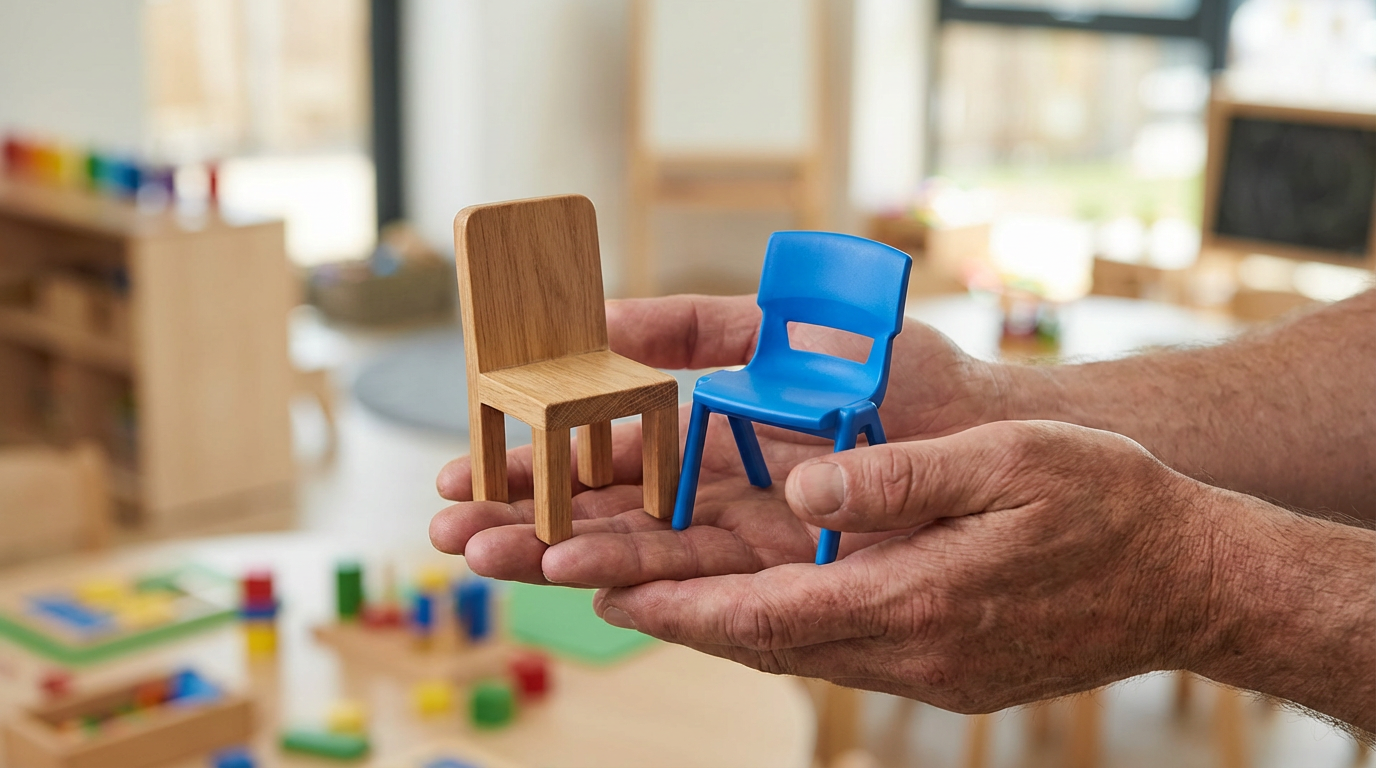
Wooden vs. Plastic Early Years Furniture: A Buyer’s Guide for UK Schools
🎯 Key Takeaway
an effective early years furniture for a UK setting depends on your priorities: wood offers superior durability and a natural aesthetic, while plastic provides cost-efficiency, easier sanitation, and vibrant colour options.
• Durability & Cost: Wood has a higher upfront cost but a longer lifespan, offering better long-term value. Plastic is cheaper initially but may need replacing sooner.
• Hygiene & Safety: Plastic’s non-porous surface is easier to sanitise, supporting infection control. All furniture must meet BS EN 1729 safety standards regardless of material.
• Learning Environment: Wood supports natural, calm, Montessori-style classrooms. Brightly coloured plastic can be used to define learning zones and stimulate engagement.This guide provides a detailed comparison to help you make an informed procurement decision for your school or nursery.
The wood versus plastic debate is a familiar one for early years practitioners, but it’s typically centred on toys. For selecting early years furniture, the decision is far more complex for school business managers, headteachers, and nursery owners. As of March 2026, factors like rigorous British safety standards, multi-year budget cycles, and the sheer demands of a high-traffic classroom environment become paramount. It’s a significant capital investment that impacts children’s safety, learning, and well-being for years to come.
This article moves beyond simple aesthetics to provide a professional, evidence-based guide for UK educational settings. We will analyse the practical, long-term value of both materials, helping you make a choice that is safe, compliant, and fiscally responsible. Our goal is to make this complex procurement process simpler, Saving Time & Stress for busy education leaders looking through our complete catalogue of educational supplies.
Written by: The Cost Cutters UK Content Team | Reviewed by: Our In-House Education Furniture Specialists, 35+ Years Experience; Rated Excellent On Trustpilot
ℹ️ Transparency Disclosure: This article offers a balanced comparison of wooden and plastic early years furniture based on our extensive industry experience, product specifications, and an analysis of UK educational standards. Our primary goal is to provide clear, actionable information. Cost Cutters UK is a leading supplier of school equipment in the UK, and while some links may direct to our products or services, all information has been editorially verified for accuracy and impartiality.
What Are the Key Decision Criteria for Professional Early Years Furniture?
The criteria for selecting professional-grade furniture are fundamentally different from choosing items for domestic use. For schools and nurseries, the decision must be based on a framework of compliance, long-term value, and pedagogical alignment. We believe there are four non-negotiable considerations that should guide every procurement choice.
First, you must evaluate the Total Cost of Ownership (TCO), not just the initial ticket price. TCO is a financial estimate that includes the purchase price along with direct and indirect costs over the furniture’s full lifecycle, such as maintenance, repairs, and eventual replacement. A cheaper plastic chair that needs replacing every three years may ultimately cost more than a durable wooden one that lasts for a decade or more.
Second, compliance with UK standards is mandatory. All furniture intended for educational use must conform to BS EN 1729, the British and European standard for chairs and tables. This standard covers both ergonomics and safety, ensuring the furniture is sized correctly for children and structurally sound enough for a classroom environment.
Third, consider durability for the setting. Classroom furniture must withstand far more than typical wear and tear; it needs to be robust enough for daily, high-intensity use by groups of children. This is where selecting durable classroom furniture becomes a critical investment.
Finally, the furniture must align with your school’s pedagogical approach. Whether you follow the Early Years Foundation Stage (EYFS), a statutory framework for early childhood education, or a specific philosophy like the Montessori Method, an educational approach emphasising natural materials, your furniture choices should actively support your learning goals. Meeting eyfs furniture requirements uk is about creating an enabling environment, and the materials you choose play a big part in that.
The Case for Wooden Early Years Furniture: Aesthetics, Sustainability & Durability
Wooden furniture is often favoured for its exceptional long-term durability, sustainability, and calming aesthetic. It represents a significant investment in creating a high-quality, natural learning environment. The primary advantage of wooden school furniture is its sheer strength. Well-constructed hardwood items can endure decades of classroom activity, and unlike plastic, they can often be repaired. Scratches can be sanded and surfaces refinished, dramatically extending the product’s lifespan and improving its TCO.
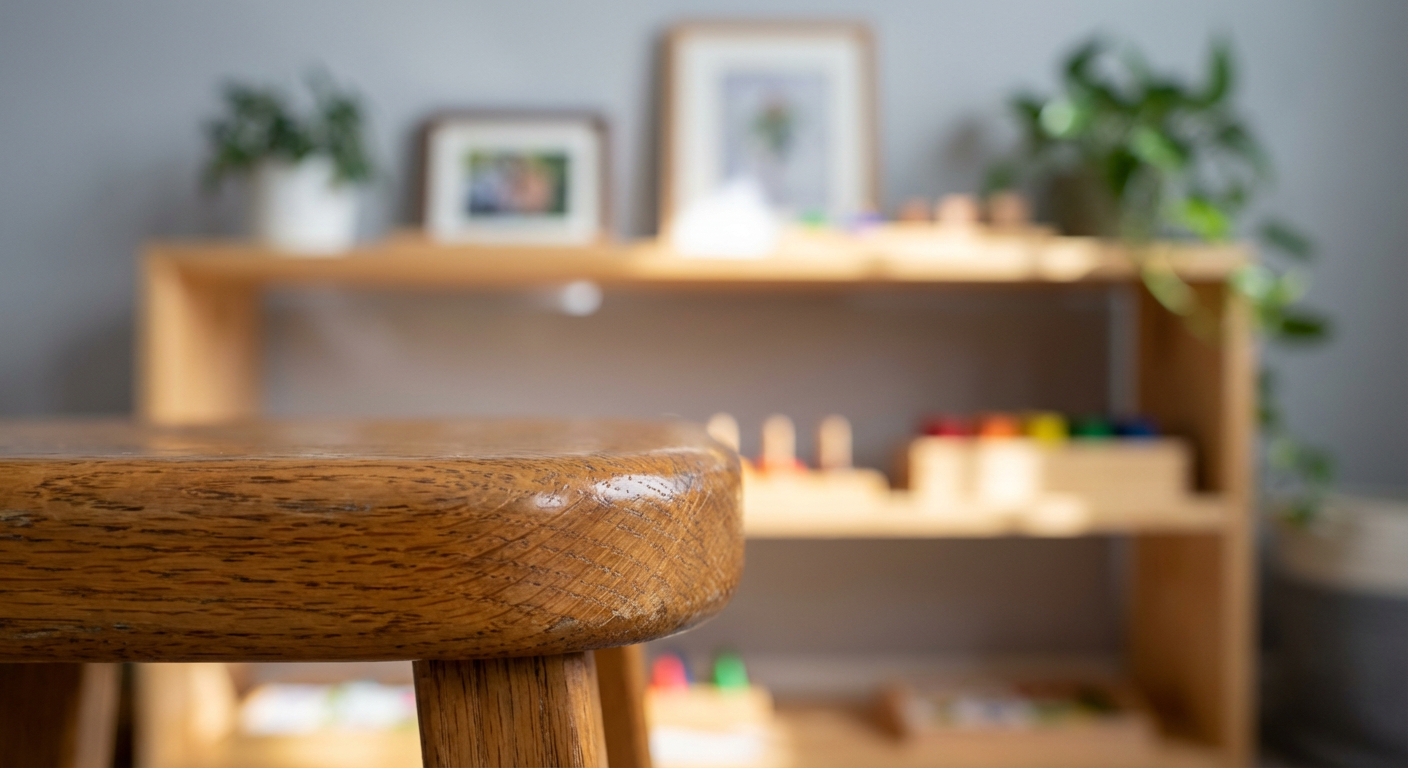
From a pedagogical perspective, wood aligns perfectly with philosophies that prioritise a connection to nature. An article from Jaques of London highlights how the natural weight and texture of wood provide a superior sensory experience. This is a core reason why montessori style furniture uk is almost exclusively made from wood; its neutral tones are believed to reduce over-stimulation and help children focus. This view is echoed by a post on Medium, which explains that the substantial feel of wood connects children to ‘real work’.
Also, wood is an excellent choice for eco-friendly school furniture. As a renewable resource that biodegrades at the end of its life, it has a more positive environmental profile than fossil fuel-based plastics. Our range of specialist early years furniture includes many such high-quality wooden options. However, there are drawbacks. Wood carries a higher initial cost, can be susceptible to water damage if not properly sealed, and its weight makes it more difficult to reconfigure a classroom layout quickly.
### Case Study: A Nursery’s Strategic Choice
– Challenge: A new nursery in Cheshire needed to furnish three classrooms on a tight budget. They wanted a natural, calming aesthetic but were concerned about the high upfront cost of wooden furniture and the potential sanitation challenges.
– Solution: We worked with them to develop a hybrid model. They invested in high-quality wooden tables and shelving units as the core, long-lasting elements of each room. For seating and smaller storage units that required frequent cleaning and colour-coding, they chose durable, easy-to-clean plastic options.
– Results: The nursery achieved its desired aesthetic while staying within budget. Cleaning protocols were streamlined, and they benefited from Bulk Buy Discounts by sourcing both types of furniture from a single supplier. The TCO projection showed a 15% saving over 10 years compared to an all-plastic solution.
– Key Insight: You don’t have to choose one material over the other. A blended approach can deliver the benefits of both wood and plastic, optimising for aesthetics, hygiene, and budget simultaneously.
The Case for Plastic Early Years Furniture: Hygiene, Versatility & Budget
Modern plastic school furniture is an excellent choice for educational settings that prioritise hygiene, vibrant colour, budget control, and flexibility. Its most significant advantage is its non-porous surface. This makes it incredibly easy to clean and disinfect, a crucial factor for infection control in any early years environment. For nurseries and reception classes, where spills and messes are a daily reality, hygienic classroom furniture is essential for maintaining a healthy space.
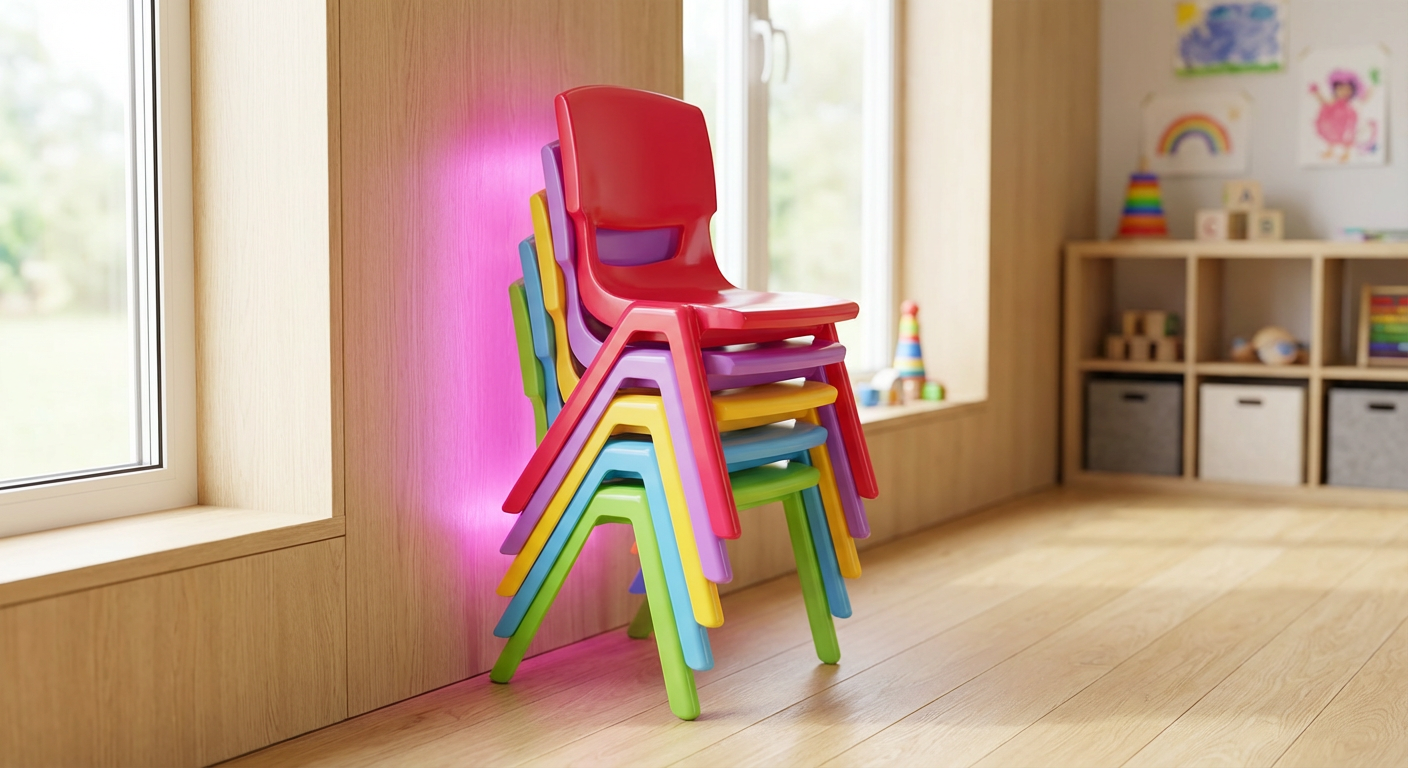
The lower upfront cost is another major draw. Plastic furniture allows schools to fully equip a classroom for a fraction of the cost of wooden equivalents, making it an accessible option for those with limited budgets or who need to furnish multiple rooms at once. Many establishments also favour our flexible payment options, whether setting up Credit Accounts Or Pay Flexibly, to manage these large-scale purchases.
Versatility is also a key benefit. Plastic chairs and tables are lightweight, making it easy for staff and even older children to reconfigure the room for different activities. Many designs are stackable, which is a huge advantage for multi-purpose halls or classrooms where floor space needs to be cleared regularly. As an article from Excelsior Ltd (2022) notes, high-quality plastic is remarkably durable and can serve several cohorts of children. The availability of bright, bold colours is not just an aesthetic choice; it’s a pedagogical tool used to define learning zones, support colour-coded organisational systems, and create a visually stimulating environment.
However, plastic is not without its disadvantages. Over time, it can become brittle and is more prone to cracking under sharp impacts than wood. From an environmental standpoint, it is a fossil fuel-based product and is not biodegradable. For some, it can also lack the premium, natural feel that wood provides.
At a Glance: Comparing Wooden vs. Plastic Early Years Furniture
For busy school managers and headteachers, a direct comparison can help clarify an effective choice for your specific needs. The decision between different types of early years furniture often comes down to a trade-off between initial cost, long-term value, and maintenance requirements. This table summarises the key differences to aid your procurement process.
| Decision Factor | Wooden Furniture | Plastic Furniture | Verdict |
|---|---|---|---|
| Total Cost of Ownership (TCO) | Higher initial cost, but longer lifespan and repairability lead to excellent long-term value. | Lower initial cost, but may require more frequent replacement, potentially increasing long-term spend. | Wood often wins on a 10+ year horizon; Plastic wins for short-term budgets. |
| Durability & Lifespan | Extremely high. Can withstand decades of use. Scratches and dents are often repairable. | Good, but can become brittle with age and UV exposure. Prone to cracking under sharp impact. | Wood is the more resilient long-term choice for durable classroom furniture. |
| Hygiene & Cleaning | Requires sealed surfaces. Porous nature can harbour germs if finish is compromised. | Excellent. Non-porous surface is easy to wipe clean and sanitise effectively. | Plastic is the clear winner for environments prioritising easy and frequent sanitation. |
| Aesthetic & Environment | Natural, calming, high-end appearance. Supports Montessori and ‘natural classroom’ principles. | Bright, vibrant, and playful. Can be used for colour-coding zones but may look less premium. | Aesthetic choice is dependent on the school’s specific pedagogical philosophy. |
| Sustainability | A renewable and biodegradable resource. Considered the more eco-friendly school furniture option. | Typically derived from fossil fuels and is non-biodegradable, contributing to landfill. | Wood has a significantly better environmental profile. |
Compliance is Non-Negotiable: Meeting UK Safety & Ergonomic Standards
Regardless of material, all furniture procured for UK schools must meet specific, legally-binding safety standards. This is not optional. The key standard for early years furniture is BS EN 1729: Furniture – Chairs and tables for educational institutions. Adherence to this standard is a critical part of a school’s duty of care.
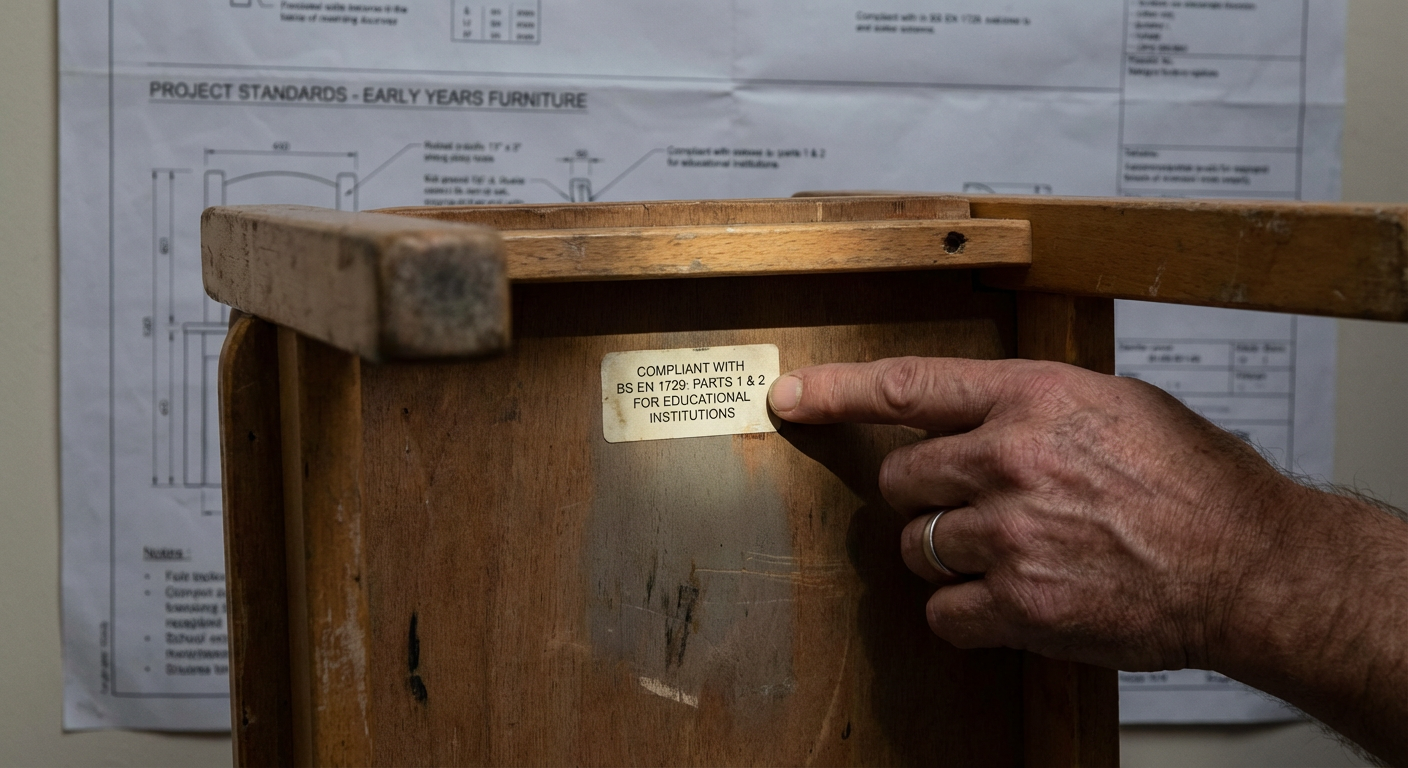
BS EN 1729 is broken into two crucial parts:
- Part 1: Functional dimensions. This part deals with ergonomics. It specifies the appropriate heights, depths, and angles for chairs and tables based on the size of the children using them. Furniture is marked with a size mark (from 1 to 7) to help schools match items to the correct age group, promoting good posture and preventing musculoskeletal strain.
- Part 2: Safety requirements and test methods. This part ensures the furniture is structurally sound and safe for a classroom environment. It involves rigorous testing for stability (to prevent tipping), strength, and durability to ensure the furniture won’t collapse under foreseeable use and even misuse.
Meeting these eyfs furniture requirements uk is about more than just ticking a box; it’s about creating a genuinely safe and supportive learning space. The Early Years Foundation Stage (EYFS) framework mandates a ‘safe and stimulating’ environment, and compliant furniture is the foundation of that safety. When procuring furniture, typically insist on certification of compliance with both parts of BS EN 1729. You can view our full list of certifications and accreditations to see our commitment to safety.
Frequently Asked Questions
What is early years furniture?
Early years furniture is a specialised category of furniture designed specifically for children in nursery and primary school settings (ages 0-5). It must meet strict safety and ergonomic standards like BS EN 1729, be highly durable to withstand classroom use, and support the developmental goals of the Early Years Foundation Stage (EYFS) framework. This makes it fundamentally different from standard domestic children’s furniture.
Is wooden furniture better than plastic for nurseries?
Neither material is universally ‘better’; an effective choice depends on the nursery’s priorities. Wooden furniture is often preferred for its durability and natural aesthetic, aligning with philosophies like Montessori. Plastic furniture excels in environments where frequent, easy sanitation and vibrant colour-coding are primary concerns. Many settings use a mix of both to get the benefits of each.
Why is wooden furniture often preferred in Montessori settings?
Wooden furniture is favoured in Montessori education because it aligns with the core principle of a natural, calm, and ordered environment. The weight and texture of wood provide a rich sensory experience, and its neutral tones are believed to reduce over-stimulation, helping children focus on their learning activities. It also promotes a connection to the natural world, a key tenet of the philosophy.
What are the main advantages of using wood instead of plastic?
The primary advantages of wood are its exceptional durability, sustainability, and timeless aesthetic. Well-made wooden furniture can last for decades and can often be repaired, offering excellent long-term value. It is also a renewable and biodegradable material, making it a more eco-friendly school furniture choice compared to fossil fuel-based plastics, a point often discussed by sources like Community Playthings.
Do bacteria grow more on wooden or plastic furniture surfaces?
Research suggests bacteria can survive on both, but plastic’s non-porous surface is generally easier to clean and disinfect effectively. While some studies indicate wood has natural antimicrobial properties, its porous nature can potentially harbour germs if the surface finish is compromised. For likely to support hygiene, plastic is often considered the more straightforward option for hygienic classroom furniture.
What is the safest material for early years furniture?
The safety of early years furniture is determined by its design and compliance with standards, not just its material. Both wood and plastic can be extremely safe if the furniture is certified to BS EN 1729. Key safety features to look for include rounded edges, anti-trap designs, and structural stability, all of which are independent of the core material used in construction.
How do materials impact EYFS furniture requirements in the UK?
The EYFS framework requires a ‘safe and stimulating’ environment, which materials can influence. While it doesn’t specify materials, the choice impacts these goals. Wood can contribute to a calming, stimulating sensory environment. Brightly coloured plastic can be used to create visually stimulating learning zones. Compliance with eyfs furniture requirements uk is about how the furniture is used, not just what it’s made of.
Is plastic or wooden furniture more durable in a classroom?
For sheer lifespan and resistance to structural failure, high-quality wooden furniture is typically more durable. It can withstand heavy use and can often be sanded and refinished to repair wear and tear. While modern plastic is tough, it can become brittle over time and is prone to cracking under impact, at which point it usually needs replacing entirely.
How important is colour in early years furniture?
Colour can be a very important pedagogical tool in an early years setting. Brightly coloured plastic furniture and storage can be used to implement colour-coded systems, helping children to identify zones for different activities (e.g., blue for reading, yellow for art) and to learn organisation skills. Conversely, the neutral tones of wooden school furniture are used to create a less distracting, calmer environment.
Why is BS EN 1729 so important for school furniture?
BS EN 1729 is critical because it ensures furniture is both safe and ergonomically appropriate for children. Part 1 specifies size markings to match furniture to the age and height of pupils, promoting good posture. Part 2 tests for strength and stability to prevent accidents like collapses or tipping. Buying compliant furniture is a key part of a school’s due diligence and risk management strategy.
Important Considerations
This analysis focuses primarily on solid wood and high-quality polypropylene, which are the most common materials used in professional educational furniture. It does not cover engineered woods like MDF and plywood or recycled plastics in depth, each of which has a unique profile of cost, durability, and safety. Also, supplier and manufacturing quality vary dramatically; a poorly constructed wooden chair will generally underperform a high-specification plastic one, and vice-versa. The manufacturer’s reputation is as important as the material itself.
While wood and plastic dominate the market, other materials are available. Metal-framed tables and chairs offer exceptional durability and are common in secondary schools, but their industrial aesthetic can be less suitable for early years settings. Composite materials, which blend wood fibres with plastic resins, aim to offer a ‘best of both worlds’ solution. However, they are often more expensive and their long-term performance and repairability in a school environment are still being evaluated.
For any large-scale procurement, a full classroom redesign, or the creation of specialised SEN (Special Educational Needs) spaces, we strongly recommend a professional consultation. An expert can conduct a thorough needs analysis, produce 2D and 3D space plans, and create a bespoke furniture schedule that perfectly balances your budget, pedagogical aims, and compliance obligations. This “Design To Install We Do It All!” approach ensures you achieve an effective possible outcome for your setting and pupils.
Making the Right Choice for Your UK Setting
Ultimately, the decision between wooden and plastic early years furniture is not about finding a single ‘best’ material, but about making a strategic choice that aligns with your setting’s budget, educational philosophy, and operational priorities. Wood represents a long-term investment in durability and a natural learning environment, making it a fantastic choice for those focused on sustainability and TCO. In contrast, plastic offers unparalleled benefits in hygiene, versatility, and upfront affordability. Our experience shows the most effective learning spaces often utilise a thoughtful combination of both.
At Cost Cutters UK, we have over 35 years of experience helping schools and nurseries make these critical decisions. As a supplier Rated Excellent On Trustpilot, we pride ourselves on being a trusted partner. If you’re planning a refurbishment and need expert advice on creating a safe, stimulating, and budget-conscious environment, consider our free space planning consultation to explore your options in detail.
References
- Famly.co – Article. Discusses the pedagogical debate around wood and plastic in early years settings.
- Community Playthings – Article. Advocates for reducing plastic to improve the quality of play and sustainability.
- Jaques of London – Article. Highlights the sensory and developmental benefits attributed to the weight and texture of wood.
- Medium (Poppa’s Wooden Creations) – Blog Post (2023). Explains the Montessori preference for wood based on its weight and connection to ‘real work’.
- Excelsior Ltd – Article (2022). Argues for plastic’s durability in educational settings, stating it can last for decades across several classes.
- BabyThinkLab – Article. Compares the sensory feedback and developmental impact of plastic versus wooden materials for young children.
Conclusion
Making the Right Choice for Your UK Setting
In summary, the choice of early years furniture is a strategic one that hinges on your setting’s specific needs, pedagogical approach, and budget. High-quality wooden school furniture offers unmatched longevity and a calming aesthetic, making it a sound long-term investment and a prime example of eco-friendly school furniture. Conversely, plastic school furniture provides significant advantages in terms of initial cost, ease of sanitation, and versatility for creating vibrant, zoned learning spaces.