Busting Office Furniture Myths: A UK Procurement Professional’s Guide
🎯 Key Takeaway
The most common office furniture myths lead procurement professionals to make costly decisions based on incorrect assumptions about price, ergonomics, and compliance. Believing these myths often results in higher long-term costs, decreased employee well-being, and potential legal risks. True ergonomic furniture is not a luxury; it’s a productivity requirement under UK Health and Safety Executive (HSE) guidelines. The initial purchase price is a poor indicator of value; Total Cost of Ownership (TCO), which refers to a calculation of the total cost of a product’s lifecycle, reveals the true expense. Finally, furniture compliance with British Standards (BS) is not automatic and is critical for safety.
Making procurement decisions based on outdated information is a significant financial risk. For workplace assets, a few persistent office furniture myths circulate that can lead to expensive office furniture procurement mistakes. These misconceptions about cost, safety, and design don’t just affect the bottom line; they impact employee well-being and productivity. As of March 2026, navigating the market requires clarity and expertise. At Cost Cutters UK, we’ve spent over 35 years helping organisations across the country make informed choices. This guide will debunk the most damaging myths with facts and UK-specific compliance data, empowering you to maximise your budget and invest in a workplace that truly performs. We offer a comprehensive range of school and office equipment to meet these exact needs.
👤 Written by: Costcutters UK Content Team
Reviewed by: Costcutters UK Editorial Team, 35+ Years in UK Furniture Procurement
Last updated: 28 March 2026
ℹ️ Transparency Disclosure: This article explores common office furniture myths based on over 35 years of industry experience and analysis of UK and EU standards. Our Transparency commitment means we aim for complete accuracy; this content has been verified by our editorial team for UK procurement professionals. This Disclosure also notes that some links may connect to our services, which we believe offer excellent solutions to the challenges discussed.
Myth 1: ‘Ergonomic’ is Just a Marketing Buzzword
Fact: True ergonomics is a science-based discipline crucial for compliance with UK Health and Safety (Display Screen Equipment) Regulations 1992. The term ergonomics, the science of designing products to fit human users, is frequently misused, leading to one of the most common ergonomic chair myths: that it’s simply a label to justify a higher price. In reality, genuine ergonomic design is about creating a workspace that fits the user, their tasks, and the environment to enhance performance and well-being.
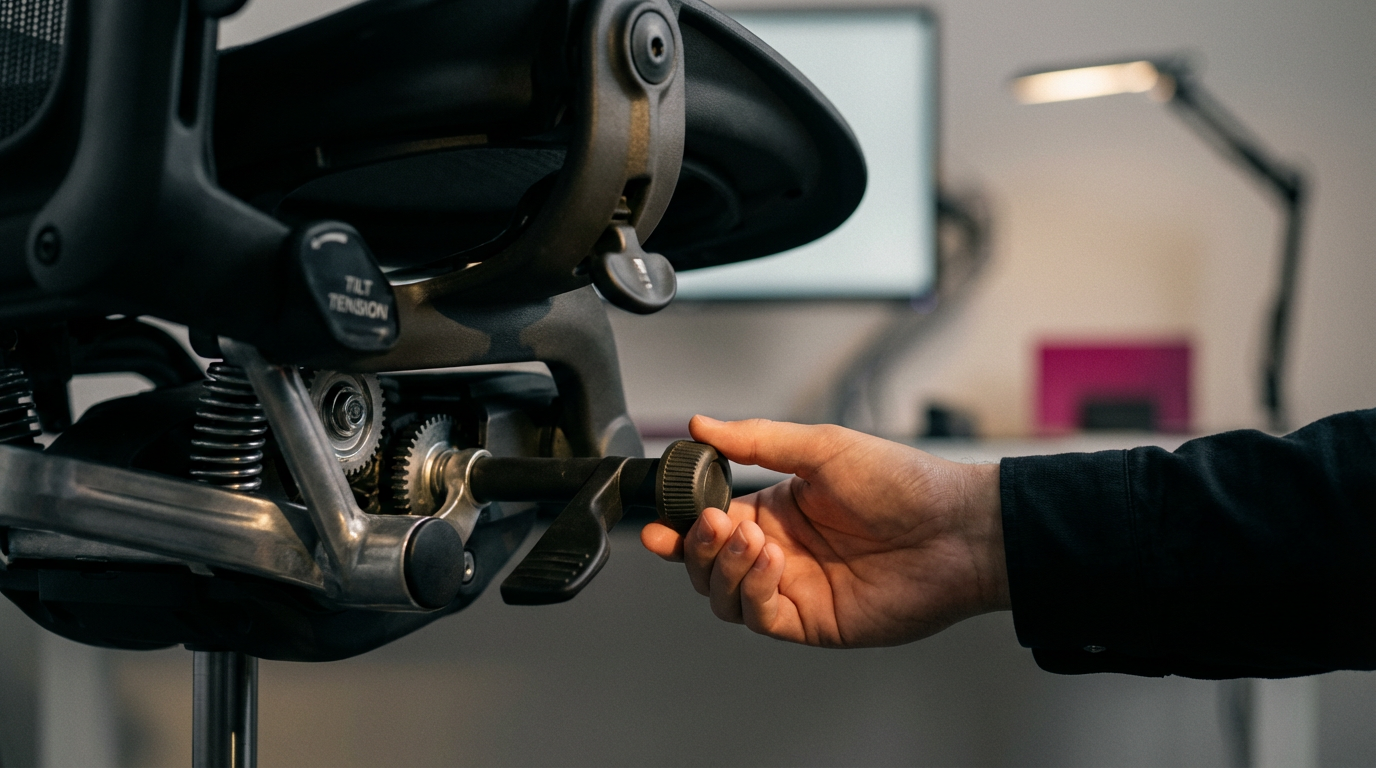
According to the Health and Safety Executive (HSE), Britain’s national regulator for workplace health and safety, employers have a legal duty to protect employees from the health risks of working with Display Screen Equipment (DSE) [1]. This includes providing workstations that meet specified requirements, such as adjustable chairs and sufficient desk space. The costs of ignoring this are tangible. A report from Kensington (2022) highlights that poor ergonomics can lead to musculoskeletal disorders (MSDs), which are a leading cause of employee absenteeism [3].
A truly ergonomic setup goes beyond a single chair. It considers the entire workstation: monitor height, keyboard position, and desk depth. Investing in genuinely ergonomic furniture isn’t a luxury; it’s a strategic decision that reduces absenteeism, improves productivity, and demonstrates a commitment to employee health. It’s about functionality and fit, not just a fancy label.
Myth 2: A Standing Desk is a Cure-All for Sedentary Work
Fact: While beneficial, a standing desk is not a magic solution; movement and postural variety are the keys to a healthy workday. The rise of wellness culture has amplified several standing desk myths, chief among them being that standing all day is inherently superior to sitting. However, research suggests that prolonged static posture of any kind – sitting or standing – is detrimental.
The goal is to combat being static. A study published by the University of Leicester (2015) linked long hours of sitting time with increased risks of type 2 diabetes and cardiovascular disease, regardless of other exercise [4]. Height-adjustable desks, or sit-stand desks, are effective tools because they facilitate regular changes in posture. They allow a user to transition smoothly from sitting to standing throughout the day, promoting what experts call ‘postural rotation’.
As noted by Boyne Ergonomics, an ergonomics consultancy, the real benefit comes from this variety, not from standing alone [5]. Standing for eight hours can lead to its own set of problems, such as leg fatigue and back pain, if not managed correctly. Therefore, the most effective strategy isn’t to replace every chair with a standing desk but to create an environment that encourages movement. This could involve a mix of traditional desks, shared sit-stand workstations, and designated breakout areas that prompt staff to get up and move.
Myth 3: The Biggest of All Office Furniture Myths – ‘Cheapest is Best Value’
Fact: The lowest initial price rarely equates to an effective long-term value. Total Cost of Ownership (TCO) is the most accurate measure for procurement. This is perhaps the most critical of all office furniture myths. When asking, “is expensive office furniture better?”, the answer lies in durability and compliance, not the price tag. TCO forces you to look beyond the initial invoice and consider the full lifecycle cost, including lifespan, warranty terms, repair costs, and eventual replacement.
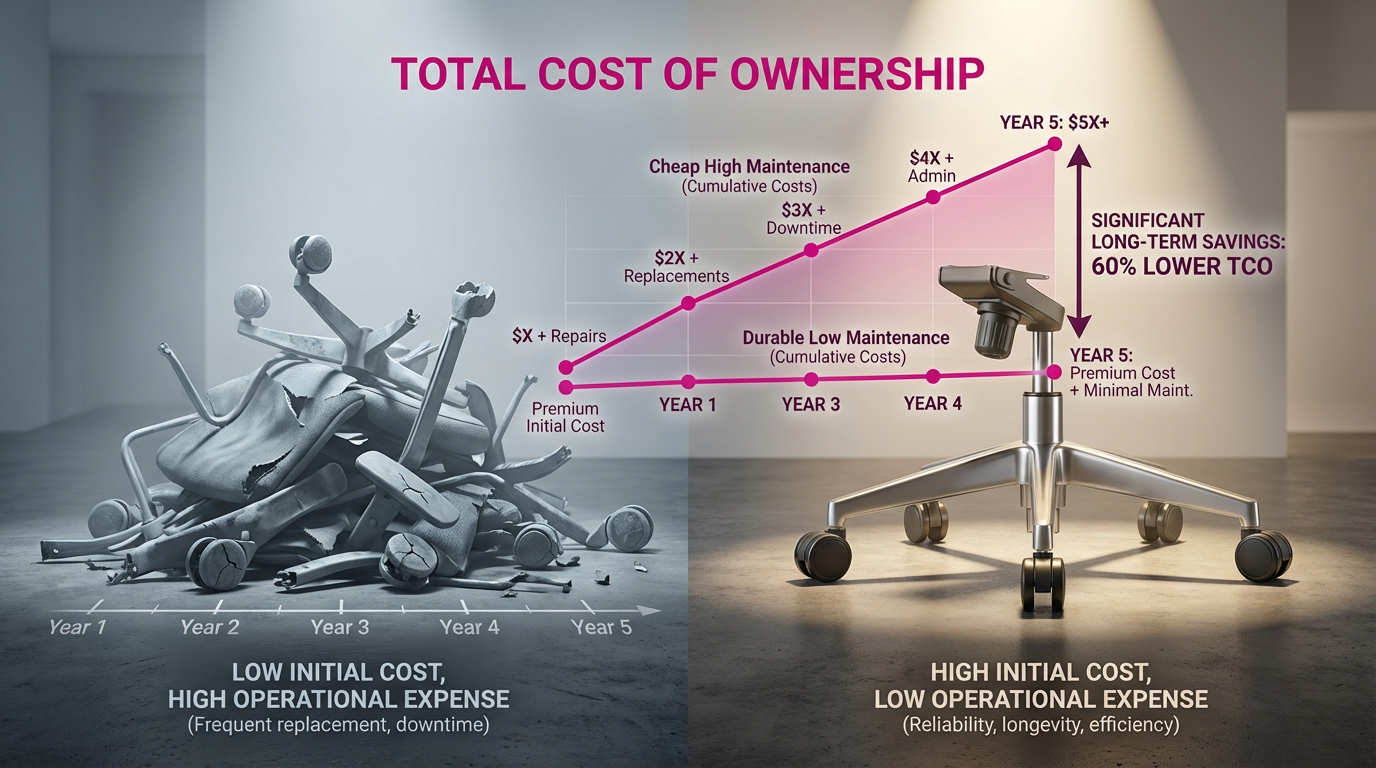
Public sector bodies and School Business Managers are often required to demonstrate ‘Best Value’, and TCO is the framework that research suggests it. A cheap, non-compliant chair might seem like a saving, but if it breaks within 18 months and has a limited warranty, you’ll be buying another one. A slightly more expensive, BS-compliant chair with a 5-year warranty will almost generally deliver a lower TCO. This is a crucial defence against common office furniture procurement mistakes.
We’ve seen this scenario play out hundreds of times over our 35 years in the business. The table below illustrates a typical comparison.
| Cost Factor | Low-Cost ‘Bargain’ Chair | Value-Engineered Compliant Chair | Key Consideration |
|---|---|---|---|
| Initial Purchase Price | £70 | £150 | The compliant chair is over twice the initial cost. |
| Commercial Warranty | 12 Months (Parts Only) | 5 Years (Structural & Parts) | The warranty reflects confidence in the product’s durability for 8-hour/day use. |
| Expected Lifespan | 18-24 Months | 7-10 Years | Compliant chairs are tested for longevity under commercial conditions. |
| Replacements in 5 Yrs | 2-3 times (£140-£210) | 0 times (£0) | The ‘bargain’ chair requires multiple re-purchases. |
| Total Cost Over 5 Yrs | £210 – £280 | £150 | The compliant chair is significantly cheaper over a typical asset cycle. |
Case Study: A Local Authority’s Procurement Shift
- Challenge: A council office was spending over £15,000 annually replacing broken task chairs purchased on a ‘lowest price’ tender. The chairs failed frequently, causing disruption and creating a poor impression.
- Solution: We worked with their procurement manager to shift the focus from unit price to a 5-year TCO model. They invested in a BS 5459-compliant chair that cost 40% more upfront but came with a 5-year commercial warranty.
- Results: In the first three years, their chair replacement budget dropped by 85%. Employee complaints about uncomfortable seating vanished, and the facilities team saved dozens of hours previously spent on repairs and re-orders.
- Key Insight: Presenting the TCO calculation to stakeholders was the key to unlocking the budget for a higher-quality initial purchase.
Myth 4: All Furniture Complies with UK Safety Standards by Default
Fact: A significant amount of furniture sold online, particularly from non-specialist retailers, does not meet the stringent British Standards (BS) required for commercial or educational use. It’s a dangerous assumption that if it’s for sale in the UK, it’s safe for your office or school. This simply isn’t true.
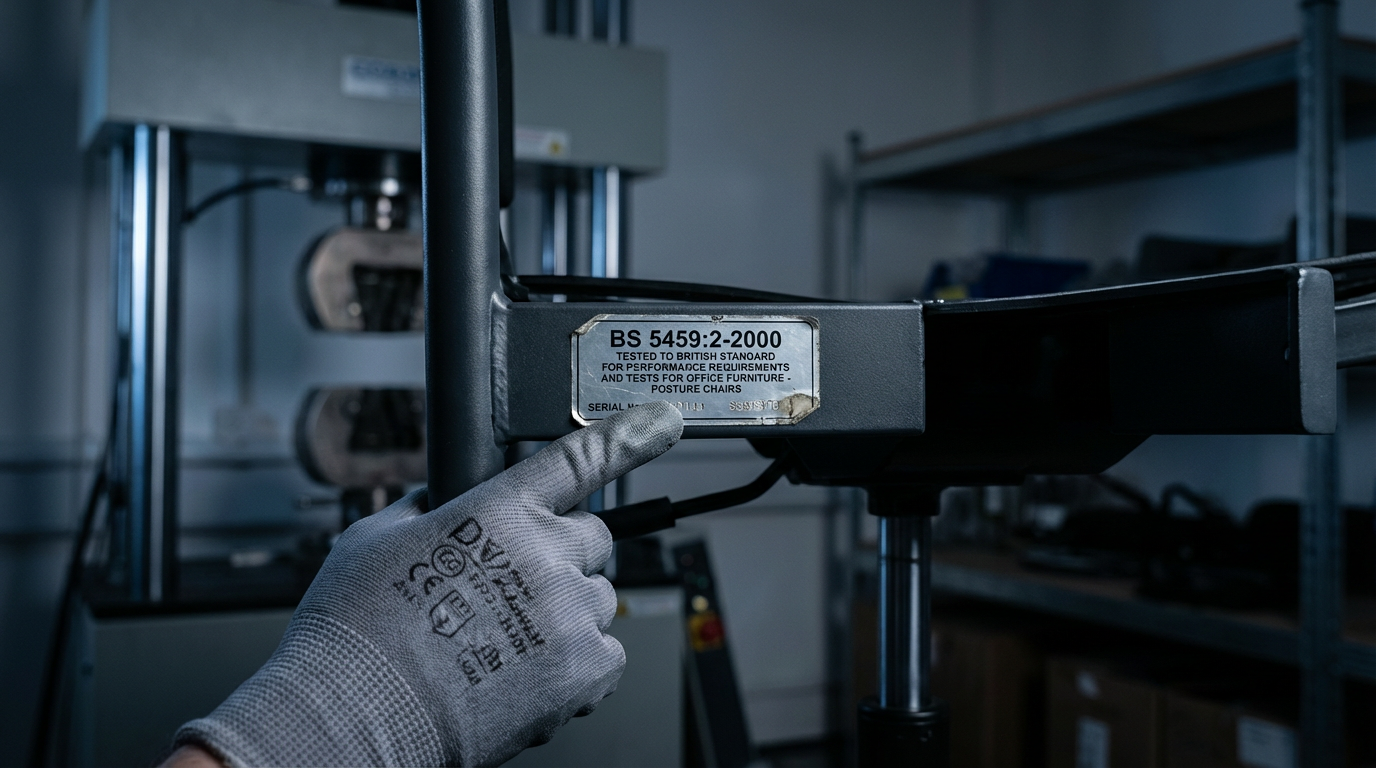
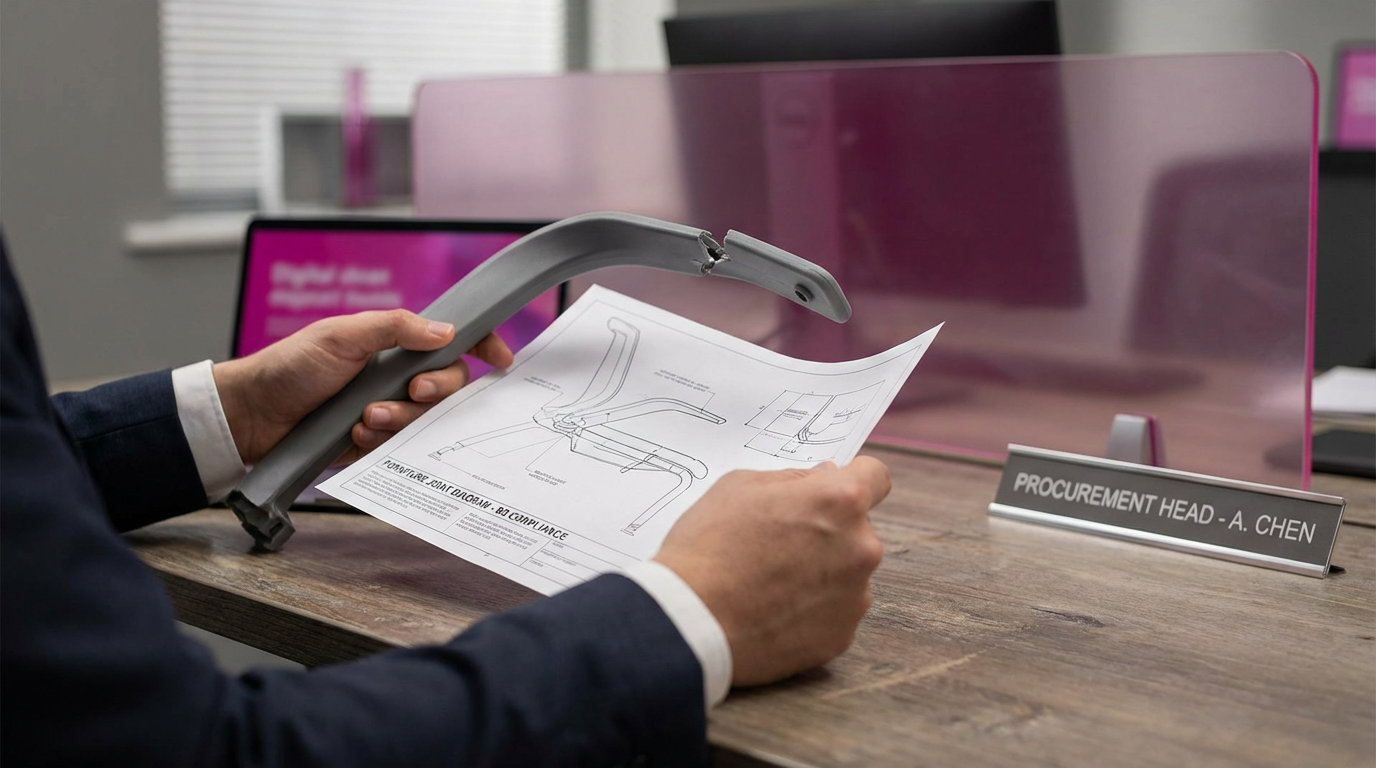
Standards like BS 5459 (for office seating) or BS EN 1729 (for educational furniture) are not just suggestions; they are benchmarks for safety and durability. They involve rigorous testing for strength, stability, and suitability for 8-hour daily use, far exceeding the requirements for domestic furniture. For example, a chair compliant with BS 5459 has been tested to withstand loads and forces simulating years of intensive use in a commercial environment. The quality of used office furniture quality is even more suspect, as its history and wear are unknown.
The risks of using non-compliant furniture are substantial. First, there’s the safety hazard to your staff or pupils, which could lead to legal liability for the organisation if an accident occurs. Second, your business insurance may be voided if an incident involves equipment that doesn’t meet the required standards. Finally, non-compliant furniture will inevitably fail sooner, hitting your budget with unexpected replacement costs. Typically demand proof of compliance from your supplier. We are proud to list our UK safety and quality certifications for full transparency.
Myth 5: You Need a Huge Office for a Functional Breakout Area
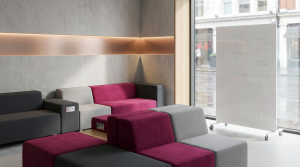
Fact: Effective breakout spaces are about smart design, not sheer size; even small, underutilised areas can be transformed into valuable collaborative zones. One of the most persistent office design misconceptions is that breakout areas are a luxury reserved for large, open-plan headquarters. In the era of hybrid working, these spaces are more critical than ever, providing a destination for the collaboration and social interaction that employees can’t get at home.
The Return on Investment (ROI) of a breakout area is measured in improved morale, enhanced creativity, and better team cohesion. It doesn’t require a huge footprint. You can create ‘micro-breakouts’ in overlooked corners, wide corridors, or underused nooks. The key is choosing the right furniture.
For instance:
- Modular seating can be reconfigured for team huddles or individual quiet time.
- High-backed sofas create acoustic and visual privacy, forming a ‘booth’ without building walls.
- Compact poseur tables and stools can turn a small corner into an informal meeting spot or a place for a quick coffee.
By thinking creatively about space, you can provide these essential zones without needing a massive floor plan. Our range of modern breakout furniture is designed specifically for this kind of flexible, space-efficient application.
How to Make Myth-Free Furniture Decisions: A 3-Step Checklist
Avoiding common office furniture procurement mistakes requires a structured approach that moves beyond myths and focuses on facts. In our experience, following a simple checklist can ensure your investment is sound, safe, and sustainable. We recommend this three-step process for any procurement professional.
Step 1: Define Needs Beyond Price
Before you even look at a catalogue, define what the furniture needs to do. Consider the roles of the users, the function of the space, and your organisation’s work patterns. Will it be for focused individual work, collaboration, or a hybrid of both? How many hours a day will it be used? Answering these questions creates a clear brief that prioritises function over simple cost.
Step 2: Verify Compliance and Durability
Don’t take claims at face value. Ask your potential supplier for specific proof of compliance with relevant British Standards (e.g., BS 5459 for chairs, BS EN 527 for desks). Also, check the warranty terms carefully. Does it cover commercial use for 8 hours a day? A 1-year domestic warranty is a major red flag for office furniture.
Step 3: Calculate the Total Cost of Ownership (TCO)
Use the framework discussed earlier. Create a simple spreadsheet comparing your shortlisted options over a 5 or 10-year period. Factor in the initial price, the length of the warranty, and the expected lifespan. The product that costs the least over this extended period is the one that offers an effective value, even if its upfront cost is higher. This simple calculation is your most powerful tool against the ‘cheapest is best’ myth.
Frequently Asked Questions About Office Furniture
What are the most common office furniture myths?
The most pervasive office furniture myths are that the cheapest option is an effective value, that ‘ergonomic’ is just a marketing term, and that all furniture sold in the UK is automatically compliant with safety standards. These misconceptions can lead to poor purchasing decisions, higher long-term costs, and an unsafe work environment. A critical approach, backed by data, is essential for effective procurement.
Is expensive office furniture really better?
Not necessarily, as price alone isn’t an effective indicator of quality or suitability. However, exceptionally cheap furniture often cuts corners on materials, construction, and compliance testing. So, while you don’t need the most expensive option, ‘value-engineered’ furniture that is certified for commercial use often provides an effective long-term return. Look for proof of compliance and a strong commercial warranty over a high price tag.
How can I tell if an office chair is truly ergonomic?
A truly ergonomic chair will offer multiple points of adjustment to fit the individual user. Key features to look for include adjustable seat height, seat depth, backrest angle, and armrest height/width. It must also provide proper, often adjustable, lumbar support. A chair that only adjusts up and down is not sufficiently ergonomic for prolonged DSE use under HSE guidelines, which is a key point in debunking ergonomic chair myths.
What are the risks of buying non-compliant furniture?
The primary risks include employee injury, which could lead to legal liability for the organisation. Non-compliant furniture is also likely to fail prematurely, leading to unexpected replacement costs and operational disruption. Also, in the event of an incident, your business insurance may not cover damages related to the use of furniture that does not meet required British Standards. Typically request certification from your supplier.
Do I need a standing desk for every employee?
No, it is not necessary to provide a standing desk for every single employee unless a specific occupational health assessment requires it. The goal is to encourage movement and combat static postures. A more cost-effective strategy can be providing shared sit-stand desks in hot-desking areas or investing in high-quality, adjustable seating that promotes good posture. A blended approach dispels common standing desk myths and is often most effective.
Is used office furniture a good way to save money?
It can be, but it carries significant risks regarding the quality and compliance of the items. The history of used office furniture quality is unknown, and it may no longer meet its original safety specifications after years of wear and tear. For critical items like office chairs, buying new, compliant furniture with a full commercial warranty is often the safer and more reliable long-term investment.
How much of my office refurbishment budget should go to furniture?
This varies widely, but a general rule of thumb is that furniture and fixtures can account for 15-25% of a total office refurbishment project. For a simple refresh focused only on furniture, it will naturally be the majority of the cost. We recommend prioritising task seating and workstations, as these have the biggest impact on employee health and productivity. A specialist can help you budget effectively.
What is the single biggest office furniture procurement mistake?
The single biggest mistake is focusing solely on the initial unit price while ignoring the Total Cost of Ownership (TCO). This leads to buying cheap, non-compliant items that need frequent replacement and may pose safety risks. A savvy procurement professional looks at the cost over the entire lifespan of the product, including warranty, durability, and compliance. This approach typically delivers better value for money.
Does office furniture colour and design really affect productivity?
Yes, research consistently shows that the physical environment has a measurable impact on employee mood, collaboration, and productivity. Office design misconceptions often lead to sterile, uninspiring spaces that can stifle creativity. Thoughtful use of colour, texture, and layout – such as creating distinct zones for focused work and collaboration – can significantly boost morale and performance. It is an important strategic factor, not just a decorative choice.
How do I plan furniture for a hybrid work model?
Planning for a hybrid model involves creating a more flexible, multi-functional, and appealing space. This may mean fewer dedicated desks and more ‘hot-desking’ zones, reservable collaborative booths, and comfortable breakout areas that make the office a destination. Invest in modular furniture that can be easily reconfigured and ensure you have adequate storage, like personal lockers for employees who are not in the office every day.
Important Considerations and Professional Guidance
This guide provides a general framework for debunking common myths, but every organisation’s needs are unique. The effective furniture solution depends on specific factors like your industry, employee roles, building layout, and workplace culture. The ‘best’ chair or desk for a creative agency may differ from that for a school staff room or a call centre. The information here should be used as a starting point for your own internal needs analysis.
While buying new, compliant furniture from a reputable supplier like us is the most reliable procurement strategy, other options exist. Some organisations may explore reupholstering existing high-quality chairs or purchasing from specialist refurbishment companies. While potentially cost-effective for certain items, this approach requires careful assessment of the furniture’s structural integrity and its ability to meet current compliance standards, as warranties are often limited and the used office furniture quality can be inconsistent.
For any significant office refurbishment or fit-out, we strongly recommend seeking professional guidance. An experienced space planning consultant can help you avoid costly mistakes, ensure full compliance with UK regulations, and design a space that maximises both your budget and your team’s potential. A consultation can translate your operational needs into a tangible, effective, and myth-free furniture plan.
Furnish Your Space with Confidence
Navigating the world of procurement requires moving beyond pervasive office furniture myths. By focusing on Total Cost of Ownership instead of just initial price, prioritising genuine, adjustable ergonomics, and demanding proof of compliance with British Standards, you can transform your furniture budget from a simple expense into a strategic investment. These principles protect your organisation from risk and actively contribute to a safer, more productive work environment, steering clear of common office design misconceptions.
With over 35 years of experience helping UK schools, offices, and public sector organisations make informed decisions, Cost Cutters UK is more than just a supplier; we are your procurement partner. We are Rated Excellent On Trustpilot because we believe in providing value that lasts. If you’re planning a project and want to ensure you get it right, book a free, no-obligation space planning consultation with our expert team today. From “Design To Install We Do It All!”, Saving Time & Stress for you.
References
- Health and Safety Executive (HSE) – UK Government Guidance. Provides the legal framework and employer responsibilities for workers who use Display Screen Equipment (DSE).
- British Standards Institution (BSI) – Standards Body. Publishes standards like BS 5459 and BS EN 1729 that define safety, strength, and durability requirements for office and educational furniture.
- Kensington (2022) – Industry Blog. Highlights common misconceptions, such as the idea that ergonomics is only for people already in pain.
- University of Leicester (2015) – Meta-analysis of 47 studies. Found that prolonged sitting time is associated with poorer health outcomes regardless of physical activity.
- Boyne Ergonomics – Industry Blog. Debunks various ergonomics myths, including the idea that standing desks are a complete solution.
- A1 Office Furniture – Industry Blog. Discusses common ergonomic myths and the importance of furniture that fits the user.
Conclusion
Furnish Your Space with Confidence
In summary, pervasive office furniture myths and common office design misconceptions prevent organisations from making sound investments. By shifting focus from initial price to Total Cost of Ownership, prioritising genuine, adjustable ergonomics, and demanding proof of compliance with British Standards, you can transform your furniture budget from a simple expense into a strategic asset. This approach protects your organisation from risk and actively contributes to a safer, more productive work environment.