Nursery Furniture Decision Guide: A UK School’s Manual to Refresh vs. Overhaul
🎯 Key Takeaway
This decision guide helps UK school managers determine whether to refresh or overhaul nursery furniture by providing a framework to assess safety, compliance, budget, and long-term educational value. It offers a structured approach to making a defensible choice.
• Assess furniture against a 5-point checklist covering safety (BS EN 1729), structural integrity, and functional suitability.
• A strategic refresh is effective for cosmetic issues on structurally sound furniture, offering a budget-friendly solution.
• A full overhaul is necessary for non-compliant or unsafe items, providing better long-term value and supporting modern teaching methods.Use our expert guidance to make a cost-effective, Ofsted-ready choice that enhances your early years learning environment.
UK School Business Managers and Headteachers face the constant challenge of balancing tight budgets with the need to provide safe, inspiring, and effective learning environments. For ageing nursery furniture, the core question is often whether to refresh existing items or commit to a full overhaul. This isn’t just a financial decision; it impacts pupil safety, staff morale, and educational outcomes. As of March 2026, making the right choice is more critical than ever. This article provides a clear decision guide to navigate this complex choice, offering a practical classroom furniture checklist and expert insights. At Cost Cutters UK, we’ve spent over 35 years helping schools make these strategic investments, and we’re here to share our expertise.
👤 Written by: Costcutters UK Content Team
Reviewed by: Costcutters UK Editorial Team, 35+ Years in Educational Supplies
Last updated: 21 March 2026
ℹ️ Transparency: This article explores the criteria for choosing between a nursery furniture refresh and a complete overhaul, based on our 35 years of experience in the UK education sector. Some links may connect to our services, such as our full range of educational supplies. All information is verified by our editorial team.
The 5-Point Triage Checklist: Assessing Your Current Furniture
Before making any financial commitment, a thorough assessment of your existing furniture is essential. This simple classroom furniture checklist provides a structured way to determine when to replace school furniture and identify immediate risks.

- Structural Safety & Integrity
- Look For: Wobbling frames, loose joints, deep cracks in wood or plastic, broken or missing components, and instability when weight is applied.
- Decision Trigger: Any item that is unstable or has a compromised structure is an immediate hazard and should be removed from service. According to the Health and Safety Executive (HSE) (2025), analysis of educational sector incidents shows that poorly maintained equipment is a significant, yet preventable, cause of accidents.
- Surface Condition & Material Safety
- Look For: Splintering wood, sharp edges, peeling laminate or paint, exposed staples or screws, and heavily stained or unhygienic surfaces that can’t be deep-cleaned.
- Decision Trigger: Surfaces that pose a splinter, cut, or hygiene risk fail the assessment. A refresh might be possible if the core structure is sound, but extensive surface damage often signals the end of an item’s life.
- UK Compliance & Standards
- Look For: A label or marking indicating compliance with
school furniture safety standards uk. The key standard is BS EN 1729, which covers strength, stability, and appropriate dimensions for children. - Decision Trigger: Any furniture, especially chairs and tables, lacking evidence of being compliant with British Standards like BS EN 1729 must be considered for immediate replacement. This is a critical point for Ofsted inspections.
- Functional Fitness for Purpose
- Look For: Furniture that is the wrong size for the current age group, inflexible designs that hinder modern teaching (e.g., heavy, fixed units), or a lack of sufficient storage for current resources.
- Decision Trigger: If furniture no longer supports your pedagogical approach or operational needs, it’s a strong candidate for replacement, even if it’s structurally sound.
- Aesthetic Impact & Learning Environment
- Look For: A tired, mismatched, and uninviting appearance. Does the furniture contribute to a bright, engaging, and positive atmosphere, or does it make the space feel dated and neglected?
- Decision Trigger: While aesthetics alone rarely trigger a replacement, a poor overall look combined with minor surface issues often makes a strategic refresh the well-suited solution.
The Case for a Strategic Refresh: Maximising Budget and Minimising Disruption
A strategic refresh is the effective solution when your furniture passes the core structural safety and compliance checks but fails on surface condition or aesthetics. In our experience, this is the most cost-effective way to transform a learning environment without the capital expenditure of a full overhaul, effectively Saving Time & Stress.
A refresh focuses on renewing what is already sound. This can include:
- Replacing Tabletops: Worn, scratched, or damaged tabletops on otherwise sturdy frames can be replaced, instantly revitalising your classroom tables.
- Reupholstering Seating: Tired or torn fabric on soft seating and chairs can be professionally reupholstered with durable, wipe-clean, and flame-retardant materials.
- Professional Repainting: Metal frames on tables and chairs that are scuffed but not rusted can be professionally sandblasted and powder-coated for a finish that is as good as new.
- Upgrading Components: Replacing worn castors on mobile units or fitting new handles on storage cupboards can restore functionality and improve safety.
We recommend this path for schools needing to make a visible impact on a limited budget. It minimises disruption as work can often be completed during school holidays, and it’s a sustainable choice that extends the life of existing assets.
The Case for a Full Nursery Furniture Overhaul: Investing in Long-Term Value
A full nursery furniture overhaul becomes the only responsible option when your assessment reveals significant safety, compliance, or functional failures. While the upfront cost is higher, we firmly believe it represents a superior long-term investment in your school’s future.
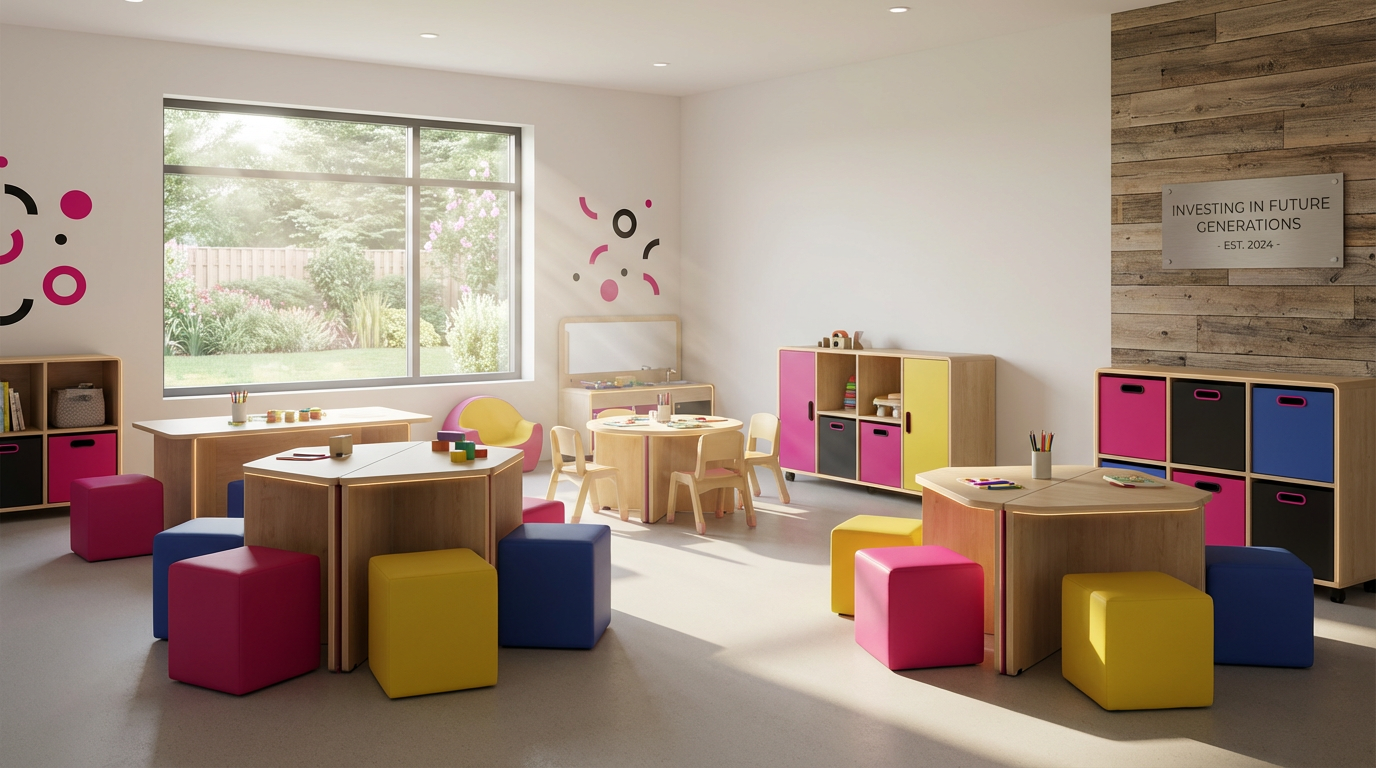
Clear triggers for a complete overhaul include:
- Widespread Safety Failures: If multiple items fail the structural integrity checks on the triage list, a piecemeal approach is inefficient and risky.
- Non-Compliance with BS EN 1729: Furniture that doesn’t meet current
school furniture safety standards ukis a liability. A full overhaul ensures every item is compliant from day one. - Supporting Modern Pedagogy: Old, fixed furniture can restrict dynamic, child-led learning. An overhaul allows you to introduce flexible, mobile, and collaborative furniture that supports modern educational philosophies. Guidance from the Department for Education (DfE) (2025) on creating effective learning spaces often highlights the need for adaptable environments.
- End of Economic Life: When the cumulative cost of repairs and the administrative time spent managing failing assets approaches 50-60% of the replacement cost, an overhaul is the more financially prudent decision.
Investing in high-quality, durable early years furniture from specialist suppliers like durable furniture ranges like Twoey during an overhaul also reduces future maintenance costs and ensures the environment remains safe and inspiring for years to come. That’s a smart investment.
Data Table: Refresh vs. Overhaul at a Glance
Making a decision is easier when the facts are laid out clearly. This table summarises the key considerations for a strategic refresh versus a full nursery furniture overhaul, helping you analyse the trade-offs in budget, time, and long-term impact. The cost of new nursery furniture can be significant, so understanding the full picture is vital.
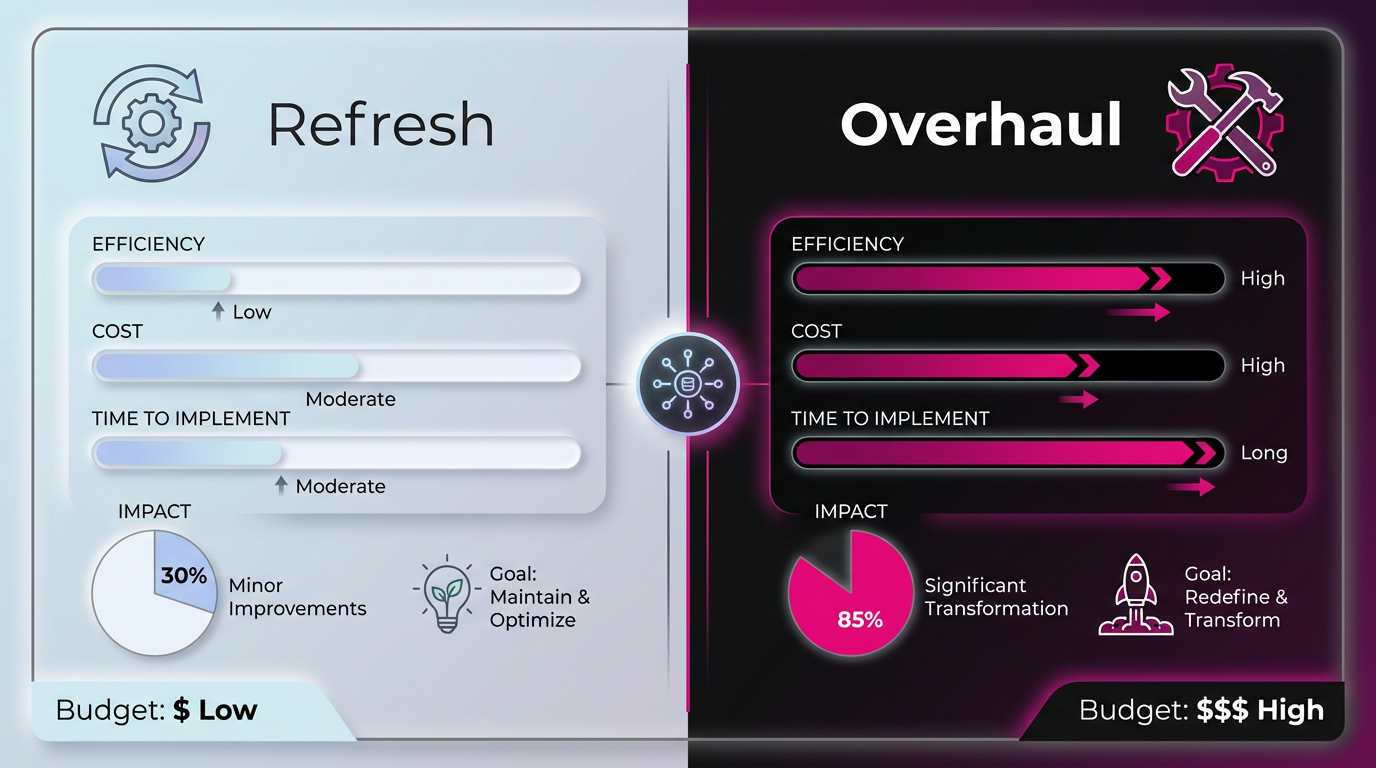
| Factor | Strategic Refresh | Full Nursery Overhaul |
|---|---|---|
| Typical Cost | Low (15-30% of replacement cost) | High (100% replacement cost) |
| Project Timescale | Short (1-3 weeks, often during holidays) | Longer (4-8 weeks, including planning) |
| Compliance Impact | No change; does not fix non-compliant items | High; ensures all items meet BS EN 1729 |
| Educational Impact | Moderate; improves aesthetics and mood | High; enables new teaching methods |
| Disruption Level | Low to moderate; can be done off-site | High; requires room to be cleared |
| Long-Term Value | Fair; extends life of assets by 2-4 years | Excellent; new assets with 10+ year lifespan |
| Best For | Sound furniture with cosmetic wear | Unsafe, non-compliant, or unsuitable furniture |
Budgeting and Procurement: A Decision Guide for School Managers
Effective educational furniture procurement begins with a clear budget and a smart strategy. This decision guide section is for the School Business Managers and Headteachers responsible for maximising value and ensuring compliance.
First, use the 5-point triage checklist to segment your furniture into three categories: ‘Keep As Is’, ‘Refresh’, and ‘Replace’. This allows you to build an accurate budget. For the ‘Replace’ category, researching the typical cost of new nursery furniture from reputable suppliers will provide a baseline figure for your capital expenditure request.
When procuring, we advise leveraging established public sector purchasing frameworks. These frameworks pre-vet suppliers for financial stability and adherence to school furniture safety standards uk, saving you significant due diligence time.
At Cost Cutters UK, we understand the financial pressures on schools. That’s why we offer practical solutions to make your budget go further. You can benefit from our Bulk Buy Discounts on larger orders, a key advantage of a planned overhaul. Also, we provide flexible payment options, allowing schools to set up Credit Accounts Or Pay Flexibly to manage cash flow effectively. Our ‘Design To Install We Do It All!’ service ensures a seamless process from initial planning to final installation, managed by a team that is Rated Excellent On Trustpilot.
Frequently Asked Questions About Nursery Furniture Decisions
What is a decision guide?
A decision guide is a structured tool that helps you evaluate options based on set criteria. For school furniture, this guide helps you weigh factors like cost, safety, and compliance to choose between refreshing and overhauling. This process ensures your choice is logical, defensible, and aligned with your school’s objectives, making it an essential part of responsible procurement.
What are the 7 C’s of decision making?
The ‘7 Cs’ framework typically includes Construct, Compile, Collect, Compare, Consider, Commit, and Check. In procurement, this means defining the problem (e.g., old furniture), compiling options (refresh/overhaul), collecting data (costs, compliance), comparing them, considering impacts on pupils and staff, committing to a choice, and checking the outcome after implementation. This structured approach is vital for making sound financial decisions in schools.
What is the 10-10-10 rule for decisions?
The 10-10-10 rule is a model for considering the consequences of a decision in 10 minutes, 10 months, and 10 years. For furniture, a cheap refresh looks good in 10 minutes (low cost), but in 10 months you might face the same issues. In 10 years, an overhaul would likely have provided better value. It’s a useful mental exercise for balancing short-term savings with long-term strategic value.
What are the 7 principles of decision making?
Key principles often include being rational, involving stakeholders, considering alternatives, understanding risks, and basing choices on accurate information. For a school business manager, this means using data from a furniture audit, considering the needs of staff and pupils, and understanding the financial and safety risks of each option. Following these principles leads to more robust and justifiable procurement choices that stand up to scrutiny.
How to make a decision guide?
To make a decision guide for furniture, first define your goals, such as improving safety while staying within budget. Next, list your key criteria (e.g., cost, compliance, downtime, educational impact). Then, create a scoring system or checklist, like our 5-point triage, to evaluate your current situation against these criteria objectively. This structured document then guides you to the most logical conclusion for your school’s specific setting.
What is the guide to decision making?
A guide to decision-making is essentially a repeatable process or framework to follow for making optimal choices. This article serves as one for school furniture, taking you from assessment (the checklist) and analysis (the comparison table) to action (budgeting and procurement). It is designed to replace gut feelings with a logical sequence of steps, ensuring all critical factors are considered before committing school funds.
What are decision principles?
Decision principles are the core values or rules an organisation uses to make choices consistently. For a school, these principles might include ‘Safety First,’ ‘Long-Term Value over Short-Term Cost,’ and ‘Support Educational Outcomes.’ Establishing these ensures that every procurement decision, including furniture, aligns with the school’s overall mission and vision. They act as a reliable compass for your management team during complex projects.
What are the 4 C’s of decision-making?
A common ‘4 Cs’ model for decision-making is Clarify, Consider, Choose, and Check. You clarify the problem (e.g., unsafe furniture), consider the options (refresh/replace), choose an effective path based on the evidence you’ve gathered, and finally check the results after implementation to see if the decision was effective. This simple loop is a powerful tool for any school procurement project, ensuring decisions are deliberate and reviewed.
What is the meaning of decision guidance?
Decision guidance refers to expert advice or a structured process designed to help an individual or organisation make a better choice. It moves beyond just providing raw data to offering context, interpretation, and a recommended course of action. This article offers decision guidance by not just listing facts but by framing them within the real-world context of UK schools, helping you apply the information effectively.
How do I ensure new furniture is compliant with UK standards?
typically purchase from a reputable educational supplier who explicitly states that their products conform to BS EN 1729. You should ask for certification documents or look for this standard listed clearly in the product specifications. Using an established supplier like Cost Cutters UK, who works with schools daily, is the most reliable way to ensure full compliance, protecting both pupils and the school.
Important Considerations
The cost and timeline figures presented in this guide are illustrative and based on typical industry projects. Every school’s situation is unique, and factors such as room size, access, specific product choices, and your location in the UK will influence the final budget and schedule. We recommend you use this guide as a preliminary planning tool before seeking a formal, detailed quotation for your project.
For very minor cosmetic issues like small scratches or a single loose fitting, a simple DIY repair by your school’s maintenance team may be sufficient. However, we’ll be honest – we strongly advise against DIY repairs for any structural damage, stability issues, or problems that could compromise safety. Professional assessment is crucial in these cases to avoid liability and ensure pupil wellbeing is rarely put at risk.
Making the right long-term decision requires expertise. We recommend consulting with an educational furniture specialist before committing a significant budget. A specialist can provide a formal site survey, offer space planning advice to maximise your learning environment, and ensure your educational furniture procurement process is fully compliant. This professional guidance is invaluable for large-scale projects.
Making the Right Choice for Your Nursery
Following this decision guide empowers school business managers and headteachers to move beyond guesswork. By systematically assessing your current assets and weighing the costs, benefits, and compliance implications of a refresh versus an overhaul, you can make a financially sound and educationally beneficial choice. This structured approach ensures your investment, whether large or small, directly contributes to a safer and more effective learning environment for your early years pupils.
Planning your next project can feel overwhelming. The team at Cost Cutters UK has over 35 years of experience helping schools like yours navigate these decisions. For expert advice tailored to your nursery’s specific needs, budget, and timeline, book your free, no-obligation space planning consultation today.
References
- Health and Safety Executive (HSE) – Governmental Data. Analysis of statistics from 2025 highlights that equipment maintenance is a key factor in preventing common accidents in educational settings.
- British Standards Institution (BSI) – Standards Body Publication. The BSI provides the framework for BS EN 1729, the definitive standard ensuring furniture is safe, durable, and ergonomically suitable for use in UK educational environments.
- Department for Education (DfE) – Governmental Guidance. The DfE’s 2025 guidance on managing school facilities underscores the importance of investing in adaptable learning spaces to support modern teaching practices.
- The School Bus – Sector-Specific Guidance. Provides checklists and best practice for school procurement, which can be referenced for budgeting and compliance sections.
- Inc. – Business Publication. Offers general business decision-making frameworks like the 10-10-10 rule, applicable to school management.
- Crescent Purchasing Consortium (CPC) – Procurement Body. A key resource for UK schools, offering compliant
frameworks and guidance for educational furniture procurement.
- Forbes – Business Publication. Outlines various decision-making models and skills applicable to management, including in educational settings.
- EYFS Framework – Governmental Guidance. The statutory framework for the early years foundation stage, which sets the standards for learning, development, and care for children from birth to five.
Conclusion
Making the Right Choice for Your Nursery
In summary, this decision guide empowers school business managers and headteachers to move beyond guesswork. By systematically assessing your current assets and